
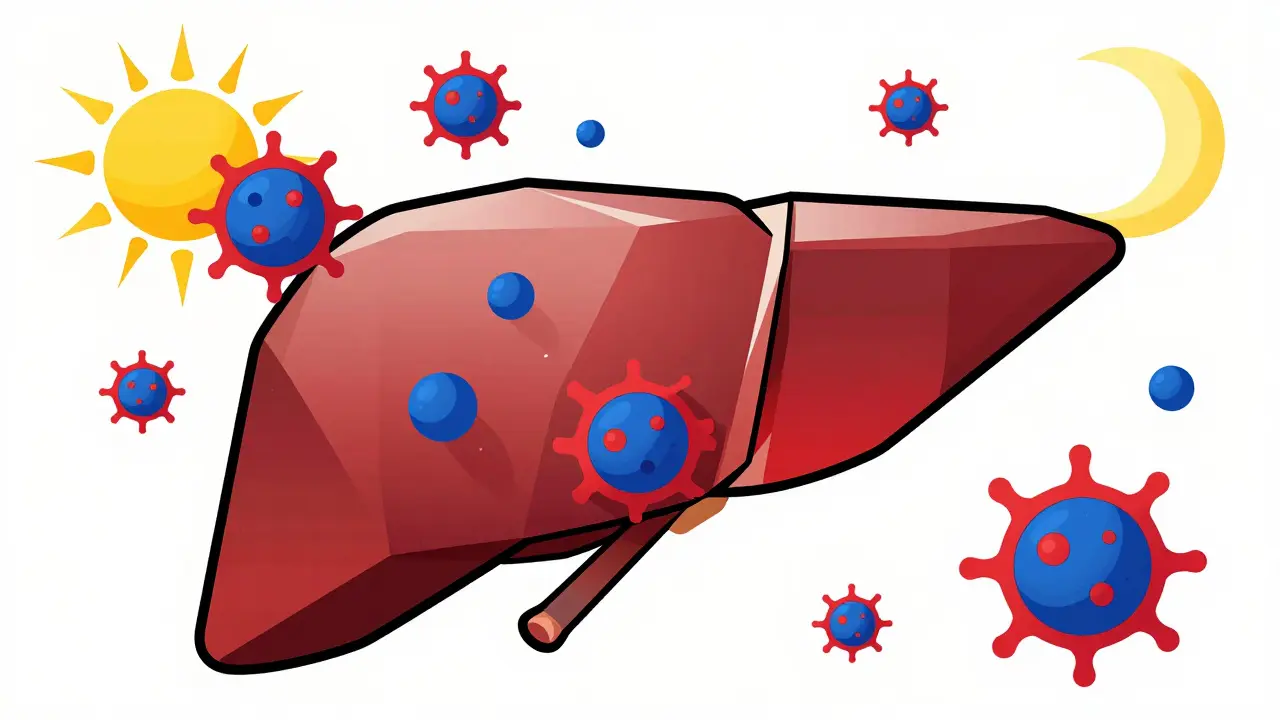
Autoimmune Hepatitis isn't just a liver issue-it's your immune system attacking your own liver. Over 100,000 people in the U.S. alone have it, but most don't know it exists until symptoms hit hard. This rare condition affects 10-25 people per 100,000 globally, with women four times more likely to develop it than men. Without treatment, it can lead to cirrhosis or liver failure. Here's what you need to know about diagnosis, why steroids and azathioprine are the standard treatment, and what to expect long-term.
What is Autoimmune Hepatitis?
Autoimmune Hepatitis (AIH) is a chronic disease where your immune system mistakenly targets liver cells. First described as 'lupoid hepatitis' in the 1950s, it was recognized as a distinct condition in the 1960s when researchers found autoantibodies and saw patients respond to immunosuppressants. Today, the 2025 European Association for the Study of the Liver (EASL) guidelines confirm it affects 2-18 people per 100,000 annually, with rising cases worldwide.
How is Autoimmune Hepatitis Diagnosed?
Diagnosis isn't simple. Doctors use blood tests, biopsies, and exclusion of other liver diseases. Here's how it works:
- Blood tests check for elevated immunoglobulin G (IgG) levels (over 1.5x normal) and autoantibodies like Antinuclear antibodies (ANA) or Smooth muscle antibodies (SMA) at titers ≥1:40. For type 2 AIH, Liver-kidney microsomal antibodies (LKM1) are key.
- Liver biopsy is mandatory. It must show interface hepatitis (inflammation at the portal-parenchymal boundary) in at least 20 portal tracts. Biopsies use ultrasound guidance with a 16-18 gauge needle, carrying a 0.1-0.3% risk of major complications like bleeding.
- Diagnostic scoring uses the Revised IAIHG system. Scores over 15 mean probable AIH; over 20 confirm definite AIH. ALT and AST levels typically show 5-10x the upper limit of normal in active disease.
The 2025 EASL guidelines no longer subclassify AIH based on autoantibody profiles. Experts agree these distinctions don't change treatment decisions-only the overall clinical picture matters.
Steroids and Azathioprine: The Standard Treatment
Since the 1970s, the go-to treatment has been prednisone and azathioprine. Here's why:
- Prednisone starts at 0.5-1 mg per kg of body weight daily (max 60 mg/day), tapered down to 10-15 mg/day by week 8. It quickly reduces liver inflammation.
- Azathioprine begins at 50 mg/day, increasing to 1-2 mg/kg (max 150 mg/day). This drug helps maintain remission while allowing lower prednisone doses.
Combination therapy cuts steroid side effects by half compared to prednisone alone. Studies show 70-80% reduction in prednisone dose by six months, with 60-80% of patients achieving full biochemical remission within 18-24 months.
Managing Treatment Side Effects
While effective, these drugs come with challenges. Prednisone side effects include:
- Moon face and rapid weight gain (52% of patients)
- Mood swings and insomnia (47%)
- Increased diabetes risk (15%) and osteoporosis (20%)
Azathioprine can cause:
- Severe nausea or pancreatitis (35% of cases)
- Bone marrow suppression (12%)
- Fatigue (28%)
Thiopurine S-methyltransferase (TPMT) testing before starting azathioprine is critical. This prevents severe blood issues in the rare 0.3% with complete enzyme deficiency. The 2025 EASL guidelines require this test, though only 45% of U.S. centers currently follow it. Real-world data from the 2024 Global Autoimmune Institute Patient Registry shows 68% of patients experience at least one treatment-related side effect. One Reddit user described steroid effects as 'moon face that made me unrecognizable, 30 pounds of fluid weight in 3 weeks, and insomnia that felt like permanent jet lag.' Another reported azathioprine caused pancreatitis at 100mg, forcing a switch to mycophenolate.
Long-Term Monitoring and Care
Regular check-ups are critical. During initial treatment, blood tests for Alanine aminotransferase (ALT) and Aspartate aminotransferase (AST) happen every 2-4 weeks. After stabilization, they drop to every 3 months. IgG levels are checked quarterly. A repeat liver biopsy after 18-24 months confirms histological remission in 50-70% of cases. Before starting treatment, hepatitis B testing is mandatory due to 15-20% risk of reactivation. Vaccinations for hepatitis A and B should be done before immunosuppression, as vaccine efficacy drops to 40-60% in treated patients versus 90% in healthy people.

What's New in AIH Treatment?
The 2025 EASL guidelines introduced major changes, like removing autoantibody-based subclassification. Second-line options include Mycophenolate mofetil (CellCept) for patients who don't respond to first-line therapy. Ongoing trials for JAK inhibitors like tofacitinib show 55% response rates in refractory cases. The FDA recently designated obeticholic acid as a breakthrough therapy for AIH, with phase 3 trials showing 42% complete response compared to 28% with standard treatment.
Frequently Asked Questions
How is autoimmune hepatitis diagnosed?
Diagnosis involves blood tests for autoantibodies (ANA, SMA, LKM1), IgG levels, and a liver biopsy. The biopsy must show interface hepatitis in at least 20 portal tracts. The Revised IAIHG scoring system confirms diagnosis-scores over 20 indicate definite AIH. Doctors also rule out viral hepatitis and other liver conditions before confirming AIH.
Why are steroids and azathioprine used together?
Steroids like prednisone reduce inflammation quickly, but long-term use causes severe side effects. Azathioprine acts as a steroid-sparing agent, allowing doctors to lower the prednisone dose. This combo cuts steroid-related side effects by half while maintaining effectiveness. Studies show 70-80% reduction in prednisone dose by six months with this approach.
What are common side effects of prednisone?
Prednisone side effects include weight gain, moon face, mood swings, insomnia, and increased risk of diabetes or osteoporosis. About 70% of patients on steroid-only treatment experience side effects, but combining it with azathioprine reduces this to 30%. Regular bone density scans and blood sugar monitoring help manage these risks.
Can autoimmune hepatitis be cured?
There's no cure, but treatment can achieve remission. About 60-80% of patients reach biochemical remission within 18-24 months. However, 50-90% relapse if treatment stops, so most need lifelong maintenance therapy. Some patients may eventually stop treatment after years of remission, but this requires careful monitoring under a specialist's guidance.
What happens if treatment doesn't work?
If no improvement after 12-18 months, doctors switch to second-line therapies like mycophenolate mofetil or calcineurin inhibitors. About 10-15% of patients require these alternatives. New treatments like JAK inhibitors and monoclonal antibodies targeting interleukin-6 are showing promise in clinical trials, offering hope for refractory cases.
Why is TPMT testing important before azathioprine?
TPMT testing checks for enzyme activity that breaks down azathioprine. The rare 0.3% with complete deficiency face a 30-fold higher risk of severe bone marrow suppression. The 2025 EASL guidelines require this test before starting azathioprine, though only 45% of U.S. centers currently follow this protocol. Skipping this test can lead to life-threatening complications.
Kieran Griffiths
February 6, 2026 AT 05:29I've been managing AIH for five years now. The steroid and azathioprine combo was tough at first, but after the first year, my liver enzymes normalized. It's not easy, but sticking with the treatment works. Don't give up.
Lisa Scott
February 6, 2026 AT 20:08This whole treatment is a scam. Steroids and azathioprine make people sicker. Real cause environmental toxins from big pharma. They want you dependent. TPMT testing is a lie. They dont want you to know. The FDA is in on it. All studies are fake. Look at the 1970s data-completely manipulated. Its all about money. Dont trust the system. The 2025 EASL guidelines? Just another piece of propaganda. They removed the autoantibody subclassification to hide the truth. The real issue is the toxins in our water supply. I've seen people get worse on these drugs. TPMT testing is a scam too. They say it's to prevent bone marrow suppression, but it's actually a way to make money. The FDA is corrupt. Doctors are just following orders. This is why so many people are sick. It's not the liver, it's the environment. We need to fight back. Don't take the meds. Research the truth. The government is lying to you. This is a conspiracy that's been going on for decades. You need to see the bigger picture. The system is rigged. Don't trust anything you read. This article is just part of the cover-up. The real treatment is avoiding all chemicals and eating organic. But they don't want you to know that. They want you dependent on their drugs. The moon face? That's just a side effect of the poison they're putting in you. I've been through it. My liver is fine now because I stopped the meds. They're lying to us. Wake up!
Tehya Wilson
February 6, 2026 AT 23:56The statistics on this condition are misleading. Women four times more likely but data skewed. Real prevalence lower. Steroids cause more harm than good. Article poorly researched.
jan civil
February 8, 2026 AT 04:09Interesting point. Share sources for your claim? 2025 EASL guidelines say 2-18 per 100k annually. Data possibly misinterpreted.
Kate Gile
February 9, 2026 AT 03:00I agree with Jan. Guidelines are clear. Let's look at latest data together. Stay informed.
Gregory Rodriguez
February 10, 2026 AT 07:48Wow, another 'expert' article. They say steroids and azathioprine are the gold standard, but let's be real-this is just a cash grab. Moon face? More like 'moon money' for Big Pharma. Next they'll tell us to drink moonshine for liver health. Hilarious.
Johanna Pan
February 11, 2026 AT 12:35Hey gregory, ur right about the moon face thing. But maybe the treatment is still necessary. I've seen people recover. Its not perfect but its better than nothing. Keep hope alive!
Jenna Elliott
February 13, 2026 AT 07:11This article is full of lies. The US healthcare system is broken. Steroids are dangerous. Azathioprine causes cancer. We need better treatments. This is why America is failing.
Elliot Alejo
February 14, 2026 AT 17:08While I understand your concerns, the data shows these treatments are effective for most. Maybe we should focus on improving access rather than dismissing proven therapies. Let's work together on solutions.
lance black
February 14, 2026 AT 17:57Stay strong.
Bella Cullen
February 15, 2026 AT 17:28This is too much info. Just give me the TLDR. Steroids bad, azathioprine good? Or vice versa?
Nancy Maneely
February 15, 2026 AT 18:05TLDR? Ugh. Its not that simple. Steroids cause moon face and diabetes. Azathioprine can kill u. Read the side effects. This is why people dont trust doctors.
Joyce cuypers
February 16, 2026 AT 01:12Ive been through this too. The treatment is hard but worth it. My liver is better now. Dont give up. Its possible. Typo: 'ive' should be 'I've' but you get the point.