
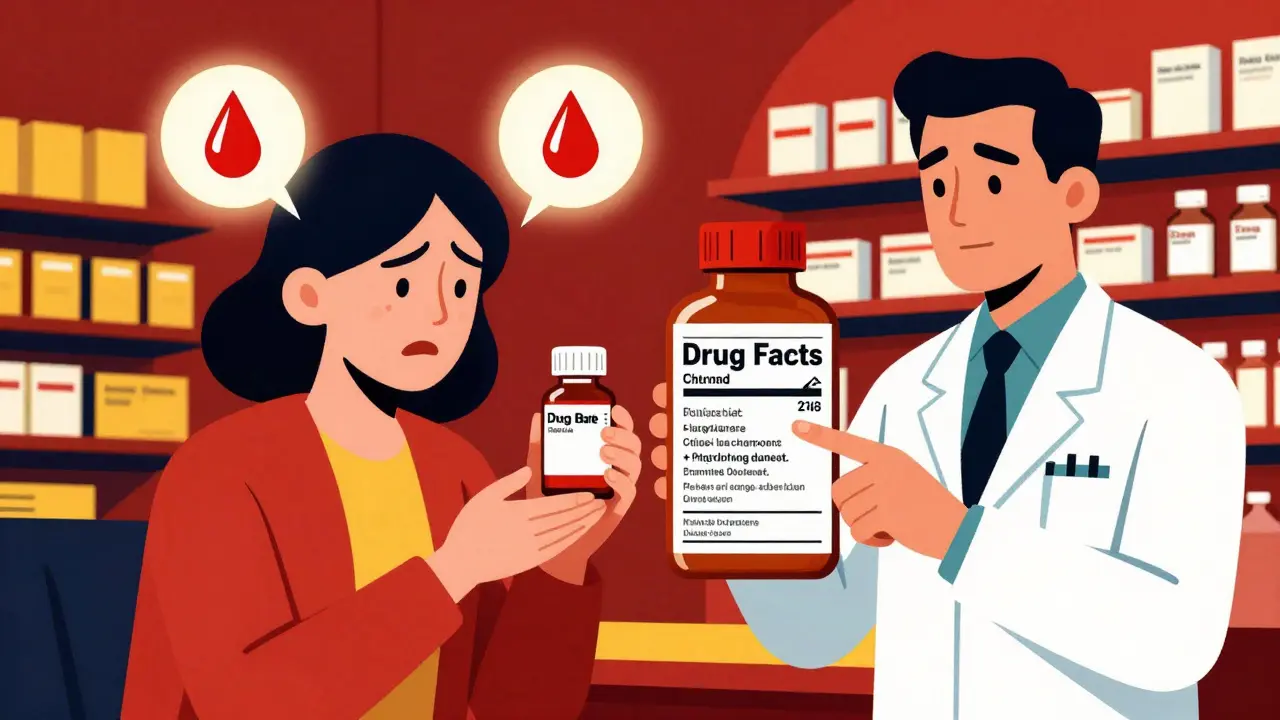
Every year, millions of people walk into a pharmacy looking for relief from a headache, a cold, or an upset stomach. They grab a bottle off the shelf, read the front label, and head out. But here’s the truth: OTC medications aren’t harmless. They’re powerful chemicals, and using them wrong can land you in the ER. You don’t need a prescription to buy them, but that doesn’t mean you shouldn’t treat them with care.
Read the Drug Facts Label - Every Time
The most important thing you’ll find on any OTC medicine is the Drug Facts label. It’s not just a sticker - it’s your safety guide. Since 1999, the FDA has required all OTC products to use this standardized format. It’s organized the same way on every box: active ingredients, purpose, uses, warnings, directions, and other information.Don’t skip this. People often glance at the brand name - Tylenol, Advil, DayQuil - and assume they know what’s inside. But two different cold medicines might both contain acetaminophen. Take both, and you’re doubling your dose without realizing it. That’s how liver damage happens. The FDA says about 56,000 emergency room visits each year are caused by too much acetaminophen. That’s not a rare mistake. It’s common.
Look at the active ingredient first. That’s what actually works. If you’re treating a stuffy nose, you might need pseudoephedrine. If it’s a cough, dextromethorphan. If you’re unsure, ask the pharmacist. They’ve seen this a hundred times. And if you’re buying something for the first time, read the whole label. Warnings aren’t there to scare you. They’re there to keep you alive.
Don’t Mix Medications - Even If They’re ‘Natural’
You might think, “I’m just taking this herbal tea and this painkiller - how bad could it be?” But herbs aren’t harmless. St. John’s wort can interfere with blood thinners. Garlic supplements can thin your blood too. Even vitamin E in high doses can be risky if you’re on anticoagulants.And it’s not just supplements. Many OTC medicines have the same active ingredients under different names. Cold and flu combos often include acetaminophen, antihistamines, and decongestants. If you take one of those plus a separate pain reliever, you’re stacking ingredients. That’s how you overdose. The Mayo Clinic says the most dangerous mistake is taking two medicines with the same active ingredient. You don’t need to treat every symptom at once. Pick the one that matches your worst symptom - and nothing else.
For example: if you have a headache and a runny nose, don’t grab a full-symptom cold tablet. Just take acetaminophen for the headache and a saline nasal spray for the congestion. Fewer ingredients. Less risk.
Know Your Body - And Your Health Conditions
OTC meds aren’t one-size-fits-all. What’s safe for a 30-year-old athlete might be dangerous for a 70-year-old with high blood pressure. If you have diabetes, avoid decongestants - they can spike your blood sugar. If you have an enlarged prostate, antihistamines like diphenhydramine can make it harder to urinate. If you have heart disease, some antacids contain sodium that can worsen fluid retention.The Merck Manual says older adults are the most at risk. They make up only 13% of the U.S. population but account for half of all adverse drug reactions. Why? Because they’re often on multiple prescriptions. Add an OTC painkiller, a sleep aid, and a cough syrup, and you’ve got a chemical cocktail no one tested.
And if you’re pregnant or breastfeeding? Don’t guess. Even something as simple as ibuprofen can affect fetal development in early pregnancy. Acetaminophen is usually safer, but you still need to check with a pharmacist. There’s no such thing as a “safe for everyone” OTC drug. Your health history matters.
Dosage Isn’t Guesswork - Use the Right Tool
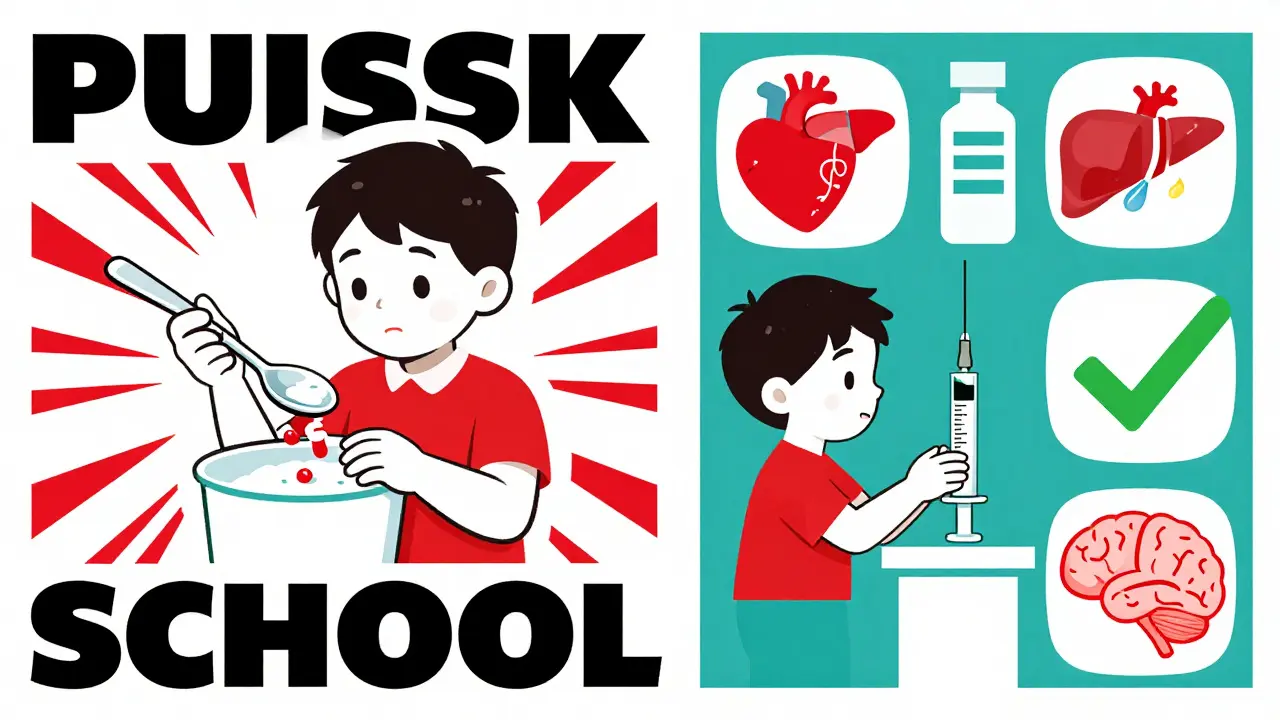
Ever used a kitchen spoon to measure medicine? You’re not alone. But here’s the problem: a tablespoon from your kitchen might hold 10 milliliters - or 20. The FDA tested kitchen spoons and found volume differences of up to 200%. That’s not a typo. Two hundred percent.Children are especially vulnerable. “Kids aren’t just small adults,” the FDA says. You can’t eyeball a dose based on size. Always use the measuring cup, dropper, or syringe that comes with the bottle. If it’s missing, ask the pharmacist for one. They’ll give it to you for free.
And never assume the label says “adult dose” means you can give it to a teen. Some products have separate dosing for teens and adults. Others have warnings like “not for children under 12.” Read it. Write it down if you need to. This isn’t just caution - it’s survival.
Use the Same Pharmacy - Always
You might think it doesn’t matter where you buy your meds. But it does. When you use the same pharmacy for all your prescriptions - and your OTC purchases - they build a complete record. That means if you pick up a new painkiller, the pharmacist can check it against your blood pressure med, your antidepressant, and your daily aspirin.They’ll catch interactions you didn’t even know existed. One study found pharmacist consultations reduced OTC medication errors by 67%. That’s not a small number. That’s life-saving.
Even if you’re buying something basic - like antacids or allergy pills - let them know. Tell them what else you’re taking. Even if you think it’s “just a little something.” That’s their job. And it’s free.
When in Doubt, Ask the Pharmacist
This is the single most important habit you can build. Pharmacists aren’t just people who hand out bottles. They’re trained to spot risks, explain side effects, and recommend alternatives. You don’t need to be embarrassed. You don’t need to have a list. Just say: “I’m not sure which one to pick.”They’ll ask you: What are your symptoms? How long have you had them? What else are you taking? Do you have any health conditions? Then they’ll point you to the right product - or tell you to see a doctor.
And if you’re still confused after reading the label? That’s exactly when you should ask. The FDA says: “If you read the label and still have questions, talk to a doctor, nurse, or pharmacist.” That’s not a suggestion. It’s the rule.
Watch for Red Flags - And When to Walk Away
Not every OTC product is created equal. Watch out for:- Products with too many ingredients - especially if you only have one symptom
- Labels that don’t list active ingredients clearly
- Packages that look outdated or poorly printed
- Products marketed with vague claims like “miracle cure” or “all-natural relief”
The FDA doesn’t approve every OTC product individually - they rely on monographs, which are like rulebooks for safe ingredients. But if a product doesn’t follow the Drug Facts format, it’s a red flag. Don’t buy it.
And if your symptoms don’t improve in 3-5 days, or they get worse? Stop taking the medicine. Don’t double the dose. Don’t switch to another brand. See a doctor. OTC meds are for short-term relief - not long-term fixes.
What’s Changing in 2025?
The FDA is updating the OTC drug review system for the first time in decades. This is part of the CARES Act from 2020, and by 2025, you’ll start seeing clearer labels, updated warnings, and faster changes when new risks are found. For example, fluticasone furoate - a nasal spray once only available by prescription - is now OTC for allergies. That’s progress. But it also means you need to be even more careful. New OTC options mean more choices - and more chances for mistakes.What’s not changing? The need to read the label. The need to ask questions. The need to know your own body.
OTC medications are meant to give you control over your health. But control only works when you’re informed. Don’t let convenience replace caution. A few extra minutes reading a label or asking a pharmacist can save you from a hospital visit - or worse.
Can I take OTC painkillers every day?
No. Most OTC pain relievers like ibuprofen and acetaminophen are meant for short-term use - usually no more than 10 days for pain or 3 days for fever. Taking them daily can damage your liver, kidneys, or stomach lining. If you need daily pain relief, see a doctor. There may be an underlying condition that needs treatment.
Is it safe to give OTC medicine to my child?
Only if it’s specifically labeled for children and you use the correct dose. Never give adult medicine to a child, even in smaller amounts. Many OTC cough and cold medicines are not approved for kids under 6. Always check the label for age limits and use the measuring tool that comes with the product. When in doubt, ask the pharmacist.
Can I drink alcohol while taking OTC meds?
Avoid alcohol with most OTC medicines. Mixing alcohol with antihistamines, painkillers like acetaminophen, or sleep aids can cause drowsiness, dizziness, liver damage, or even breathing problems. Even one drink can be risky. If the label says “do not use with alcohol,” take it seriously.
What should I do if I think I took too much?
Call Poison Control immediately at 1-800-222-1222 (in the U.S.) or your local emergency number. Don’t wait for symptoms. Acetaminophen overdose, for example, can cause liver damage before you feel sick. Bring the medicine bottle with you if you go to the hospital.
Are generic OTC brands as safe as name brands?
Yes. Generic OTC medicines contain the same active ingredients as name brands, at the same strength and dosage. The only differences are in inactive ingredients, packaging, and price. The FDA requires generics to meet the same safety and effectiveness standards. Save money by choosing generics - just make sure the active ingredients match.
Jane Wei
December 16, 2025 AT 17:43Just grabbed a bottle of DayQuil last week and didn’t even look at the label. Learned my lesson the hard way when I ended up with a stomachache and a headache. Now I read every single line. Seriously, it’s not that hard.
Meghan O'Shaughnessy
December 17, 2025 AT 08:34My grandma used to say, ‘If you don’t know what’s in it, don’t put it in you.’ She was right. I still ask the pharmacist every time-even for aspirin. They don’t mind. They’ve seen it all.
Kaylee Esdale
December 19, 2025 AT 08:29generic is just as good and saves you 10 bucks. active ingredient is what matters. dont fall for the branding. i buy store brand every time and never had an issue.
Naomi Lopez
December 19, 2025 AT 19:42It’s astonishing how many people treat pharmaceuticals like candy. The Drug Facts label isn’t decorative-it’s a legally mandated safety protocol. The FDA’s standardization since 1999 was a watershed moment in public health literacy, yet the majority still treat it as optional reading. This isn’t about caution-it’s about basic cognitive responsibility. If you can’t parse a standardized label, you shouldn’t be self-medicating. Period.
And let’s not romanticize pharmacists as benign advisors. They’re gatekeepers of pharmacovigilance. Their training includes recognizing polypharmacy risks, metabolic interactions, and contraindications invisible to laypersons. To dismiss their input as ‘just advice’ is dangerously naive.
Even ‘natural’ supplements like St. John’s wort are CYP450 enzyme modulators with documented interactions. You wouldn’t mix bleach and ammonia and call it ‘cleaning innovation.’ Why treat pharmacology any differently?
The real tragedy isn’t accidental overdose-it’s the normalization of ignorance. People think ‘OTC’ means ‘safe.’ It means ‘unrestricted.’ Big difference. The ER stats aren’t anomalies. They’re the predictable outcome of a culture that confuses accessibility with innocence.
And don’t get me started on kitchen spoons. The FDA’s 200% volume variance study isn’t a footnote-it’s a public health emergency. A child’s dose measured with a soup spoon could be lethal. This isn’t hyperbole. It’s epidemiology.
Generic drugs? Of course they’re equivalent. The FDA’s ANDA process requires bioequivalence within 80–125% of the brand. But you still need to read the label. Because inactive ingredients can trigger allergies. And yes, even ‘simple’ acetaminophen can cause fulminant hepatic necrosis if you’re a slow metabolizer. Knowledge isn’t optional. It’s survival.
The 2025 FDA overhaul? Long overdue. But until then, your only protection is vigilance. Read. Ask. Double-check. Your liver doesn’t care how much you ‘trust’ the brand.
Victoria Rogers
December 21, 2025 AT 15:58lol the fda is just trying to control us. i took 3 advils and a cold med once and nothing happened. people are weak. back in my day we just took what we needed and didn't cry about it. why do we need so many warnings? its like babysitting adults.
also why do they make it so hard to buy pseudoephedrine? like i need a license just to get over a cold? this is america. freedom.
Philippa Skiadopoulou
December 23, 2025 AT 02:58Pharmacists are underutilized resources. In the UK, community pharmacists routinely conduct medication reviews for patients on multiple prescriptions. A simple conversation can prevent hospital admissions. The model works. It’s not about trust-it’s about systems.
Always use the provided measuring device. A kitchen teaspoon is not a calibrated instrument. This is not opinion. This is clinical fact.
Virginia Seitz
December 23, 2025 AT 12:27just read the label 😭 i know it’s boring but your liver will thank you 🙏
Nishant Desae
December 24, 2025 AT 18:44i’ve been working in a pharmacy in delhi for 15 years and i’ve seen so many people take 3 different pills at once because they ‘felt better’ after one. i always ask them: what are you trying to fix? and then i tell them: one thing at a time. most of them don’t know what’s in their own medicine. i give them a piece of paper and write it down in english and hindi. they always come back and say thank you. it’s not complicated. just listen. and don’t be shy to ask. we’re here to help, not to judge.
Pawan Chaudhary
December 25, 2025 AT 13:42you know what? i used to think i was fine taking stuff without reading. then my buddy had a bad reaction to a cough syrup and ended up in the hospital. now i always check the label. and i tell my friends to do the same. it’s not about being scared-it’s about being smart. small steps save lives.
Peter Ronai
December 26, 2025 AT 02:44Oh, so now we’re supposed to trust the FDA’s ‘monographs’? Please. The agency has been captured by Big Pharma since the 1980s. They approve everything that makes money. The ‘Drug Facts’ label is a marketing tool disguised as regulation. And don’t even get me started on how they allowed fluticasone furoate to go OTC-without proper long-term studies. This is all orchestrated. You’re being manipulated into thinking you’re safe. You’re not.
And the pharmacist? They’re paid by the pharmacy chain. They’re incentivized to sell, not to safeguard. Ask them about alternatives? They’ll point you to the most expensive brand. It’s not about safety-it’s about profit margins.
Read the label? Fine. But don’t believe it. Cross-reference every active ingredient with PubMed. Question everything. The system is broken. And you’re just a pawn in it.
amanda s
December 27, 2025 AT 01:48why do they even make these labels so complicated? i just want to feel better. why do i need to be a scientist to buy ibuprofen? this is ridiculous. i’m not a child. i’m an american. i should be able to take what i want when i want it. they’re treating us like idiots.
and why do they keep changing things? first it was this, now it’s that. i can’t keep up. just give me the medicine and shut up.
Steven Lavoie
December 27, 2025 AT 02:16My dad had a stroke last year. The doctors said one of the biggest risks was him taking OTC painkillers with his blood thinner. He didn’t even know it was dangerous. I started going with him to the pharmacy. Now we ask the pharmacist about every single thing-even the vitamins. It’s not about being paranoid. It’s about being prepared. And honestly? It’s made me a lot calmer about health.
Jonathan Morris
December 27, 2025 AT 16:47Did you know that the FDA doesn’t test OTC drugs before they hit shelves? They rely on industry-funded studies. That’s not safety-that’s corporate self-policing. The ‘Drug Facts’ label? A placebo for compliance. The real danger isn’t overdose-it’s the illusion of safety. They want you to feel like you’re in control. You’re not. You’re being conditioned to trust broken systems.
And the ‘same pharmacy’ advice? That’s surveillance disguised as care. Your medication history is sold to data brokers. Your ‘safe’ choices are being tracked, profiled, and monetized. You think you’re protecting yourself? You’re just feeding the algorithm.
Read the label? Fine. But don’t assume it’s truthful. Look up the manufacturer’s clinical trial disclosures. Question every claim. The truth isn’t on the box. It’s buried in corporate filings you’ll never see.
Chris Van Horn
December 29, 2025 AT 00:52Let me be perfectly clear: The notion that OTC medications are ‘safe’ is a dangerous myth propagated by regulatory capture, pharmaceutical lobbying, and a public that conflates accessibility with innocence. The FDA’s Drug Facts label is a performative gesture-a bureaucratic theater designed to absolve industry of liability while giving consumers the illusion of autonomy. The 56,000 annual ER visits from acetaminophen overdose are not anomalies; they are the predictable outcome of a system that commodifies health literacy.
Pharmacists, while well-intentioned, operate within a profit-driven infrastructure. Their ‘free consultations’ are not altruistic-they are risk-mitigation tactics to prevent litigation. The notion that using the same pharmacy ‘reduces errors by 67%’ is statistically misleading. It reduces errors only for those who bother to engage. For the majority? It’s irrelevant.
And the ‘generic equals safe’ myth? It is only true if the active ingredient is identical. But inactive ingredients-fillers, dyes, preservatives-are unregulated in their sourcing. A generic acetaminophen may contain a binding agent derived from a plant that triggers anaphylaxis in 0.03% of the population. You won’t know until it’s too late.
The 2025 FDA overhaul? A cosmetic revision. They will not mandate real-time interaction alerts. They will not require barcode scanning at checkout. They will not enforce mandatory pharmacist counseling. They will not remove misleading terms like ‘gentle’ or ‘natural’ from packaging. The system is not broken. It is working exactly as intended: to maximize consumption while minimizing liability.
Do not read the label. Read the manufacturer’s 10-K filings. Cross-reference adverse event reports with FAERS. Question every claim. Your life is not protected by a sticker. It is protected only by skepticism.