
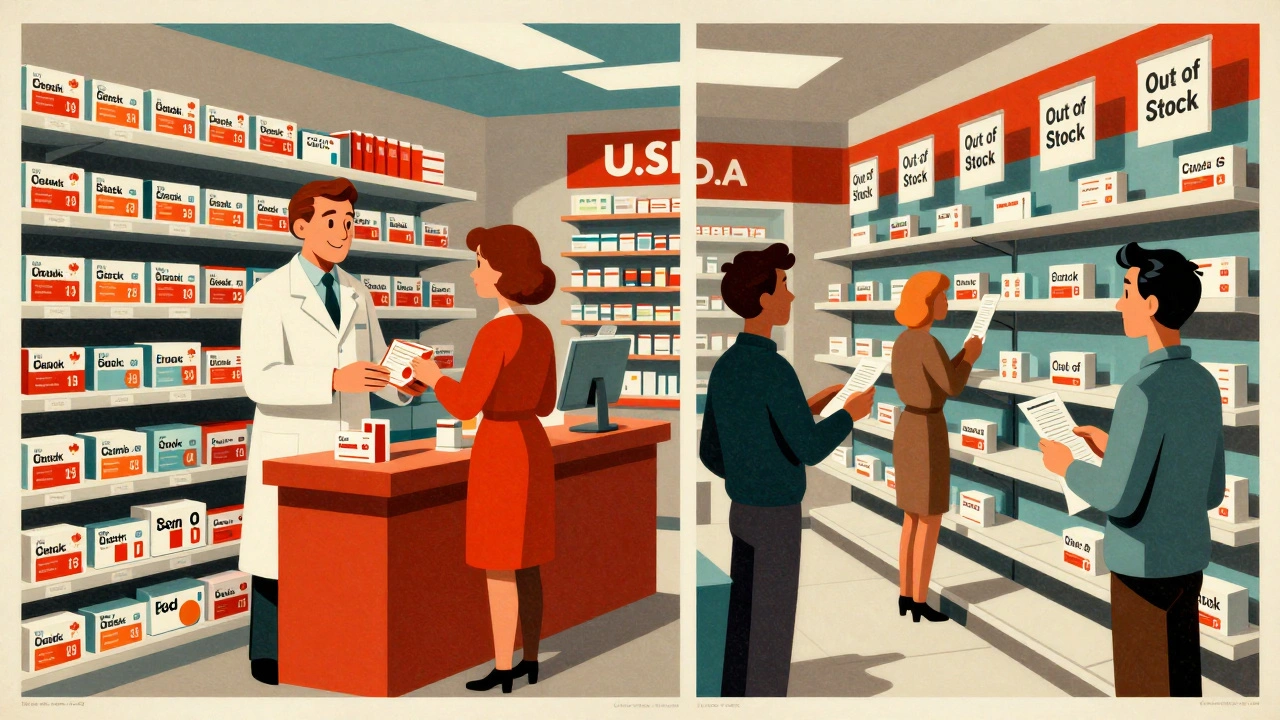
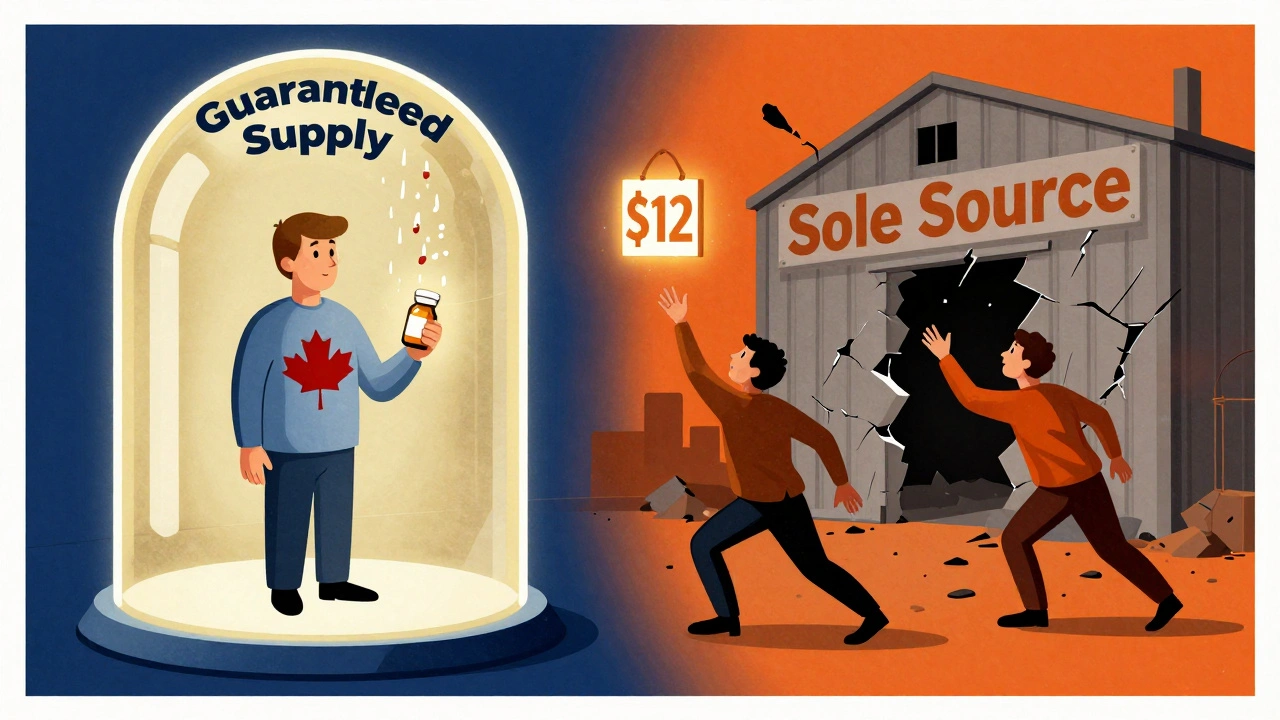
When you fill a prescription for a generic drug, what you pay can depend more on which side of the border you live on than on the medicine itself. In Canada, a 90-day supply of generic atorvastatin might cost you $45 CAD. In the U.S., the same amount could cost just $12. But if that drug suddenly disappears from shelves, your chances of getting it back might be better in Canada. This isn’t a glitch-it’s the result of two completely different systems designed for different goals.
Canada’s System: Controlled Prices, Stable Supply
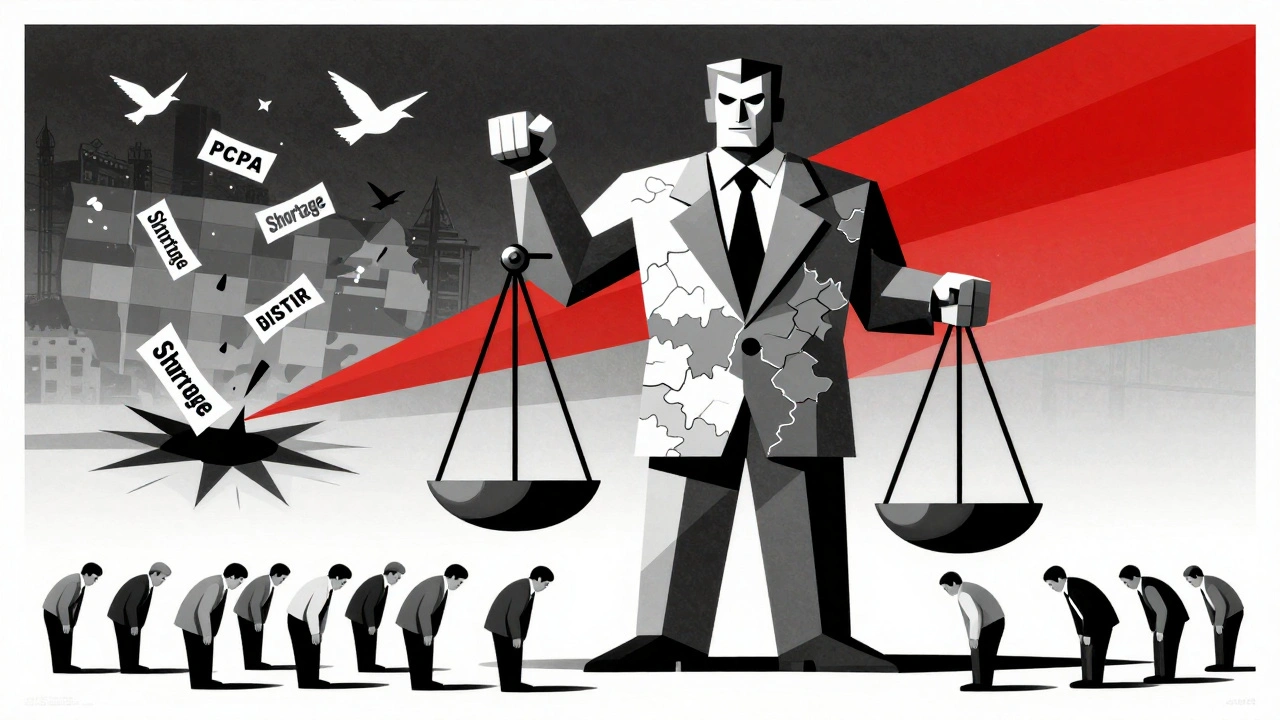
Canada doesn’t let the market set prices for generic drugs. Instead, it uses the pan-Canadian Pharmaceutical Alliance (pCPA) a coordinated body of provincial and territorial health ministries that negotiates drug prices on behalf of public drug plans to lock in prices before generics even hit the market. This started in 2010 and was renewed in October 2023 with a new three-year pricing framework. The goal? Keep drug costs predictable for public insurers who cover 42% of all prescriptions.The pCPA doesn’t just negotiate once-it keeps renegotiating. After a brand-name drug loses its patent, manufacturers have to wait 18 to 24 months before the pCPA finalizes the price for generics. That’s slow compared to the U.S., but it’s intentional. Canada’s system avoids the wild price swings you see south of the border. Instead, it creates a steady, predictable cost structure for hospitals and pharmacies.
There’s a catch: Patented Medicine Prices Review Board (PMPRB) a federal agency that regulates the prices of brand-name drugs in Canada, but has no authority over generic drugs controls prices for brand-name drugs, but it doesn’t touch generics. That means generic drug makers face no federal price cap. With fewer competitors in Canada-only about 3.8 manufacturers per generic drug, compared to 7.3 in the U.S.-prices don’t always drop as low as they could. That’s why 33% of generic drugs in Canada actually cost more than in the U.S., according to the Fraser Institute.
The U.S. System: Free Market, Low Prices, Unstable Supply
The U.S. has no national price controls on generic drugs. Once a patent expires, multiple manufacturers jump in, and prices crash. In six months, the same drug can drop 80-90% in price. That’s why U.S. pharmacies often list generic drugs at $4 to $10 for a 30-day supply. PharmacyChecker found that 88% of top-prescribed generics are cheaper in the U.S.-on average, 68% cheaper than in Canada.But that low price comes with a trade-off: instability. The U.S. has more manufacturers, yes-but that also means more companies can exit the market if profits shrink. When one manufacturer stops making a drug, there’s often no backup. In 2022, the U.S. saw double the shortage risk for sole-sourced generic drugs compared to Canada. A drug like albuterol inhalers? Patients in Seattle waited weeks. In Calgary, Health Canada stepped in, rerouted supply, and kept hospitals stocked.
Pharmacists in the U.S. spend less time managing prices-because there are too many of them. GoodRx reports that 63% of U.S. patients have to check three or more pharmacies just to find the lowest price. In Canada, prices are standardized across provinces, so pharmacists only need to check one source. But that also means less flexibility. If a patient needs a cheaper alternative, they’re stuck with the pCPA-set price.
Why Do Generic Prices Differ So Much?
It’s not about quality. Both countries follow the same FDA and Health Canada standards for generic drug safety and effectiveness. The difference is in scale and strategy.Canada has about 18 major generic manufacturers. The U.S. has over 70. Canada’s population is one-tenth the size of the U.S.’s. That means fewer customers for each manufacturer. With less competition, manufacturers can hold prices higher without losing market share.
Meanwhile, in the U.S., the race to be the cheapest drives prices down. But when prices get too low, manufacturers quit. That’s why 90% of drug shortages in both countries involve generics-and why sole-source drugs are a bigger problem in the U.S. One company makes it. If they shut down? No backup.
Canada’s system is designed to prevent that. Health Canada actively tracks supply chains, works with manufacturers to prevent shortages, and even allows private labeling so pharmacies can step in with alternative suppliers. The U.S. FDA reacts after shortages happen. Canada tries to stop them before they start.
Who Pays More? Who Gets More?
On paper, the U.S. spends more per person on drugs-$1,432 in 2021 versus Canada’s $814. But that’s because the U.S. pays high prices for brand-name drugs. For generics, Canada often pays more.Still, Canada’s system saves billions overall. The Canadian Generic Pharmaceutical Association says the pCPA has saved over $4 billion in the last decade. That money goes back into public health funding. The U.S. saves less because its system doesn’t coordinate buying power. Each state, insurer, and pharmacy negotiates separately.
Canada’s generic dispensing rate is 83%. The U.S. is at 90%. That gap isn’t because Canadians are resistant to generics-it’s because the pCPA takes longer to approve and price new generics. A new generic drug approved in the U.S. takes an average of 8.2 months longer to appear in Canada.
Real People, Real Experiences
On Reddit, a user in Ontario posted about paying $45 for 90 days of generic atorvastatin. A friend in Ohio paid $12. The Canadian user didn’t complain about the price-he said he never had to worry about running out when shortages hit.On nursing forums, a pharmacist in Calgary remembered the 2022 albuterol shortage. Her hospital got priority supply through Health Canada’s intervention. Her sister’s hospital in Seattle couldn’t get any for weeks.
U.S. users on PharmacyChecker rate their pharmacies higher for price consistency. But Canadian users rate their system higher for reliability. In a 2023 survey, 68% of Canadians reported no access issues with essential generics. Only 49% of Americans said the same.
What’s Next?
The U.S. is starting to look at Canada’s model. Vermont, Colorado, and soon Florida, have passed laws to import cheaper drugs from Canada. But Canada has pushed back. In January 2023, it launched the Supply Chain Resilience Framework to prevent its own shortages from being drained by U.S. buyers.Canada’s generic prices are expected to rise 15-20% by 2025 due to global supply chain pressures. The U.S. expects its generic prices to drop another 5-8% annually through 2026.
Neither system is perfect. The U.S. gets low prices but risks shortages. Canada gets stability but pays more for generics. The real question isn’t which is better-it’s what you value more: lower cost or guaranteed access.
Why are generic drugs more expensive in Canada than in the U.S.?
Canada doesn’t have federal price controls on generic drugs, and its smaller market supports fewer manufacturers-about 3.8 per drug versus 7.3 in the U.S. With less competition, prices don’t drop as low. The pCPA negotiates prices slowly, and manufacturers don’t face the same pressure to undercut each other. Meanwhile, the U.S. has dozens of manufacturers competing to be the cheapest, driving prices down rapidly.
Does Canada have generic drug shortages?
Yes, but less frequently than the U.S. Canada’s Health Canada actively monitors supply chains and intervenes when shortages are predicted. They work with manufacturers to increase production, approve alternative suppliers, and prioritize essential drugs. In contrast, the U.S. FDA typically responds after shortages occur, leading to longer delays in access.
Can Americans buy cheaper drugs from Canada?
Legally, no-unless the U.S. government approves importation. While states like Vermont and Colorado have passed laws allowing it, the federal Department of Health and Human Services has never authorized it. Canada has also tightened its own supply rules to prevent its drug supply from being drained by U.S. buyers.
Which system is better for patients?
It depends on what you need. If you want the lowest possible price and can find a reliable pharmacy, the U.S. wins. If you need consistent access to essential drugs during shortages, Canada’s system offers more reliability. U.S. patients pay less but risk running out. Canadian patients pay more but rarely face gaps in supply.
Why does Canada take longer to approve generic drugs?
Canada’s pCPA must negotiate prices with manufacturers before a generic can be widely dispensed. This process can take 18-24 months after patent expiry. In the U.S., generics enter the market as soon as they’re approved, and competition drives prices down quickly. Canada prioritizes cost control over speed, which delays availability but helps manage long-term spending.
Do Canadian pharmacists handle generics differently than U.S. pharmacists?
Yes. Canadian pharmacists spend 5-7 hours a week managing price tiers and pCPA rules, since pricing is standardized but complex. U.S. pharmacists spend less time on pricing but more time navigating dozens of private insurer formularies and trying to find the lowest price across multiple pharmacies. The U.S. system is fragmented; Canada’s is centralized but rigid.
Aileen Ferris
December 10, 2025 AT 18:11Jack Appleby
December 11, 2025 AT 03:39Frank Nouwens
December 11, 2025 AT 15:56Kaitlynn nail
December 13, 2025 AT 10:40Nikki Smellie
December 15, 2025 AT 08:52Michelle Edwards
December 15, 2025 AT 09:48Sarah Clifford
December 15, 2025 AT 14:19Ben Greening
December 16, 2025 AT 20:49Paul Dixon
December 16, 2025 AT 23:53Monica Evan
December 17, 2025 AT 02:19Taylor Dressler
December 17, 2025 AT 08:52Aidan Stacey
December 17, 2025 AT 14:13Jean Claude de La Ronde
December 17, 2025 AT 15:57Rebecca Dong
December 18, 2025 AT 17:51