
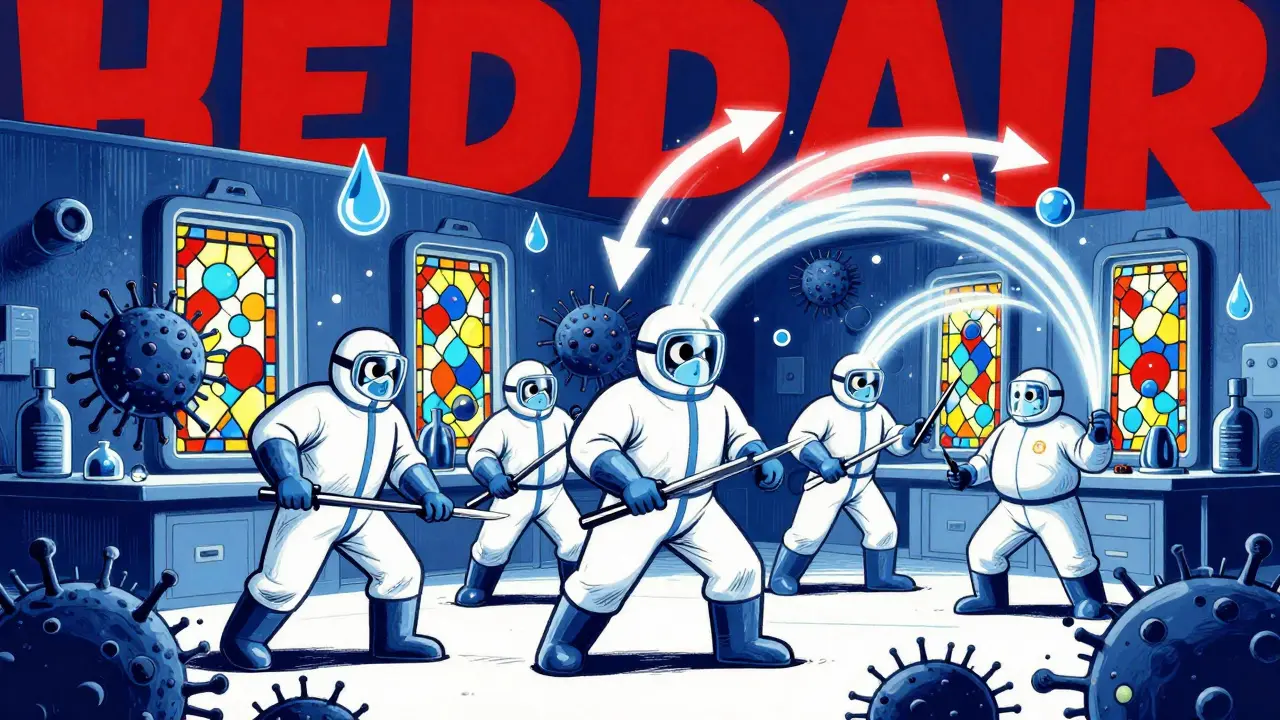
When you take a generic pill, you expect it to work just like the brand-name version. But behind that simple tablet is a complex battle against invisible threats-dust, microbes, chemical residues-that can turn a life-saving medicine into a dangerous one. Contamination control isn’t just a regulatory checkbox; it’s the line between a safe drug and a public health crisis.
Why Contamination Matters More in Generics
Generic drug manufacturers produce the same active ingredients as brand-name drugs, but at a fraction of the cost. That pressure to cut expenses makes contamination risks higher. Unlike innovator companies that often build new, dedicated facilities, many generic makers retrofit older plants or share equipment across dozens of products. One wrong cleaning step, one unsealed air vent, one compromised gown-and you’ve contaminated the next batch.The 2020 Valsartan recall wasn’t an accident. Nitrosamine impurities, formed during chemical synthesis and missed by standard tests, ended up in millions of blood pressure pills across 22 companies. The cost? Over $1.2 billion in lost product and damaged trust. That’s not a glitch. It’s a failure of contamination controls.
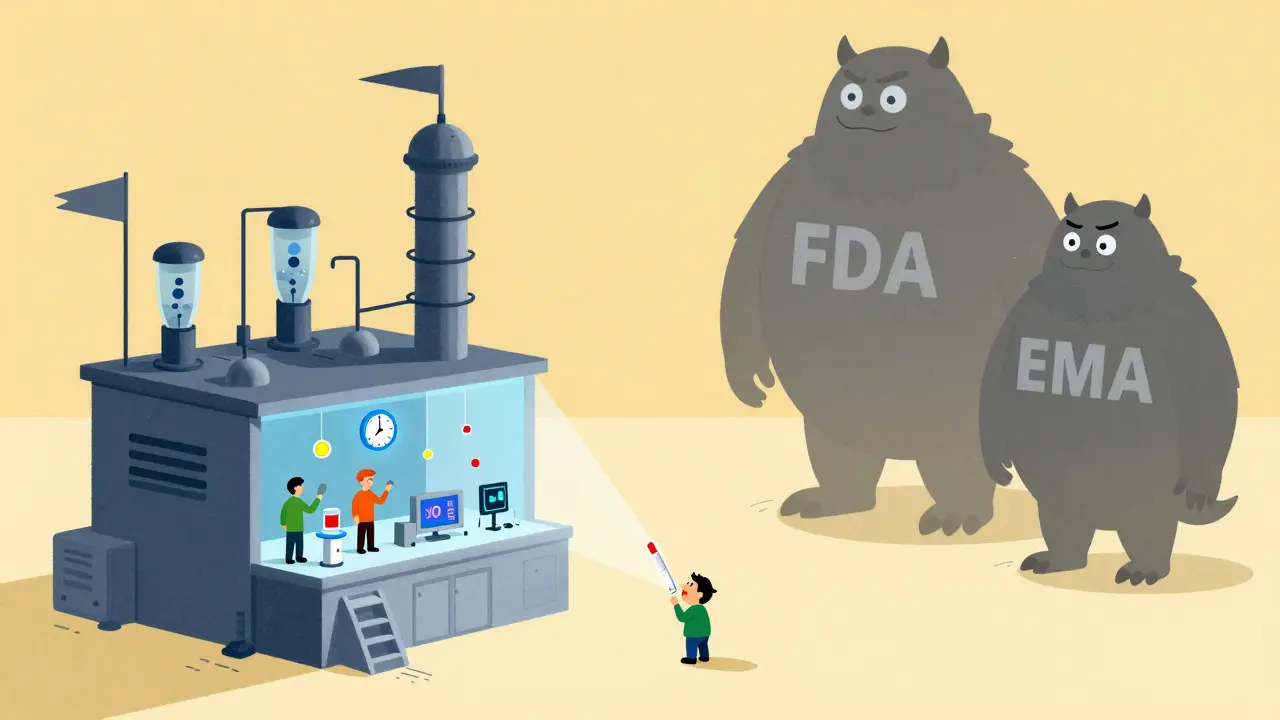
The FDA doesn’t wait for disasters to act. In fiscal year 2022, nearly 4 out of every 10 warning letters sent to drugmakers were for contamination violations. That’s more than any other type of defect. And it’s not just the FDA. The EMA, Health Canada, and other regulators are tightening inspections. If your facility doesn’t have real controls, you’re not just at risk of a recall-you’re at risk of being shut down.
What Counts as Contamination?
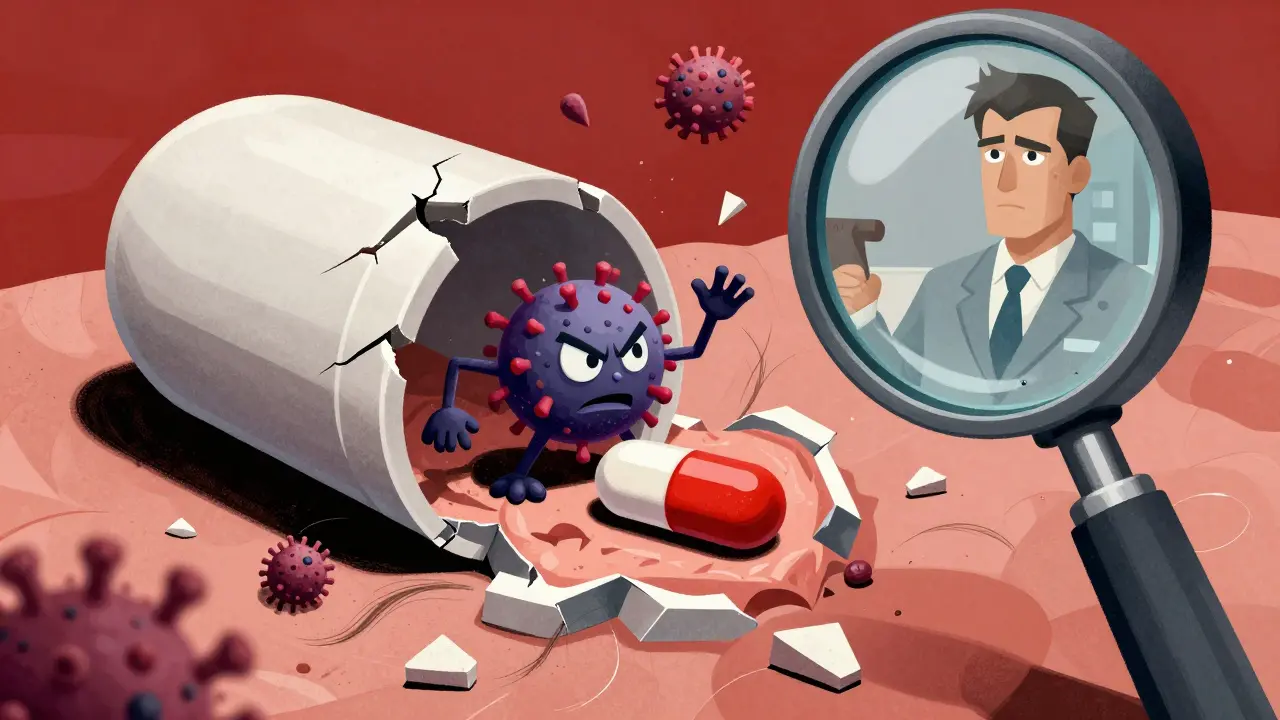
Contamination isn’t just dirt. It’s anything that shouldn’t be in your drug. That includes:- Chemical residues from previous batches-like leftover blood pressure medicine mixing into an antibiotic
- Microbial growth from poor sanitation-bacteria or mold growing in a poorly cleaned tank
- Particulates from human activity-skin flakes, hair, or fibers falling into a powder blend
- Cross-contamination from shared equipment-especially with high-potency drugs like cancer treatments
The FDA defines a drug as adulterated if it’s made under unsanitary conditions that could make it harmful. That’s not a technicality. It’s the law. And it applies to every generic manufacturer, no matter how small.
How Clean Is Clean Enough?
There’s no universal answer. Cleanliness depends on the drug. A heart medication might need to be cleaner than a vitamin because even a tiny amount of leftover chemical can cause serious harm.Regulators use health-based exposure limits (HBELs) to set safe thresholds. For example, if a potent cancer drug is made on the same line as a cholesterol pill, the residual amount left behind must be below 1 nanogram per square centimeter. That’s less than one-millionth of a grain of salt. To measure that, you need swabs, rinse samples, and advanced lab tests that can detect parts per million-or even parts per billion.
For microbial limits, the standard is ≤10 colony-forming units (CFU) per 25 cm² surface. That means if you swab a mixer and find 11 bacteria, that batch gets rejected. No exceptions.
And here’s the catch: you can’t just test the final product. The FDA says that’s a violation. You have to prove the process itself is clean. That means cleaning validation before every batch. That means monitoring air quality, personnel behavior, and equipment hygiene every single day.
The Cleanroom Rules
Most generic drug manufacturing happens in cleanrooms-controlled environments with filtered air and strict entry protocols. These aren’t fancy labs. They’re industrial spaces built like fortresses.ISO 14644-1 standards define cleanroom classes. For sterile products, you need ISO Class 5 (Grade A)-the cleanest. That means no more than 3,520 particles larger than 0.5 micrometers per cubic meter of air. To get there, you need:
- HEPA or ULPA filters that remove 99.97% to 99.999% of airborne particles
- 20 to 60 air changes per hour
- Pressure differentials of 10-15 Pascals between rooms (so air flows inward, not outward)
- Unidirectional airflow in critical zones-like laminar hoods that push clean air straight down over filling lines
But cleanrooms alone aren’t enough. A 2022 ISPE study found that facilities using real-time particle counters saw contamination incidents drop by 63%. Manual checks? They miss 78% of contamination events. Why? Because particles don’t wait for your scheduled inspection. They show up when someone opens a door, when a technician adjusts a valve, or when a gown tears.
Human Error Is the Biggest Risk
You can have the best filters, the cleanest rooms, and the most advanced equipment. But if your staff doesn’t follow the rules, it all falls apart.Industry experts say 83% of contamination events come from human factors. That’s not because workers are careless. It’s because the system is flawed.
- After 8 hours of wearing a gown, compliance drops 40%-people get tired, skip steps, touch their face
- Switching to reusable gowns without upgrading air showers led to a 30% spike in non-compliance at one Teva facility
- Color-coded equipment reduced mix-ups by 65%-simple, cheap, effective
- One batch at a time production cut cross-contamination by 53%
Training isn’t a one-time event. It’s ongoing. A 2022 survey found that cleaning validation software like ValGenesis V2 required 147 hours of training per user. That’s over three weeks of full-time learning. If you don’t invest in training, you’re setting yourself up for failure.
Technology Is Changing the Game
Old-school methods-swabbing, culturing, waiting five days for results-are no longer enough. The industry is shifting to faster, smarter tools:- ATP bioluminescence gives you microbial results in 5 minutes instead of 5 days, with 95% accuracy
- Real-time particle counters like the MetOne 3400+ alert you the moment air quality drops
- AI-powered systems like Honeywell’s Forge Pharma predict contamination risks before they happen, cutting false alarms by 68%
- Dycem CleanZone mats reduce foot-borne contamination by 72%-used by Pfizer and others
But these tools aren’t cheap. A single real-time monitor costs $15,000 to $25,000. Full systems run $500,000 to $2 million. That’s why only 89% of the top 50 generic manufacturers use them-and only 37% of small facilities do.
For smaller companies, the question isn’t just about cost. It’s about survival. The FDA’s 2023 draft guidance requires all solid oral dosage forms to have HBELs by 2025. Implementing that costs about $1.2 million per facility. For a small generic maker, that’s more than their annual profit.
The Future Is Integrated
The best-contamination control systems don’t just react-they prevent. That means combining:- Facility design (segregated suites, airlocks, unidirectional flow)
- Procedural controls (one batch at a time, color-coding, shift staggering)
- Real-time monitoring (particles, microbes, humidity)
- Risk-based cleaning validation (ICH Q9)
- Staff training and culture
McKinsey found that companies investing in integrated systems get 3.2 times the return over five years-through fewer batch failures, faster approvals, and less regulatory scrutiny. But those who wait? They’ll be left behind.
Regulators aren’t just watching. They’re pushing. The EMA found 41% of generic drug applications had contamination-related deficiencies in 2022. The FDA is increasing inspections by 27% for facilities with past violations. This isn’t a trend. It’s a new standard.
And it’s not just about safety. It’s about trust. Patients don’t care if your drug is generic. They care if it works. If it’s safe. If they can rely on it. Contamination control isn’t a cost center. It’s the foundation of your brand.
What You Can Do Now
If you’re in generic manufacturing, here’s where to start:- Map every product and process. Know what’s made where and when.
- Identify high-risk areas-shared equipment, high-potency drugs, manual cleaning steps.
- Run a risk assessment using ICH Q9. Don’t guess-analyze.
- Upgrade your cleaning validation. Replace culture methods with ATP or RMMs.
- Install real-time monitoring in critical zones-even one sensor is better than none.
- Train staff weekly. Make compliance part of the culture, not a checklist.
- Plan for HBELs. Start now. The 2025 deadline is coming fast.
Contamination doesn’t announce itself. It creeps in quietly. And when it does, the consequences are never small. The best time to fix it was yesterday. The next best time is now.
Sharleen Luciano
December 30, 2025 AT 10:24Let’s be real-most generic manufacturers are one misplaced glove away from a Class I recall. The FDA’s warning letters aren’t suggestions; they’re autopsy reports waiting to happen. And yet, you still see plants using 1990s cleaning protocols while charging $0.10 per pill. It’s not negligence-it’s arrogance dressed up as capitalism. You don’t get to cut corners on human life and call it ‘cost efficiency.’
HBELs? They’re not optional. If your facility can’t detect a nanogram of a potent compound, you shouldn’t be allowed to touch a tablet press. And don’t even get me started on those ‘color-coded equipment’ band-aids. That’s not a solution-it’s a public relations stunt while the real systemic rot continues.
I’ve seen facilities with $2M in real-time monitoring systems still fail because their QA lead was too busy playing politics to enforce SOPs. Technology doesn’t fix culture. Culture fixes culture. And right now, the culture in too many of these plants is ‘do the bare minimum until someone gets caught.’
And yes, I’m talking to you, small generic makers thinking you’re ‘too small to matter.’ The FDA doesn’t care about your revenue. They care about the 72-year-old woman who took your metformin and ended up in the ER because your cleaning validation was a PowerPoint slide. You’re not a startup. You’re a public health liability.
ICH Q9 isn’t a buzzword. It’s your lifeline. Risk-based validation isn’t ‘optional innovation’-it’s the difference between FDA approval and a federal shutdown. If you’re still using culture plates instead of ATP bioluminescence, you’re not ‘budget-conscious.’ You’re just incompetent.
And let’s not pretend the EMA or Health Canada are being ‘harsh.’ They’re just the ones who actually read the science. The US has been asleep at the wheel for a decade. This isn’t regulation-it’s damage control.
Jim Rice
December 31, 2025 AT 11:08Everyone’s panicking about contamination-but nobody’s asking why we even need generics to be this expensive to make. If you’re spending $1.2M on HBEL compliance, why not just make the brand-name drug? The whole system is rigged. Big Pharma owns the patents, then cries when generics try to compete. Now they want us to spend millions to prove they’re not poisoning people? That’s not safety-that’s extortion.
And who says one batch at a time is the answer? That’s just a way to slow production and jack up prices. We’re supposed to believe that a $0.05 pill needs a $2M cleanroom? That’s not science. That’s corporate theater.
Real-time particle counters? Cute. But if your staff is still touching their face after 8 hours in a gown, no sensor in the world is going to save you. The problem isn’t tech-it’s the fact that we treat pharmacy workers like disposable cogs. Pay them better. Train them like professionals. Stop treating them like janitors in lab coats.
Tamar Dunlop
January 1, 2026 AT 22:00As a Canadian pharmacist who has worked in both public and private sector manufacturing, I find this discussion both vital and deeply sobering. The standards outlined here are not merely regulatory-they are ethical imperatives. In our healthcare system, where access to medication is a right, not a privilege, the integrity of every tablet is non-negotiable.
I recall a visit to a small generic facility in Ontario that had implemented ATP bioluminescence monitoring. The difference was palpable. Staff moved with purpose. Supervisors engaged in real-time troubleshooting. There was no fear of inspection-only pride in precision. This is what accountability looks like when it is rooted in dignity, not dread.
It is heartbreaking to witness how economic pressures have eroded the foundational ethos of pharmaceutical manufacturing. We are not producing widgets. We are producing trust. And trust, once broken, is nearly impossible to rebuild.
May I humbly suggest that the next step is not merely compliance, but the cultivation of a culture where every technician, from the floor to the boardroom, sees themselves as a guardian of life? That is the true measure of excellence.
David Chase
January 2, 2026 AT 23:29OKAY SO LET ME GET THIS STRAIGHT 🤯
WE'RE TELLING SMALL COMPANIES THEY NEED TO SPEND $1.2M JUST TO MAKE A PILL THAT COSTS 5 CENTS???
AND YOU WANT ME TO BELIEVE THAT'S 'SAFETY' AND NOT JUST BIG PHARMA'S WAY TO KILL COMPETITION???
THE FDA ISN'T PROTECTING US-THEY'RE PROTECTING BRANDS!!! 🤬
EVERY TIME SOMEONE SAYS 'REGULATIONS' I THINK 'CORPORATE BARRIERS TO ENTRY' 😤
AND DON'T EVEN GET ME STARTED ON 'ONE BATCH AT A TIME'-THAT'S JUST A WAY TO MAKE DRUGS MORE EXPENSIVE AND SLOW DOWN ACCESS!!!
THE REAL CONTAMINATION IS THE SYSTEM ITSELF. 💀
Emma Duquemin
January 3, 2026 AT 06:00Okay, I just read this and I’m literally shaking. This isn’t just about pills-it’s about trust in medicine. I have a cousin who takes blood pressure meds and she didn’t even know about the Valsartan recall until her pharmacist called her. She cried. Not because she was scared of the drug-but because she realized she had no idea if the $3 pill she buys every month was even safe.
And then I thought: what about the grandma in rural Alabama who can’t afford brand-name? What if her only option is a generic made in a plant where the air filters are old and the workers are exhausted?
But here’s the GOOD news-we can fix this. Real-time sensors? YES. Color-coded equipment? YES. Weekly training? YES. One batch at a time? YES. It’s not rocket science. It’s just… doing the damn thing.
And to all the small manufacturers reading this: you don’t need to buy the whole $2M system tomorrow. Start with one sensor. One new SOP. One trained employee. Momentum builds. Trust is earned. And we need you to be the heroes here.
Let’s not wait for another recall. Let’s make contamination history. 💪💊
Duncan Careless
January 4, 2026 AT 03:34Interesting piece. I’ve worked in pharma QA in the UK and the emphasis on process validation over final product testing is absolutely correct. Too many assume the lab results are the endgame-when in fact, the process is the only true guarantee.
That said, I’ve seen facilities with perfect compliance records still have contamination events because someone forgot to change their gloves after a bathroom break. No sensor catches that. Only culture does.
Training isn’t a checkbox. It’s a ritual. Daily huddles. Peer feedback. Recognition for catching near-misses. That’s what turns a facility from compliant to exceptional.
And yes-smaller companies are struggling. But maybe the answer isn’t more tech. Maybe it’s collaboration. Shared validation protocols. Regional cleanroom hubs. Innovation doesn’t always mean buying new equipment.
Samar Khan
January 6, 2026 AT 01:42Ugh. Another boring pharma lecture. 😴
Everyone’s acting like contamination is some new threat. Newsflash: drugs have always been sketchy. People die from brand-name pills too. Why is it only the generics getting crucified?
Also, who cares if there’s a nanogram of something in your pill? You think your kale smoothie is pure? 😂
STOP SCAREMONGERING. JUST TAKE THE PILL. 🤷♀️
Russell Thomas
January 7, 2026 AT 01:07Wow. So we’re supposed to believe that a $0.10 pill needs a $2 million cleanroom? That’s not science-it’s corporate welfare for equipment vendors.
And let’s not pretend the FDA gives a damn about patients. They care about headlines. They don’t want to be on the news because some old lady died from a pill made in a facility that couldn’t afford a $15k sensor.
Here’s the real contamination: the belief that profit and safety are mutually exclusive. They’re not. But you’d never know that from this overwrought, fear-driven manifesto.
Fix the system. Don’t bankrupt the small guys to make regulators look good.
Joe Kwon
January 8, 2026 AT 08:26Great breakdown. I’ve been implementing ICH Q9 risk assessments at my facility and the shift from ‘checklist compliance’ to ‘risk-based decision-making’ has been transformative. We identified a high-risk cross-contamination zone we’d been ignoring for years-turned out it was a shared dryer for two non-related APIs. Fixed it with a $300 partition and a new SOP. No new equipment needed.
Also, color-coding? Genius. We switched our cleaning tools to color-coded handles-red for high-potency, blue for vitamins-and our error rate dropped 70%. Simple, low-cost, high-impact.
And yes-training is everything. We started doing 15-minute daily huddles with QA and line staff. Now people report near-misses instead of hiding them. Culture change > tech upgrade.
Small manufacturers: you don’t need to match Pfizer. You need to be intentional. Start small. Document everything. And never underestimate the power of a clean gown and a well-rested worker.
Nicole K.
January 8, 2026 AT 12:51This is disgusting. People are dying because some companies are too cheap to clean their machines. That’s murder. And the government lets it happen. I’m never buying another generic pill again. I don’t care how much it costs. I’d rather pay $100 than risk my life for a $3 pill made by someone who doesn’t care.
Sharleen Luciano
January 8, 2026 AT 22:07And yet, Nicole, you still buy generic insulin. You just don’t think about it. Because you can’t afford the brand. And that’s the cruel irony of this whole system. The people who need cheap medicine the most are the ones most at risk from poor controls. You want to boycott generics? Good luck finding a $200/month alternative. The system isn’t broken because of greed-it’s broken because we let greed become policy.