
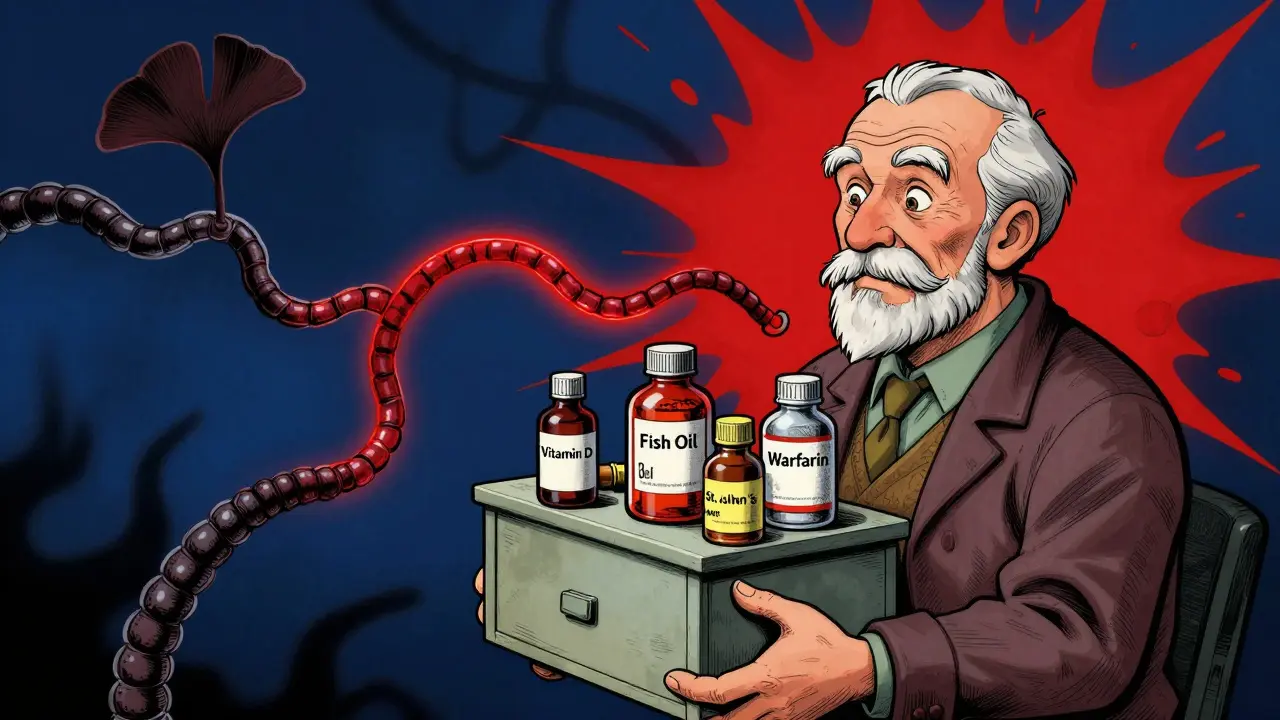
More than 85% of adults over 60 in the U.S. take dietary supplements - vitamins, herbs, fish oil, probiotics - while also juggling four or five prescription drugs. That’s a recipe for trouble if no one’s checking what’s happening when these mix. You might think, It’s just a pill from the store, but supplements aren’t harmless. They can turn your blood thinner into a danger, make your antidepressant useless, or cause your transplant medication to drop to dangerous lows. And most doctors never ask about them.
How Supplements Interfere With Your Medications
Supplements don’t work like candy. They’re chemically active. When you take them with drugs, two things usually happen: either the supplement changes how much of the drug gets into your blood, or it changes how your body responds to the drug.
The first kind - pharmacokinetic - messes with absorption, metabolism, or elimination. For example, magnesium in antacids can bind to antibiotics like ciprofloxacin and stop them from being absorbed. One study found absorption dropped by up to 90%. That means the antibiotic doesn’t work, and your infection keeps growing.
The second kind - pharmacodynamic - changes how your body reacts. St. John’s wort, a popular herb for mood, turns on liver enzymes that break down drugs too fast. If you’re on cyclosporine after a transplant, this can slash its levels by 57%. Your body rejects the new organ. If you’re on warfarin, St. John’s wort can make your INR spike - or crash - increasing your risk of stroke or bleeding. In one documented case, a patient’s INR jumped from 2.5 to 7.1 after starting St. John’s wort. That’s a life-threatening level.
Top 5 Dangerous Combinations You Can’t Ignore
- Warfarin + Vitamin K, Ginkgo, or St. John’s wort: Warfarin thins your blood. Vitamin K reverses that effect. Ginkgo and St. John’s wort can make bleeding worse. A single dose of ginkgo combined with warfarin has sent people to the ER with internal bleeding.
- Statins + Red Yeast Rice: Red yeast rice contains lovastatin - the same active ingredient as the prescription drug Mevacor. Taking it with another statin like simvastatin can cause rhabdomyolysis, a condition that destroys muscle tissue and can lead to kidney failure.
- Levothyroxine + Calcium or Iron Supplements: Calcium in antacids or multivitamins can block levothyroxine from being absorbed. One study showed absorption dropped by 25-50%. That means your thyroid levels stay low, and you’re still tired, gaining weight, and depressed - even though you’re taking your pill.
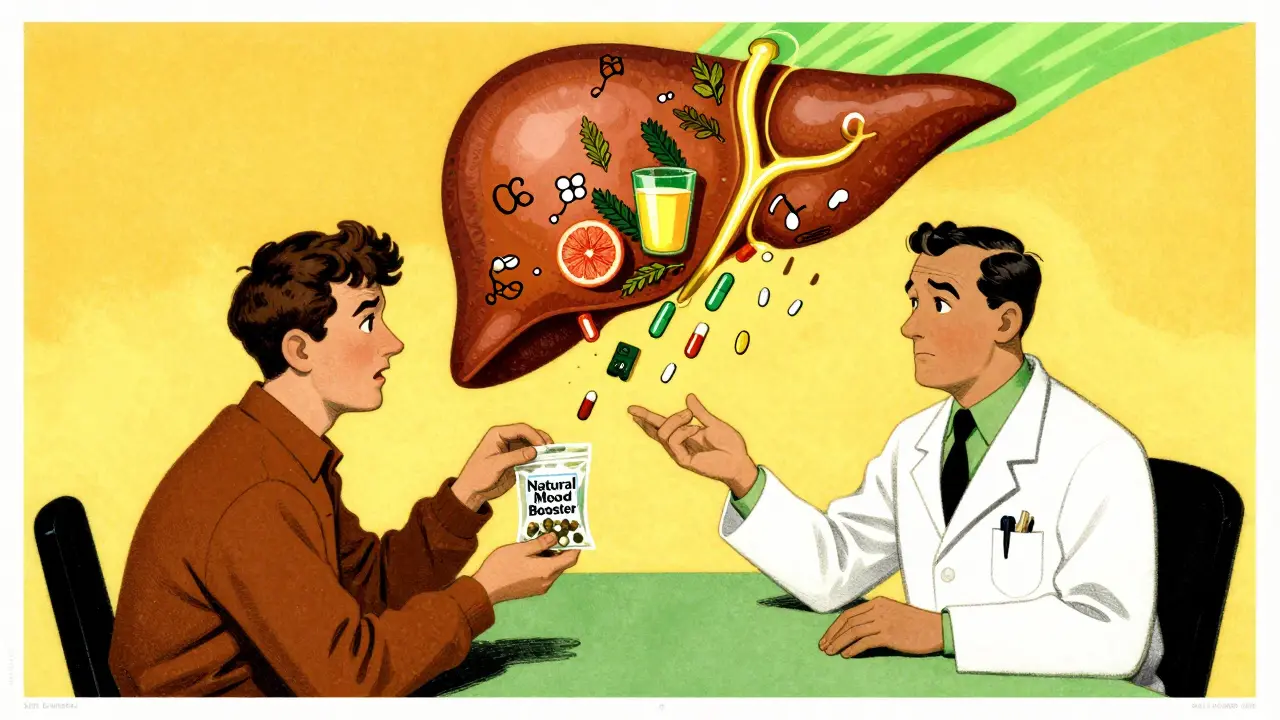
- Immunosuppressants + Grapefruit Juice or Goldenseal: Grapefruit juice blocks enzymes that break down drugs like cyclosporine and tacrolimus. This causes levels to rise dangerously, increasing the risk of kidney damage and infection. Goldenseal does the same thing - and many people don’t realize it’s in their cold remedy.
- SSRIs + St. John’s wort or 5-HTP: Combining these can trigger serotonin syndrome - a rare but deadly condition with high fever, seizures, and muscle rigidity. It’s not theoretical. The FDA has documented multiple cases.
Why Your Doctor Doesn’t Know What You’re Taking
Ask 10 people if they tell their doctor about their supplements. Nine will say yes. Then ask the doctor. Eight will say no. There’s a disconnect.
Patients assume supplements are safe because they’re sold over the counter. They think, My doctor doesn’t care about supplements. One Reddit user wrote: "My doctor doesn’t know anything about supplements anyway." That’s a common belief - and it’s deadly.
Doctors don’t ask because they’re not trained to. A 2020 study found only 32% of pharmacists could correctly identify major supplement-drug interactions. After a four-hour training course? That jumped to 87%. The problem isn’t ignorance - it’s lack of systems.
Supplement labels rarely warn about interactions. The FDA doesn’t require it. A 2022 NCCIH report found 78% of supplement labels had no interaction warnings - even when the risks were well-documented. You’re expected to know this on your own.
Herbs Are the Biggest Risk - Here’s Why
Not all supplements are equal. Vitamins and minerals? Usually low risk. But herbs? They’re potent. They’re complex. And they’re poorly regulated.
Herbal supplements make up only 15% of supplement sales, but they cause 65% of severe interactions reported to the FDA. Why? Because they contain dozens of active compounds. St. John’s wort alone has over 100 known chemicals that affect liver enzymes. Goldenseal contains berberine, which blocks the same enzyme pathway as grapefruit juice. And no one knows what’s in most herbal products.
A 2019 JAMA Internal Medicine study tested 44 herbal supplements. One in five contained unlisted pharmaceuticals - like sildenafil in “natural” male enhancement pills, or steroids in joint pain creams. These aren’t mistakes. They’re intentional. Manufacturers add drugs to make products work faster - and avoid the cost of clinical trials.
What You Should Do Right Now
You don’t need to stop supplements. But you need to take control.
- Make a list. Write down every pill, capsule, powder, and tea you take - even the ones you’ve had for years. Include brand names and doses.
- Bring it to every appointment. Don’t wait to be asked. Say: "I’m taking these supplements. Can you check if they interact with my meds?"
- Use trusted resources. Check the Natural Medicines Database or NIH’s LiverTox. If your pharmacist doesn’t have access, ask for a printed sheet.
- Watch for warning signs. Unexplained bruising, fatigue, confusion, muscle pain, or sudden changes in mood or heart rate? It could be an interaction. Call your doctor - don’t wait.
- Report bad experiences. If something goes wrong, report it to the FDA’s MedWatch program. It’s the only way we’ll fix this system.
What’s Changing - And What’s Not
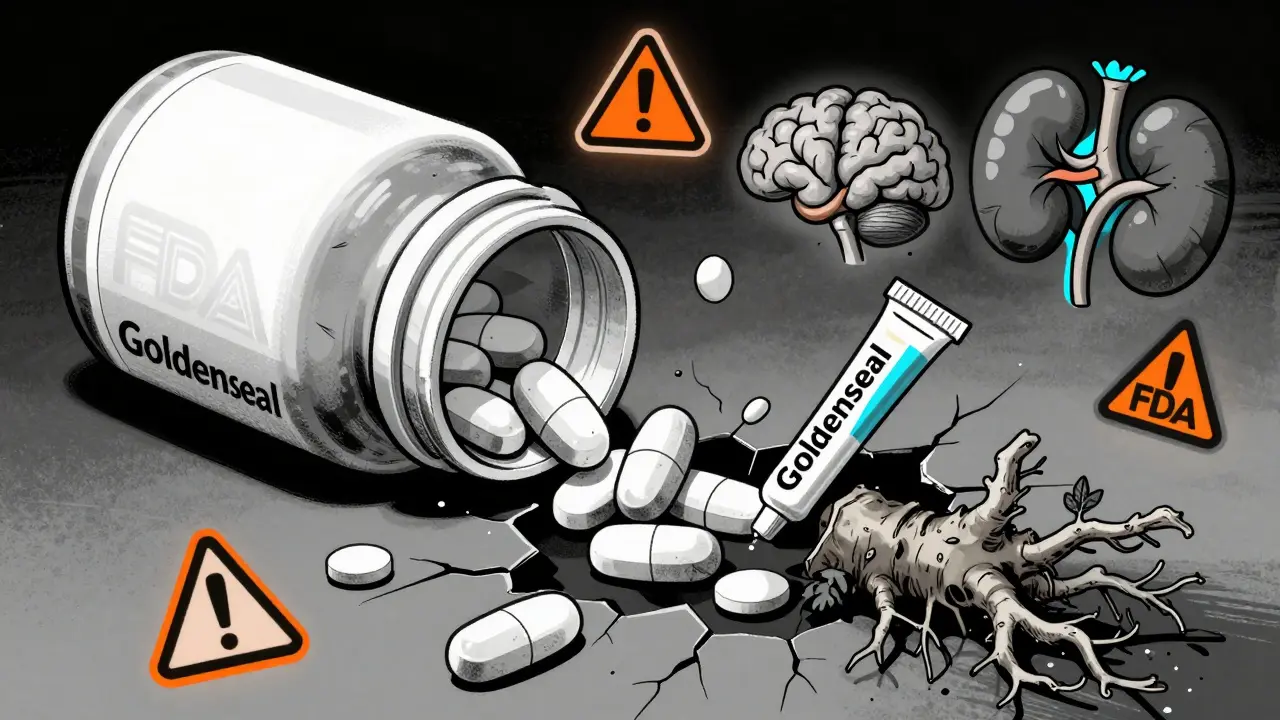
The FDA can’t force supplement makers to prove safety before selling. That’s the law - the Dietary Supplement Health and Education Act of 1994. The FDA can only act after someone gets hurt. That’s like letting a car company sell a model with no brakes, then pulling it off the road after a crash.
There’s momentum for change. In 2023, Congress proposed the Dietary Supplement Labeling Act, which would require interaction warnings on high-risk products. The NCCIH is funding $15.7 million in new research by 2025. But until regulations catch up, the burden is on you.
Industry doesn’t help. Only 12% of major supplement manufacturers run formal interaction studies. Most rely on old animal studies or anecdotes. The market is growing fast - projected to hit $82 billion by 2028 - but safety isn’t keeping pace.
Bottom Line: Knowledge Is Your Only Protection
Supplements aren’t the enemy. But assuming they’re safe is. The truth is simple: if you take medication, you need to treat every supplement like a drug - because in your body, that’s what it is.
You’re not alone. 77% of Americans take supplements. Most don’t know the risks. But you do now. Don’t wait for a crisis. Don’t assume your doctor knows. Take your list. Ask the questions. Make sure your next doctor’s visit isn’t the first time you’ve talked about what’s in your medicine cabinet.
Vince Nairn
January 7, 2026 AT 08:27Ayodeji Williams
January 8, 2026 AT 03:49Kyle King
January 8, 2026 AT 11:05Kamlesh Chauhan
January 9, 2026 AT 20:30Emma Addison Thomas
January 11, 2026 AT 01:53Mina Murray
January 11, 2026 AT 03:02Rachel Steward
January 12, 2026 AT 11:38Christine Joy Chicano
January 12, 2026 AT 21:49Adam Gainski
January 13, 2026 AT 23:27