
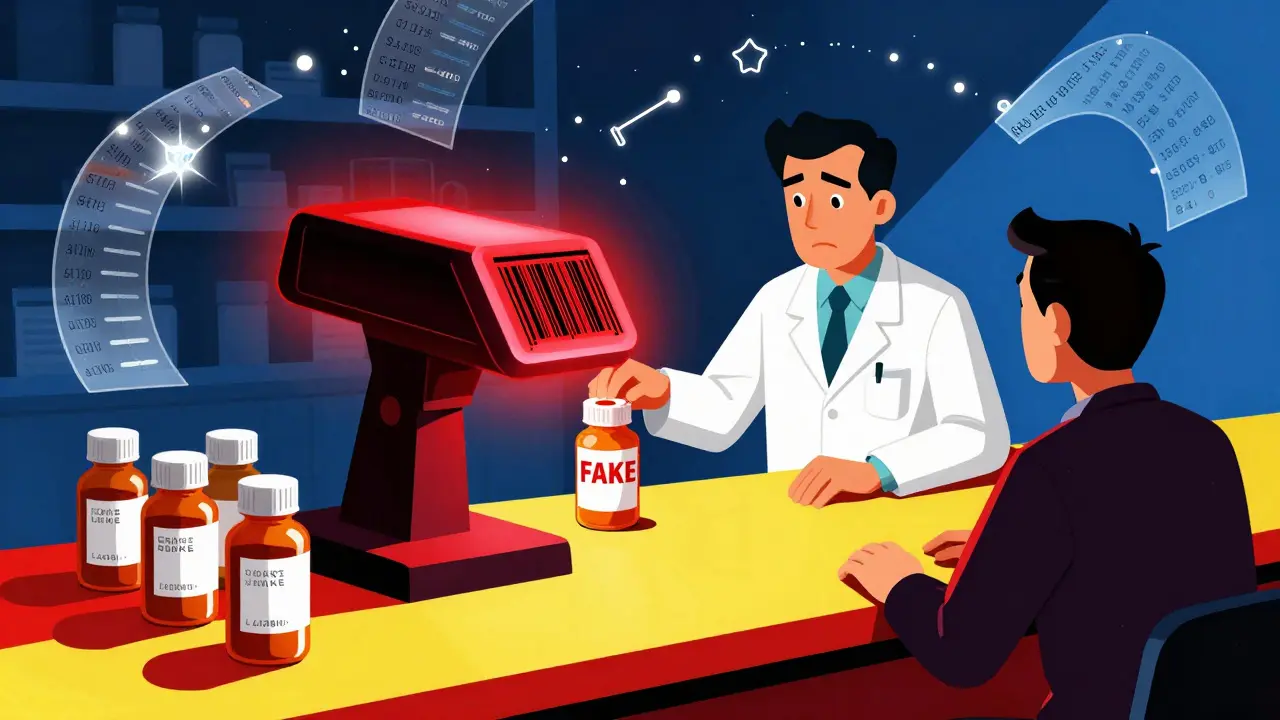
Every year, millions of Americans rely on prescription drugs to manage chronic conditions, treat infections, or survive life-threatening illnesses. But what if the pill in your bottle wasn’t made by the company listed on the label? What if it had no active ingredient - or worse, something toxic? This isn’t science fiction. Counterfeit drugs have been a growing threat for decades. In 2023, the FDA intercepted over 1.2 million fake drug packages at U.S. borders. The DSCSA track-and-trace system was created to stop this before it reaches your medicine cabinet.
What Is the DSCSA, Really?
The Drug Supply Chain Security Act (DSCSA) isn’t just another regulation. It’s the U.S. government’s answer to a broken system. Before 2013, every state had its own rules for tracking drugs. One state required paper logs. Another used barcodes. A third didn’t track anything at all. This patchwork made it easy for counterfeiters to slip fake drugs into the supply chain - especially when drugs crossed state lines. The DSCSA, signed into law in November 2013, replaced all that with one federal standard. Its goal? Make sure every prescription drug package can be traced from manufacturer to pharmacy.By November 27, 2024, every single prescription drug sold in the U.S. must have a unique identifier. That means each bottle, blister pack, or vial carries a serial number, lot number, expiration date, and the National Drug Code (NDC). All of this is printed in both human-readable text and machine-readable barcode format. Think of it like a digital fingerprint for every pill.
How the System Works: The Three E’s
The DSCSA doesn’t just require labels - it demands electronic communication. Every time a drug changes hands - from manufacturer to wholesaler, from wholesaler to pharmacy - three key pieces of data must be shared electronically:- Transaction Information (TI): What’s being shipped? The NDC, lot number, expiration date, and serial number.
- Transaction History (TH): Where has this product been? A full chain of custody - who shipped it, when, and to whom.
- Transaction Statement (TS): A legal certification that the transaction is legitimate. No fakes allowed.
This isn’t optional. If a pharmacy receives a shipment without these three elements, it’s illegal to accept it. The system also requires verification: if a pharmacy suspects a drug is fake - maybe the barcode doesn’t scan, or the serial number doesn’t match the manufacturer’s database - they must immediately quarantine it and report it to the FDA. There’s no gray area.
Why This Matters: Real Numbers, Real Impact
Talk is cheap. Numbers tell the truth. Since the DSCSA began rolling out in phases:- The FDA estimates counterfeit drugs entering the supply chain have dropped by 95% since 2017.
- Drug recalls that used to take weeks - and shut down entire product lines - now target specific lots. One 2022 recall, triggered by a single faulty serial number, affected only 37 bottles out of 120,000 shipped. That saved pharmacies millions in wasted inventory.
- Drug diversion (theft and illegal resale) has fallen by 40% in chain pharmacies with full DSCSA compliance, according to McKesson’s 2023 report.
But it’s not perfect. A 2023 survey by the National Community Pharmacists Association found that 68% of independent pharmacies still consider DSCSA compliance their biggest tech challenge. Why? Because the system relies on data exchange - and not everyone speaks the same language.
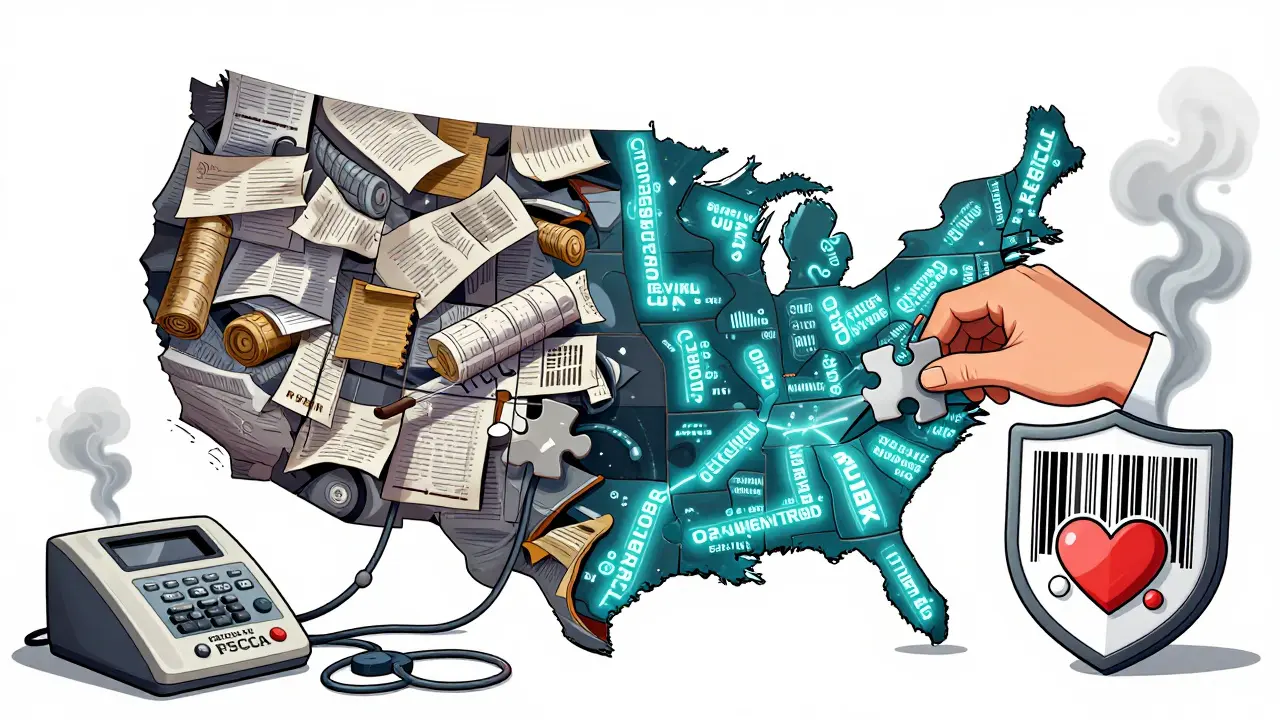
The Tech Behind the Shield
The DSCSA doesn’t use just any barcode. It follows GS1 standards - the same global system used by Walmart and Amazon to track products. Each serial number is 20 characters long, alphanumeric, and randomly generated. No repeats. No patterns. That makes cloning nearly impossible.Pharmacies need software that can:
- Scan barcodes at the point of receipt
- Send the serial number to the manufacturer’s database for verification
- Store the transaction history for 6 years (as required by law)
- Alert staff if a product is flagged as suspect
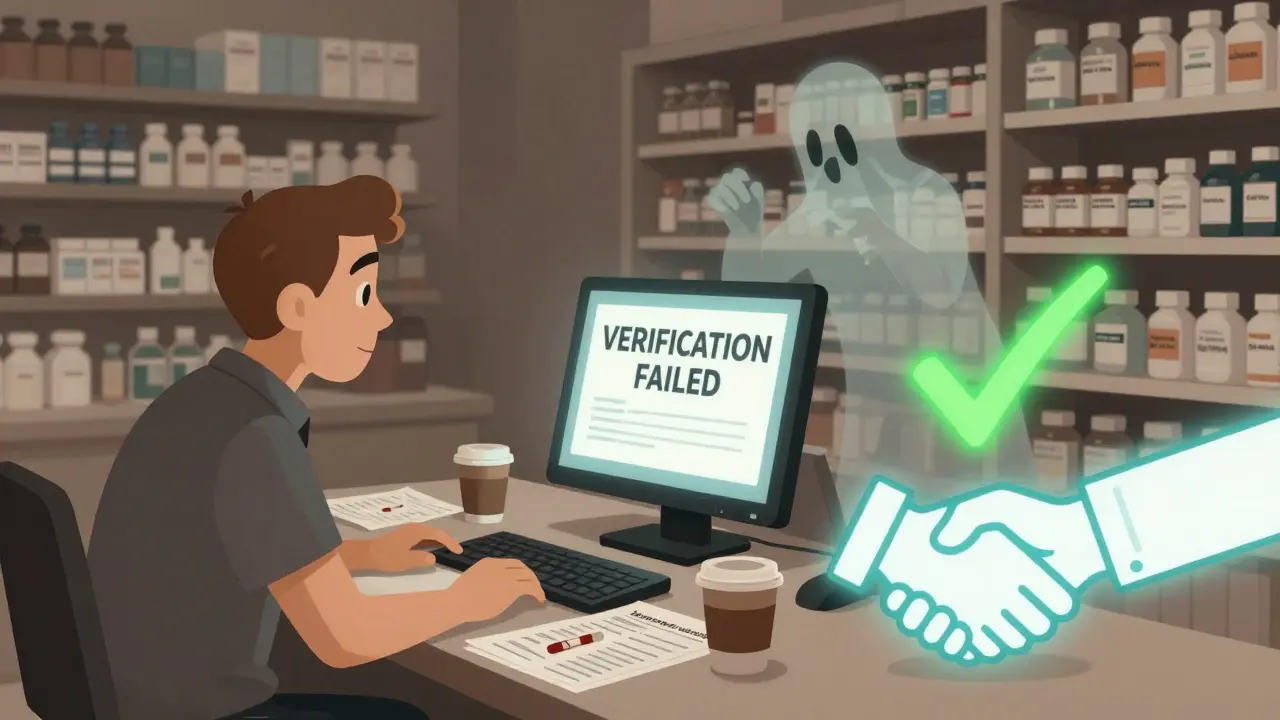
Companies like TraceLink, SAP, and Oracle dominate this space. Their platforms handle millions of transactions daily. But here’s the catch: if your pharmacy uses one vendor and your wholesaler uses another, and they don’t share the same data format - welcome to a 48-hour delay. That’s what happened at a mid-sized pharmacy in Ohio in early 2023. Their system couldn’t read the serial numbers from a new distributor. The shipment sat in the warehouse. Patients waited. The pharmacy lost $18,000 in sales.
Who’s Compliant? Who’s Not?
The data shows a clear divide:| Stakeholder | Serialization Implemented | Verification System Active |
|---|---|---|
| Manufacturers | 98% | 98% |
| Wholesale Distributors | 95% | 95% |
| Chain Pharmacies | 91% | 91% |
| Independent Pharmacies | 72% | 58% |
Big players like CVS, Walgreens, and McKesson spent millions upgrading their systems. They now process over a billion serialized transactions a year with 99.98% accuracy. But small pharmacies? Many are still using Excel sheets and fax machines. The average cost to upgrade for a single independent pharmacy? Around $185,000. That’s more than their annual profit in some cases.
The 2024 Deadline: What’s at Stake?
November 27, 2024, isn’t just a date on a calendar. It’s the final deadline. After that, any drug without a full electronic pedigree - or any pharmacy that can’t verify it - is breaking federal law. The FDA has said they’ll use enforcement discretion during a one-year stabilization period, but they won’t tolerate non-compliance after November 2024.That means:
- Pharmacies must be able to verify every drug within 24 hours of receipt.
- Wholesalers must provide full transaction data - no exceptions.
- Manufacturers must ensure every serial number is unique and traceable.
Failure to comply could mean fines, loss of license, or even criminal charges. The FDA issued a warning letter to a regional distributor in 2022 for failing to investigate suspect products. That distributor shut down six months later.
What’s Next? Beyond 2024
The DSCSA isn’t finished. The FDA is already looking ahead. In March 2023, Commissioner Dr. Robert Califf said the agency is evaluating whether to extend track-and-trace rules to certain over-the-counter drugs - especially high-risk ones like insulin, asthma inhalers, or erectile dysfunction pills. Why? Because counterfeiters are moving into these markets too.Long-term, the system is expected to save the U.S. healthcare system over $2.3 billion a year by 2027 - mostly through fewer recalls, less theft, and fewer patient harm incidents. But that only works if everyone plays by the rules.
Bottom Line: It’s Not Perfect - But It’s Working
The DSCSA track-and-trace system isn’t flawless. It’s expensive. It’s complex. It’s got glitches. But it’s the most powerful tool we’ve ever had to stop fake drugs from reaching patients. Before DSCSA, counterfeiters could hide in the gaps between state systems. Now, every package has a digital trail. If it doesn’t check out - it doesn’t move.For patients, that means safer pills. For pharmacies, it means fewer losses. For manufacturers, it means trust. And for the system to keep working? Everyone - from the biggest distributor to the smallest independent pharmacy - must get on board. The deadline is here. The stakes are real. And the medicine you take? It should be real, too.
What happens if a pharmacy can’t verify a drug’s serial number?
If a pharmacy can’t verify a drug’s serial number, they must immediately quarantine the product and report it as a suspect item to the FDA. They’re required to investigate whether it’s counterfeit, stolen, or part of a fraudulent transaction. If confirmed as illegitimate, the drug must be destroyed under FDA supervision. Failure to do so violates federal law and can lead to fines or loss of license.
Is the DSCSA the same as the EU’s Falsified Medicines Directive?
No. The EU’s Falsified Medicines Directive (FMD) requires physical anti-tampering seals and a centralized European database to verify drugs. The DSCSA doesn’t use a central database - instead, it relies on direct electronic communication between trading partners. The EU system is more rigid; the U.S. system is more flexible, but requires stronger coordination between companies.
Do I need to worry about counterfeit drugs as a patient?
Thanks to DSCSA, the risk is extremely low if you get your prescriptions from a licensed U.S. pharmacy. Counterfeit drugs are mostly found online or through unlicensed vendors. Never buy medication from websites that don’t require a prescription or can’t verify they’re a licensed pharmacy. Stick to your local pharmacy or trusted mail-order providers.
Why do some pharmacies still struggle with DSCSA compliance?
The biggest hurdles are cost and complexity. Upgrading software, training staff, and integrating with wholesalers can cost over $180,000 for a small pharmacy. Many also face technical mismatches - if their software doesn’t talk to their distributor’s system, verification fails. The FDA provides free resources, but implementation still requires significant time and expertise.
Will DSCSA apply to over-the-counter drugs in the future?
Yes, the FDA is actively considering it. High-risk OTC products like insulin pens, asthma inhalers, and certain pain relievers are under review. The goal is to prevent the same counterfeit risks that plague prescription drugs. No official timeline exists yet, but industry experts expect expansion within the next 3-5 years.
Sarah B
February 8, 2026 AT 11:36Savannah Edwards
February 10, 2026 AT 06:02Gouris Patnaik
February 11, 2026 AT 02:25Ariel Edmisten
February 12, 2026 AT 00:56Amit Jain
February 12, 2026 AT 23:49Eric Knobelspiesse
February 14, 2026 AT 12:40Heather Burrows
February 15, 2026 AT 11:34AMIT JINDAL
February 17, 2026 AT 00:59Lakisha Sarbah
February 17, 2026 AT 10:53Niel Amstrong Stein
February 19, 2026 AT 07:39Mary Carroll Allen
February 20, 2026 AT 23:04Joey Gianvincenzi
February 21, 2026 AT 13:35Tola Adedipe
February 22, 2026 AT 12:22Ritu Singh
February 24, 2026 AT 02:31