
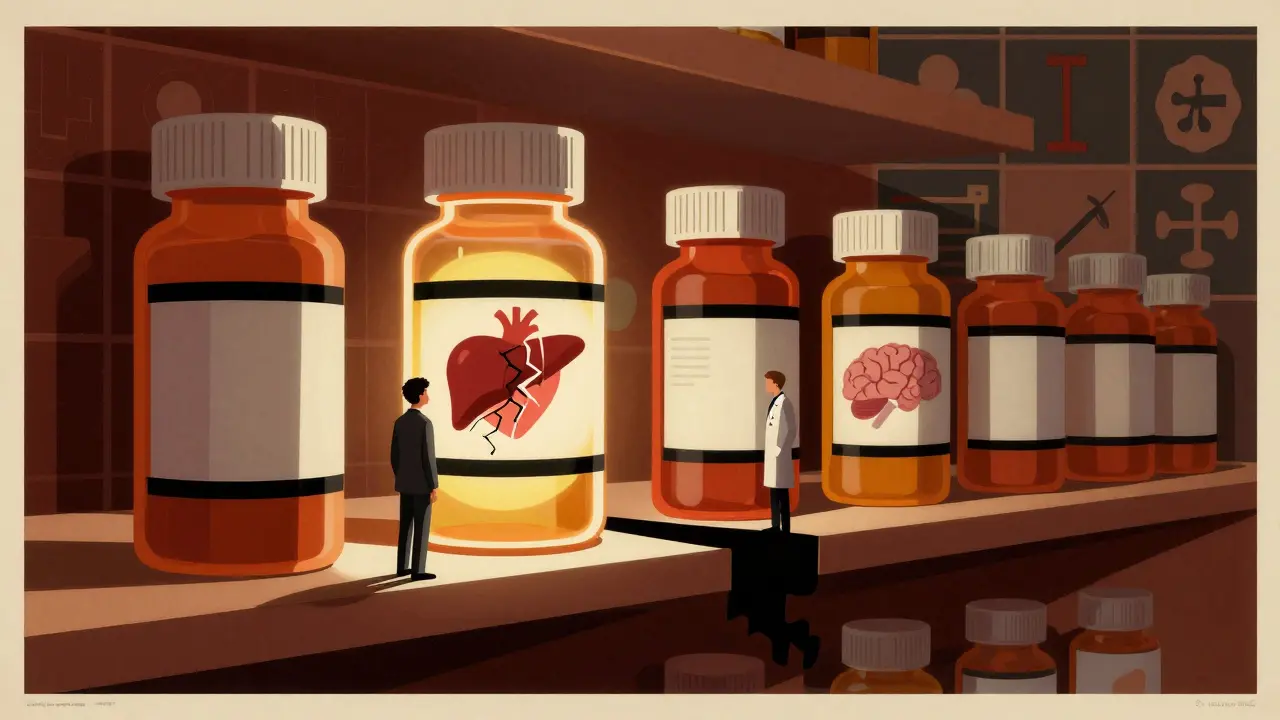
When you pick up a prescription, you might not notice the small black rectangle on the label. But that box? It’s the FDA’s loudest possible warning: this drug can kill you.
What Exactly Is a Black Box Warning?
A black box warning is the strongest safety alert the U.S. Food and Drug Administration can require on a prescription drug. It’s printed in bold black borders on the drug’s official prescribing information - right at the top, where doctors and pharmacists can’t miss it. This isn’t a gentle reminder. It’s a red flag for life-threatening risks.The FDA doesn’t slap these warnings on lightly. As of 2022, over 400 approved medications carry one. These include drugs for depression, diabetes, arthritis, cancer, and even common antibiotics. The warning appears because the FDA has seen enough evidence - from patient reports, clinical trials, or post-market surveillance - that the drug can cause death or severe injury in certain people.
Unlike mild side effects like nausea or dizziness, black box warnings highlight dangers like:
- Heart failure or sudden cardiac arrest
- Severe liver damage
- Suicidal thoughts or behavior
- Life-threatening infections
- Birth defects in unborn children
- Severe allergic reactions
These aren’t theoretical risks. They’re real, documented, and serious enough that the FDA believes the benefit of the drug must be weighed against the risk - carefully, and only with full awareness.
How Does the FDA Decide to Add a Black Box Warning?
Most people assume the FDA only adds these warnings before a drug hits the market. That’s not true. In fact, the majority come after the drug is already being used by thousands - sometimes millions - of patients.The FDA monitors safety through the FDA Adverse Event Reporting System (FAERS). Every year, they get around 1.3 million reports from doctors, pharmacists, patients, and drug companies about bad reactions. When patterns emerge - like a spike in liver failures among users of a certain diabetes drug - the agency investigates. If the data shows a clear, serious, and preventable risk, they require the black box.
Take rosiglitazone (Avandia), a diabetes drug. After studies linked it to a higher risk of heart attacks, the FDA added a black box warning in 2007. Within a year, prescriptions dropped by 70%. But here’s the twist: even after the warning, over 3.8 million patients kept taking it. Why? Because for some, the alternative was worse - uncontrolled diabetes leading to amputations or kidney failure.
That’s the point of the warning: not to scare people off entirely, but to make sure no one takes the drug without understanding the stakes.
What Does a Black Box Warning Actually Say?
It’s not just a label. It’s a detailed warning with specific instructions. For example:- Antidepressants like fluoxetine: “Increased risk of suicidal thinking and behavior in children, adolescents, and young adults.”
- Insulin glargine (Lantus): “May cause severe hypoglycemia; must be used with caution in elderly patients.”
- Warfarin (Coumadin): “Risk of fatal bleeding; requires regular blood monitoring.”
- Isotretinoin (Accutane): “Can cause severe birth defects; women must use two forms of birth control and enroll in a pregnancy prevention program.”
Some warnings include not just risks, but mandatory steps to reduce them. For high-risk drugs like clozapine (used for treatment-resistant schizophrenia), the FDA requires a special program called a REMS - Risk Evaluation and Mitigation Strategy. That means:
- Doctors must be certified to prescribe it
- Patients must have monthly blood tests to check for dangerous drops in white blood cells
- Pharmacies can only dispense it if the patient is enrolled in the tracking system
These aren’t suggestions. They’re rules. Skip them, and you’re putting someone’s life at risk.
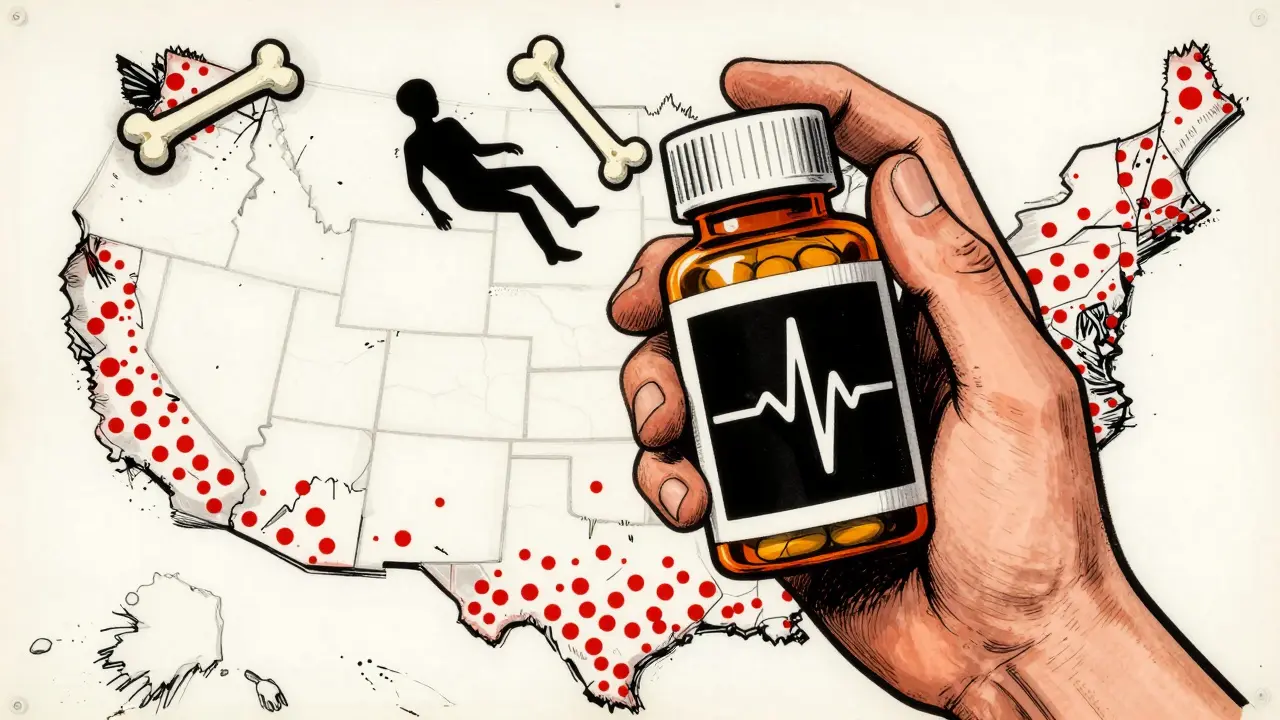
Does a Black Box Warning Mean You Shouldn’t Take the Drug?
No. Not automatically.Many patients with serious conditions have no other options. For example, cancer drugs often carry black box warnings for heart damage or nerve injury - but without them, the cancer could kill you faster. A black box warning doesn’t mean “don’t use.” It means “use with eyes wide open.”
Think of it like driving a car. The seatbelt warning doesn’t mean you shouldn’t drive. It means you must buckle up. The black box is the same: it’s telling you how to use the drug safely.
Dr. Meghan Lehmann, a pharmacist at Cleveland Clinic, puts it plainly: “If a medication you’re taking carries a risk that warrants a black box warning, that doesn’t necessarily mean you shouldn’t take it.”
What matters is context:
- Are you young and healthy, or older with multiple conditions?
- Are you taking other drugs that could interact dangerously?
- Is there a safer alternative?
- Can you be monitored closely - with blood tests, check-ups, or emergency plans?
Doctors use a framework called STEPS to decide: Safety, Tolerability, Effectiveness, Price, Simplicity. If the drug is the only thing that works, and the risk can be managed, it might still be the right choice.
What Should You Do If Your Drug Has a Black Box Warning?
Don’t panic. Don’t stop cold. Do this:- Ask your doctor: “What exactly is the risk? How common is it? What signs should I watch for?”
- Ask about alternatives: “Is there another drug without this warning that could work?”
- Ask about monitoring: “Do I need blood tests? How often? What happens if I miss one?”
- Ask about emergency plans: “If I have a bad reaction, who do I call? When do I go to the ER?”
- Report side effects: If you experience something serious, report it to the FDA through MedWatch. You can do it online - it takes five minutes. Your report helps protect others.
Many patients never discuss the warning at all. A 2021 study found that over 60% of people prescribed drugs with black box warnings had no meaningful conversation about the risks. That’s dangerous. You have the right to know - and your doctor has the duty to tell you.
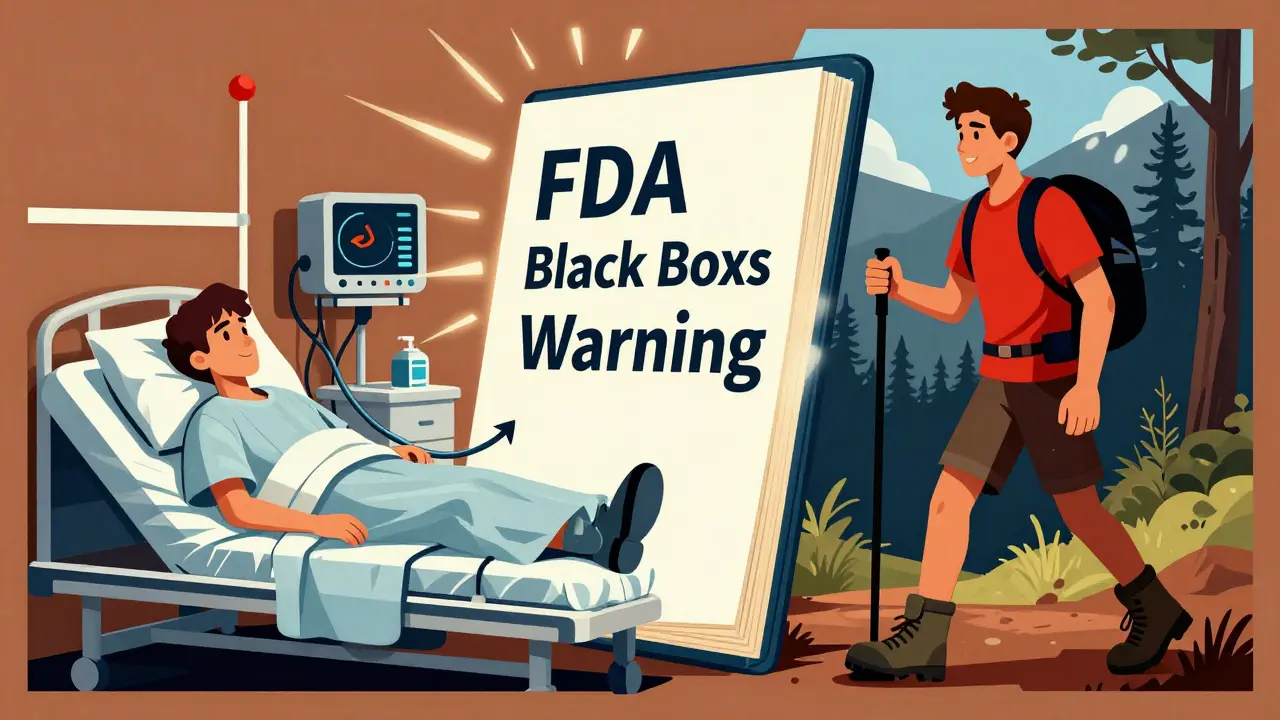
How Are Black Box Warnings Changing?
The FDA is moving toward smarter, more personalized warnings. In 2023, they announced plans to include pharmacogenomic data - meaning warnings could soon say: “This drug increases risk of liver damage in people with the HLA-B*57:01 gene.”That’s a big shift. Right now, a black box warning applies to everyone. In the future, it might only apply to people with certain genetic markers. That means safer use for most, and better targeting for those who truly need the drug.
The FDA is also using electronic health records and insurance data through its Sentinel Initiative to spot risks faster. Instead of waiting for thousands of reports, they can now detect spikes in hospital visits linked to a drug within weeks.
And more drug makers are now looking for these risks during clinical trials - not after the drug is on the market. It’s a sign the system is learning.
Where to Find Current Black Box Warnings
You don’t have to guess. The FDA makes this information public:- Go to Drugs@FDA - the FDA’s searchable database of all approved drugs
- Check the drug’s official prescribing information (often called the “package insert”)
- Look at the drug’s page on reputable sites like MedlinePlus or the Cleveland Clinic’s drug database
Pharmacies are also required to include the warning in printed materials. If you’re unsure, ask your pharmacist. They’re trained to spot these alerts and explain them.
Final Thought: Knowledge Is the Best Protection
Black box warnings aren’t meant to scare you away from medicine. They’re meant to make sure you’re not taking a risk blindly. For some drugs, the danger is real - but so is the benefit. The difference between life and harm often comes down to one thing: awareness.If you’re on a medication with a black box warning, you’re not alone. Millions are, too. But only those who ask questions, understand the risks, and follow monitoring rules stay safe.
Don’t let the black box silence you. Use it as a starting point for a conversation - with your doctor, your pharmacist, and yourself.
Do black box warnings mean a drug is unsafe?
No. A black box warning means the drug carries serious, potentially life-threatening risks - but those risks may be manageable and outweighed by the benefits for certain patients. Many life-saving drugs, including cancer treatments and insulin, carry black box warnings. The warning ensures you’re fully informed before using it.
Can a black box warning be removed?
Yes. If new evidence shows the risk is lower than originally thought - or if safer use practices have reduced harm - the FDA can remove or modify the warning. This requires new clinical data, long-term studies, or real-world safety reports proving the risk profile has improved.
Are over-the-counter drugs ever given black box warnings?
No. Black box warnings only apply to prescription drugs. Over-the-counter medications may have strong warnings, but they don’t carry the FDA’s highest-level alert. This is because prescription drugs are used under medical supervision and often treat serious conditions where risks are more complex.
How do I know if my drug has a black box warning?
Check the drug’s official prescribing information, which your pharmacist can provide. You can also search the FDA’s Drugs@FDA database online. The warning is always listed in the “Warnings and Precautions” section, enclosed in a black border. If you’re unsure, ask your doctor or pharmacist directly.
Do black box warnings affect drug prices?
Yes - but indirectly. After a black box warning is issued, sales often drop by 25-40% as doctors become more cautious. However, if the drug treats a serious condition with few alternatives, demand often remains high. The price usually doesn’t change, but insurance coverage may require prior authorization or additional monitoring.
What’s the difference between a black box warning and a REMS?
A black box warning is a label that alerts users to serious risks. A REMS (Risk Evaluation and Mitigation Strategy) is a set of rules the FDA imposes to reduce those risks - like mandatory blood tests, prescriber training, or patient registries. All REMS drugs have black box warnings, but not all black box drugs have REMS. REMS add extra layers of safety.
Can I report a side effect from a drug with a black box warning?
Yes - and you should. The FDA relies on patient reports to detect new or worsening risks. You can report side effects through MedWatch, the FDA’s online reporting system. It takes less than five minutes and helps protect others. Your report could lead to updated warnings or even a drug recall.
Colin Pierce
January 28, 2026 AT 15:35Just wanted to add that if you're on a drug with a black box warning, always keep a written list of side effects to watch for. I had a friend on clozapine who missed a blood test and ended up in the ER with agranulocytosis. It's scary, but totally preventable with simple tracking. Your pharmacist can give you a printable checklist - ask for it.
fiona vaz
January 29, 2026 AT 06:42This is one of those posts that should be mandatory reading for anyone on meds. I’m on an antidepressant with a black box warning, and honestly? I didn’t know what it meant until I read this. Now I check my mood weekly and talk to my doctor every 30 days. Knowledge really is power.
Kathy Scaman
January 30, 2026 AT 03:51My grandma’s on warfarin. She’s 82, eats kale like it’s candy, and still forgets to get her INR checked. This post? I printed it out and taped it to her fridge. She says it’s the only thing that made her take it seriously.
Linda O'neil
January 31, 2026 AT 01:07If you’re scared of your black box warning, don’t be - be proactive. Ask your doctor for the FDA’s official package insert. It’s online, free, and way more detailed than what your pharmacist gives you. I read mine cover to cover. It didn’t scare me - it empowered me.
Timothy Davis
January 31, 2026 AT 09:19Let’s be real - most people don’t read these warnings because they’re written like legal jargon. The FDA needs to simplify this. ‘Risk of fatal bleeding’? Say ‘you could bleed out if you cut yourself’. People respond to plain language, not bureaucratic euphemisms.
Sue Latham
February 1, 2026 AT 06:47Ugh, I can’t believe people still take these drugs. Like, really? You’d rather risk liver failure than… what? Eat better? Try therapy? I mean, we live in 2024 - there’s literally no excuse for relying on chemical crutches anymore.
Anna Lou Chen
February 2, 2026 AT 10:32Isn’t it ironic? The system designed to protect us is the same one that greenlights these drugs in the first place. The black box is just damage control - a PR maneuver to absolve pharma of liability while keeping profits flowing. We’re not being warned - we’re being managed.
jonathan soba
February 3, 2026 AT 05:23According to FAERS data, 78% of black box-related deaths occur in patients over 65. Yet the warnings rarely mention age-specific thresholds. That’s not safety - that’s negligence. The FDA’s data is outdated and underutilized. They’re still using 2015 metrics in 2024. Pathetic.
Lance Long
February 3, 2026 AT 22:36Hey - if you’re reading this and you’re on a drug with a black box warning, I want you to know you’re not alone. I’ve been there. I cried the first time I saw it on my prescription. But I stayed on it because my life improved. You’re not weak for taking it. You’re brave for asking questions.
Lexi Karuzis
February 5, 2026 AT 13:17Wait… so the FDA waits until people die before they warn us? And then they say ‘use with caution’? That’s not a warning - that’s a death sentence with a disclaimer. They know this stuff kills people… and they still let it be sold. This is corporate murder with paperwork.
James Dwyer
February 6, 2026 AT 10:08My sister’s on isotretinoin. She had to sign 12 forms, get two birth control prescriptions, and do monthly bloodwork. It’s a nightmare - but she’s acne-free and hasn’t had a single depressive episode since starting. The system works when you follow it.
Timothy Davis
February 7, 2026 AT 09:41^ You’re missing the point. The system doesn’t work - it’s just a theater. The fact that your sister had to jump through hoops doesn’t mean the drug is safe. It means the system is broken. They’re making patients do the work of regulating the drug companies. That’s not safety - that’s outsourcing liability.