
Tyramine Content Checker
Check Tyramine Content in Foods
Search for foods to see if they're safe while taking MAOIs. This tool shows tyramine content in mg/kg or mg/L and classifies safety status.
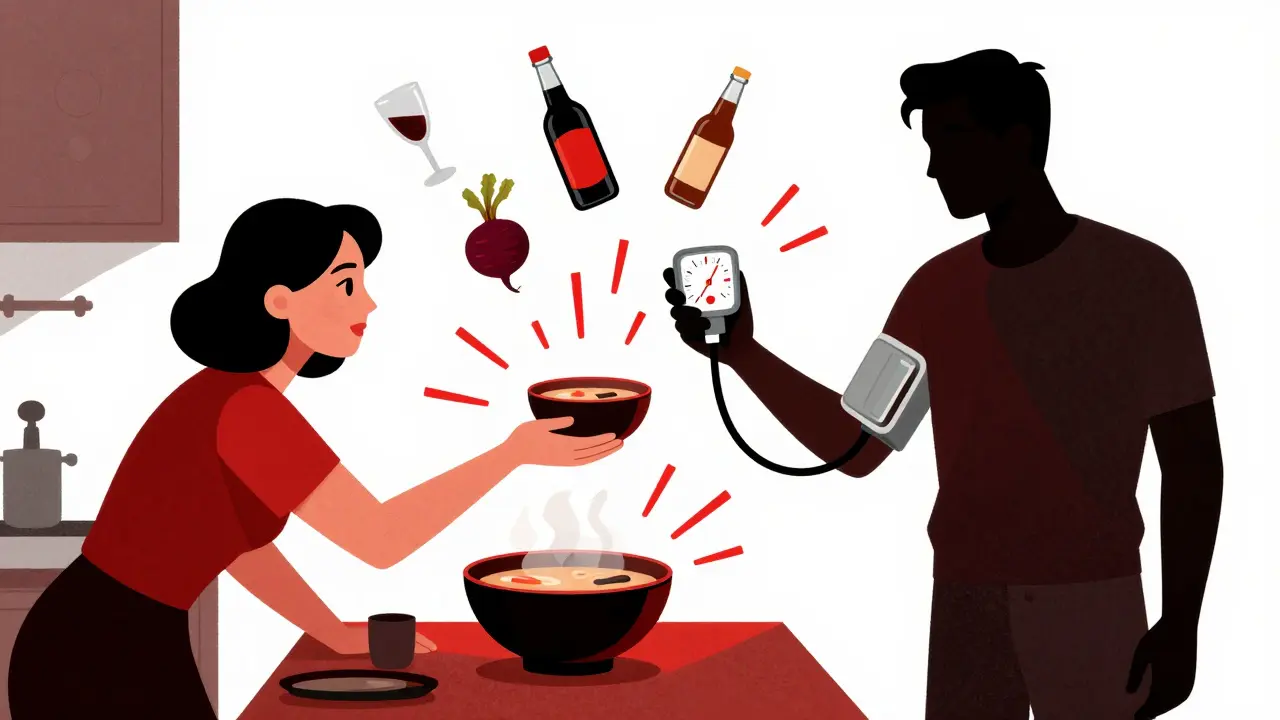
When you’re on an MAOI antidepressant, the danger isn’t just from cheese. It’s from the miso in your soup, the soy sauce on your stir-fry, the pickled beets on your salad, even the draft beer at your friend’s barbecue. Most people know about the cheese warning. Few know that tyramine hides in plain sight across dozens of everyday foods-and that a single bite can send your blood pressure soaring into life-threatening territory.
What MAOIs Do-and Why Tyramine Is Dangerous
MAOIs like phenelzine (Nardil) and tranylcypromine (Parnate) work by blocking an enzyme called monoamine oxidase. This enzyme normally breaks down excess tyramine, a compound formed when proteins in food break down during aging or fermentation. When MAOIs stop that process, tyramine builds up in your bloodstream. That triggers a massive release of norepinephrine, which can spike your systolic blood pressure past 180 mmHg in minutes. This isn’t just a headache. It’s a hypertensive crisis-potentially causing stroke, heart attack, or death.It’s Not Just Cheese
Aged cheeses like cheddar, blue, and parmesan are the classic culprits, with tyramine levels hitting 200-500 mg/kg. But they’re only the tip of the iceberg. Here’s what else carries real risk:- Dry-aged salami: 95-115 mg/kg
- Pepperoni: 80-100 mg/kg
- Smoked fish: 75-90 mg/kg
- Miso paste: 60-85 mg/kg
- Soy sauce: 45-70 mg/kg
- Sauerkraut: 50-75 mg/kg
- Kimchi: 40-65 mg/kg
- Worcestershire sauce: 25-45 mg/kg
- Fish sauce: 35-55 mg/kg
- Marmite or Vegemite: 40-60 mg/kg
- Draft beer: 15-30 mg/L
- Red wine: 20-40 mg/L
- Sherry: 35-55 mg/L
- Tomato paste: 20-35 mg/kg
These aren’t outliers. They’re standard in commercial products. A 2022 European Food Safety Authority report confirmed that tyramine levels in modern fermented foods are still high enough to trigger crises-especially when combined with other risk factors like alcohol or overripe fruit.
Hidden Sources You Won’t Find on Labels
Restaurant meals are the most dangerous wild card. A 2023 investigation found that 7 out of 10 popular chain restaurants couldn’t tell you if their menu items contained soy sauce, Worcestershire sauce, or fermented condiments-even when asked directly. That’s not negligence-it’s systemic invisibility. Ingredients like these are often listed as “seasoning” or “flavoring,” and staff aren’t trained to recognize them as hazards.Even foods you think are safe can become risky. Tofu starts with under 5 mg/kg of tyramine. After 72 hours in the fridge, that jumps to 25 mg/kg. Overripe bananas? They can hit 15-20 mg/kg. Pickled beets? 30-55 mg/kg. These aren’t rare cases-they’re documented in the USDA FoodData Central database.
Alcohol Isn’t Just a Party Drink
Alcohol isn’t just a mood-altering substance when you’re on MAOIs-it’s a tyramine amplifier. Draft beer is worse than bottled because it’s exposed to air longer during dispensing, allowing more bacterial activity and tyramine formation. Sherry and vermouth are especially dangerous, with levels as high as 75 mg/L. Red wine can trigger a crisis even in small amounts. One patient on Reddit reported a blood pressure spike to 210/115 after drinking a single glass of red wine with miso soup. She ended up in the ER.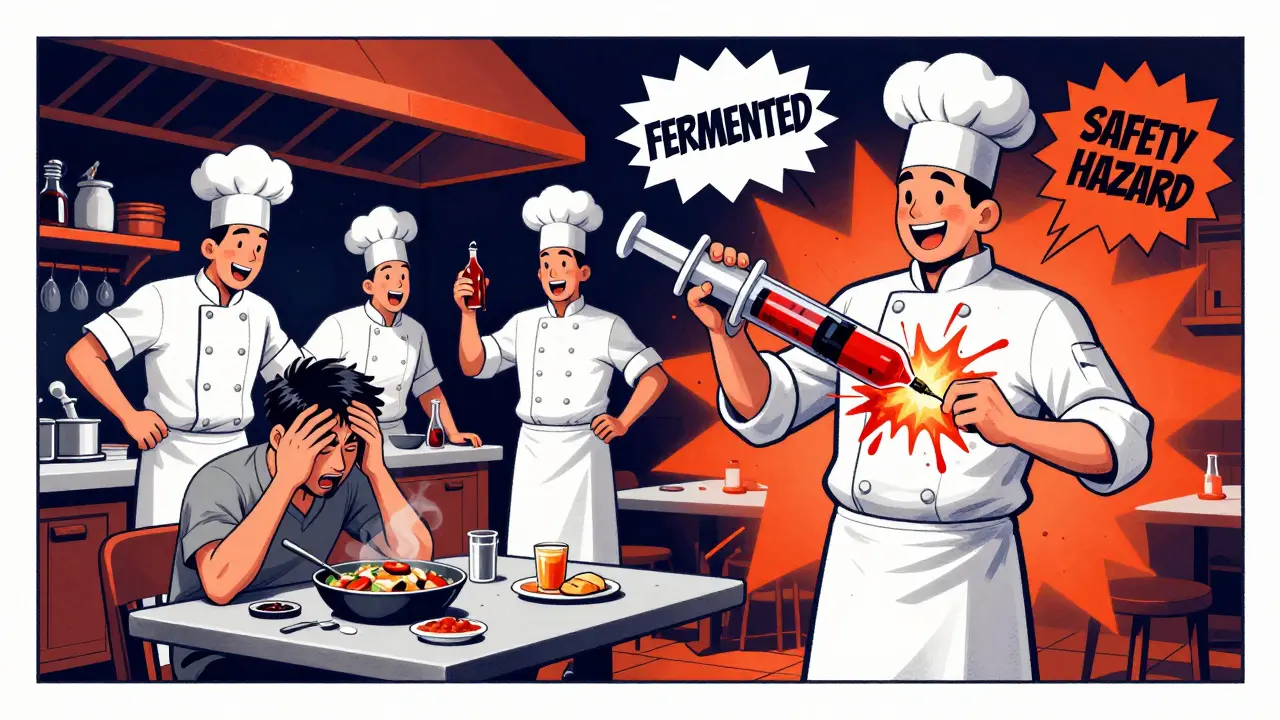
Why Refrigeration Doesn’t Fix It
Many people assume chilling food stops tyramine growth. It doesn’t. Refrigeration slows it down-but doesn’t reverse it. Tyramine accumulates over time, and once it’s there, cold won’t remove it. A 2022 Harvard study showed that even properly stored fermented foods retain dangerous levels. The only safe approach? Avoid them entirely.What About Soy? The Great Debate
There’s confusion around soy. Some experts, like Dr. Sarah R. Lieber at Columbia University, say all fermented soy products-miso, tempeh, soy sauce-must be avoided. Others, like Dr. Brian Staiger from GoodRx, suggest small amounts of soy sauce (one tablespoon) may be tolerable for some patients. But here’s the catch: there’s no reliable way to know if you’re one of them. Your body’s sensitivity to tyramine isn’t predictable. One person can eat a spoonful of soy sauce with no issue. Another has a crisis. That’s why guidelines from the American Psychiatric Association and Mayo Clinic are clear: avoid all fermented soy during MAOI therapy-and for two weeks after stopping.Real People, Real Consequences
A 2022 survey of 347 MAOI users found that 68.3% had accidentally eaten a high-tyramine food within their first six months. The top three triggers? Fermented condiments (32.1%), overripe fruit (27.8%), and cured meats at restaurants (24.5%). Many didn’t even know what they ate was dangerous. One woman ate a “vegetable stir-fry” at a Thai restaurant and ended up in the hospital because the chef used fish sauce. Another drank a smoothie with banana and soy milk-both flagged in the USDA database as potential risks.But it’s not all fear. Seventy-eight percent of those surveyed said the dietary restrictions were worth it. Their depression lifted. Their energy returned. They felt like themselves again. The problem isn’t the medication-it’s the lack of clear, practical education.
How to Stay Safe
The rules are simple-but hard to follow without support:- Read every label. Look for: fermented, aged, cured, smoked, pickled, yeast extract, soy sauce, miso, Worcestershire, fish sauce, Marmite.
- Avoid leftovers. Tyramine builds over time. Eat fresh. Discard anything past its prime-even if it looks fine.
- Ask questions at restaurants. Don’t assume “vegetarian” or “low-sodium” means safe. Ask specifically: “Does this have soy sauce, fish sauce, or fermented ingredients?”
- Carry a warning card. The Psychiatric Times reports 87% of ER doctors prefer patients have a printed card listing MAOI risks. Keep one in your wallet.
- Use MAOI-safe resources. Groups like the MAOI Support Network on Facebook offer real-time help with menu reviews and recipe swaps. NutriMind’s certified “MAOI-safe” meal delivery service has helped over 12,000 people.
What’s Changing?
The future is looking more hopeful. In 2023, the FDA approved TyraZyme, a supplement that reduces tyramine absorption by 58% in clinical trials. It’s not a free pass-but it’s a tool. The transdermal selegiline patch (Emsam) already allows limited tyramine intake at lower doses. And research is underway to identify genetic markers that predict who can tolerate small amounts of tyramine safely.Still, for now, the safest rule is the oldest one: if it’s fermented, aged, or pickled-don’t eat it. Your brain is healing. Don’t risk it for a flavor.
When to Call for Help
If you’ve eaten something questionable and feel:- Severe headache
- Blurred vision
- Fast heartbeat
- Neck stiffness
- Profuse sweating
-call 911 immediately. This is not a wait-and-see situation. Hypertensive crises can kill within minutes.
Can I have a little cheese if it’s not aged?
No. Even fresh cheeses like cottage cheese, ricotta, or cream cheese are generally safe-but only if they’re truly fresh and not stored past their date. Aged cheeses, even if labeled “mild,” can still contain dangerous levels of tyramine. Stick to unaged, refrigerated, and consumed within 48 hours of opening. When in doubt, skip it.
Is soy milk safe on MAOIs?
Plain, unfermented soy milk is typically safe. But check the ingredients. Some brands add fermented soy extracts or flavorings. Avoid any soy milk labeled “fermented,” “cultured,” or “with miso.” Stick to brands that list only soybeans and water. If you’re unsure, call the manufacturer.
Can I drink coffee while on MAOIs?
Yes, in moderation. Coffee doesn’t contain tyramine. But MAOIs can make you more sensitive to caffeine, which may raise your heart rate or cause anxiety. Stick to one or two cups a day. Avoid energy drinks, which often contain hidden stimulants.
How long do I need to avoid tyramine after stopping MAOIs?
At least 14 days after your last dose. The enzyme inhibition lasts that long, and tyramine can still trigger a crisis even after you’ve stopped taking the medication. Don’t assume you’re safe just because you’re off the pills. Follow your doctor’s timeline exactly.
Are there any safe fermented foods on MAOIs?
Very few. Yogurt and kefir made with live cultures are usually low in tyramine and considered safe by most guidelines. But only if they’re fresh, unflavored, and not aged. Avoid kombucha, fermented pickles, kimchi, sauerkraut, and anything labeled “naturally fermented.” When in doubt, choose non-fermented alternatives.
What if I accidentally eat something risky?
Don’t panic-but don’t wait. Monitor your blood pressure if you have a home monitor. If it rises above 160/100, or if you feel any symptoms like headache, chest tightness, or rapid heartbeat, call emergency services. Do not take over-the-counter blood pressure pills-they can make things worse. Get help immediately.
MAOIs are powerful tools for treatment-resistant depression. But their safety depends entirely on your awareness. Tyramine doesn’t care if you’re careful-it only takes one slip. Stay informed. Stay cautious. And never assume a food is safe just because it doesn’t look like cheese.
swarnima singh
January 18, 2026 AT 07:29Ryan Hutchison
January 18, 2026 AT 15:11Samyak Shertok
January 19, 2026 AT 11:14next you’ll say oxygen is dangerous if you breathe too fast. we’re all gonna die from flavor. capitalism turned my lunch into a pharmacology exam.
Stephen Tulloch
January 21, 2026 AT 07:37turns out terroir = hypertensive crisis. 🤦♂️
also, why is everyone so scared of soy? it’s just plant protein. chill. 🥶
Melodie Lesesne
January 23, 2026 AT 00:15Chelsea Harton
January 23, 2026 AT 06:15Corey Chrisinger
January 23, 2026 AT 15:06now we’re scared of flavor. we’ve turned nourishment into a minefield. 🤔
Bianca Leonhardt
January 24, 2026 AT 07:34Travis Craw
January 26, 2026 AT 05:08still alive. still scared. still reading labels. thanks for the reminder.
Christina Bilotti
January 27, 2026 AT 21:52you want to eat kimchi? fine. just don’t come crying to me when your blood pressure spikes and you’re screaming in the ER like a horror movie extra.
brooke wright
January 28, 2026 AT 17:40vivek kumar
January 29, 2026 AT 18:59the real issue is systemic ignorance. we need public health campaigns-not Reddit posts. this should be on every pharmacy poster.