
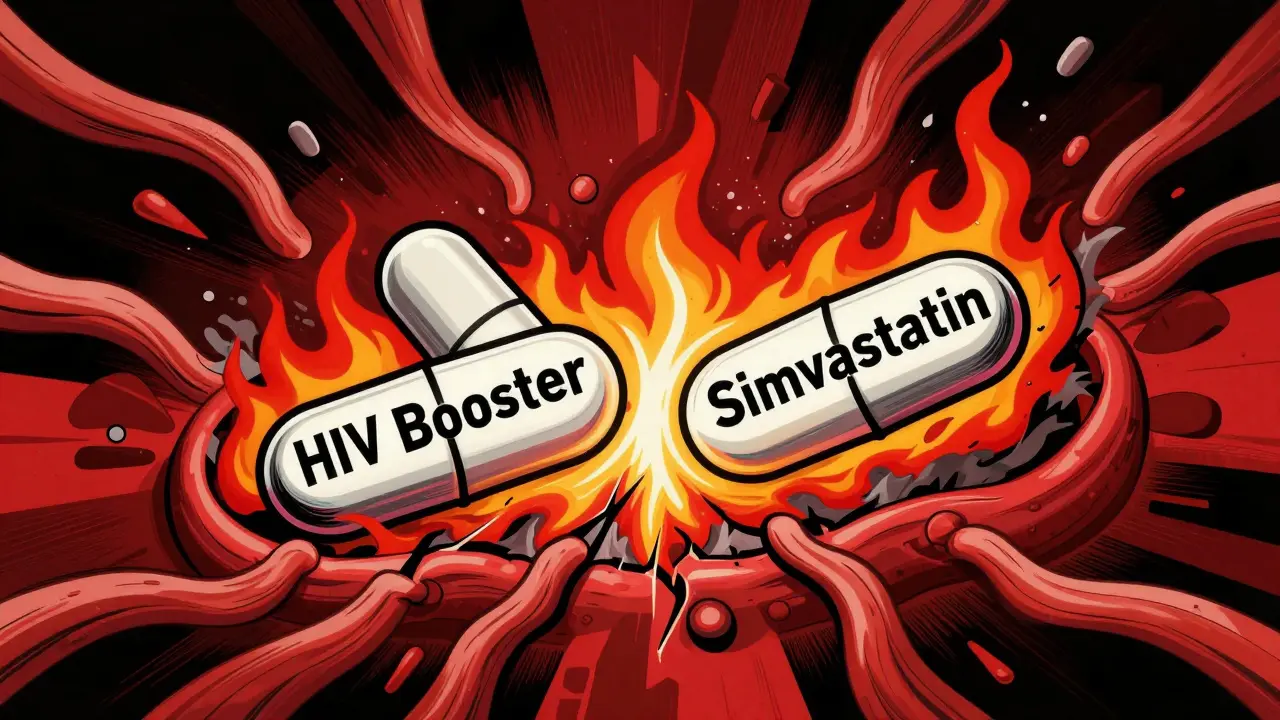
When you’re managing HIV and also need to lower your cholesterol, combining statins with your HIV meds isn’t as simple as popping two pills. Some combinations can be dangerous - even life-threatening. The key isn’t avoiding statins altogether, but knowing which ones are safe, how much you can take, and what to watch for.
Why This Combination Is Risky
HIV medications and statins don’t just sit in your body side by side. They fight over the same metabolic pathways. Most statins are broken down by an enzyme called CYP3A4. So are key HIV drugs like cobicistat and ritonavir - the boosters that make other antivirals work better. When these HIV boosters are in your system, they block CYP3A4, which means your statin doesn’t get cleared out. It builds up. And when it builds up too much, your muscles start to break down.This isn’t theoretical. In 2016, the FDA issued a warning after reports of rhabdomyolysis - a condition where muscle tissue dies and floods your bloodstream with toxins - in people taking simvastatin or lovastatin with HIV protease inhibitors. One case study showed statin levels rising up to 20 times higher than normal. That’s not a side effect. That’s a medical emergency.
Statins You Must Avoid
There are two statins you should never take if you’re on any HIV regimen that includes cobicistat or ritonavir: simvastatin and lovastatin. These are absolute no-gos. The New York State Department of Health, the FDA, and the University of Liverpool’s HIV Drug Interactions database all agree: combining these with HIV boosters is contraindicated.Why? Because even small doses can trigger severe muscle damage. You might notice muscle pain, weakness, or dark urine - signs your kidneys are under stress. In worst-case scenarios, this leads to kidney failure. The risk isn’t just higher - it’s unacceptably high. If you’re on a regimen like Prezcobix (darunavir/cobicistat) or Kaletra (lopinavir/ritonavir), these two statins are off the table.
Safe Statins - And How to Use Them
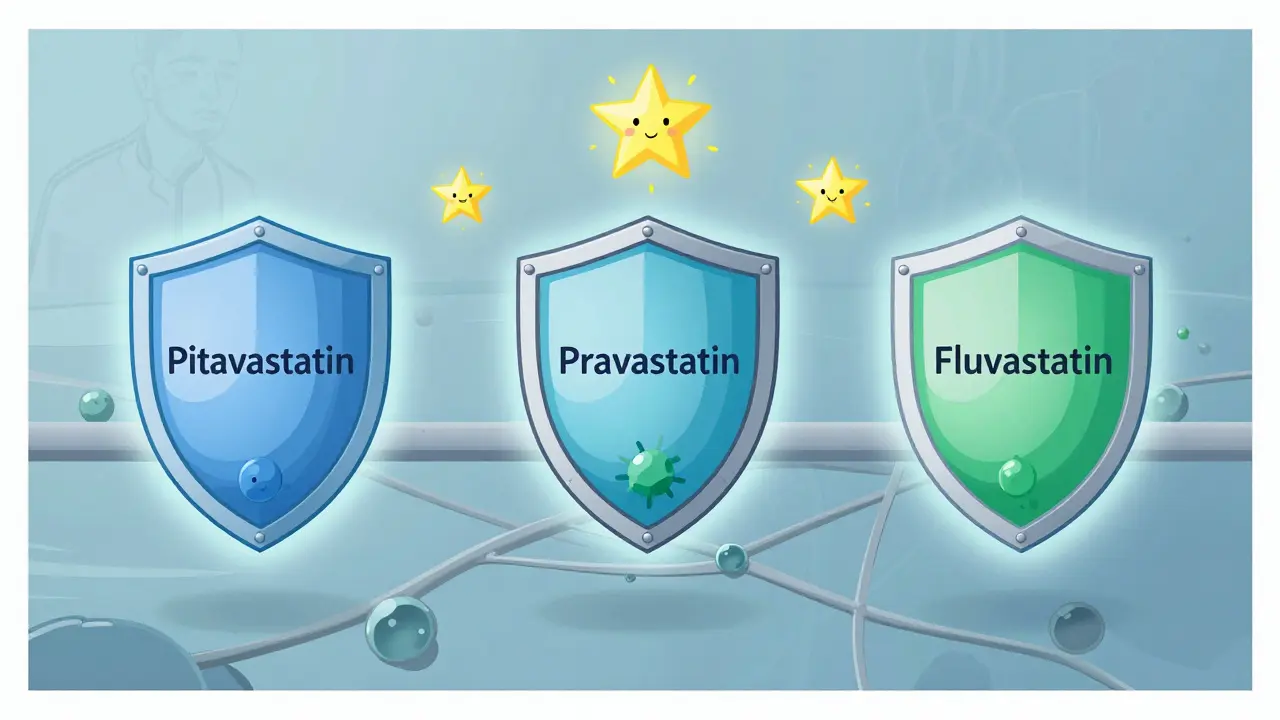
The good news? You have options. Not all statins are created equal when it comes to HIV drug interactions.- Pitavastatin - This is often the top choice. It’s metabolized mostly by a different enzyme (glucuronidation), so it doesn’t interfere much with CYP3A4. Studies show minimal interaction with most HIV drugs, even boosted ones. Dosing is typically 1-4 mg daily.
- Pravastatin - Also low-risk. It doesn’t rely on CYP3A4 at all. You can usually take it at standard doses (10-40 mg), even with cobicistat or ritonavir. It’s a solid, predictable pick.
- Fluvastatin - Mostly broken down by CYP2C9. It’s okay with most HIV drugs, but use caution with ritonavir - it can raise fluvastatin levels by about 2 times. Stick to 20-40 mg daily.
- Atorvastatin - Can be used, but with strict limits. If you’re on darunavir/cobicistat, don’t exceed 20 mg per day. For other boosted regimens, 20-40 mg may be acceptable. Never go above 40 mg without specialist oversight.
- Rosuvastatin - Also usable, but capped at 10 mg daily if you’re on ritonavir or cobicistat. Higher doses can increase exposure by 3 times. Don’t assume you can take the same dose as someone without HIV.
Integrase inhibitors like dolutegravir or bictegravir - found in drugs like Triumeq or Biktarvy - are much friendlier. They don’t interfere much with CYP3A4, so you can usually use standard doses of atorvastatin or rosuvastatin without major adjustments.
What to Monitor
Even with a "safe" statin, you can’t just start and forget. You need to stay alert.- Watch for muscle symptoms - Unexplained pain, tenderness, or weakness, especially in your thighs or shoulders. Don’t brush it off as "getting older."
- Get blood tests - Your doctor should check creatine kinase (CK) levels before starting and again 4-12 weeks after any dose change. Liver enzymes (ALT, AST) should also be monitored.
- Check kidney function - Muscle breakdown can overload your kidneys. A simple eGFR test helps catch early signs of trouble.
- Watch for older adults - People over 65 are at higher risk for statin side effects, especially if they’re also on blood pressure meds or have kidney issues.
One study found that 1 in 5 people on statins with HIV reported muscle pain - but only half told their doctor. If you feel off, speak up.
Other Medications That Make Things Worse
It’s not just HIV drugs. Many common prescriptions can pile on the risk.Calcium channel blockers like felodipine or verapamil - often used for high blood pressure - are also broken down by CYP3A4. Taking them with atorvastatin or rosuvastatin can push statin levels even higher. Ask your doctor if you can switch to amlodipine or lisinopril instead - they’re safer.
Also avoid gemfibrozil if you’re taking a statin. It’s used for high triglycerides, but it dramatically increases the chance of muscle damage. Fenofibrate or omega-3 fatty acids are better alternatives for lipid control in people with HIV.
What You Should Do Right Now
If you’re on HIV meds and taking a statin - or thinking about it - here’s your action plan:- Check your current statin - If it’s simvastatin or lovastatin, stop immediately and call your provider.
- Know your HIV regimen - Are you on cobicistat? Ritonavir? Dolutegravir? Write it down.
- Use the Liverpool HIV Drug Interactions Checker - It’s free, updated monthly, and trusted worldwide. Type in your exact meds and see what pops up.
- Ask your pharmacist - Most pharmacies have drug interaction software. Ask them to run a check on every new prescription, including supplements.
- Bring a list - To every appointment, bring your HIV meds, statin, blood pressure pills, OTC painkillers, and even herbal supplements like St. John’s wort.
Why This Matters Now More Than Ever
People with HIV are living longer. In 2007, only 9% of HIV-positive adults in studies were over 60. By 2015, that number had jumped to 16%. And with age comes higher risk of heart disease. Statins can cut that risk by 30-40%. But if you’re on the wrong one, you’re trading one danger for another.Studies show that while contraindicated statin use dropped from 15% in 2007 to under 5% by 2015, only about half of eligible patients are even getting statins at all. That’s a missed opportunity. You don’t have to choose between HIV control and heart health. You just need the right combination.
There’s no room for guesswork. The data is clear. The tools are available. The risk is real - but so is the solution.
Can I take atorvastatin with my HIV meds?
Yes, but only if you’re not taking simvastatin or lovastatin. If your HIV regimen includes cobicistat or ritonavir, the maximum safe dose is 20 mg per day. If you’re on an unboosted integrase inhibitor like dolutegravir or bictegravir, you can usually take up to 40 mg. Always confirm with your provider and check the Liverpool HIV Drug Interactions database.
Is pitavastatin the safest statin for people with HIV?
Yes, pitavastatin is generally the safest choice. It’s metabolized differently than most statins and has minimal interaction with HIV drugs, including boosted regimens. It’s often the first recommendation for people on cobicistat or ritonavir. Doses of 1-4 mg daily are typically effective and well-tolerated.
What should I do if I start feeling muscle pain?
Stop taking the statin immediately and contact your doctor. Muscle pain, weakness, or dark urine could signal rhabdomyolysis - a serious condition that can damage your kidneys. Don’t wait to see if it goes away. Get a blood test for creatine kinase (CK) and kidney function as soon as possible.
Can I use over-the-counter supplements with statins and HIV meds?
Be very careful. Supplements like red yeast rice contain natural statins and can increase your risk of side effects. St. John’s wort can reduce the effectiveness of your HIV meds. Even garlic pills or fish oil can interfere in unpredictable ways. Always tell your provider about everything you’re taking - even if you think it’s "natural."
Do I need to avoid grapefruit juice?
Yes. Grapefruit juice blocks CYP3A4, just like cobicistat and ritonavir. If you’re taking atorvastatin, simvastatin, or lovastatin, even one glass can raise drug levels dangerously. It’s safest to avoid grapefruit and Seville oranges completely. Other citrus fruits like oranges and tangerines are fine.
Why isn’t my doctor checking for interactions automatically?
Many clinics don’t have integrated systems that flag all possible drug interactions, especially with HIV regimens. A 2023 survey found only 58% of primary care providers routinely check for interactions before prescribing statins to HIV patients. Don’t rely on automation. Bring your full medication list to every visit and ask: "Is this safe with my HIV drugs?"
Next Steps: What to Do Today
If you’re on HIV treatment and need a statin:- Go to hiv-druginteractions.org - type in your exact meds.
- Write down your current statin and HIV regimen.
- Call your pharmacist and ask for an interaction check.
- Book a follow-up with your HIV provider to review your options.
- If you’re on simvastatin or lovastatin, don’t wait - get a safer alternative now.
Managing both HIV and heart health is possible. But it takes knowledge, not luck. The right statin can protect your heart. The wrong one can destroy your muscles. Choose wisely - and always check before you start.