
Starting Hormone Replacement Therapy is often a game-changer for managing menopause, but it doesn't happen in a vacuum. If you're already taking other medications, HRT can change how those drugs work in your body, or those drugs might interfere with your hormone levels. This isn't just about a few mild side effects; in some cases, it can lead to a breakthrough seizure or a dip in the effectiveness of a critical medication. The goal is to get the relief you need from menopause without compromising the stability of your other treatments.
The Hidden Logic of Drug Interactions
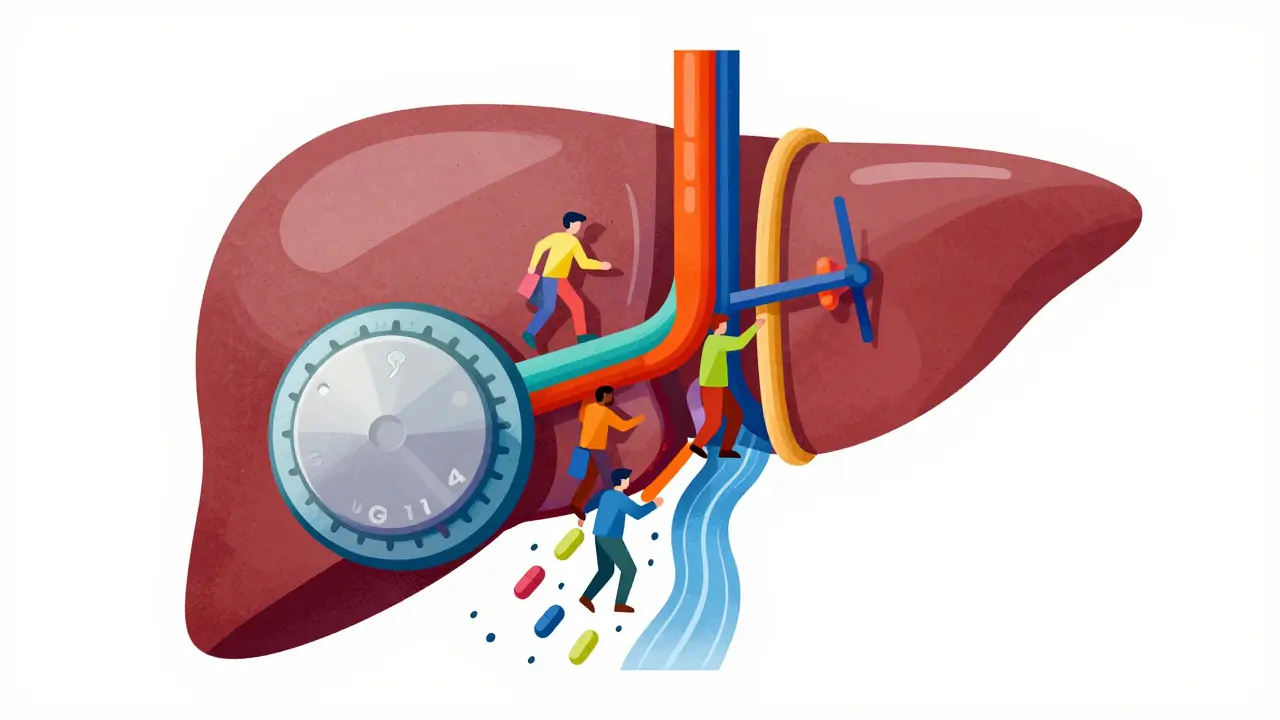
How does one drug affect another? It usually comes down to the liver and enzymes. When you take Estrogen-a primary component of HRT-it can act like a volume knob for certain enzymes in your liver. For example, estradiol can increase the expression of an enzyme called UGT1A4. Think of this enzyme as a cleanup crew; if there are more of them, they clear out other medications from your bloodstream much faster than usual.
This is exactly what happens with Lamotrigine, a medication used for epilepsy and mood stabilization. Because HRT ramps up the cleanup crew, the levels of lamotrigine in your blood can drop. For a patient, this doesn't look like a chemical reaction in a lab-it looks like a return of depressive symptoms or, more dangerously, an increased risk of seizures. In one documented case from the Netherlands Pharmacovigilance Centre Lareb, a woman noticed her mood dipping significantly after five months on combination HRT, only to find her medication levels were significantly lower than they should have been.
Comparing Delivery Methods: Patches vs. Pills
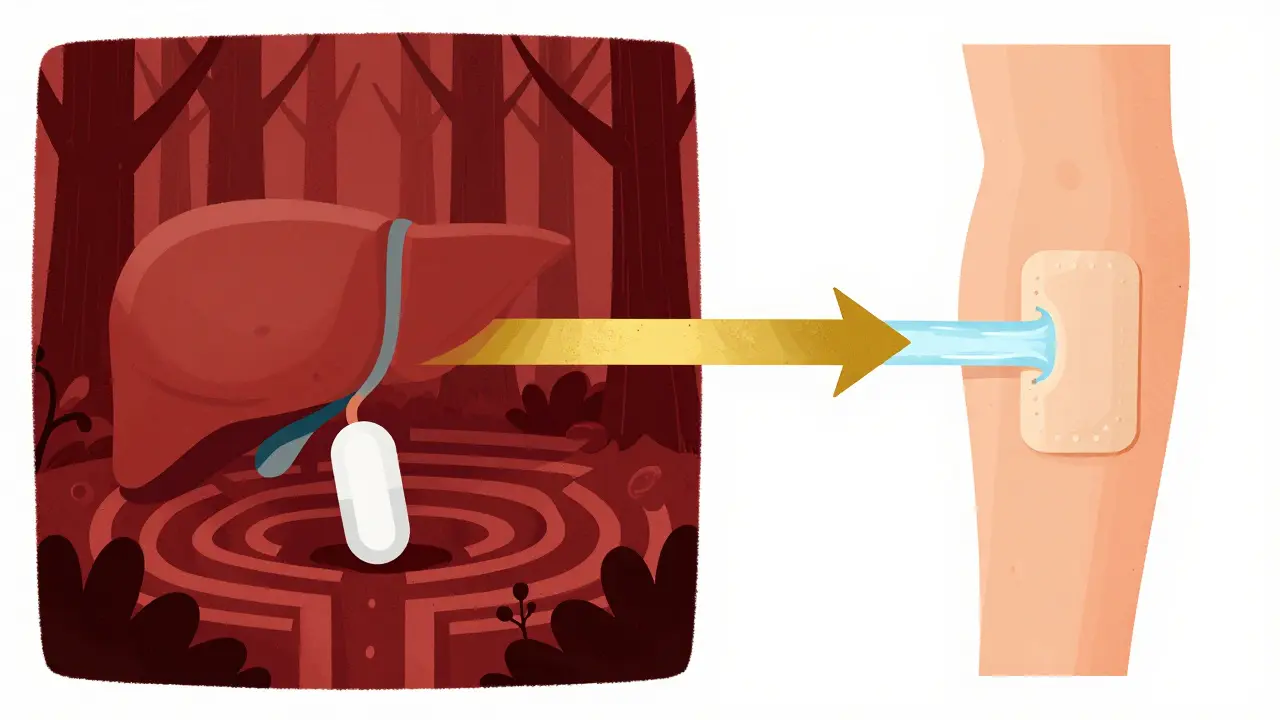
Not all HRT is created equal when it comes to interactions. The way the hormone enters your body determines how much it interacts with your liver's metabolic pathways. Oral tablets and capsules go straight through the digestive system and pass through the liver first-this is known as the "first-pass effect." This is where most of the heavy enzyme interaction happens.
Transdermal patches, on the other hand, deliver hormones directly through the skin into the bloodstream. Because they bypass that initial trip through the liver, they are generally less likely to interfere with other medicines. If you are taking a drug with a narrow therapeutic index-meaning the difference between a working dose and a toxic dose is very small-your doctor might suggest a patch over a pill to minimize these risks.
| Feature | Oral (Tablets/Capsules) | Transdermal (Patches/Gels) |
|---|---|---|
| Liver First-Pass Effect | High | Low/Bypassed |
| Risk of Enzyme Induction | Higher | Lower |
| Interaction with St. John's Wort | More likely to be affected | Less likely to be affected |
| Impact on Protein Synthesis | Significant | Moderate to Low |
The Cortisol Connection and Steroid Therapy
If you're managing an adrenal condition and taking Hydrocortisone, HRT introduces a specific diagnostic headache. Female hormones-whether from HRT or oral contraceptives-increase the production of corticosteroid-binding globulin (CBG) in the liver. This protein acts like a sponge, soaking up cortisol in your blood.
The result? Your total cortisol levels might look almost double on a blood test, but your "free" cortisol (the stuff your body actually uses) remains the same. This means a standard cortisol test can't be used to see if your hydrocortisone replacement is at the right level. If you're also taking testosterone, keep an eye out for swollen hands, feet, or ankles, as this combination can lead to increased water retention.
Watch Out for Herbal Remedies and Supplements
Many people assume that "natural" means "safe," but herbal supplements can be just as reactive as prescription drugs. St. John's Wort is a classic example. It can speed up the breakdown of HRT, essentially flushing the hormones out of your system before they can work. If you're using this for mild depression, you might find your hot flashes returning because your HRT is no longer effective.
Other supplements like Resveratrol have a chemical structure similar to synthetic estrogens, which can create an additive effect in the body. There is also some evidence that rosemary might increase the rate at which the liver deactivates estrogen. While the evidence for some of these is less robust than for prescription drugs, the potential for interference is real enough to warrant a conversation with your pharmacist.

Managing High-Risk Medications
Some drugs are simply more volatile than others. If you are on Anticoagulants (blood thinners) or strong anticonvulsants, the stakes are higher. HRT, particularly combined estrogen-progestin therapy, can increase the risk of blood clots, heart attack, and stroke. When you combine this with blood thinners, the balance becomes delicate.
For those preparing for surgery, the rules are strict. If you have risk factors like diabetes, high blood pressure, or a history of smoking, medical guidelines typically suggest stopping estrogen and progestin at least 4 to 6 weeks before any major procedure or period of prolonged bedrest. This is to prevent the formation of dangerous clots while your mobility is limited.
Practical Checklist for Your Next Appointment
Since much of the current evidence on HRT interactions is based on "biological plausibility" (how we think the body works) rather than huge clinical trials, your personal history is the most important piece of data. Be proactive about your medication list.
- List everything: Include vitamins, over-the-counter supplements, and herbal teas.
- Ask about delivery: If you're on a narrow-index drug, ask if a patch is safer than a pill.
- Monitor for changes: If your mood shifts or a chronic condition flares up after starting HRT, don't assume it's just "part of menopause."
- Watch for red flags: Report sudden severe headaches, vision loss, or speech problems immediately, as these can be signs of cardiovascular events.
Can HRT make my epilepsy medication less effective?
Yes, specifically with medications like lamotrigine. Estrogens can increase the liver enzyme UGT1A4, which breaks down the medication faster, leading to lower blood levels and a higher risk of seizures or mood instability.
Are skin patches safer than pills for drug interactions?
Generally, yes. Because transdermal patches bypass the liver's first-pass metabolism, they have a lower likelihood of inducing enzymes that clear other medications from your system.
Does St. John's Wort interfere with HRT?
Yes. St. John's Wort can increase the metabolism of HRT, which may make your hormone therapy less effective and cause menopausal symptoms to return.
How does HRT affect cortisol testing?
HRT increases the production of corticosteroid-binding globulin (CBG). This raises total cortisol levels in the blood without necessarily increasing the active, free cortisol, making standard tests unreliable for adjusting hydrocortisone doses.
What are the signs of a dangerous HRT interaction?
Immediate danger signs include sudden, severe headaches, loss of vision, speech problems, or sudden severe vomiting, which could indicate a stroke or cardiovascular event. You should also watch for a sudden decrease in the effectiveness of your maintenance medications.
Mark Zhang
April 4, 2026 AT 17:21It is so important to be your own advocate when it comes to these medications. I've seen a few people struggle with the switch from pills to patches and it really does make a difference in how they feel overall.
Joseph Rutakangwa
April 5, 2026 AT 21:39patches are definitely the way to go
Divine Manna
April 7, 2026 AT 07:14The biological mechanism described here is elementary, yet most people treat their bodies like chemical waste bins without a second thought. We must realize that the liver is not merely a filter but a complex metabolic engine that requires precision and respect. To ignore the first-pass effect is to ignore the very architecture of human pharmacology. True wellness is not found in a pill, but in the systemic understanding of how these molecules dance within our veins. One must transcend the desire for a quick fix and instead embrace the rigorous study of enzyme induction if they wish to truly master their own health.
Aysha Hind
April 7, 2026 AT 16:53Typical big pharma narrative, acting like these "interactions" are just random accidents. Wake up! They want us on the pills because the liver damage keeps us coming back for more fancy cocktails of meds to fix the mess they made in the first place. It's all a giant web of chemical puppetry to keep us docile and dependent. My cousin tried the patches and suddenly she was hearing frequencies from the basement-don't trust the "bypassing the liver" fairy tale. It's just a different way to sneak the toxins in through the skin without us noticing the immediate crash.
Brian Shiroma
April 9, 2026 AT 16:18Oh sure, let's just trust a "checklist" to prevent a stroke. Truly a revolutionary medical breakthrough here.
The Charlotte Moms Blog
April 10, 2026 AT 18:51The lack of nuance regarding the St. John's Wort section is absolutely appalling!!! Does the author even realize how many "natural" supplements are actually potent drugs??? This is a dangerous oversimplification of a complex pharmacological interaction!!! I cannot believe this was posted without a more rigorous analysis of the pharmacokinetic data!!!
simran kaur
April 11, 2026 AT 19:28The sheer arrogance of suggesting a pharmacist is the final authority on herbal interactions is laughable. Most pharmacists are simply trained to repeat the brochure. The real knowledge is hidden in the texts they refuse to let us read because it doesn't fit the current medical hegemony. I've found that the interaction with rosemary is likely underestimated to keep the organic market thriving while the synthetic labs keep their secrets.
angel sharma
April 13, 2026 AT 01:53This is such an incredible reminder for all of us to stay positive and proactive because while the science of enzymes and the UGT1A4 pathway might sound intimidating to some, it is actually an opportunity for us to take total control of our longevity and vitality by working closely with our healthcare providers to ensure every single molecule in our body is working in perfect harmony to give us the energy we need to conquer our daily goals and live our best lives despite the challenges of menopause!
Jenna Carpenter
April 13, 2026 AT 13:39peopl really think they can just take herbs and laemotrigine and not have a mess... so naive
Branden Prunica
April 15, 2026 AT 11:08I literally cannot imagine the absolute horror of a breakthrough seizure just because of a hormone patch! My heart is racing just thinking about the chaos of that medical emergency. It's like a plot from a medical drama where everything goes wrong at the worst possible moment! The drama of the liver being a "cleanup crew" is just too much for me to handle today.
Hope Azzaratta-Rubyhawk
April 16, 2026 AT 11:26You must absolutely insist that your doctor provides a full blood panel before and after starting any HRT regimen! It is completely unacceptable to simply "monitor for changes" when your stability is at stake! Demand the data and do not settle for vague assurances!