
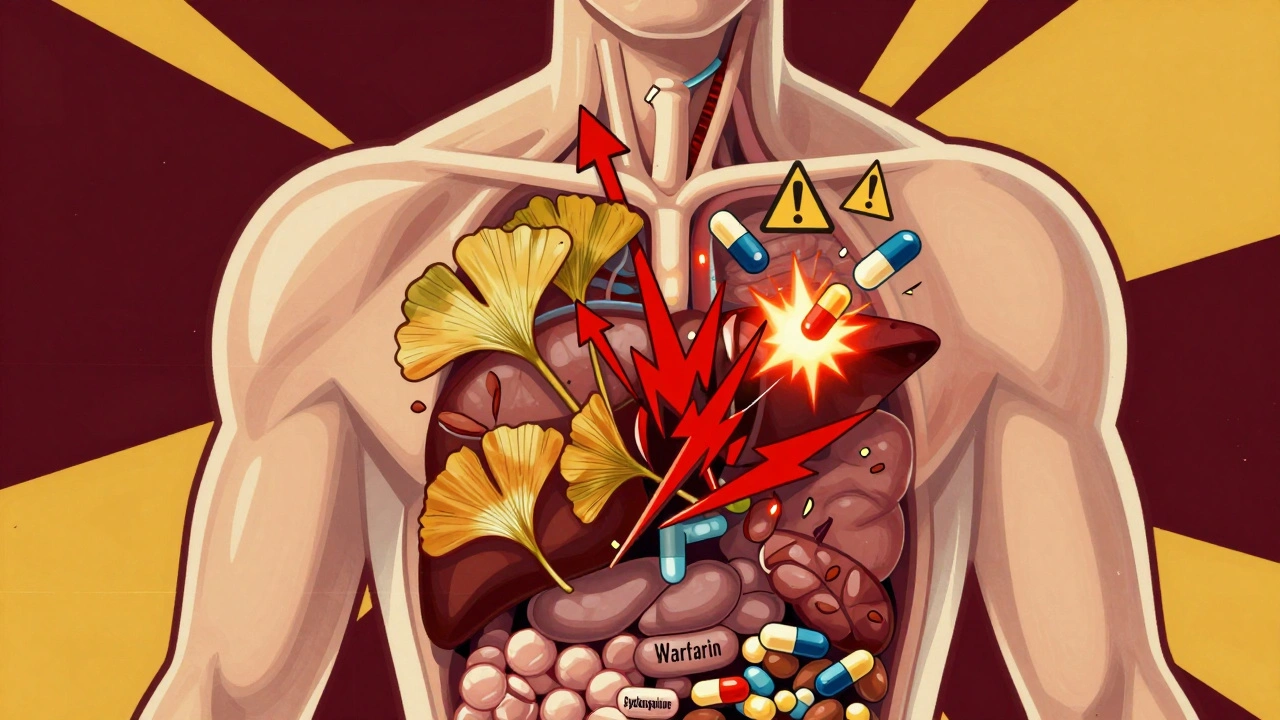
Every year, over 23,000 people end up in the emergency room because of dangerous mixtures between dietary supplements and prescription drugs. That’s not a small number-it’s more than double what it was in 2010. And here’s the scary part: most of these people had no idea their daily vitamin or herbal pill could be putting them at risk. You might think, It’s natural, so it must be safe. But the FDA has been clear for years: natural doesn’t mean safe.
Why Supplements Can Be Dangerous with Medications
Your body doesn’t care if something comes from a plant, a pill, or a pharmacy. It processes everything the same way. Many supplements affect the same enzymes in your liver that break down medications-especially the CYP3A4 and CYP2C9 pathways. When a supplement blocks or speeds up these enzymes, it changes how your body handles your drugs. For example, St. John’s wort, a popular herb for mood support, can cut the effectiveness of cyclosporine (used after organ transplants) by up to 50%. That means your body might reject the new organ. It also reduces the potency of birth control pills, HIV medications, and antidepressants like SSRIs. In some cases, it triggers serotonin syndrome-a potentially fatal condition caused by too much serotonin in the brain. Even common minerals can cause problems. Calcium, magnesium, zinc, and iron all fight for the same absorption spots in your gut. If you take them with antibiotics like tetracycline or thyroid medication like levothyroxine, your body absorbs less of the drug. That makes your treatment less effective, even if you’re taking the right dose. Vitamin E is another sneaky one. At doses above 400 IU, it can raise your INR levels by 15-20% if you’re on warfarin. That means your blood takes longer to clot, increasing your risk of internal bleeding. One study found that people taking both warfarin and ginkgo biloba had more than twice the chance of major bleeding compared to those on warfarin alone.Which Supplements Are Most Risky?
Not all supplements are created equal. Some are mostly harmless. Others? They’re ticking time bombs when mixed with common prescriptions.- High-risk (avoid with most meds): St. John’s wort, goldenseal, kava, echinacea (in some cases), and garlic (especially before surgery).
- Moderate-risk (use with caution): Ginkgo biloba, fish oil, ginger, and vitamin E (at high doses).
- Low-risk (generally safe): Milk thistle, cranberry, American ginseng, saw palmetto, and valerian.
What to Do Before Taking Anything New
You don’t need to stop taking supplements. You just need to be smarter about them. Start by making a full list of everything you take: prescription drugs, over-the-counter pills, vitamins, herbs, teas, and even CBD or melatonin. Don’t skip anything. Not even the ones you think are “just for sleep” or “only taken once a week.” Then, bring that list to your doctor or pharmacist. The CDC calls this the “brown bag method.” It’s simple: gather all your meds and supplements in a bag and walk into your next appointment with them. A 2022 Johns Hopkins study found this reduces medication errors by 37%. That’s huge. Pharmacists are your best allies here. Walgreens, CVS, and other major chains have mandatory screening programs. In 2021, they started checking every customer’s supplement list during refills. In 18% of cases, they found dangerous interactions-many of which the patient didn’t even know about. If your doctor doesn’t ask about supplements, ask them. Say: “I’m taking [name], and I’m not sure if it’s okay with my [medication]. Can we check?” Most will be glad you did.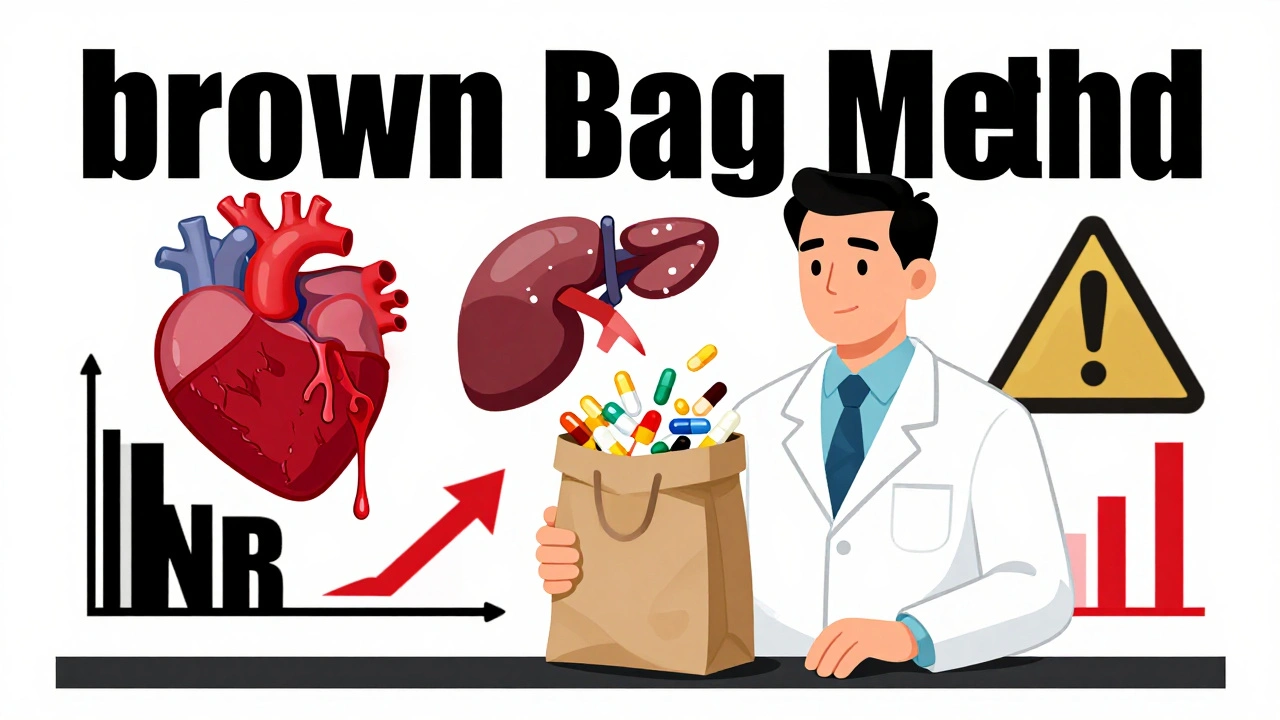
What to Look for on the Label
Supplement labels aren’t regulated like drug labels. But there are still clues to look for:- Active ingredients: Make sure you know exactly what’s in the bottle. “Proprietary blend” labels hide the amounts. Avoid them.
- Dosage per serving: More isn’t better. Vitamin E at 1,000 IU is dangerous. 400 IU is already risky with blood thinners.
- Warning statements: If it says “May interact with blood thinners” or “Not for use with antidepressants,” pay attention. That’s the manufacturer’s way of saying, “This could hurt you.”
Special Cases: Surgery, Pregnancy, and Chronic Conditions
If you’re scheduled for surgery, stop taking ginkgo, garlic, fish oil, and vitamin E at least 7-10 days before. These all thin the blood. Surgeons don’t want you bleeding out on the table. Pregnant women should avoid nearly all herbal supplements unless cleared by an OB-GYN. Even something like ginger, often used for morning sickness, can interfere with hormone balance. People with chronic conditions like heart disease, diabetes, or kidney disease are especially vulnerable. For example, if you’re on amiodarone (Cordarone) for irregular heartbeat, taking simvastatin (a cholesterol drug) above 20 mg daily can cause muscle breakdown-rhabdomyolysis-which can lead to kidney failure. The risk jumps 15-fold. That’s not a guess. It’s from a 2022 American Heart Association study.What About “Natural” or “Doctor-Recommended” Supplements?
Just because a supplement is sold in a health food store or endorsed by a wellness influencer doesn’t mean it’s safe. The supplement industry isn’t required to prove safety before selling. That’s the law-under the Dietary Supplement Health and Education Act of 1994. The FDA can only act after people get hurt. Even integrative doctors like Dr. Andrew Weil admit St. John’s wort is dangerous with medications. He still recommends it for mild depression-but only if you’re not on anything else. That’s the key: context matters.
Real Stories, Real Consequences
One Reddit user, “PharmaTech87,” shared that after taking ginkgo biloba with Eliquis, he ended up in the hospital for seven days with internal bleeding. He thought ginkgo was “just a brain booster.” It wasn’t. Another woman in her 60s took calcium supplements with her thyroid med for years. Her doctor finally tested her TSH levels and found they were sky-high. The calcium was blocking absorption. Once she switched to taking calcium at night and her thyroid med in the morning, her levels normalized in six weeks. These aren’t rare cases. They’re common. And they’re preventable.What’s Changing in 2025?
The FDA is pushing harder. By 2027, they want to cut supplement-medication interactions by 25%. That means:- More warning labels on bottles
- Pharmacies required to screen every customer
- Electronic health records (like Epic) now flag supplement risks automatically
- Doctors must ask about supplements during every medication review
Simple Action Plan
Here’s what to do right now:- Write down every supplement and medication you take-including doses and times.
- Use the FDA’s new Dietary Supplement Ingredient Database app to scan your labels.
- Bring your list to your next doctor or pharmacist visit.
- Ask: “Could any of these interact with my meds?”
- If you’re scheduled for surgery, stop high-risk supplements 10 days before.
Can I take vitamin D with my blood pressure medication?
Yes, vitamin D is generally safe with most blood pressure medications. There’s no strong evidence it interferes with ACE inhibitors, beta-blockers, or calcium channel blockers. However, if you’re taking thiazide diuretics, high doses of vitamin D could raise calcium levels too much. Stick to the recommended 600-800 IU daily unless your doctor says otherwise.
Is it safe to take turmeric with aspirin?
No. Turmeric (and its active compound curcumin) has natural blood-thinning properties. When combined with aspirin or other NSAIDs, it increases bleeding risk. This is especially dangerous if you’re also on warfarin or Eliquis. Avoid turmeric supplements if you’re on any blood thinner-even if you’re just taking a small dose.
What if my supplement doesn’t list any warnings?
That doesn’t mean it’s safe. Many supplement makers don’t list interactions because they’re not required to. The FDA doesn’t test supplements before they hit shelves. If you’re unsure, assume it could interact. Check the FDA’s new app, talk to your pharmacist, or look up the ingredient on the National Institutes of Health’s database.
Can I just space out my supplements and meds to avoid interactions?
Sometimes, yes-but not always. For example, calcium and thyroid meds should be taken at least 4 hours apart. But for drugs like St. John’s wort, timing won’t help. It changes how your liver processes medications for days after you take it. If the interaction is metabolic (like with CYP3A4), spacing won’t fix it. Always check the specific interaction, don’t guess.
Are there any supplements that are always safe?
No supplement is 100% safe for everyone. But some have very low interaction risk: milk thistle, cranberry, American ginseng, and saw palmetto are generally considered safe with most medications. Still, if you’re on warfarin, even cranberry has been linked to bleeding in rare cases. Always check with your provider before assuming something is safe.
What should I do if I think a supplement is causing side effects?
Stop taking it immediately. Write down what you took, when, and what symptoms you experienced. Then call your doctor or pharmacist. You can also report the reaction directly to the FDA’s MedWatch program. It’s anonymous and helps track dangerous products. Don’t wait until it gets worse.
If you’re on even one prescription, your supplement choices matter. You don’t need to be an expert. You just need to ask the right questions-and listen to the answers.
George Graham
December 5, 2025 AT 23:45I used to take fish oil with my blood pressure meds and never thought twice about it. Then I started bruising like a cartoon character. Turned out the combo was thinning my blood too much. Now I check every supplement with my pharmacist before I even open the bottle. Simple habit, huge difference.
John Filby
December 6, 2025 AT 23:12Wait so ginkgo + Eliquis = bad? 😳 I’ve been taking that for ‘brain fog’ since last year. Guess I’m stopping it tonight. Thanks for the wake-up call.
Elizabeth Crutchfield
December 7, 2025 AT 15:03omg i just realized i’ve been taking calcium at the same time as my thyroid med for 3 years… i’m gonna switch to night time now 😅
Ben Choy
December 8, 2025 AT 21:47This is the kind of post that makes me feel less alone. I’ve been telling my friends for years that ‘natural’ doesn’t mean ‘harmless’-but no one listens. Now I just hand them this article and say, ‘Read this, then talk to me.’
Emmanuel Peter
December 10, 2025 AT 07:41So let me get this straight-you’re telling me that the entire supplement industry is a scam run by people who don’t even know what CYP3A4 is? And we’re supposed to trust labels that say ‘proprietary blend’? This isn’t health advice, this is corporate negligence wrapped in a hemp blanket. The FDA is asleep at the wheel.
Ashley Elliott
December 10, 2025 AT 16:16Just wanted to say-thank you for writing this. I’m a nurse, and I see this exact scenario every single week. Someone comes in with a full bag of supplements, no idea what they’re taking, and then wonders why their INR is off the charts. Please, everyone: bring your brown bag. It’s not embarrassing. It’s smart.
Chad Handy
December 11, 2025 AT 07:43I’ve been on 11 different meds for my autoimmune stuff and take 8 supplements. I’ve had three ER trips in the last year because I thought ‘it’s just a little turmeric’ or ‘it’s just melatonin.’ I didn’t realize my liver was screaming. Now I have a spreadsheet. I color-code everything. I even print out the FDA app results and tape them to my pill organizer. I’m not proud of how long it took me to figure this out-but I’m glad I’m finally doing it right.
Augusta Barlow
December 12, 2025 AT 15:35Of course the FDA is pushing for more regulation now-right after they let Big Pharma buy out half the supplement companies. This whole thing is a distraction. They don’t care if you bleed out from ginkgo-they care if you stop buying their $800-a-month pills. The real danger isn’t the supplement-it’s the system that lets them sell both at the same time and profit from the chaos.
Joe Lam
December 13, 2025 AT 07:00Wow. This article is almost as bad as the ‘eat kale and you’ll cure cancer’ nonsense. You’re treating supplements like they’re nuclear bombs. Most of these interactions are theoretical or occur at doses no human would ever take. You’re scaring people into thinking their vitamin D is going to kill them. It’s irresponsible.
Jenny Rogers
December 14, 2025 AT 06:14It is both lamentable and profoundly disconcerting that the general populace continues to conflate the metaphysical concept of ‘naturalness’ with the empirical standard of ‘safety.’ One cannot, by virtue of botanical origin, ascribe moral or physiological innocence to a substance. The CYP enzyme system does not discriminate between phytochemicals and synthetics-it is indifferent, mechanistic, and unforgiving. One must therefore approach pharmacological synergy with the rigor of a biochemist, not the naïveté of a wellness influencer.
Scott van Haastrecht
December 15, 2025 AT 00:07They’re all lying. The supplement industry is funded by Big Pharma. The FDA’s new app? A Trojan horse. They’re tracking your habits. They’re building profiles. They’re going to use this data to deny you insurance if you take ‘risky’ herbs. This isn’t about safety-it’s about control. I’ve seen the documents. I’ve seen the emails. You think you’re being protected? You’re being monitored.
Chase Brittingham
December 15, 2025 AT 04:40My mom took St. John’s wort for depression and didn’t tell her doctor she was also on Lexapro. She ended up in the psych ward with serotonin syndrome. It was terrifying. I’m so glad this post exists. I showed it to my whole family. Now we all bring our brown bags. Even my dad, who thinks ‘supplements are for hippies.’ He’s now asking his pharmacist about his fish oil. Progress.