
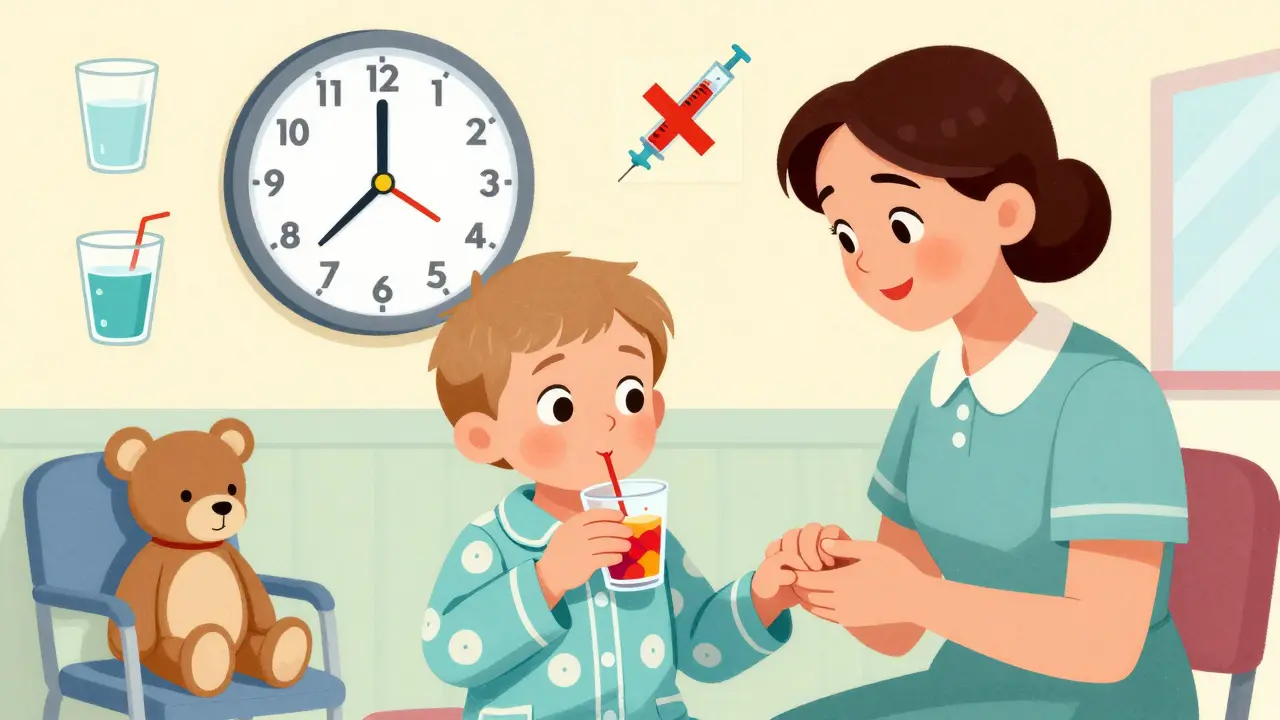
Preparing a child for surgery or a medical procedure isn’t just about showing up on time. It’s about making sure their body and mind are ready-safely and calmly-for what’s coming. Too often, parents are left confused about what to give, when to give it, or what foods are allowed. The good news? There’s a clear, evidence-based way to do this right. And getting it right reduces anxiety, lowers risks, and helps your child recover faster.
Why Pediatric Pre-Op Prep Is Different
Children aren’t small adults. Their bodies process medicines differently. Their stomachs empty faster. Their brains react more strongly to stress-and sometimes, to sedatives. A 5-year-old might panic at the sight of a needle, while a 12-year-old might worry about pain or losing control. These aren’t just emotional reactions; they affect how anesthesia works.That’s why standardized protocols exist. Hospitals like Children’s Hospital of Philadelphia (CHOP), Royal Children’s Hospital Melbourne, and Texas Children’s Hospital have spent years refining how to prepare kids for procedures. Their data shows that following these steps reduces anesthesia complications by nearly 30%, cuts down on post-op behavioral issues like nightmares or clinginess by 37%, and boosts parent satisfaction from a 6.2 to an 8.7 out of 10.
But none of that matters if you don’t know what to do. Here’s exactly how to prepare.
Fasting Rules: What They Really Mean
The biggest source of confusion? Fasting. You’ve probably heard, “No food after midnight.” But that’s outdated-and dangerous if followed too strictly.Current guidelines say:
- No solid foods after midnight for kids over 12 months
- Milk or formula can be given up to 6 hours before the procedure
- Breast milk is okay up to 4 hours before
- Clear liquids-water, Pedialyte, apple juice, Sprite, or 7-Up (no pulp)-are allowed up to 2 hours before
Why such short fasting times? Kids digest faster than adults. Adults are told to stop clear liquids 4 hours before, but for children, 2 hours is safe and actually reduces dehydration and low blood sugar.
Common mistakes? Giving orange juice (it’s not clear-it has pulp), letting kids snack on crackers after midnight, or assuming “no food” means no medicine. If your child takes daily meds, check with the hospital. Most asthma inhalers, seizure meds, and acid reflux drugs can be given with a tiny sip of water on the day of surgery.
Pre-Op Medications: What’s Given and Why
The goal of pre-op meds isn’t to knock the child out. It’s to calm them down so the IV or mask doesn’t become a battle. The most common drugs are midazolam and ketamine.Oral midazolam is the gold standard. Dosed at 0.5 to 0.7 mg per kilogram of body weight (max 20 mg), it’s given 20-30 minutes before the procedure. Most kids feel sleepy, relaxed, and less scared. Parents often report their child is cuddly or even giggly after taking it. It works in about 90% of cases.
Intranasal midazolam is used when swallowing is hard or if the child refuses pills. Dosed at 0.2 mg per kg (max 10 mg), it’s sprayed into each nostril. It works just as well, but about 12% of kids get nasal irritation or sneezing fits. That’s why some hospitals keep oral as the first choice.
Intramuscular ketamine is reserved for kids who are extremely anxious, have developmental delays, or refuse all oral and nasal options. Given as a shot in the thigh, it takes 3-5 minutes to kick in. The child becomes detached from their surroundings-calm, but awake. Parents are often surprised to see their child smiling while being carried to the operating room. But there’s a catch: 8-15% of kids experience “emergence delirium” afterward-crying, thrashing, or confusion as they wake up. That’s why it’s used carefully.
Don’t give any other sedatives at home. No melatonin, Benadryl, or herbal teas. These can interfere with anesthesia and cause dangerous interactions.

Special Cases: Asthma, Seizures, and Obesity
Some kids need extra attention.If your child has asthma, they should use their rescue inhaler (like albuterol) 30 minutes before arriving at the hospital. Studies show this cuts intraoperative bronchospasm by 40%. Nitrous oxide (laughing gas) should be avoided-it can trigger airway tightening in kids with severe asthma or pulmonary hypertension.
If your child takes anti-seizure medications, don’t skip them. AAFP guidelines say these should be given with a sip of water on the day of surgery. Stopping them can cause seizures during or after the procedure. Many hospitals use a checklist to confirm this.
For children with obesity, standard midazolam doses may not work. A 2023 multicenter trial found that 35% of obese kids needed 20% higher doses to get the same calming effect. This is now part of the updated CHOP protocol from August 2025. If your child is overweight, tell the anesthesiologist-they’ll adjust the dose.
Children with autism spectrum disorder often need modified plans. Some hospitals give clonidine (a blood pressure med that also calms the nervous system) 4 hours before the procedure. Others use distraction techniques, dim lights, or let a parent stay in the room until the child is asleep.
What to Do the Night Before and Morning Of
Preparation starts long before the hospital.The night before: Stick to clear liquids after dinner. Avoid heavy meals. Talk to your child in simple terms: “You’re going to sleep for a little while while the doctors fix your tooth/ear/leg. We’ll be right there when you wake up.” Don’t say “It won’t hurt.” Kids sense when you’re hiding fear.
The morning of: Give meds with water only if approved. No gum, candy, or sips of juice after the 2-hour cutoff. Bring your child’s favorite blanket, toy, or stuffed animal. Hospitals allow these in the pre-op area.
Arrive early. You’ll need time for paperwork, a nurse to check vitals, and a doctor to review meds and history. If your child has a fever, cough, or runny nose, call the hospital. Procedures may be postponed to avoid breathing complications.
Common Mistakes Parents Make
Even well-meaning parents mess up. Here’s what to avoid:- Giving orange juice or milk after the cutoff-even a small amount can delay anesthesia
- Skipping seizure meds-this is the most common medication error in community hospitals
- Using Benadryl or melatonin-these can interact with anesthesia and cause breathing problems
- Forgetting to mention all meds-including supplements, CBD, or over-the-counter drugs
- Not asking about the anesthesiologist’s plan-ask: “Will my child get a mask or IV first?” “Will I be allowed to stay until they fall asleep?”
One parent in a Texas Children’s Hospital focus group admitted she gave her daughter a popsicle at 5:45 a.m., thinking it was “just ice.” The procedure was delayed by two hours. Clear liquids mean clear liquids-no pulp, no color, no cream.
What Happens When You Get to the Hospital
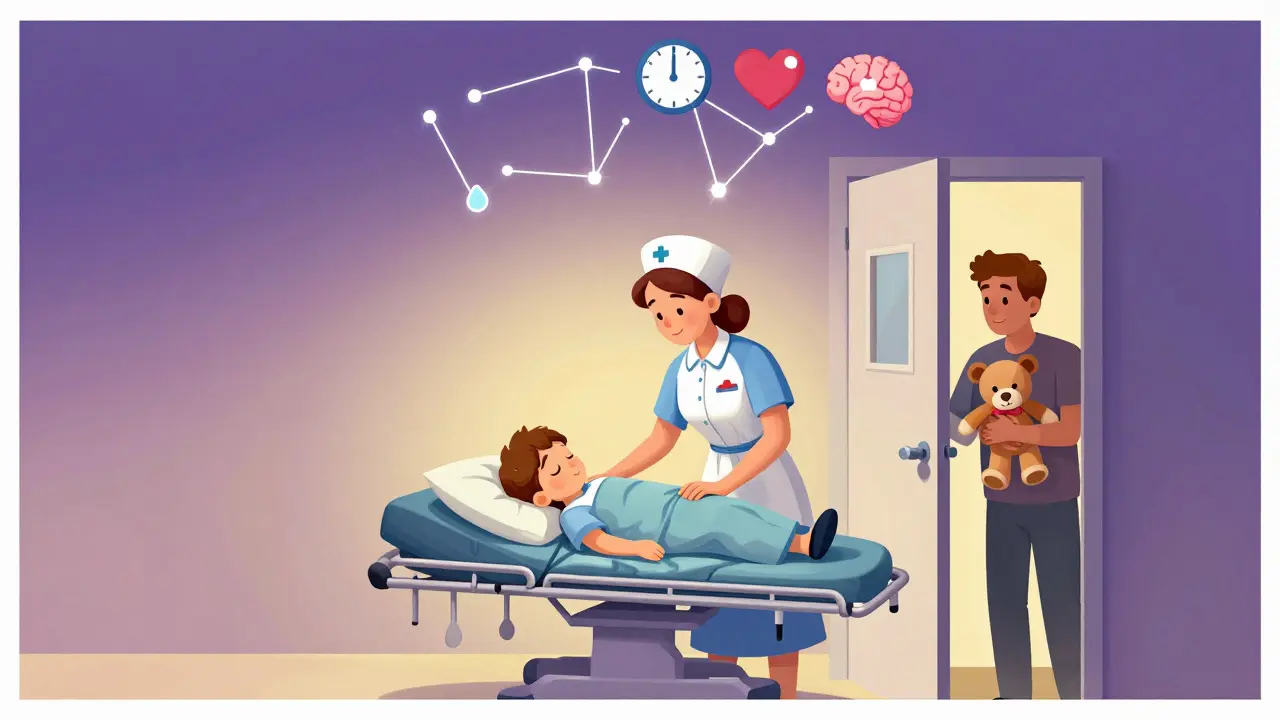
You’ll be taken to the pre-op area. A nurse will check your child’s temperature, heart rate, and oxygen levels. They’ll ask you to confirm fasting times and meds. A doctor will review the history and explain the plan.Then comes the medicine. If it’s oral midazolam, your child will drink a sweet, fruity liquid. If it’s nasal spray, they’ll get two quick sprays. Within minutes, they’ll start to look sleepy. Their eyes may droop. They might smile at you or babble. That’s normal.
You’ll be asked to hold them until they’re deeply relaxed. Then, they’ll be gently moved to the operating room. Most parents are allowed to stay until the child is asleep. That’s a big comfort-for both of you.
What You Should Ask Before Leaving
Don’t assume everything’s covered. Ask:- “Will my child need an IV or a mask to go to sleep?”
- “What signs of trouble should I watch for after they wake up?”
- “Will my child be nauseous? What can we give them to eat first?”
- “Are we scheduled for a follow-up if there’s behavior changes after surgery?”
Many hospitals now offer post-op behavioral checklists. If your child starts having nightmares, bedwetting, or refuses to be alone after the procedure, it’s not just “normal adjustment.” It’s a known side effect-and treatable.
Final Thought: This Is Manageable
Preparing for pediatric procedures sounds overwhelming. But with clear rules, the right meds, and a little planning, it’s not scary. The system is designed to protect your child. Your job is to follow the timeline, ask questions, and trust the team.Thousands of kids go through this every day. Most wake up calm, safe, and surprised it was over so fast. You can make that happen for yours.
Can I give my child a sip of water after the 2-hour fasting cutoff?
No. After the 2-hour cutoff, no liquids of any kind are allowed-not even water. This is to prevent aspiration, where stomach contents enter the lungs during anesthesia. Even a small amount can cause serious breathing problems. Stick to the timeline exactly.
Is midazolam safe for toddlers?
Yes. Midazolam is the most studied and safest pre-op sedative for children as young as 6 months. Dosing is based on weight, not age. Pediatric anesthesiologists calculate the exact amount needed. Side effects like drowsiness or mild nausea are common but short-lived. Serious reactions are rare.
What if my child is on seizure medication? Should I skip it?
Never skip seizure meds without explicit instructions from the anesthesiologist. Stopping them can trigger a seizure during or after surgery. Most antiepileptic drugs can be taken with a small sip of water on the day of the procedure. Always confirm this with the hospital’s pre-op nurse.
Can I bring my child’s favorite toy into the operating room?
You can usually bring a small comfort item like a stuffed animal or blanket into the pre-op area. Most hospitals don’t allow these into the actual operating room for safety and sterility reasons. But your child can hold it until they fall asleep, which helps reduce anxiety.
Why is ketamine sometimes used instead of midazolam?
Ketamine is used when midazolam doesn’t work-often with very anxious children, those with developmental delays, or those who refuse oral or nasal meds. It works quickly and keeps the child calm without suppressing breathing. The downside is that 8-15% of kids become agitated or confused as they wake up. Doctors use it only when the benefits outweigh this risk.
How do I know if the pre-op meds worked?
You’ll know because your child will become noticeably calmer. Their eyes may glaze over, their movements slow, and they might stop talking or respond slowly. They may smile or cuddle more. If they’re still crying, kicking, or resisting, let the nurse know-they can adjust the dose or switch methods.
Jay Ara
December 27, 2025 AT 05:46just gave my 4yo midazolam last week and holy crap it was a miracle
he was screaming at the door then 10 mins later he was cuddling my neck like a sleepy koala
no iv no tears just pure chill
hospital staff said it was the smoothest prep theyve seen in months
thanks for the guide honestly saved my sanity
Michael Bond
December 27, 2025 AT 08:18Clear liquids mean clear. No pulp. No color. No exceptions.
Kuldipsinh Rathod
December 29, 2025 AT 01:39my niece had ketamine last year and she woke up smiling like she just won a video game
but then she started yelling at the ceiling about dragons
weird but worth it
the docs said its normal and she was fine by lunch
still dont give her gummy bears before surgery tho
SHAKTI BHARDWAJ
December 30, 2025 AT 18:15THIS IS ALL A LIE
my kid got sedated with midazolam and cried for 3 hours after
the hospital lied to us
they said its safe but he had nightmares for weeks
you people are brainwashed by big pharma
why dont you try letting your kid stay awake and hold your hand instead
my 3 year old was calmer without drugs
youre all just scared of natural parenting
Matthew Ingersoll
December 31, 2025 AT 00:54As someone who grew up in a rural Indian village where surgery meant a local healer and a prayer, seeing these protocols in action still amazes me.
The precision here-weight-based dosing, timed fasting, clear communication-isn’t just medical, it’s a form of respect.
It treats children as individuals, not problems to be solved.
That’s something worth preserving.
carissa projo
January 1, 2026 AT 08:16There’s something quietly revolutionary about treating a child’s fear as a legitimate medical variable-not just an emotional hiccup to be silenced.
When we acknowledge that a 5-year-old’s panic can alter anesthetic kinetics, we’re not just being cautious-we’re being human.
This guide doesn’t just list rules; it whispers: You are not alone. Your child’s trembling hands matter. Your exhaustion is seen.
And for that, thank you.
Also-please don’t forget to bring the stuffed dragon. It’s not a distraction. It’s a lifeline.
josue robert figueroa salazar
January 3, 2026 AT 03:10midazolam doesnt work on my kid
they screamed so loud the nurse cried
ketamine was the only thing that worked
now they have trauma from the shot
so yeah thanks for the guide but your stats are fake
you dont know my child
david jackson
January 4, 2026 AT 12:16Let me tell you about the time my daughter had a tonsillectomy and we didn’t know about the 2-hour clear liquid rule-so I gave her a tiny sip of cranberry juice at 5:58 a.m. thinking it was "just a taste"
Turns out cranberry juice has pulp even if it looks clear
The anesthesiologist walked in at 6:15 and said "Did you give her anything?"
I said "No!" and my wife just stared at me like I’d set the house on fire
Procedure got delayed two hours
They had to re-schedule the whole OR block
And I had to sit in that waiting room while every other parent looked at me like I was a monster
Now I use a timer. I write everything down. I triple-check.
And I still cry every time I see a kid get an IV
Not because I’m weak
But because I learned the hard way
that love isn’t enough
you have to be precise
Jody Kennedy
January 5, 2026 AT 09:10I read this whole thing with tears in my eyes
Not because I’m scared
But because someone finally wrote this with care
My son had surgery last year and I felt like I was navigating a maze blindfolded
Now I’m giving this to every parent I know
And I’m telling my sister-in-law to stop giving her kid melatonin before surgery
That stuff is a time bomb
Thank you for making this feel less like a hospital manual and more like a hug