

The Battle Against Airborne Allergens
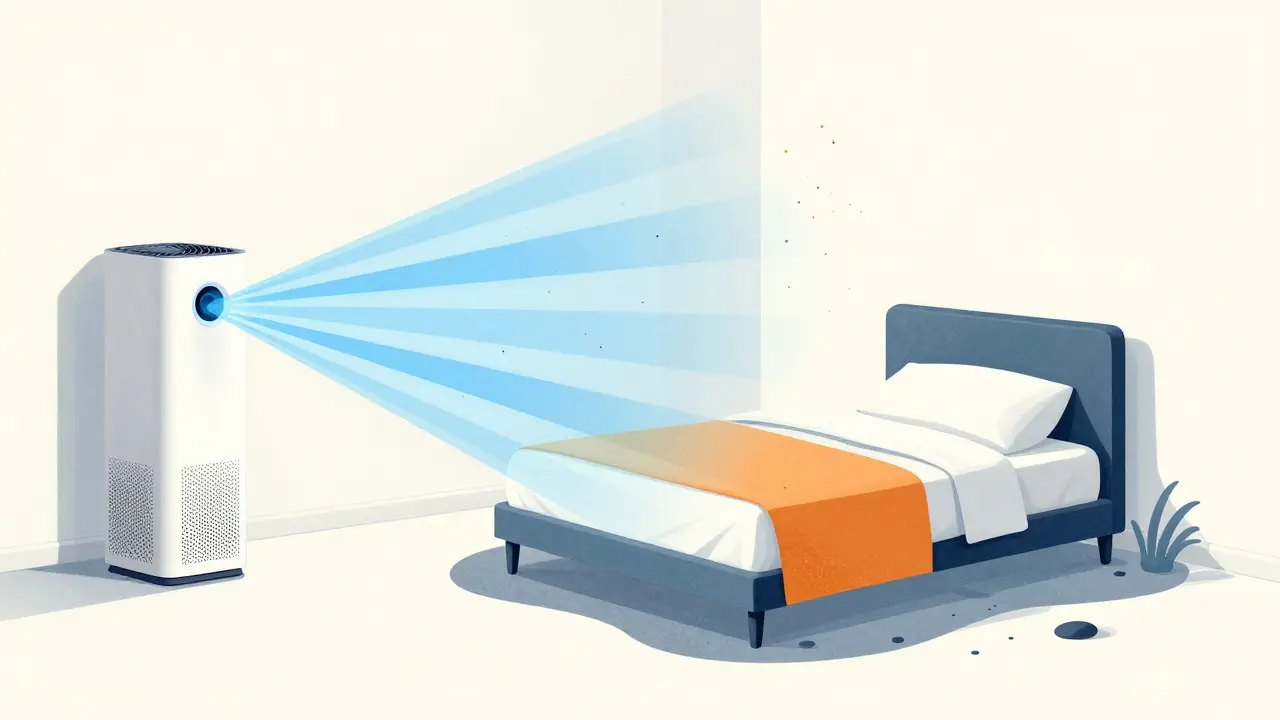
Because dander is so light, it stays airborne long after your dog has left the room. Standard vacuum filters often fail here because they simply blow the smallest particles back into the air. To actually remove these triggers, you need a HEPA Filter, which is a high-efficiency particulate air filter capable of trapping 99.97% of particles as small as 0.3 microns. Using a HEPA-certified vacuum is a game-changer, offering 30-50% better capture rates than basic models. Pair this with a true HEPA air purifier in your main living area to cut airborne allergen concentrations by up to 60%. If you're shopping for filters, look for "True HEPA" rather than "HEPA-type," as the latter often lets the smallest, most irritating proteins slip through.Creating a Safe Haven in the Bedroom
If there is one rule to live by, it's this: keep the bedroom a pet-free zone. This is arguably the most impactful change you can make. When you spend eight hours a night with your face pressed against pillows that have collected dander, your sinuses never get a break. By banning pets from the bedroom, clinical studies show you can reduce nighttime symptoms by up to 40%. For those who can't resist letting their pet in, focus on the fabrics. Bedding should be washed weekly in hot water (at least 130°F or 54°C) to neutralize the proteins. If you have carpets, you're fighting an uphill battle; hardwood or linoleum floors harbor 50-75% less dander because they don't trap particles in fibers. If replacing floors isn't an option, frequent HEPA vacuuming twice a week is your best defense.| Strategy | Estimated Reduction in Allergens | Effort Level |
|---|---|---|
| Pet-Free Bedroom | Up to 40% reduction in symptoms | Low |
| HEPA Air Purifiers | 40-60% airborne reduction | Low |
| Hard Flooring vs Carpet | 50-75% less dander accumulation | High (Installation) |
| Weekly Pet Bathing | Variable (significant if consistent) | High |
| Daily Lint Rolling | 70-85% surface removal | Medium |
Managing the Source: Pet Grooming and Care
Dealing with the environment is half the battle; the other half is managing the animal. While no breed is truly "hypoallergenic"-as every animal produces some level of protein-you can reduce how much dander enters your air. Bathing your pet once a week is highly recommended to wash away excess dander and saliva. However, let's be real: bathing a cat is often a nightmare. Since about 60% of cat owners struggle with this, consider using allergen-reducing shampoos or damp cloths to wipe down your pet's coat daily. This mimics a bath by trapping dander before it becomes airborne. Additionally, using a lint roller on your clothes and furniture daily can remove up to 85% of surface dander, preventing you from carrying allergens from the sofa to your face.Medical Support and Long-Term Relief
When cleaning isn't enough, medical intervention fills the gap. For mild cases, over-the-counter antihistamines work for about 60-70% of people within an hour. But if you're looking for a permanent solution, Immunotherapy is a medical treatment involving gradual exposure to allergens through shots or tablets to desensitize the immune system. Modern options have evolved. While traditional allergy shots are effective, a newer sublingual tablet called Odactra has been approved specifically for cat allergies, providing an 80% symptom reduction without the need for needles. For those committed to the long haul, a 3-5 year course of immunotherapy can provide lasting relief for up to 85% of patients, potentially ending the struggle entirely.
A Practical Checklist for Your First 30 Days
Establishing a new routine takes a few weeks. If you're just starting, don't try to do everything at once. Follow this phased approach to get your home under control:- Week 1: Establish Boundaries. Make the bedroom a strict no-pet zone. Buy a quality HEPA air purifier and place it in the room where you spend the most time.
- Week 2: Upgrade Your Gear. Swap your old vacuum for a HEPA-certified model. Start vacuuming high-traffic areas 2-3 times per week.
- Week 3: Focus on the Pet. Begin a weekly bathing or wiping schedule. Use a lint roller on your favorite chair and clothing every morning.
- Week 4: Fabric Deep Clean. Wash all pet bedding and curtains in hot water. Evaluate if you need to see an allergist for a long-term medication plan.
Common Pitfalls to Avoid
One of the biggest mistakes is relying on "hypoallergenic" breed labels. Whether it's a Poodle or a Sphynx, the animal is still producing the proteins that trigger your allergies. The variation is individual, not breed-specific. Another error is neglecting the filters in your air purifiers and vacuums. A clogged HEPA filter becomes useless; check your manuals, but generally, you'll need to replace them every 6-12 months to maintain that 99.97% efficiency.Can a "hypoallergenic" dog actually cure my allergies?
No. There is no such thing as a 100% hypoallergenic pet. All dogs and cats produce dander and proteins in their saliva. Some animals simply produce less of the allergen than others, but you can still have a reaction regardless of the breed.
How often should I really vacuum if I have pet allergies?
For the best results, you should vacuum using a HEPA filter 2-3 times per week. This prevents dander from accumulating in carpets and rugs, where it can otherwise linger for up to six months.
Do anti-allergen sprays actually work?
They can be helpful, but they are temporary. Testing shows they can reduce allergen potency on surfaces by 30-70%, but the effect usually only lasts between 24 and 72 hours. They are best used as a supplement to cleaning, not a replacement.
What is the difference between a HEPA filter and a standard filter?
Standard filters trap large dust bunnies but often let microscopic dander pass through or blow it back into the room. A true HEPA filter is dense enough to trap 99.97% of particles as small as 0.3 microns, which includes most pet dander and pollen.
Is immunotherapy better than daily antihistamines?
Antihistamines treat the symptoms (the sneeze, the itch) after they happen. Immunotherapy treats the cause by training your immune system to stop overreacting to the protein. While it takes years to complete, it has a higher long-term success rate (80-85%) and can lead to permanent relief.
dwight koyner
April 9, 2026 AT 14:59It is important to emphasize that while HEPA filters are incredibly effective, the placement of the unit is critical. For maximum allergen capture, the purifier should be positioned away from walls and curtains to ensure a 360-degree intake of air. Additionally, for those considering immunotherapy, I highly recommend consulting a board-certified allergist to determine if you are reacting to the dander itself or perhaps a secondary allergen like mold or dust mites that the pet is simply carrying into the home.
Toby Sirois
April 10, 2026 AT 00:23Everyone knows that these 'solutions' are just band-aids. If you can't handle a dog, you just don't have the energy for a pet. Period. Also, the idea that washing bedding once a week is enough is a joke. You need to deep clean everything every few days or you're just living in a skin-flake wasteland. Honestly, most people are just too lazy to actually keep a house clean and then they wonder why they're sneezing.
Jamar Taylor
April 10, 2026 AT 19:31You guys can totally do this! Just take it one step at a time. That 30-day checklist is such a great way to stay on track without getting overwhelmed. Keep pushing through the sneezing and keep those furry friends happy! You've got this! 🚀
Ethan Davis
April 12, 2026 AT 06:53Sure, buy the fancy filters. Follow the 'science'. Just a coincidence that these HEPA companies are making billions while we're told to spend our lives vacuuming three times a week? It's a racket. They probably put the allergens in the air themselves just to sell you the purifiers. Wake up people, this is just another way to get us addicted to expensive subscriptions and replacement filters every six months.
Stephen Luce
April 13, 2026 AT 10:15I totally get how heartbreaking it is to keep your pet out of the bedroom. My cat used to sleep on my chest and I had to move her to the couch, and the guilt was real. But man, the first night of actually breathing through my nose was a revelation. It's a tough transition for both of you, but your health has to come first.
Nikhil Bhatia
April 14, 2026 AT 02:48Too much work.
Jitesh Mohun
April 15, 2026 AT 17:57stop whining about the work and just do it if you love your animals’ it ain’t that hard to wipe a dog down once a day get over yourselves and stop looking for magic cures
Jay Vernon
April 16, 2026 AT 04:05Hard floors are the best! 🏠✨ My house is so much easier to clean now and I feel way better 🐶❤️