
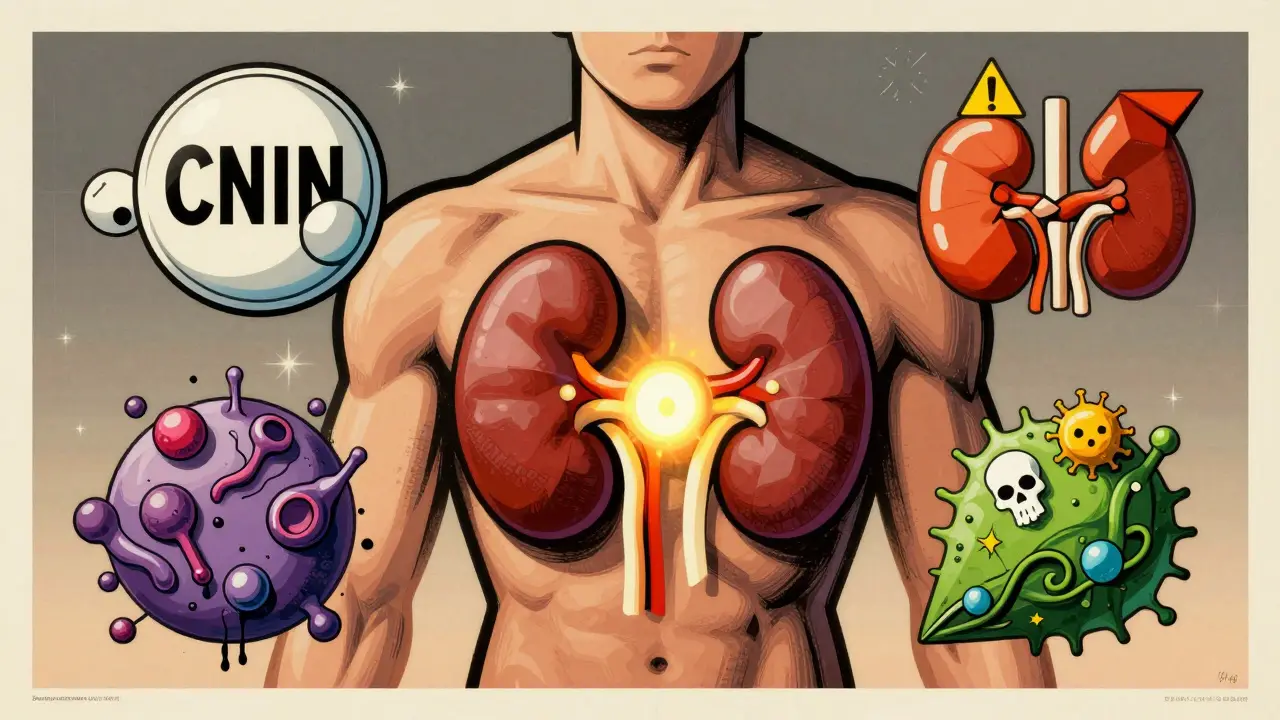
Getting a transplant isn’t the end of the journey-it’s just the beginning of a lifelong balancing act. After a kidney, heart, liver, or lung transplant, your body sees the new organ as an invader. To stop your immune system from attacking it, you need immunosuppressants. But these drugs don’t just block rejection. They also open the door to infections, cancers, kidney damage, and other serious side effects. There’s no perfect drug. The goal isn’t to eliminate all risk-it’s to manage it every single day.
How Immunosuppressants Work (And Why They’re Necessary)
Your immune system is designed to kill anything foreign. That’s great when it’s fighting off a cold. It’s dangerous when it’s trying to destroy a new liver. Immunosuppressants quiet this response. Without them, most transplanted organs would be rejected within days. Modern protocols use combinations of drugs that hit different parts of the immune system. This multi-target approach lowers the dose of each drug, reducing side effects while still preventing rejection.
Back in the 1950s, rejection happened in 80% of kidney transplants. Today, thanks to better drugs, that number is under 15%. But even with these advances, chronic rejection still kills more transplanted organs than anything else over time. That’s why you can’t stop taking these meds. Even if you feel fine, your immune system is still watching-and waiting.
The Four Main Classes of Transplant Medications
Not all immunosuppressants are the same. Each class works differently and comes with its own set of risks. Most patients take at least two, sometimes three or four, at the same time.
Calcineurin Inhibitors (CNIs): Cyclosporine and Tacrolimus
These are the backbone of most transplant regimens. They stop T-cells from activating, which is the first step in rejection. Tacrolimus is now more common than cyclosporine because it’s slightly more effective and has fewer long-term side effects-but both carry heavy risks.
- 30-50% of patients develop chronic kidney damage from long-term use
- 20-30% get low magnesium, which can cause muscle cramps and heart rhythm problems
- 15-25% develop high potassium, which can be life-threatening
- Cancer risk jumps 2 to 4 times higher than in the general population
Even small changes in blood levels can be dangerous. Too low? Rejection. Too high? Kidney failure. That’s why regular blood tests are non-negotiable.
Corticosteroids: Prednisone and Methylprednisolone
Steroids were once used in nearly every transplant patient. Today, many doctors try to get patients off them within a year. Why? The side effects pile up fast.
- 10-40% develop steroid-induced diabetes
- 30-50% lose bone density, leading to fractures
- Weight gain, facial puffiness, mood swings, and high blood pressure are common
- Long-term use increases heart disease risk
Some patients can stop steroids entirely after the first few months. Others need them for life. It depends on the organ, your immune response, and how well other drugs are working.
Antiproliferative Agents: Mycophenolate and Azathioprine
These drugs stop immune cells from multiplying. Mycophenolate (MMF) is now the most common. Azathioprine is older and used less often.
- 30-50% have stomach problems-nausea, vomiting, diarrhea
- 10-20% get low white blood cell counts, increasing infection risk
- Myelosuppression (bone marrow suppression) can require dose changes or temporary stops
MMF is taken twice daily. Some patients switch to an extended-release version to cut down on side effects and make dosing easier.
mTOR Inhibitors: Sirolimus and Everolimus
These are newer options, often used when CNIs are too toxic. They work differently-slowing cell growth instead of blocking activation.
- Less kidney damage than CNIs-only 10-20% develop chronic issues
- Higher risk of delayed wound healing (20-30% of patients)
- 1-5% develop life-threatening lung inflammation (pneumonitis)
- 30-50% get high cholesterol and triglycerides
- Everolimus has a black box warning: it can cause kidney clotting within 30 days after transplant
- Sirolimus is banned for liver and lung transplants due to higher death rates
They’re often switched to after the first year, especially in kidney patients, to protect kidney function long-term.
Why Adherence Is the Most Important Factor
You can have the best drug regimen in the world. If you miss a dose, skip a pill, or run out because you can’t afford it, you’re putting your transplant at risk.
Studies show:
- 55% of kidney transplant patients are nonadherent-some delay doses, others skip them entirely
- Heart transplant patients who miss meds are 3.5 times more likely to develop transplant coronary disease
- Lung transplant patients show nonadherence rates from 2.3% to over 70%
The reasons? Complex schedules, cost, forgetfulness, or feeling fine. But here’s the truth: rejection doesn’t always come with symptoms. By the time you feel sick, it might be too late.
Solutions? Use pill organizers. Set phone alarms. Use apps that send reminders. Ask your pharmacist about once-daily versions of tacrolimus or mycophenolate. If cost is an issue, talk to your transplant team. There are patient assistance programs. You don’t have to choose between meds and rent.
Living with a Weakened Immune System
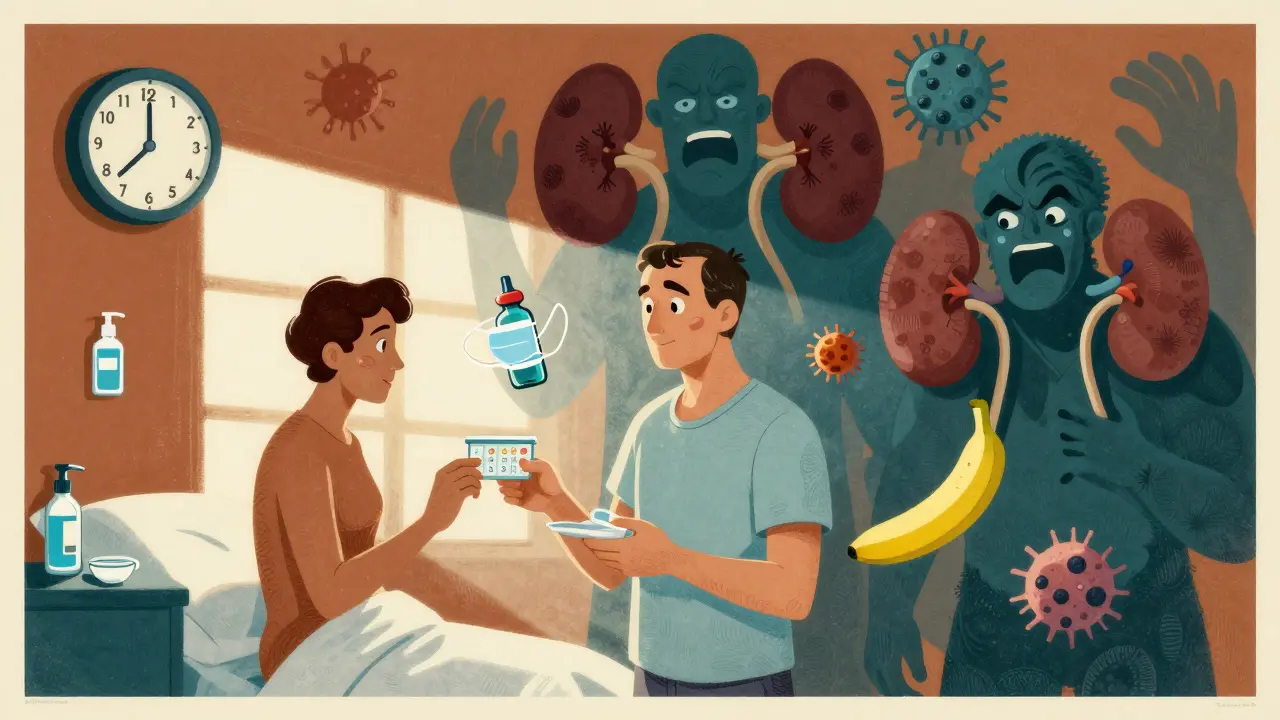
These drugs don’t just stop rejection-they make you vulnerable. You’re more likely to get sick, and when you do, it can be serious.
Here’s what you need to do:
- Wash hands often. Use hand sanitizer. Avoid crowds during flu season
- Wear a mask in hospitals or crowded indoor spaces
- Don’t clean litter boxes or change bird cages-fungus in droppings can cause deadly infections
- Avoid raw meat, sushi, unpasteurized dairy, and undercooked eggs
- Stay up to date on vaccines-flu, pneumonia, COVID-19, tetanus. But avoid live vaccines (like MMR or shingles)
- Get checked for CMV (cytomegalovirus). If you’re at high risk, you’ll get antiviral meds for 3-6 months after transplant
Even a common cold can turn into pneumonia. A small cut can become a serious infection. Prevention isn’t optional-it’s survival.
Monitoring, Adjustments, and Long-Term Strategy
Your transplant team doesn’t set your meds and forget them. They watch you closely.
Early on (first 3-6 months), you’re on the highest dose. Blood tests happen weekly. Then monthly. Then every 3 months. Doses are lowered slowly as your body learns to tolerate the organ.
By year one, most patients are on 2-3 drugs instead of 3-4. Some stop steroids. Others switch from a CNI to an mTOR inhibitor to protect their kidneys.
Doctors now use personalized approaches. If your blood tests show low rejection risk, they might cut your CNI dose by 30-50%. If you have high cholesterol, they might avoid sirolimus. If you’re prone to infections, they’ll avoid high-dose steroids.
There’s no one-size-fits-all. Your regimen changes with your body.
What Happens If Your Transplant Fails?
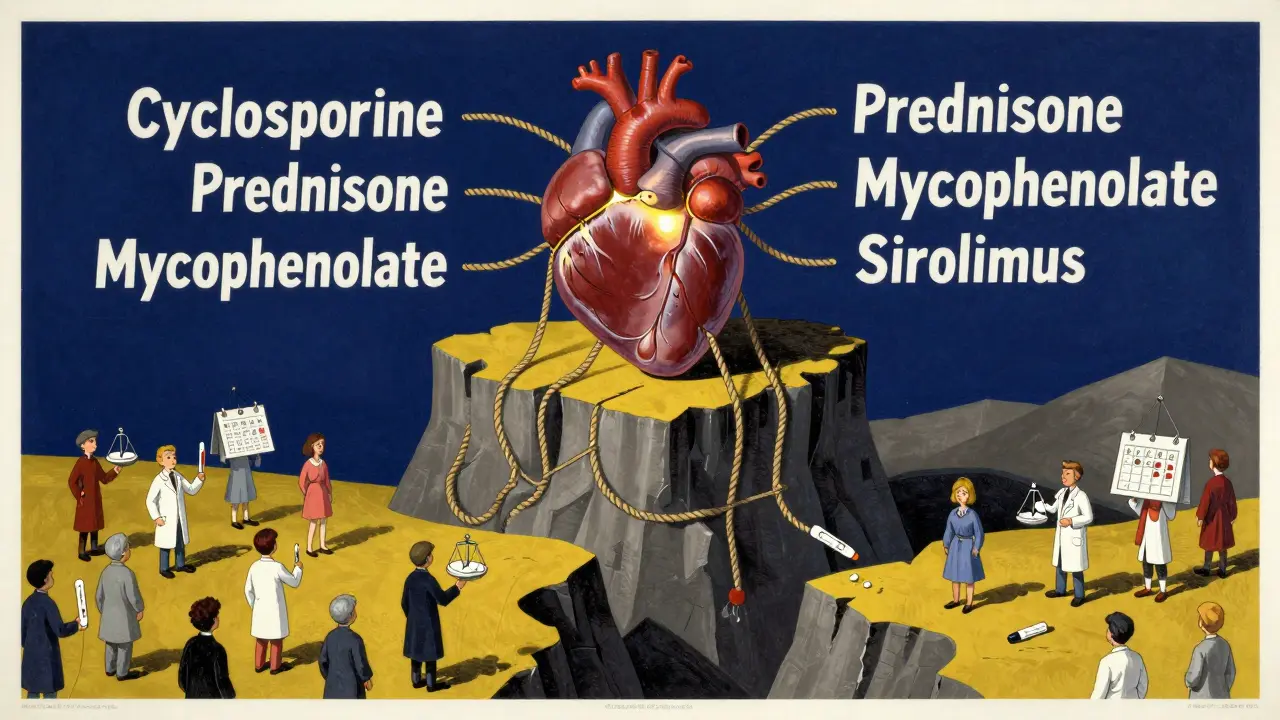
If the organ stops working, you might go back to dialysis or wait for another transplant. But what do you do with your meds?
Some patients stop immunosuppressants. Others keep taking them. Why? Because stopping suddenly can cause a violent immune reaction that damages the failing organ and makes future transplants harder.
Symptoms of rejection if you stop meds:
- Kidney: less urine, swelling, high blood pressure
- Liver: jaundice, abdominal pain, nausea
- Lung: shortness of breath, dry cough
- Heart: fatigue, swelling in legs, chest pain
Never stop these drugs without talking to your transplant team. Even if the organ is failing, stopping abruptly can make things worse.
What’s Next? The Future of Transplant Medication
Researchers are working on ways to train the immune system to accept the new organ without lifelong drugs. Early trials use cell therapies, stem cells, and tolerance-inducing protocols. But none are ready for wide use yet.
For now, the best tools we have are:
- More precise dosing based on genetics and biomarkers
- Drugs with fewer side effects
- Apps and reminders to improve adherence
- Cost-reduction programs to keep meds accessible
The goal isn’t just to keep you alive. It’s to help you live well-for decades.
Manish Singh
March 20, 2026 AT 03:05One buddy went from 6 pills a day to 2 after a year. His kidney function improved, and his mood lifted. But he still checks his blood weekly. No exceptions.
jared baker
March 21, 2026 AT 18:07MALYN RICABLANCA
March 23, 2026 AT 01:09It's like driving a Ferrari with no brakes and saying, 'I'm not speeding right now, so why check the tires?'
Your immune system is a silent assassin. It doesn't knock. It doesn't warn. It just... ends you. And you'll be dead before you even realize you're sick. This isn't medicine-it's a life-or-death daily war. Stop being casual about it.
Shameer Ahammad
March 24, 2026 AT 22:10jerome Reverdy
March 25, 2026 AT 09:03Jeremy Van Veelen
March 26, 2026 AT 17:15It’s not about willpower. It’s about surrender. To the science. To the schedule. To the silence of your own body.
Andrew Muchmore
March 28, 2026 AT 14:29Michelle Jackson
March 30, 2026 AT 13:40becca roberts
March 30, 2026 AT 16:06Well then. Guess what? I'm doing it. And I'm proud of myself. You don't get to call it a burden. It's a gift. Even if it's heavy.
David Robinson
April 1, 2026 AT 00:20Andrew Mamone
April 1, 2026 AT 10:30My sister got a liver transplant in 2021. She’s on tacrolimus, MMF, and prednisone. She uses a pill box with alarms. She avoids raw sushi. She gets her labs every 3 weeks. She’s alive. And she’s thriving. This isn’t magic. It’s discipline. And discipline is possible. It just takes support. 🙌
Laura Gabel
April 2, 2026 AT 14:26Nilesh Khedekar
April 4, 2026 AT 06:36