
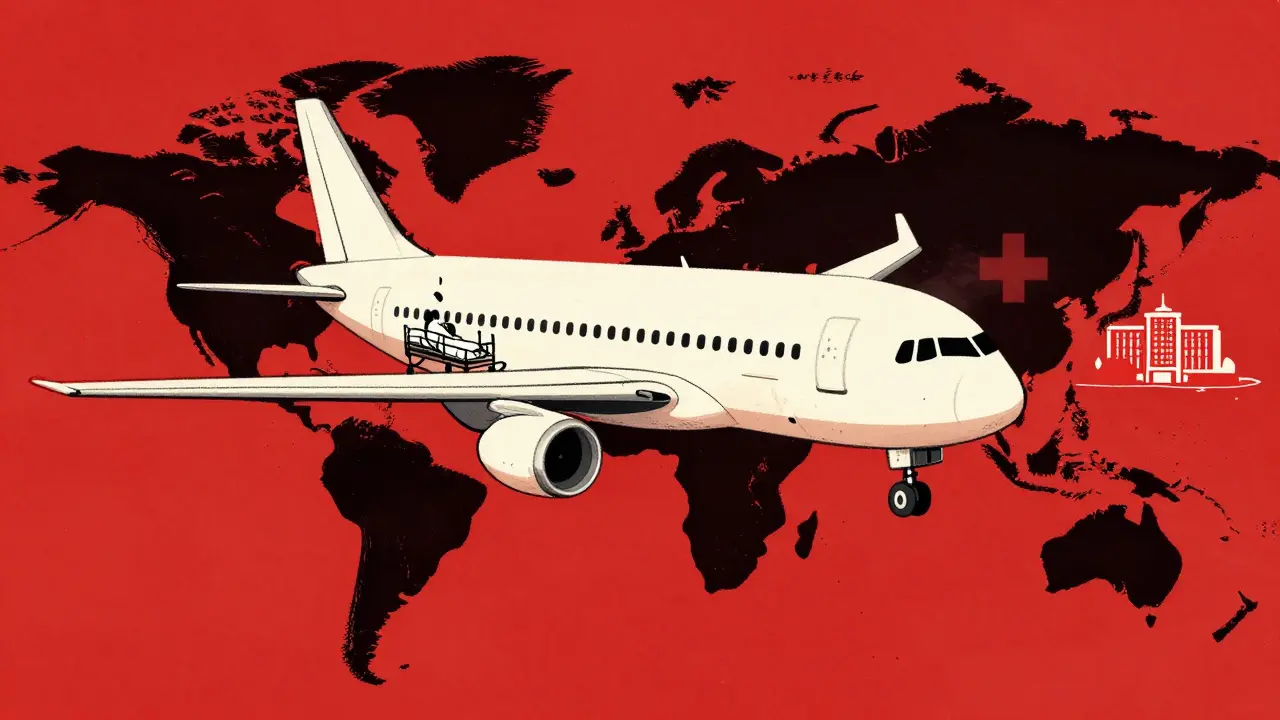
Imagine flying thousands of miles for a life-changing surgery or a cutting-edge treatment that your insurance won't cover at home. The price tag is a fraction of what you'd pay locally, and the facility looks like a five-star hotel. But once the procedure is over and you're heading to the airport, a new problem emerges: the medication you've been prescribed isn't approved in your home country, or worse, you can't find a local equivalent to keep your recovery on track. This is the hidden side of medical tourism is the practice of traveling internationally to receive healthcare services. While the savings are tempting, the gap in pharmaceutical regulations can turn a successful surgery into a medical nightmare.
| Country | Estimated Savings | Commonly Sought Procedures |
|---|---|---|
| Mexico | 40-65% | Dentistry, bariatrics, fertility treatments |
| Turkey | 50-70% | Hair transplants, eye surgery, cosmetics |
| South Korea | 30-55% | Dermatology, cancer treatment, cosmetic surgery |
| India | Significant | Cardiac surgery, orthopedic procedures |
The Danger of Regulatory Disparities
The biggest risk isn't always the surgery itself; it's what happens in the pharmacy. Every country has its own pharmaceutical regulations, which are the laws governing how drugs are tested, approved, and sold. What is considered a "gold standard" medication in Thailand might be restricted or completely unavailable in the UK or US. This creates a massive headache for patients returning home who need to maintain a specific drug regimen.
When pharmaceutical standards don't align, you run into the risk of substandard or falsified medications. In some developing regions, an estimated 1 in 10 medical products may not meet quality standards. While high-end clinics often avoid this, the broader supply chain in a foreign country might not have the same oversight as the FDA in the US or the MHRA in the UK. If you're given a drug with an incorrect dosage or an impure ingredient, your recovery could be compromised or you could suffer a severe adverse reaction.
The Continuity of Care Gap
Getting the surgery is the easy part; the hard part is the "after." Roughly 26% of medical tourists face significant issues with follow-up care. This usually happens because the doctor who operated on you is now thousands of miles away, and your local GP has no idea what exactly was administered during your stay. This lack of communication often leads to dangerous drug interactions.
For example, if you're prescribed a powerful blood thinner or a specific antibiotic abroad, and your local doctor prescribes something that interacts poorly with that drug, you're at risk. Without a seamless transition of medical records, the burden of "medication reconciliation"-the process of making sure your list of meds is accurate across different providers-falls entirely on you. Most people aren't trained pharmacists, and guessing which pill does what is a recipe for disaster.
Evaluating Quality Markers
You've probably seen the term JCI Accreditation (Joint Commission International) while researching clinics. It's a good starting point. JCI is an international organization that certifies healthcare organizations based on global standards. If a hospital in Thailand or Malaysia is JCI-accredited, it generally means they have better safety protocols and facility standards than a non-accredited clinic.
However, here is the catch: JCI focuses heavily on facility standards and general patient safety. It doesn't always guarantee that the specific medication protocols used in that country align with your home country's laws. You can't rely on a gold seal on the wall to ensure that the meds you're taking will be legal or available when you land back home. You still need to do the legwork to verify the drugs themselves.
Modern Solutions: Telemedicine and AI
Some providers are finally trying to bridge this gap. We're seeing a rise in the use of telemedicine and digital health records to keep patients connected to their surgeons after they fly home. This allows for real-time medication adjustments and better coordination with local doctors.
In some high-tech hubs, things are getting even more advanced. South Korea's Severance Hospital, for instance, has implemented AI-driven genetic profiling for cancer treatments. While this sounds like science fiction, it actually helps in making medication more precise (personalized medicine), which can reduce the risk of adverse reactions. But again, the challenge remains: if an AI-driven precision drug is used, how does a local pharmacy in a different country replicate that exact formula?

A Practical Checklist for Your Medication Safety
If you're planning a trip for medical reasons, don't just book the flight and the surgery. Use this strategy to protect your health:
- Pre-Trip Consultation: Sit down with your current doctor. Tell them where you're going and what procedure you're getting. Ask them, "If the surgeon abroad prescribes X, what is the closest equivalent we can use here?"
- Request a Full Ingredient List: Don't just accept a brand name. Brand names change by country. Ask for the generic chemical name and the exact dosage in milligrams.
- Verify Local Legality: Check if the medication you'll be bringing back is legal in your home country. Some powerful painkillers or specialty drugs are controlled substances that could get you flagged at customs.
- Digital Paper Trail: Ensure your foreign provider can send your records electronically to your home physician before you even leave the destination country.
- The "Wellness" Trap: Be extra careful with wellness tourism. Supplements and herbal remedies often have even less oversight than prescription drugs and can interfere with your recovery medications.
Is it safe to bring medications bought abroad back to my home country?
It depends on the medication. While most standard medicines are fine, some are classified as controlled substances (like certain opioids or stimulants) and may require a specific prescription or import permit to avoid legal issues at customs. Always carry a translated copy of your prescription and the official medical report from the clinic.
What should I do if my home doctor can't find an equivalent for a drug I was given abroad?
First, provide your doctor with the generic (chemical) name of the drug, not the brand name. If an exact equivalent doesn't exist, your doctor will need to find a therapeutic alternative-a different drug that achieves the same result. Do not try to order the drug from an unregulated online pharmacy to fill the gap, as this increases the risk of receiving counterfeit medication.
Does JCI accreditation mean the medication is safe?
JCI accreditation is a strong indicator that the facility follows high safety and quality standards. However, it is a facility-level certification. It does not mean the specific drugs used are approved in your home country or that they are compatible with your local healthcare system's regulations.
Why do medication prices vary so much between countries?
Price differences usually stem from different government pricing controls, labor costs, and pharmaceutical patents. Some countries allow generic versions of drugs much sooner than others, and some governments subsidize healthcare more heavily, lowering the cost for the end user.
Can AI-driven treatments increase medication safety?
Yes, tools like genetic profiling can help doctors choose the most effective drug and dosage for a specific patient's DNA, reducing the "trial and error" phase and minimizing adverse reactions. However, this only works if the patient continues to have access to that specific, high-tech treatment plan after returning home.
Next Steps for Patients
If you are in the planning phase, start by mapping out your "medication journey." This means listing every drug you currently take and identifying who will manage those drugs during and after your trip. If you've already had a procedure abroad and are struggling to find the right meds at home, your first move should be to contact the international clinic and request a "Pharmacological Summary"-a document specifically for your pharmacist that lists chemical compounds rather than trade names.