

More than one in three adults in the U.S. has metabolic syndrome - and many don’t even know it. It’s not a single disease, but a cluster of warning signs that together raise your risk for heart disease, stroke, and type 2 diabetes. The three most telling clues? Your waist size, your triglyceride levels, and how well your body handles glucose. These aren’t random numbers on a lab report. They’re connected - deeply and dangerously - by one root cause: insulin resistance.
What Exactly Is Metabolic Syndrome?
Metabolic syndrome isn’t something you catch like a cold. It’s a pattern. A quiet, slow-burning signal from your body that things are off balance. To be diagnosed, you need at least three of five specific markers: a large waistline, high triglycerides, low HDL (the "good" cholesterol), high blood pressure, and elevated fasting blood sugar. The key here isn’t just having one of these - it’s having several at once. That’s what turns a minor concern into a major health threat. The most important marker? Waist size. It’s not about being overweight overall - it’s about where the fat sits. Belly fat, especially the deep kind wrapped around your liver and organs, is metabolically active. It doesn’t just sit there. It releases chemicals that disrupt how your body uses insulin. That’s the spark that sets off the whole chain reaction.Waist Size: The First Red Flag
For men, a waist measurement over 40 inches (102 cm) is a red flag. For women, it’s over 35 inches (88 cm). But those numbers aren’t the same for everyone. People of South Asian descent, for example, face increased risk at much smaller waist sizes - as low as 31.5 inches (80 cm) for women. Why? Because fat distribution varies by ethnicity. South Asian and other Asian populations tend to store more fat internally, even when they look lean on the outside. That’s why a person with a normal BMI can still have metabolic syndrome. Every extra inch around your waist matters. Research shows that for every 4-inch (10 cm) increase in waist circumference, your risk of heart disease goes up by about 10%. That’s not a small jump. It’s the difference between a manageable risk and a serious one. And here’s the catch: you can’t spot-reduce belly fat. Crunches won’t fix it. The only proven way to shrink that waistline is sustained weight loss - usually 5% to 10% of your total body weight.Triglycerides: When Fat Turns Toxic
Triglycerides are the main type of fat in your blood. Normal levels are under 150 mg/dL. When they rise above that, especially past 200 mg/dL, your risk of plaque buildup in arteries increases - even if your LDL ("bad") cholesterol is fine. Here’s how it connects to your waist: belly fat releases free fatty acids into your bloodstream. Your liver grabs those fatty acids and turns them into triglycerides, which it then packages into VLDL particles and sends out into your blood. More belly fat = more triglycerides. Simple as that. But it gets worse. High triglycerides don’t just sit there. They make insulin resistance worse. Fat molecules interfere with insulin signaling in muscle and liver cells. That means your body needs even more insulin to do the same job - and over time, your pancreas can’t keep up. That’s when blood sugar starts to climb. The American Heart Association says triglycerides above 200 mg/dL are a high-risk zone. And if you’re over 500 mg/dL, you’re at serious risk for pancreatitis. That’s not just a cholesterol issue - it’s a metabolic emergency.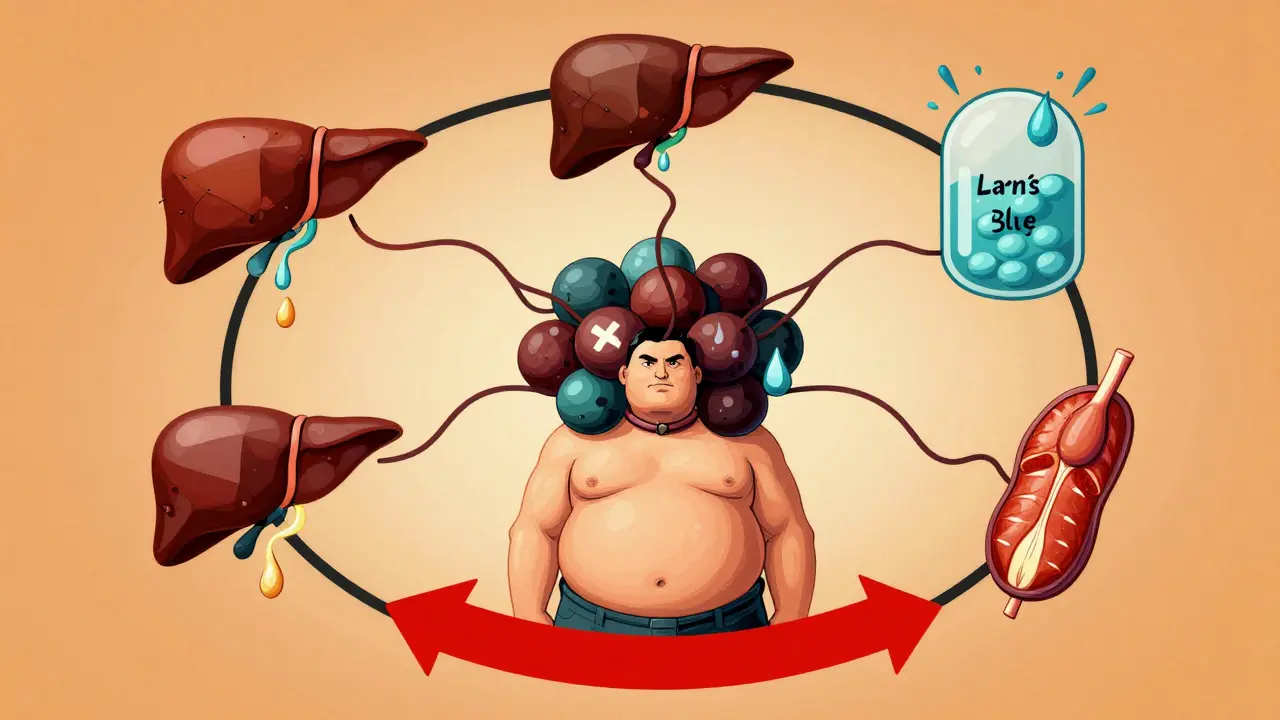
Glucose Control: The Silent Breakdown
Fasting blood sugar of 100 mg/dL or higher is the third piece of the puzzle. That’s not diabetes yet - it’s prediabetes. But it’s your body screaming that it’s struggling to manage sugar. Your cells have stopped responding properly to insulin. So glucose stays in your blood instead of moving into muscles and fat where it’s needed. The Diabetes Prevention Program found that people with fasting glucose between 100 and 125 mg/dL have a 5% to 10% chance each year of developing full-blown type 2 diabetes - unless they make changes. And here’s the kicker: 85% of people with type 2 diabetes already had at least one component of metabolic syndrome before diagnosis. For more than half, they met all the criteria. This isn’t a gradual decline. It’s a cascade. Insulin resistance from belly fat → high triglycerides → more insulin resistance → rising blood sugar → pancreas burns out. Once that happens, reversing it becomes much harder.The Cycle: How One Problem Fuels the Others
It’s not a list of separate issues. It’s a loop. Belly fat triggers insulin resistance. Insulin resistance makes your liver churn out more triglycerides. High triglycerides make your muscles and liver even less responsive to insulin. That pushes blood sugar higher. High blood sugar leads to more fat storage, especially around the waist. And the cycle keeps spinning. Dr. Robert Eckel, a leading expert on metabolic syndrome, put it plainly: "Abdominal obesity is the trigger. Everything else follows." You can’t fix triglycerides without addressing the fat around your middle. You can’t control glucose without fixing insulin resistance. And you can’t fix insulin resistance without losing weight - especially visceral fat.What You Can Do: Lifestyle Is the Only Cure
There’s no pill that cures metabolic syndrome. But there’s something even better: lifestyle change. And it works - dramatically. The Diabetes Prevention Program showed that people who lost 5% to 7% of their body weight through diet and 150 minutes of walking per week reduced their risk of diabetes by 58%. That’s more effective than metformin, the standard diabetes medication. Start with your diet. Cut out added sugars - soda, candy, pastries, even "healthy" granola bars. These spike insulin and feed fat storage. Focus on whole foods: vegetables, lean proteins, legumes, nuts, and healthy fats like olive oil and avocado. The PREDIMED trial showed that a Mediterranean-style diet cut heart attacks and strokes by 30% in high-risk people. Move more. You don’t need to run marathons. Aim for 30 minutes of brisk walking five days a week. Strength training twice a week helps too - muscle burns more glucose than fat, even at rest. Limit alcohol. One drink a day for women, two for men. Alcohol raises triglycerides fast and adds empty calories that turn straight to belly fat. Sleep and stress matter too. Poor sleep increases cortisol, which promotes fat storage around the waist. Chronic stress does the same. Fixing these isn’t optional - they’re part of the treatment plan.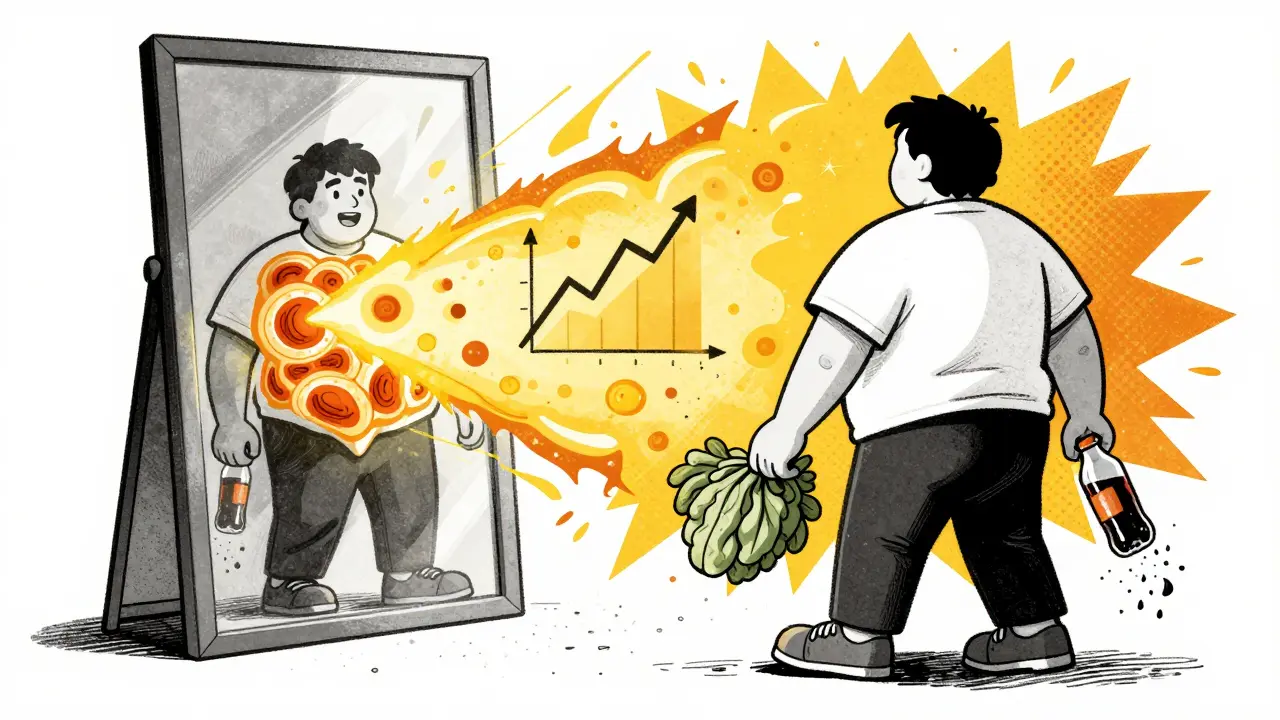
When Medication Might Help
Lifestyle is the foundation. But sometimes, you need backup. Metformin is often prescribed for prediabetes. It improves insulin sensitivity and lowers blood sugar. Fibrates or prescription omega-3s (4 grams a day) can help bring down triglycerides if they’re above 500 mg/dL. Blood pressure meds like ACE inhibitors may be needed if your numbers are high. But here’s the truth: no drug works as well as losing weight. The National Heart, Lung, and Blood Institute says clearly: "Weight loss remains the most effective strategy for reversing all components of metabolic syndrome."What’s Next: New Tools on the Horizon
Scientists are now looking beyond the traditional five markers. The triglyceride-glucose (TyG) index - calculated from your fasting triglyceride and glucose numbers - is emerging as a simple, powerful predictor of insulin resistance. A TyG index above 8.5 is strongly linked to metabolic syndrome, even before waist size or cholesterol go out of range. Research is also exploring gut bacteria. Certain microbial patterns are consistently found in people with metabolic syndrome. Future treatments might involve probiotics or dietary tweaks to reshape the microbiome. The World Health Organization warns that by 2030, half of adults in developed countries could meet the criteria for metabolic syndrome. That’s not inevitable. It’s preventable - if we act on the signals we already have.What to Do Today
You don’t need a doctor’s order to start. Here’s your simple checklist:- Measure your waist. If you’re a man over 40 inches, or a woman over 35 inches, take this seriously.
- Check your last blood test. Are your triglycerides above 150? Is your fasting glucose above 100?
- Start cutting added sugar. Swap soda for sparkling water. Skip the dessert. Read labels - sugar hides everywhere.
- Walk 30 minutes a day. Five days a week. That’s it.
- Get your blood pressure checked. If it’s over 130/85, talk to your doctor.
Can you have metabolic syndrome even if you’re not overweight?
Yes. While obesity - especially belly fat - is the main driver, some people, particularly those of South Asian, Hispanic, or certain Indigenous backgrounds, develop metabolic syndrome at normal or even low BMI levels. This is because their bodies store fat internally around organs, even if they don’t look heavy on the outside. Waist size is a better indicator than BMI alone.
Does metabolic syndrome always lead to diabetes?
Not always, but the risk is very high. People with metabolic syndrome have a fivefold increased chance of developing type 2 diabetes compared to those without it. Without lifestyle changes, about 5% to 10% of people with prediabetes (a key part of metabolic syndrome) will develop full diabetes each year. The good news: losing just 5% to 7% of body weight can cut that risk by more than half.
Can medications alone fix metabolic syndrome?
No. Medications can help manage individual pieces - like lowering blood pressure, reducing triglycerides, or controlling blood sugar - but they don’t reverse the root cause: insulin resistance from excess belly fat. The National Institutes of Health states that weight loss is the only treatment proven to reverse all five components of metabolic syndrome. Drugs are a backup, not a replacement, for lifestyle changes.
How long does it take to reverse metabolic syndrome?
Improvements can start in weeks. Fasting blood sugar and triglycerides often drop within 2 to 4 weeks of cutting sugar and starting regular movement. Waist circumference may shrink noticeably after 8 to 12 weeks of consistent diet and exercise. Full reversal - meaning no longer meeting three or more diagnostic criteria - typically takes 6 to 12 months with steady effort. The key is consistency, not speed.
Is metabolic syndrome the same as prediabetes?
No. Prediabetes means your blood sugar is higher than normal but not yet diabetic. Metabolic syndrome includes prediabetes - but also adds high waist size, high triglycerides, low HDL, and high blood pressure. You can have prediabetes without metabolic syndrome, and you can have metabolic syndrome without prediabetes (though it’s rare). But if you have metabolic syndrome, you’re almost certainly at risk for prediabetes or diabetes.
Susan Arlene
January 6, 2026 AT 20:20Mukesh Pareek
January 6, 2026 AT 22:08Rachel Wermager
January 7, 2026 AT 11:02Katelyn Slack
January 7, 2026 AT 14:55Harshit Kansal
January 9, 2026 AT 06:47Vinayak Naik
January 9, 2026 AT 20:23Saylor Frye
January 9, 2026 AT 22:59Brian Anaz
January 11, 2026 AT 01:21