
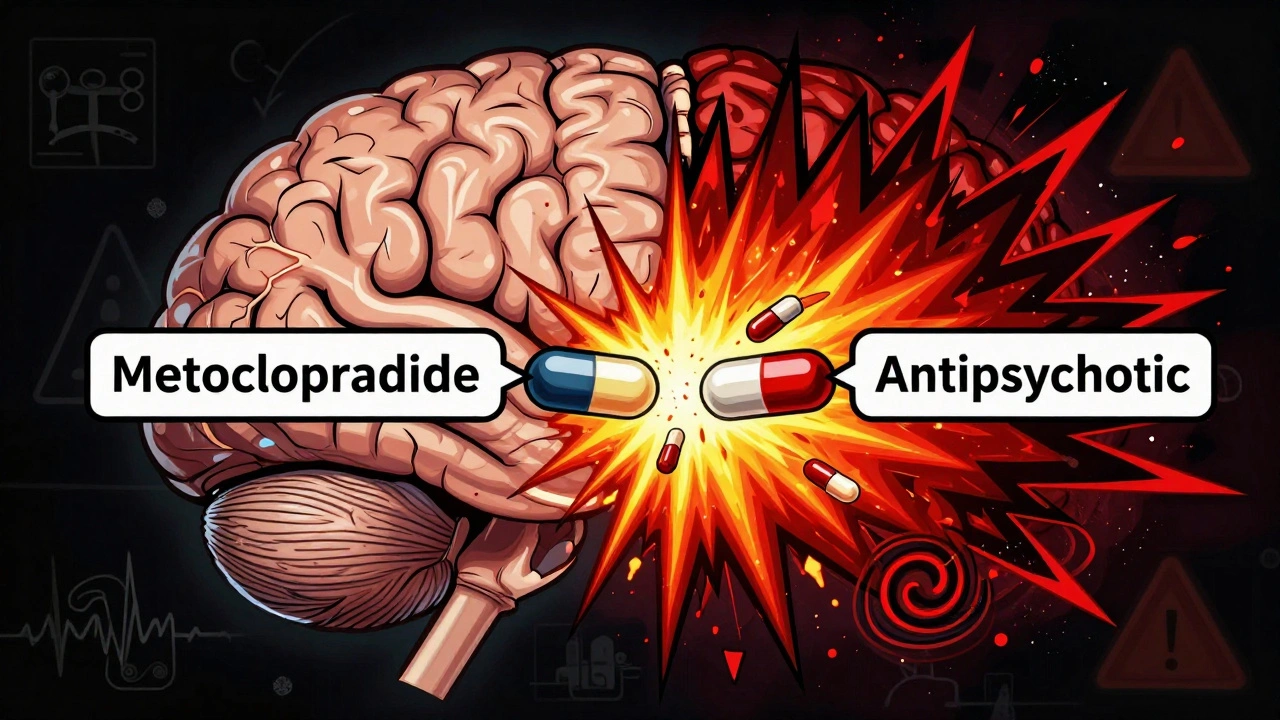
NMS Risk Assessment Tool
Assess Your NMS Risk
This tool helps you understand your risk of Neuroleptic Malignant Syndrome when taking metoclopramide with antipsychotics. Based on factors like age, kidney function, and other medications.
Imagine you're on an antipsychotic for schizophrenia or bipolar disorder, and suddenly you get severe nausea. Your doctor reaches for metoclopramide - a common anti-nausea drug. It seems logical. But what if that simple choice could trigger a life-threatening reaction called Neuroleptic Malignant Syndrome? This isn't theoretical. It’s a documented, deadly interaction that doctors are warned to avoid - yet it still happens.
What Is Neuroleptic Malignant Syndrome (NMS)?
NMS isn’t just another side effect. It’s a medical emergency. It shows up with four key signs: a high fever (often above 102°F), stiff muscles that don’t relax, confusion or loss of awareness, and wild swings in heart rate and blood pressure. These symptoms don’t come on slowly. They can develop within hours or days after adding a new drug. If not treated fast, NMS can lead to kidney failure, seizures, or death.
It’s rare - maybe 0.02% to 0.05% of people on antipsychotics develop it. But when it happens, it’s often because two drugs are working together in the wrong way. And one of the most dangerous pairs? Metoclopramide and antipsychotics.
Why Metoclopramide Is Risky With Antipsychotics
Metoclopramide (brand names Reglan, Gimoti) is used for nausea, vomiting, and slow stomach emptying. It works by blocking dopamine receptors in the brain and gut. That’s exactly how most antipsychotics work too - drugs like haloperidol, risperidone, olanzapine, and quetiapine. They all block dopamine. When you stack them, you’re not just doubling the dose. You’re overwhelming the brain’s dopamine system.
Dopamine isn’t just about mood. It’s critical for movement control. When dopamine levels drop too fast or too hard, the brain’s motor circuits go haywire. That’s why people on these drugs can develop tremors, muscle rigidity, or involuntary movements. NMS is the extreme version of this - a total system failure.
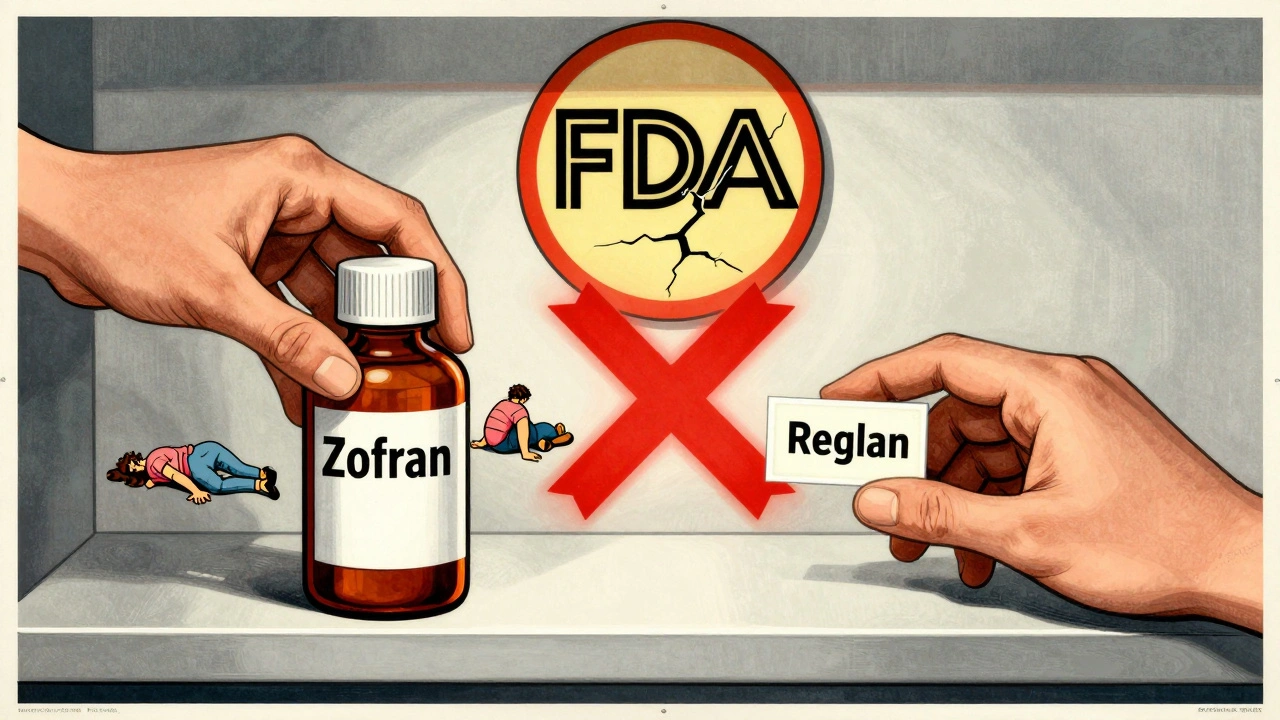
The FDA has been clear since 2017: Avoid Reglan in patients receiving other drugs associated with NMS, including typical and atypical antipsychotics. That’s not a suggestion. It’s a boxed warning - the strongest type of safety alert the agency can issue.
The Double Hit: Pharmacodynamics and Pharmacokinetics
This isn’t just about both drugs doing the same thing. There’s a second layer: how your body processes them.
Metoclopramide is broken down mainly by an enzyme called CYP2D6. Many antipsychotics - especially risperidone and haloperidol - block that same enzyme. So instead of being cleared from your system, metoclopramide builds up. Your blood levels can spike 2 to 3 times higher than normal. That means even a standard 10mg dose could act like 20mg or 30mg.
On top of that, some antidepressants like fluoxetine (Prozac) and paroxetine (Paxil) also block CYP2D6. So if you’re on an antipsychotic plus an SSRI, and then get metoclopramide? You’re stacking three drugs that all push dopamine down - and two of them trap metoclopramide in your system.
It’s a perfect storm. Pharmacodynamic synergy + pharmacokinetic trapping = much higher risk of NMS.
Who’s Most at Risk?
Not everyone who takes both drugs gets NMS. But certain people are far more vulnerable:
- Older adults - metabolism slows down, and the brain is more sensitive to dopamine changes
- People with kidney disease - metoclopramide is cleared by the kidneys. If they’re not working well, the drug piles up
- Those with genetic variations in CYP2D6 - about 7% of white Europeans are poor metabolizers, meaning they break down metoclopramide extremely slowly
- People with Parkinson’s disease or a history of movement disorders - their dopamine system is already fragile
- Anyone who’s been on antipsychotics for months or years - their brain has adapted to low dopamine, and adding another blocker can tip the balance
And here’s the kicker: many of these people are already on antipsychotics for psychiatric conditions. Their doctors may not even realize they’re at risk.
What Happens If You Mix Them?
The reaction doesn’t always start as NMS. Often, it begins with something subtle - a stiff neck, a shuffling walk, a sudden tremor. These are called extrapyramidal symptoms (EPS). Many doctors dismiss them as "side effects" and keep the drug going. That’s a mistake.
EPS can escalate fast. Within 24 to 72 hours, muscle rigidity can spread. Body temperature climbs. Heart rate races. Blood pressure drops. The person may stop responding. They might stop eating or drinking. They could slip into a coma.
One case study from 2020 described a 68-year-old woman on risperidone for psychosis who was given metoclopramide for nausea. Three days later, she had a fever of 104°F, rigid limbs, and confusion. Her creatine kinase (CK) levels - a marker of muscle breakdown - were 12 times normal. She spent 11 days in the ICU. She survived, but only because her team caught it early.
That’s not unusual. Studies show that when NMS is recognized and treated quickly, survival rates jump from under 50% to over 90%. But if it’s missed? Mortality can hit 20%.
What Should Doctors Do Instead?
If someone on an antipsychotic needs an anti-nausea drug, metoclopramide is the wrong choice. There are safer alternatives:
- Ondansetron (Zofran) - blocks serotonin, not dopamine. Safe with antipsychotics.
- Methylprednisolone - a steroid sometimes used for nausea in cancer patients.
- Prochlorperazine - yes, it’s also a dopamine blocker, but it’s used in much lower doses and is often preferred in psychiatric settings because it’s better studied for this population.
- Dimenhydrinate (Dramamine) - an antihistamine. Not as strong for severe nausea, but safe.
For gastroparesis - the condition metoclopramide is often prescribed for - alternatives include dietary changes, small frequent meals, and in some cases, gastric electrical stimulation. There’s no reason to risk NMS when other options exist.
What If You’re Already Taking Both?
If you’re currently on metoclopramide and an antipsychotic, don’t stop either one cold turkey. That can cause withdrawal symptoms or worsen psychosis.
Instead, talk to your doctor or pharmacist. Ask:
- Is there a safer alternative for my nausea or stomach issue?
- How long have I been on metoclopramide? (It’s not meant for more than 12 weeks total - the FDA says so.)
- Have I ever had tremors, stiffness, or unusual movements on this drug?
- Am I on any antidepressants that might be raising metoclopramide levels?
If you notice any new stiffness, fever, confusion, or fast heartbeat - go to the ER. Don’t wait. Say clearly: I’m on metoclopramide and an antipsychotic. I’m worried about NMS.
The Bigger Picture: Why This Interaction Gets Overlooked
Metoclopramide is cheap. It’s been around since the 1980s. Many doctors think of it as "harmless." But the FDA’s boxed warning for tardive dyskinesia - a permanent movement disorder - should have been a red flag.
Tardive dyskinesia and NMS come from the same root: dopamine blockade. The difference is timing. Tardive dyskinesia builds slowly over months. NMS hits fast. But both are preventable.
The real problem? Prescribing habits. A patient with schizophrenia gets nausea. The psychiatrist doesn’t prescribe the anti-nausea drug - the primary care doctor does. No one talks. No one checks the list. And suddenly, two drugs that shouldn’t be together are being taken by the same person.
Pharmacists can catch this. But only if they’re asked. Always bring your full medication list - including over-the-counter and herbal products - to every appointment.
Final Takeaway: When in Doubt, Don’t Mix
Metoclopramide and antipsychotics don’t just interact. They can kill. The science is clear. The warnings are loud. The alternatives exist.
If you’re on an antipsychotic, never take metoclopramide unless your doctor has ruled out every other option - and even then, only under close monitoring. If you’re on metoclopramide and start feeling stiff, hot, or confused - act immediately.
This isn’t about being scared of medication. It’s about being smart. One wrong combination can change everything. Don’t let a simple prescription become a life-threatening mistake.
Can metoclopramide cause NMS on its own?
Yes, but it’s rare. Metoclopramide alone can trigger NMS, especially at high doses or in vulnerable people like the elderly or those with kidney problems. However, the risk jumps dramatically when it’s combined with antipsychotics or other dopamine-blocking drugs. The FDA warns against combining them specifically because the interaction multiplies the danger.
Is NMS the same as serotonin syndrome?
No. NMS is caused by dopamine blockade, while serotonin syndrome comes from too much serotonin - usually from mixing SSRIs, SNRIs, or MAOIs. Both can cause fever and confusion, but NMS features muscle rigidity and high creatine kinase levels, while serotonin syndrome shows more clonus (involuntary muscle spasms), dilated pupils, and hyperreflexia. Treatment differs too: NMS needs dopamine agonists like bromocriptine; serotonin syndrome needs serotonin blockers like cyproheptadine.
How long after starting both drugs does NMS usually appear?
NMS can develop within hours or up to 10 days after starting the combination. Most cases show up within 2 to 3 days. That’s why it’s critical to watch for early signs - like new stiffness or restlessness - right after adding a new medication. Don’t wait for a fever to appear.
Are atypical antipsychotics safer than typical ones with metoclopramide?
No. Atypical antipsychotics like olanzapine or quetiapine still block dopamine receptors, even if they’re less potent than older drugs like haloperidol. The FDA’s warning includes both types. Studies show NMS can occur with any dopamine antagonist combined with metoclopramide. There’s no safe version of this combination.
Can I take metoclopramide if I’ve had NMS before?
Absolutely not. If you’ve had NMS once, you’re at extremely high risk of getting it again - even with a small dose of metoclopramide or another dopamine blocker. The FDA and medical guidelines strongly advise lifelong avoidance of all dopamine antagonists after a single episode of NMS.
What should I do if my doctor prescribes metoclopramide while I’m on an antipsychotic?
Ask for alternatives. Say: "I’m on an antipsychotic. Is there a non-dopamine-blocking option for my nausea?" If they say no, ask for a second opinion from a pharmacist or a specialist in psychopharmacology. You have the right to know the risks. Don’t accept "it’s been done before" as an answer.
Zoe Bray
December 3, 2025 AT 06:16Metoclopramide’s dual pharmacodynamic and pharmacokinetic synergy with antipsychotics represents a clinically significant pharmacological hazard, particularly in polypharmacy scenarios involving CYP2D6 inhibition. The FDA’s boxed warning is not merely advisory-it is a mandatory clinical imperative. The confluence of dopamine receptor antagonism and impaired metabolic clearance elevates the risk of neuroleptic malignant syndrome beyond baseline thresholds, necessitating rigorous medication reconciliation protocols in psychiatric and primary care settings.
Furthermore, the under-recognition of extrapyramidal symptoms as prodromal indicators of NMS remains a systemic failure in clinical education. Early intervention, including immediate discontinuation and dopamine agonist administration, can reduce mortality from >20% to <10%. This is not theoretical-it is evidence-based, peer-reviewed, and codified in UpToDate and Lexicomp guidelines.
Healthcare systems must implement mandatory EHR alerts for concurrent prescriptions of dopamine antagonists. Without structural interventions, this preventable iatrogenic catastrophe will persist.
Pharmacists, as medication safety gatekeepers, must be empowered to flag these combinations proactively-not reactively. The burden of vigilance cannot rest solely on the patient.
Girish Padia
December 4, 2025 AT 12:56people just dont care anymore. doctor gives metoclopramide cause its cheap and fast. patient dont know better. then boom. hospital. maybe they die. nobody gets punished. nobody even apologizes. just another statistic.
Sandi Allen
December 5, 2025 AT 01:24THIS IS WHY YOU CAN’T TRUST BIG PHARMA!!! They’ve known about this for DECADES!!! Reglan was pulled in Europe in 2013 for tardive dyskinesia-and now they’re still pushing it in the U.S. because it’s profitable!!! The FDA? They’re bought off!!! And don’t get me started on how they let CYP2D6 poor metabolizers be ignored like this!!! It’s a genocide of the vulnerable!!!
They don’t want you to know that metoclopramide is basically a chemical weapon in the hands of careless doctors!!!
And guess what? They’re testing this on veterans, on the elderly, on Medicaid patients!!! It’s all connected!!!
Why do you think the CDC never warns about this? Because they’re part of the cover-up!!!
Check your meds. Now. Before it’s too late!!!
John Webber
December 5, 2025 AT 18:46my aunt took this stuff with her antipsychotic and she got real stiff and hot and had to go to the hospital. she was fine after but i was scared to death. why do doctors not tell you this stuff? i mean, its not like its secret. the warning is right there. but nope. they just write the scrip and move on. i think they just dont care. or they dont read. either way, its scary. i told my mom to never let her doctor give that drug again. and she listened. thank god.
Shubham Pandey
December 6, 2025 AT 19:58metoclopramide bad with antipsychotics. done.
Elizabeth Farrell
December 8, 2025 AT 13:49I just want to say how incredibly important this post is-and thank you for taking the time to lay out every detail so clearly. I’ve worked in mental health for over 15 years, and I’ve seen too many patients get caught in this exact trap. It’s heartbreaking because it’s so preventable.
Many primary care doctors don’t realize that antipsychotics are still active in the brain even after years of use, and they assume dopamine blockade is "just a side effect"-not a potential death sentence.
But here’s the hopeful part: when patients are educated, when pharmacists speak up, when we all ask "what’s the alternative?"-we can change this. I’ve had patients come to me terrified after being prescribed Reglan, and we’ve swapped it for ondansetron in under 24 hours. No one got hurt. No one was hospitalized.
So please, if you’re reading this and you’re on an antipsychotic: don’t wait for symptoms. Ask your pharmacist or prescriber right now: "Is there a dopamine-safe option?" You deserve to be safe. And you’re not overreacting if you’re worried. You’re being smart.
And if you’re a clinician reading this? Thank you. Please share this with your colleagues. One conversation can save a life.
Saurabh Tiwari
December 9, 2025 AT 05:12good breakdown. i had no idea metoclopramide could do this. i thought it was just for heartburn 😅
glad there are safer options. ondansetron is my go-to now anyway. no drama. just works.
ps: thanks for not being alarmist. just facts. 👍
Michael Campbell
December 9, 2025 AT 16:42they want you dependent. that’s why they keep selling this stuff. they don’t want you healthy. they want you on meds forever. this is control. plain and simple. they’ll kill you slowly with side effects… then blame the disease.