

Metronidazole Dose Calculator
Track Your Metronidazole Dose
Determine if you've reached the critical 42-gram threshold where neuropathy risk significantly increases
Your Risk Assessment
When you take metronidazole for a stubborn infection-whether it’s bacterial vaginosis, a C. diff flare, or a liver abscess-you expect relief, not new problems. But for some people, the very drug meant to kill harmful bacteria starts attacking nerves instead. The result? Numbness, tingling, burning feet, or electric shocks in the hands. These aren’t just side effects. They’re early warning signs of something serious: metronidazole-induced peripheral neuropathy.
This isn’t rare. It’s just hidden. Doctors often miss it because the symptoms look like diabetes, aging, or even stress. But if you’ve been on metronidazole for more than a few weeks, and your toes are going numb, it’s time to pay attention. The damage can be reversed-if you catch it early. If you don’t, it might stick around forever.
What Exactly Is Metronidazole Neuropathy?
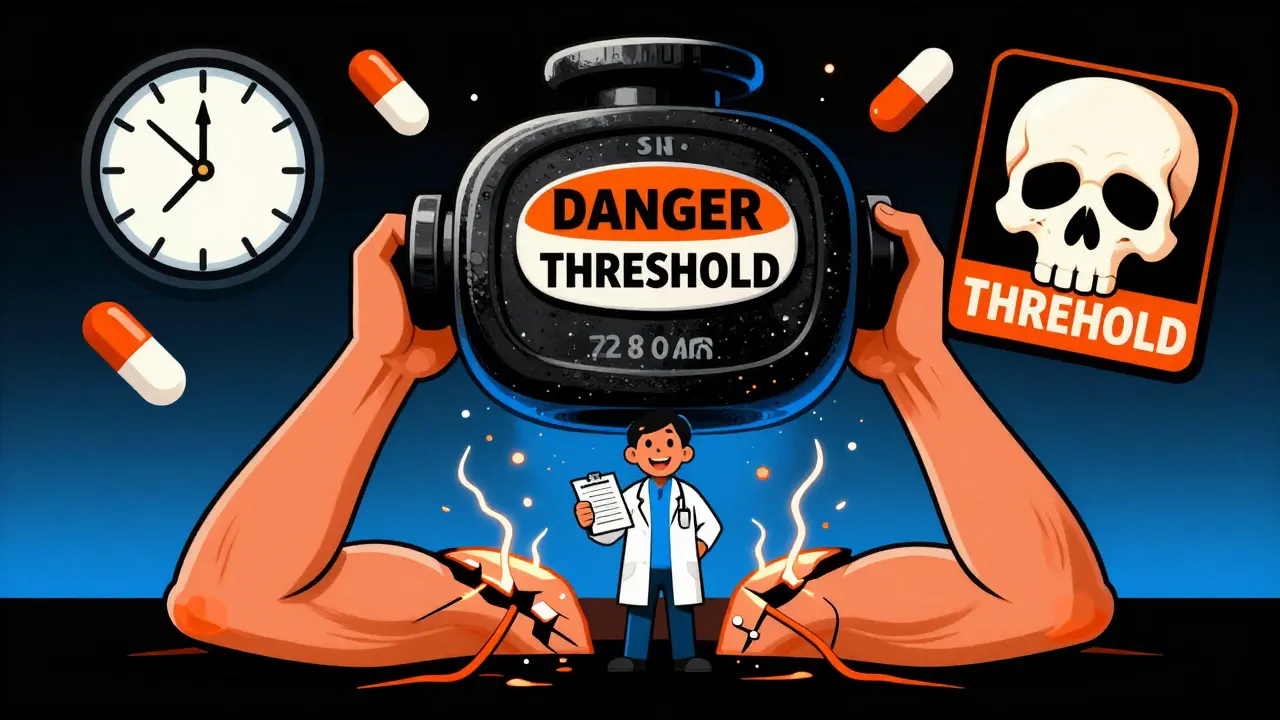
Metronidazole is a powerful antibiotic used for anaerobic bacteria and parasites. It’s been around since the 1960s. It works well. Cheap. Widely prescribed. Over 10 million U.S. prescriptions a year. But for about 1 in 6 people who take more than 42 grams total (that’s 500 mg three times a day for about four weeks), it can cause nerve damage.
The damage shows up as a sensory neuropathy-meaning your nerves stop sending normal signals. You feel numbness, tingling, or pain, usually starting in your feet and hands. It’s symmetric, meaning both sides of your body are affected. The classic pattern? Like wearing invisible socks or gloves that keep getting tighter. Some people describe it as a constant burning, others as sharp zaps or pins and needles that don’t go away.
And it gets worse at night. That’s not coincidence. Studies show nighttime pain is one of the most consistent features. Sleep gets ruined. Walking becomes painful. Simple things-like putting on shoes or stepping on a rug-turn into challenges.
The 42-Gram Threshold: Why Dose Matters
Metronidazole isn’t dangerous in short bursts. A 5-day course for a tooth infection? Very low risk. But when you take it for weeks-say, for recurrent C. diff, pelvic inflammatory disease, or H. pylori-the risk jumps dramatically.
Here’s the hard number: 42 grams. That’s the cumulative total dose where the risk of nerve damage spikes. A 500 mg tablet taken three times a day adds up to 1.5 grams per day. So after 28 days, you’ve hit 42 grams. That’s the red line.
Studies show that people who exceed this threshold have a 10.5 times higher risk of developing neuropathy compared to those who stay under it. Some cases have popped up after just 10 days with high doses. Others took months. But every documented case ties back to prolonged exposure.
And here’s the scary part: once the nerve damage starts, it doesn’t always stop just because you stop the drug. Recovery can take months. In 6% of cases, symptoms never fully go away.
How It Happens: The Science Behind the Numbness
Metronidazole crosses the blood-brain barrier easily. Once inside nerve cells, its chemical structure-specifically the nitro group-gets broken down into reactive molecules. These molecules create free radicals, which are like tiny molecular wrecking balls. They attack the inside of nerve cells, especially the long fibers that run from your spine to your toes.
Think of it like rust eating through a wire. The insulation (myelin) and the wire itself (axon) swell, break down, and lose their ability to carry signals. That’s why nerve conduction studies show reduced sensory responses. The nerves aren’t just irritated-they’re physically damaged.
Animal studies confirm this. When rats were given metronidazole, their nerve fibers showed clear signs of swelling and degeneration. The same pattern shows up in human biopsies and EMG tests. It’s not guesswork. It’s measurable.
What Sets It Apart From Other Neuropathies
Diabetic neuropathy? Usually starts in the feet and creeps up slowly. Vitamin B12 deficiency? Causes balance problems and memory fog. Chemo neuropathy? Often affects fingers more than toes.
Metronidazole neuropathy is different. It’s:
- Fast-moving-symptoms can appear within weeks, not years
- Symmetric-both hands and feet affected equally
- Reversible-unlike chemo or diabetes, most cases improve after stopping the drug
- Autonomic-linked-some patients report temperature sensitivity, sweating changes, or even needing to submerge feet in ice water for relief
One case from Duke University involved a 15-year-old girl who developed severe pain and temperature dysregulation after 12 weeks of metronidazole. She couldn’t tolerate socks. Her feet burned so badly she had to soak them in ice water just to sleep. That’s not normal. That’s drug toxicity.
Why Doctors Miss It
Most doctors don’t think about metronidazole as a nerve poison. They think of it as safe. A go-to for anaerobic infections. A cheap fix. A 2023 survey found only 38% of primary care doctors knew the 42-gram risk threshold.
Patients with diabetes? They’re told their numbness is “just diabetic neuropathy.” Patients over 50? “Aging.” People with back pain? “Pinched nerve.” The real cause? Hidden.
One Reddit user, r/Neurology, shared: “I lost six months of my life. My doctor kept saying it was my feet giving out. I had to go to a neurologist myself to connect the dots.” He’d been on metronidazole for 8 weeks for C. diff prophylaxis. His symptoms started after week 4. He didn’t stop the drug until the numbness spread to his knees.
That’s why awareness matters. If your doctor doesn’t ask about tingling or numbness during follow-ups, ask them yourself.

What You Should Do If You Notice Symptoms
If you’re on metronidazole and start feeling:
- Numbness in feet or hands
- Tingling that doesn’t go away
- Burning pain, especially at night
- Weakness when walking
Don’t wait. Don’t assume it’s something else. Stop taking metronidazole immediately and call your doctor. Do not taper. Do not wait for a follow-up. Discontinuation is the single most effective treatment.
Recovery starts the moment you stop. Most people notice improvement within 2-4 weeks. Full recovery can take 3-6 months. Physical therapy helps-especially balance and sensory retraining. One study showed patients who got structured rehab regained normal walking speed 37% faster than those who didn’t.
EMG (electromyography) can confirm the diagnosis, but don’t wait for testing to stop the drug. Delaying discontinuation risks permanent damage.
What’s Being Done to Prevent This
Hospitals are starting to wake up. Mayo Clinic now blocks electronic prescriptions for metronidazole beyond 28 days without infectious disease approval. Some institutions require neurological check-ins every 4 weeks for extended courses.
The FDA updated the drug label in 2023 to highlight the 42-gram threshold. The Infectious Diseases Society of America now recommends avoiding metronidazole beyond 42 grams unless absolutely necessary.
And there’s hope on the horizon. A clinical trial at UC San Francisco is testing whether alpha-lipoic acid (600 mg daily) can protect nerves while metronidazole fights infection. Early results are promising. If it works, this could become standard care for patients needing long-term treatment.
But right now, the best protection is awareness. Ask your doctor: “Could this cause nerve damage?” Check your total dose. Track how long you’ve been on it. If you’re approaching 42 grams, talk about alternatives.
What You Can Do Right Now
- Know your total dose. Multiply your daily dose (in mg) by the number of days you’ve taken it. If you’re at or over 42,000 mg (42 grams), you’re in the danger zone.
- Ask your doctor about alternatives. For some infections, other antibiotics like vancomycin, fidaxomicin, or clindamycin may work without the nerve risk.
- Monitor yourself. Every week, ask: “Are my feet or hands feeling different?” Keep a simple log: numbness? tingling? pain worse at night?
- Don’t ignore symptoms. Even mild tingling can be the first sign. Don’t wait for it to get bad.
- Report it. If you develop symptoms, ask for a report to the FDA’s MedWatch system. Real data saves lives.
Metronidazole is a lifesaver in many cases. But it’s not harmless. That numbness you feel? It’s your nerves screaming for help. Listen before it’s too late.
Can metronidazole cause permanent nerve damage?
Yes, in about 6% of cases. Most people recover fully after stopping the drug, but if nerve damage is allowed to progress for months without intervention, some changes can become permanent. The longer symptoms persist after stopping metronidazole, the less likely full recovery becomes. Early discontinuation is the best way to avoid lasting harm.
How long does it take to recover from metronidazole neuropathy?
Recovery varies. Many people notice improvement within 2-4 weeks of stopping the drug. Full recovery usually takes 3-6 months. In some cases, especially with high cumulative doses or delayed discontinuation, it can take up to a year. Physical therapy and nerve stimulation techniques can speed up recovery significantly.
Is metronidazole neuropathy the same as diabetic neuropathy?
No. Diabetic neuropathy develops slowly over years due to high blood sugar damaging nerves. Metronidazole neuropathy strikes quickly-often within weeks-and is directly tied to drug exposure. It’s symmetric, often worse at night, and usually improves after stopping the drug. Diabetic neuropathy rarely reverses. Metronidazole-induced damage often does.
Can I take metronidazole again if I had neuropathy before?
No. Once you’ve had metronidazole-induced neuropathy, you should never take it again. Even a small dose can trigger a recurrence-and often faster and more severe than the first time. Your body has already shown it’s vulnerable. Alternatives exist, and your doctor should avoid metronidazole completely in your future treatments.
Are there any tests to confirm metronidazole neuropathy?
Yes. Electromyography (EMG) and nerve conduction studies are the gold standard. They show reduced sensory nerve signals and axonal damage. Blood tests may rule out other causes like B12 deficiency or diabetes. But diagnosis is primarily clinical: if symptoms appear during or after metronidazole use and fit the pattern, the diagnosis is likely-even before testing.
Diane Croft
March 5, 2026 AT 06:46Metronidazole saved my life after a C. diff relapse, but I never knew it could do this to nerves. I’m grateful for this post-it’s the kind of info that should be on every prescription bottle. I’ve already shared it with my mom, who’s on her third round this year.
Jessica Chaloux
March 6, 2026 AT 00:39I’ve been on metronidazole for 6 weeks for H. pylori. My toes have been numb since week 3. I cried last night because I couldn’t feel my socks. I didn’t know it was the drug. I thought I was just getting old. I’m stopping it today. Thank you for this.
Dean Jones
March 6, 2026 AT 02:39The science here is compelling, but let’s not oversimplify. Nerve damage from metronidazole isn’t a binary outcome-it’s a spectrum influenced by genetics, liver metabolism, concurrent medications, and baseline vitamin status. The 42-gram threshold is a population-level risk, not a personal alarm bell. Some people metabolize it slowly, others rapidly. Some have preexisting subclinical neuropathy from prediabetes or alcohol use. This post reads like a panic button, but real clinical decision-making requires nuance. We’re not just treating infections-we’re managing complex biological systems. The FDA’s label update is a step forward, but blanket avoidance without risk stratification is just as dangerous as ignoring the risk entirely.
Raman Kapri
March 7, 2026 AT 17:10Interesting claims, but where are the peer-reviewed studies with controlled cohorts? You cite ‘studies show’ repeatedly without referencing any. Is this based on case reports? Retrospective analyses? A single 2021 paper from a small European hospital? The lack of citations undermines credibility. Also, 1 in 6? That’s an alarming statistic-where did that come from? A meta-analysis? A meta-meta-analysis? I need sources, not anecdotes masquerading as epidemiology.
Megan Nayak
March 9, 2026 AT 12:52Let’s be honest-this isn’t about metronidazole. It’s about the pharmaceutical industry’s systematic erasure of long-term toxicity data. They pump out billions of doses, bury the adverse event reports, and let doctors assume ‘it’s safe because it’s cheap.’ The 42-gram threshold? That’s not a discovery-it’s a cover-up that finally got leaked. I’ve seen patients with permanent neuropathy from this drug. One man couldn’t walk for 18 months. He was 34. They told him it was ‘idiopathic.’ He had to sue to get his records. This isn’t medical advice. It’s a whistleblowing.
Tildi Fletes
March 9, 2026 AT 16:55As a neurologist with 18 years of clinical experience, I can confirm the clinical presentation described is accurate. EMG findings consistently show length-dependent axonal sensory neuropathy with preserved motor function, consistent with metronidazole toxicity. The reversibility window is typically within 3 months of discontinuation; beyond that, residual deficits are common. I routinely screen patients on prolonged courses for sensory changes. I also recommend baseline and follow-up vitamin B12 and HbA1c testing to rule out confounders. This is not alarmist-it is evidence-based vigilance.
Levi Viloria
March 10, 2026 AT 01:49My sister had this. Took metronidazole for 5 weeks for a dental abscess. Started with numb toes. Thought it was her shoes. Took 3 months to realize it was the drug. She’s fine now, but it was scary. I’ve told everyone I know to ask their doctor: ‘Could this hurt my nerves?’ It’s a simple question. Should be standard.
RacRac Rachel
March 11, 2026 AT 14:22This changed my life. I’m on day 24 of metronidazole for a stubborn infection. I just started noticing tingling in my left foot. I stopped the medication today. I’m scheduled for an EMG next week. I’m so glad I read this. You’ve saved me from permanent damage. Thank you. 🙏
Lebogang kekana
March 13, 2026 AT 12:16I’m from South Africa. We use metronidazole like water here-cheap, effective, everywhere. I’ve seen patients with foot numbness and no one connected it. This isn’t just a US problem. We need global awareness. Doctors here don’t even know what ‘42 grams’ means. I’m sharing this with every clinic I can. This is public health. Not just personal health. Someone needs to translate this into Zulu, Xhosa, and Afrikaans. Lives depend on it.