
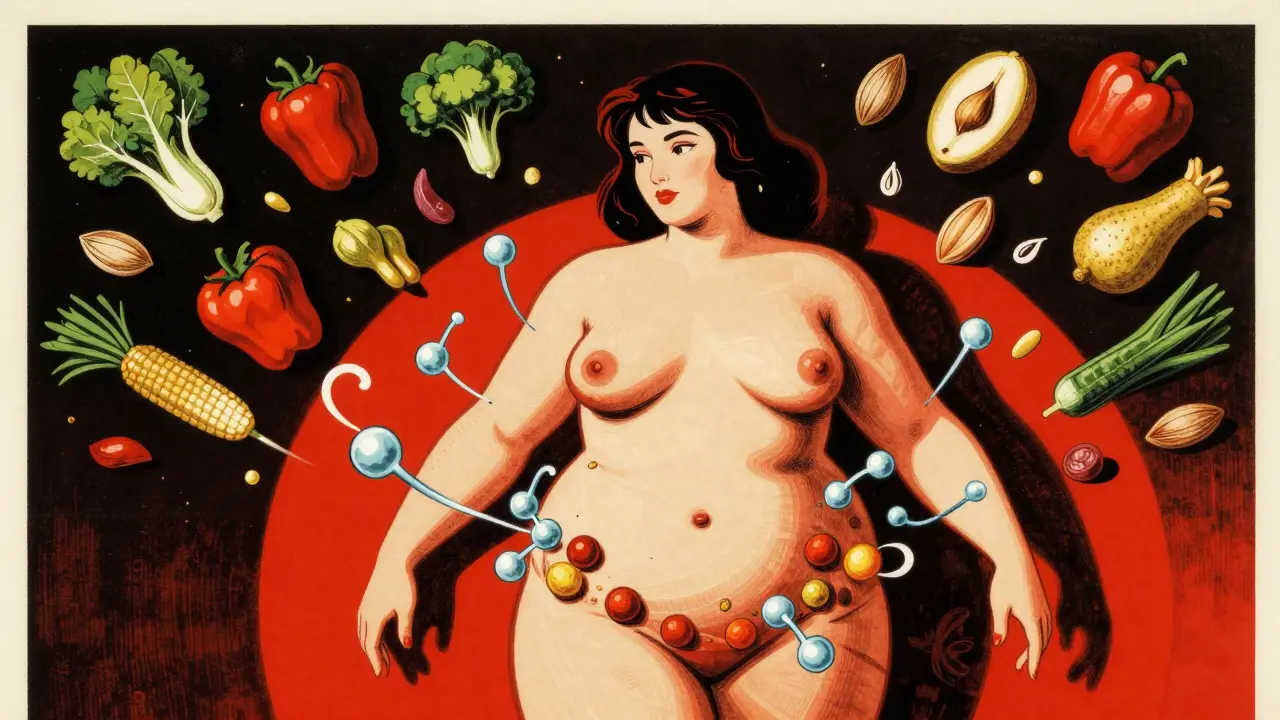
When you have PCOS, losing weight isn’t just about eating less or working out harder. It’s not a lack of willpower. It’s biology. The real culprit hiding behind stubborn belly fat, constant hunger, and failed diets is insulin resistance. And if you’re struggling to shed pounds despite doing everything ‘right,’ this is why.
Why Your Body Holds Onto Fat With PCOS
Most people think PCOS is just about irregular periods or acne. But the deeper issue is metabolic. Up to 95% of women with PCOS who are overweight have insulin resistance. Even lean women with PCOS? Around 30-75% still have it. That’s not a coincidence. It’s the core problem. Insulin is your body’s fat-storage hormone. When your cells stop responding to it - that’s insulin resistance - your pancreas pumps out more and more to compensate. Higher insulin means your body stops burning fat and starts storing it, especially around your middle. That’s why PCOS weight gain looks different: an apple shape, not a pear. Fat piles up in your abdomen, not your hips. And that kind of fat is dangerous. High insulin also tells your ovaries to make more testosterone. More testosterone means more cravings - especially for sugar and carbs - and less control over hunger. You feel ravenous, then crash. Then you eat again. It’s not emotional eating. It’s biochemical. Your hormones are screaming for fuel, but your body can’t use it properly. And here’s the trap: the more weight you gain, the worse your insulin resistance gets. Fat tissue, especially belly fat, releases chemicals that make your cells even less sensitive to insulin. So you gain weight → insulin rises → you gain more weight. It’s a loop. And breaking it isn’t about willpower. It’s about changing what you eat.The Health Risks You Can’t Ignore
PCOS isn’t just about fertility or skin. It’s a metabolic disorder with serious long-term risks. Women with PCOS are up to seven times more likely to develop type 2 diabetes than women without it. If you’re overweight? That risk jumps even higher. High insulin and belly fat also raise your chances of high blood pressure, bad cholesterol, and heart disease. Sleep apnea is common too - partly because of the fat around your neck and chest. And then there’s the risk of endometrial cancer. When you don’t ovulate regularly, your uterine lining keeps building up without shedding. Over time, that can turn into abnormal cells. These aren’t distant threats. They’re real, measurable risks. And the good news? Many of them can be reversed - not with pills, but with food.What to Eat: The PCOS Diet That Actually Works
There’s no magic diet for PCOS. But there is one rule that matters most: control your insulin spikes. Forget low-fat. Forget calorie counting. Focus on quality and timing of carbs. Start by cutting out the big insulin triggers: sugar, white bread, pastries, soda, and processed snacks. These foods spike your blood sugar fast, which means your body releases a flood of insulin. That’s exactly what you don’t want. Instead, choose:- Non-starchy vegetables - broccoli, spinach, kale, zucchini, peppers
- Lean proteins - chicken, fish, eggs, tofu, lentils
- Healthy fats - avocado, olive oil, nuts, seeds
- Low-glycemic fruits - berries, apples, pears
- Whole grains in small amounts - quinoa, oats, brown rice (not white rice or flour)
Timing Matters: Eat Like Your Life Depends On It
When you eat is just as important as what you eat. Skip the all-day grazing. Eating small meals or snacks every few hours keeps insulin high all day. That’s the opposite of what you need. Try this instead: eat within an hour of waking up. Then wait at least four hours between meals. Let your insulin drop. Let your body switch from storing fat to burning it. Many women with PCOS find success with time-restricted eating - like eating only between 8 a.m. and 6 p.m. That gives you a 14-hour fasting window. Not because fasting is magic. But because it gives your insulin a break. Don’t skip breakfast if you’re hungry. But don’t force yourself to eat if you’re not. Listen to your body. Hunger isn’t your enemy. Constant snacking is.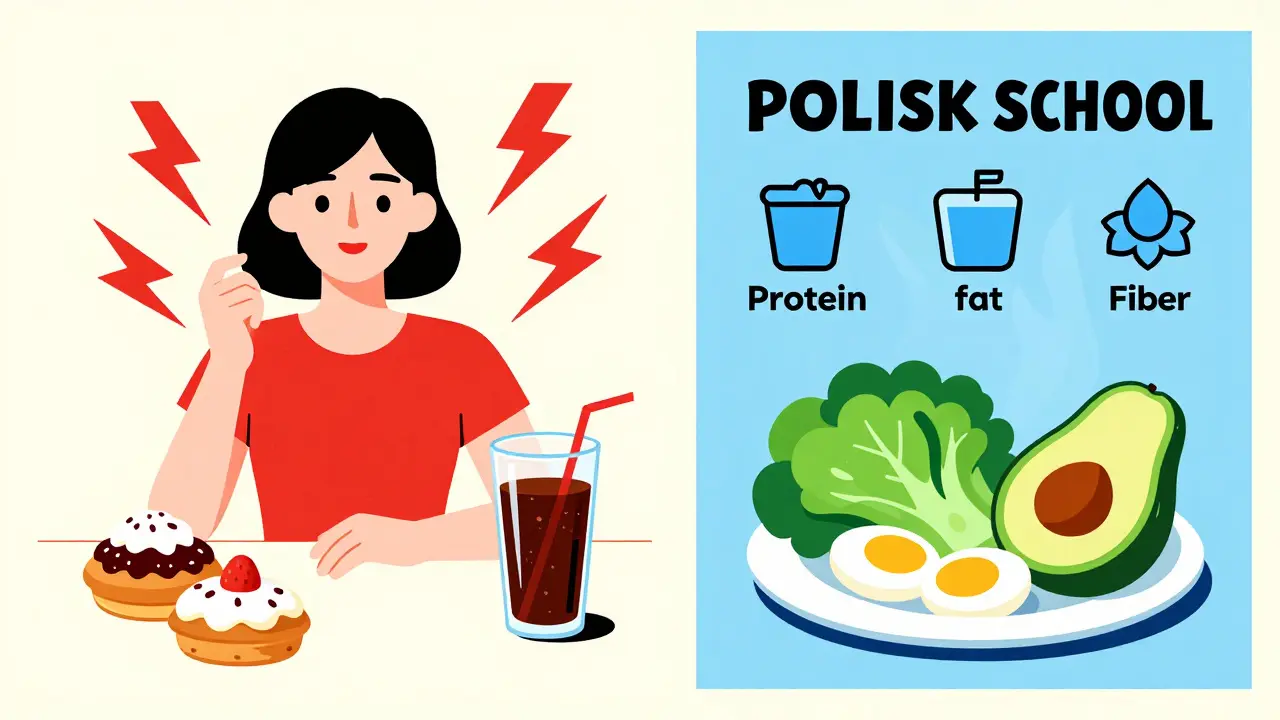
What About Carbs? Do You Have to Go Keto?
You don’t need to go full keto. But you do need to be smart about carbs. A moderate-carb diet - 40-45% of calories from complex carbs - works better for most women with PCOS than very low-carb or high-carb plans. The key is pairing carbs with protein and fat. Eat an apple with almond butter. Have oatmeal with chia seeds and eggs. Don’t eat carbs alone. Avoid anything with added sugar, even if it’s labeled “whole grain” or “natural.” That granola bar? It’s sugar with fiber. The flavored yogurt? Sugar with protein. Read labels. If sugar is in the first three ingredients, leave it. Some women do well on lower-carb plans (30% carbs). Others need a bit more. Track how you feel. Do you get hungry two hours after eating? That’s a sign you need more protein or fat. Do you crash after lunch? You probably ate too many simple carbs.Supplements That Help - But Aren’t Magic
Food comes first. But a few supplements have solid research backing for PCOS:- Inositol - especially myo-inositol and D-chiro-inositol. Studies show it improves insulin sensitivity and can restore ovulation.
- Vitamin D - low levels are common in PCOS and linked to worse insulin resistance. Get tested and supplement if needed.
- Magnesium - helps with insulin signaling and reduces cravings. Found in leafy greens, nuts, and seeds, or take 200-400 mg daily.
- Omega-3s - reduce inflammation and improve lipid profiles. Aim for 1,000-2,000 mg of EPA/DHA daily.
Why Exercise Alone Won’t Fix It
You’ve probably heard “just move more.” But if you’re doing endless cardio and still not losing weight, it’s not because you’re lazy. Cardio burns calories, but it doesn’t fix insulin resistance. In fact, too much cardio can raise cortisol - the stress hormone - which makes PCOS worse. Focus on strength training instead. Lift weights, do bodyweight exercises, use resistance bands. Muscle burns more calories at rest. It also improves insulin sensitivity more than any cardio routine. Add in daily movement - walking after meals, taking the stairs, standing more. That’s more helpful than an hour on the treadmill five times a week.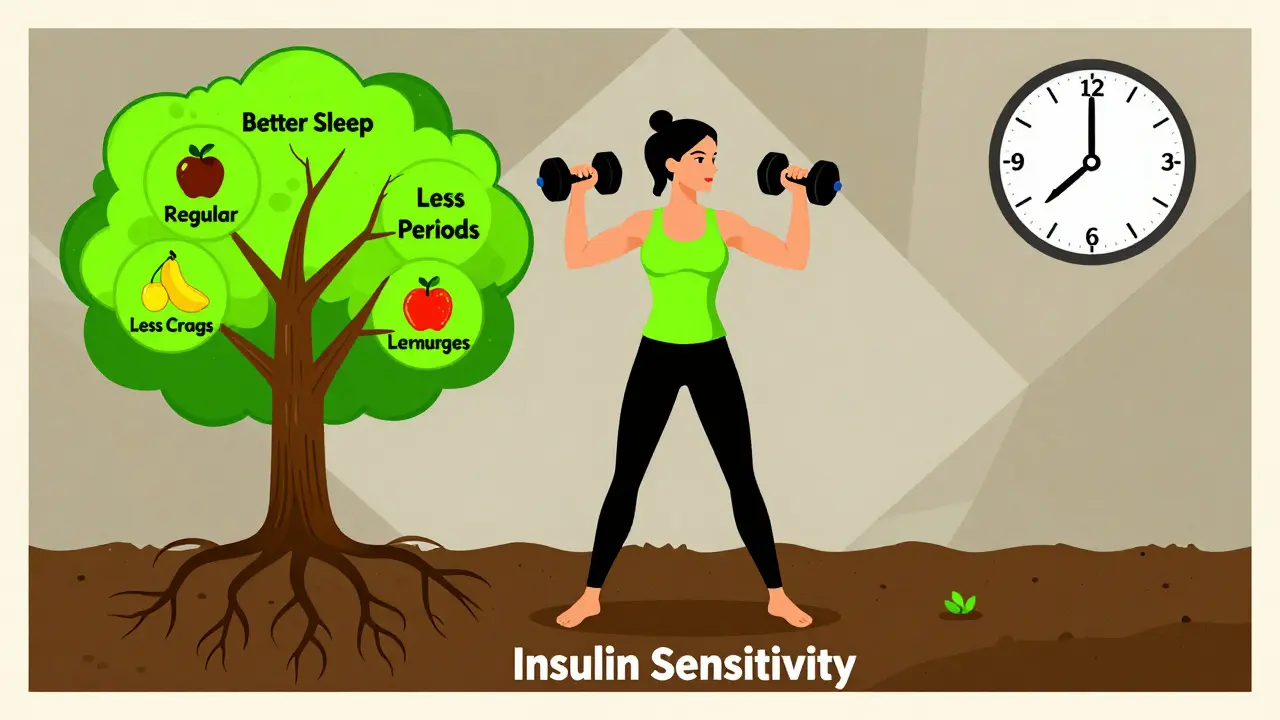
It’s Not About the Scale
You might not lose weight fast. Or maybe you lose a few pounds, then hit a wall. That’s normal. Look for other signs of progress: better sleep, fewer cravings, more energy, regular periods, clearer skin. These matter more than the number on the scale. Your body isn’t broken. It’s responding to a hormonal mess. And fixing that takes time. Be patient. Consistency beats intensity.What Doesn’t Work (And Why)
- Low-fat diets - They’re high in carbs. That spikes insulin. You’ll feel hungrier. - Calorie counting - It ignores hormones. Two 1,500-calorie meals can have totally different effects on your insulin. - Extreme fasting - Skipping meals for days? That stresses your body. It can make insulin resistance worse. - Detox teas, supplements, or cleanses - They’re marketing. Not science. You don’t need to overhaul your life overnight. Start with one change: cut out sugary drinks. Then add one protein-rich meal a day. Then stop snacking after dinner. Small steps. Daily. That’s how you break the cycle.Final Thought: This Is a Metabolic Reset
PCOS isn’t your fault. And you don’t need to be perfect. You just need to understand the rules your body is playing by. Insulin resistance is the engine driving your weight gain. Food is the fuel. Choose wisely. Eat real food. Eat slowly. Don’t let hunger rule you. And give yourself grace. The weight will come off - not because you’re starving, but because your body finally has the chance to heal.Can you lose weight with PCOS?
Yes, but not the way most people try. Weight loss with PCOS requires addressing insulin resistance through diet, not just calories or exercise. Cutting sugar, eating protein and fiber with every meal, and avoiding constant snacking are key. Many women see real progress within 3-6 months of consistent changes.
Why is it harder to lose belly fat with PCOS?
High insulin levels push fat storage into the abdominal area. Belly fat is also more active metabolically - it releases hormones and chemicals that make insulin resistance worse. This creates a cycle: more belly fat → worse insulin resistance → more fat storage. Breaking it requires lowering insulin through diet, not just targeting the belly with crunches.
Does metformin help with PCOS weight loss?
Metformin improves insulin sensitivity and can help some women lose 5-10% of body weight, especially when combined with diet changes. But it’s not a magic pill. Many women still struggle to lose weight on metformin alone. It works best as a tool alongside food and lifestyle changes - not as a replacement.
Are low-carb diets the best for PCOS?
They can be effective, but aren’t necessary for everyone. A moderate-carb diet (40-45% of calories) with smart carb choices - like whole grains, legumes, and fruit - works just as well for many. The key is avoiding refined carbs and sugar. Going too low-carb can cause fatigue or hormonal disruption in some women. Personalization matters more than any trend.
How long does it take to see results from a PCOS diet?
Cravings and energy levels often improve in 2-4 weeks. Periods may become more regular in 2-3 months. Weight loss is slower - most women lose 1-2 pounds per week after the first month. Real metabolic changes take 6-12 months. Patience and consistency are more important than speed.
Can PCOS be reversed with diet and lifestyle?
PCOS is a lifelong condition, but its symptoms can be dramatically improved - even reversed - in many cases. Studies show that losing just 5-10% of body weight can restore ovulation, lower testosterone, and improve insulin sensitivity. For some women, periods return, acne clears, and fertility improves without medication. It’s not a cure, but it’s powerful healing.
Teresa Marzo Lostalé
December 29, 2025 AT 00:53Just wanted to say this post made me cry a little-not because I’m sad, but because for the first time, someone explained why my body feels like it’s working against me. Not laziness. Not failure. Biology. I’ve been told to ‘just eat less’ for 12 years. This? This is the first thing that actually made sense.
Bradly Draper
December 29, 2025 AT 00:59I’ve been trying to lose weight with PCOS for years. I thought it was me. Turns out it’s my hormones. This post just saved me a ton of guilt. Thanks for writing this.
Kelsey Youmans
December 29, 2025 AT 01:03While the physiological mechanisms described are largely accurate and well-supported, I must emphasize the importance of individual variability in metabolic response. Some women exhibit marked improvement with moderate carbohydrate restriction, while others thrive on higher-fiber, lower-glycemic-load diets. Clinical observation suggests that adherence and psychological sustainability often outweigh dietary perfection in long-term outcomes.
Sydney Lee
December 30, 2025 AT 07:34Let’s be honest-this post is basically just a thinly veiled endorsement of keto-adjacent diet culture disguised as science. You mention ‘no magic diet,’ but then you list every single ‘PCOS-approved’ food as if it’s a holy scripture. And where’s the data on how many women actually sustain this? The real issue? The medical system fails us, and then corporations sell us ‘solutions’ that cost $80 a month. You’re not helping. You’re monetizing despair.
Debra Cagwin
December 30, 2025 AT 19:53Hey, I just want to say-this is exactly what I needed to hear. I’ve been doing the ‘eat less, move more’ thing for years and felt like a failure every single time. The part about insulin spikes and cravings being biochemical? That’s me. I’m not weak. I’m not lazy. I’m just fighting a hormone storm. And the meal plate breakdown? I’m trying that tomorrow. No more granola bars. No more ‘healthy’ smoothies with 40g of sugar. I’m done. Thank you for not blaming us.
Hakim Bachiri
January 1, 2026 AT 04:31Ugh. Another ‘PCOS diet’ post. Look, I’ve been to med school. This isn’t rocket science. You want to lose weight? Eat less sugar. Stop snacking. Move your ass. Done. Why do we need 2000 words? Also, who the hell is ‘Debra Cagwin’? Is this a cult? I’m from the South-we don’t need to be coddled with ‘empathy’ and ‘grace’-we need discipline. And no, I don’t care about your ‘insulin resistance’-if you can’t control your cravings, maybe you shouldn’t be allowed near a fridge.
ANA MARIE VALENZUELA
January 1, 2026 AT 18:22You say ‘it’s not about willpower’-but then you act like anyone who doesn’t follow your exact meal plan is just ‘not trying hard enough.’ You list ‘low-glycemic fruits’ like they’re sacred. Berries? Great. But what if you live in a food desert? What if you’re on Medicaid and your only ‘healthy’ option is a $4 frozen chicken nugget meal? You talk about ‘real food’ like it’s a moral choice. It’s not. It’s a privilege. And you’re not helping. You’re making people feel worse for being poor.
Ryan Touhill
January 2, 2026 AT 17:36Interesting. The author ignores the role of environmental endocrine disruptors-phthalates in plastics, parabens in cosmetics, even glyphosate in our food supply-all of which have been shown to mimic estrogen and exacerbate insulin resistance. Yet here we are, blaming the woman’s breakfast choices. This is classic victim-blaming wrapped in biochemistry. The real solution? Policy change. Regulate the chemicals. Not the carbs. But of course, that’s too inconvenient for a Reddit post. Let’s just tell women to eat more kale. Again.