
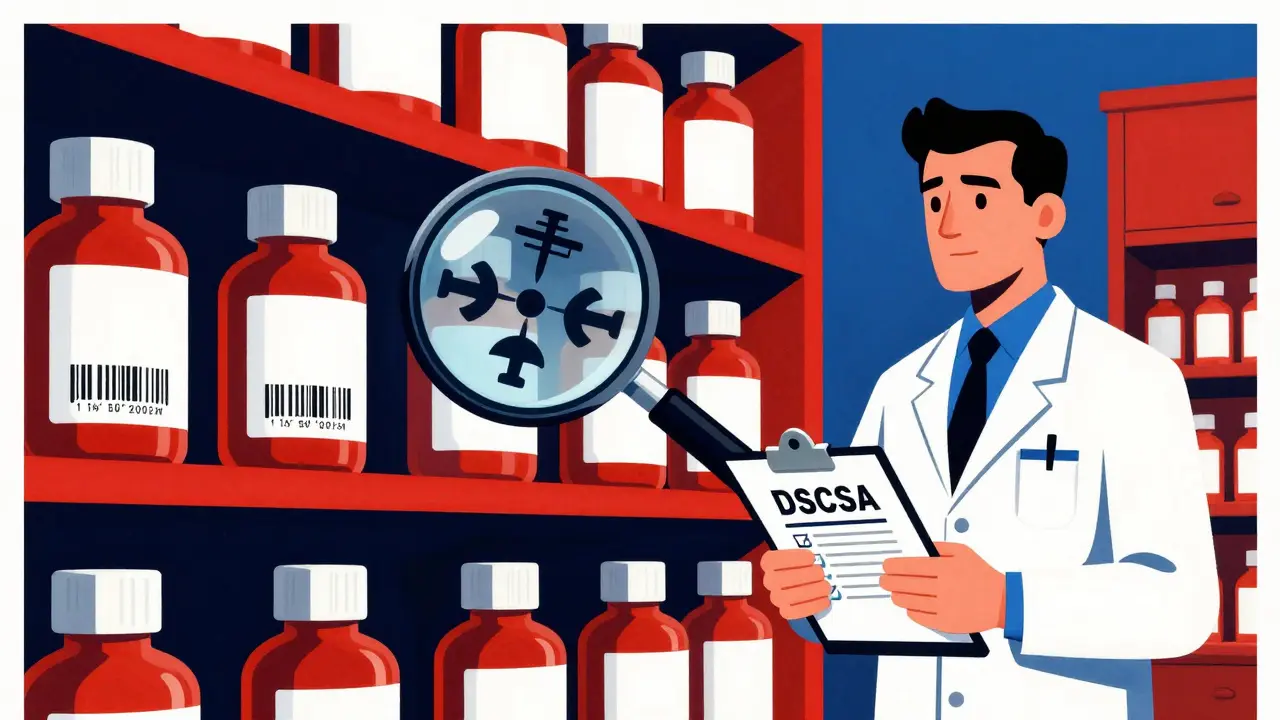
Every pill that leaves a pharmacy shelf should be safe. But in a global supply chain worth over $1 trillion, that’s not always guaranteed. Around 1% of all medicines circulating worldwide are fake - that’s billions of dollars and countless lives at risk. For pharmacies, especially those in the U.S., the stakes are high. Getting drugs from the right source isn’t just about cost or convenience - it’s about legal compliance, patient safety, and avoiding catastrophic errors. The rules are strict, the consequences are serious, and the system is more complex than most realize.
What Makes a Drug Procurement Legitimate?
Legitimate drug procurement isn’t just buying from a company that says it’s authorized. It’s a chain of verifiable actions, documented proof, and system checks that trace every package from manufacturer to patient. The backbone of this system in the U.S. is the Drug Supply Chain Security Act (DSCSA), passed in 2013 and fully enforced by November 2023. This law requires every entity in the supply chain - manufacturers, distributors, wholesalers, and pharmacies - to exchange electronic transaction data for every prescription drug. That means: transaction information (who sold what), transaction history (the full chain of ownership), and transaction statements (official documentation). Without this data, a shipment of insulin, antibiotics, or cancer drugs can’t be legally received. If a distributor can’t provide full tracing records, the pharmacy must quarantine the entire lot. In 2023, one hospital in Ohio had to hold $87,000 worth of medication because their supplier’s system glitched during the DSCSA data transfer. That’s not an outlier - it’s becoming routine.Who Can You Legally Buy From?
Not every supplier is created equal. The only legitimate sources are those registered with the FDA and licensed by your state pharmacy board. In 49 states, pharmacies must buy from distributors accredited by the Verified-Accredited Wholesale Distributors (VAWD) program run by the National Association of Boards of Pharmacy. Mississippi is the only exception - but even there, state licensing rules are tight. The American Society of Health-System Pharmacists (ASHP) recommends seven key checks before signing any contract:- Current FDA registration and state pharmacy license
- Proof of compliance with current Good Manufacturing Practices (cGMP)
- Documented quality management system
- History of product recalls or adverse events
- Security measures to prevent theft or diversion
- Financial stability (no risky startups)
- DSCSA compliance and electronic tracing capability
Why ‘White Bagging’ and ‘Brown Bagging’ Are Risky
Some pharmacies try to cut costs or speed up delivery by using nontraditional methods like white bagging or brown bagging. White bagging means a specialty pharmacy ships drugs directly to a clinic for administration. Brown bagging is when a patient picks up a drug from a retail pharmacy and brings it to their doctor’s office. Both methods bypass the formal supply chain. That means no DSCSA tracing. No temperature monitoring. No verification of lot numbers or expiration dates. ASHP found that 42% of health systems using these methods had at least one medication error linked to improper handling. One patient got the wrong dose because the bottle wasn’t labeled correctly. Another received insulin that had been stored at room temperature for three days - it was ineffective. These shortcuts may save money short-term, but they expose pharmacies to lawsuits, FDA penalties, and - worst of all - harm to patients.
Temperature Control and Product Integrity
Not all drugs are the same. Some, like vaccines, biologics, and certain antibiotics, must be kept between 2°C and 8°C. Others need to stay frozen. If a shipment sits in a delivery van for hours in January in Chicago, it’s ruined. Legitimate suppliers use validated cold chain systems: temperature loggers, insulated packaging, real-time alerts, and delivery tracking. Pharmacies must verify that each temperature-sensitive order came with a certificate of compliance. If the log shows a spike above 10°C, the product must be rejected - even if it looks fine. A 2022 survey found that 31% of independent pharmacies didn’t have reliable temperature monitoring. That’s not just negligence - it’s illegal under FDA guidelines.The Cost of Compliance
Compliance isn’t free. Since DSCSA went into full effect, healthcare systems have seen a 220% increase in procurement-related compliance costs. Hospitals now spend an average of 15-20 hours per week just verifying supplier documents. Independent pharmacies spend over 10% of their entire budget on compliance - compared to just 6% for large chains. Why the gap? Chains have centralized teams, automated systems, and buying power. Independent pharmacies often rely on one pharmacist juggling inventory, billing, and regulatory paperwork. That’s why group purchasing organizations (GPOs) are becoming essential. Hospitals using GPOs with dedicated compliance teams reported zero supply chain security incidents in 2022 - compared to 33% of standalone pharmacies that had at least one issue.Technology Is Changing the Game
The future of legitimate procurement isn’t just paperwork - it’s tech. By 2025, 73% of health systems plan to use blockchain-based traceability platforms like TraceLink or rfxcel. These systems automate DSCSA data exchange, flag anomalies in real time, and reduce manual errors. Artificial intelligence is also stepping in. Deloitte predicts that by 2026, AI will detect suspicious patterns - like a drug suddenly appearing from an unknown supplier, or a lot number being reused - with 75% accuracy. That could slash counterfeit incidents dramatically. But tech alone won’t fix the problem. Only 35% of health systems today have seamless integration between their electronic medical records (EMR), enterprise resource planning (ERP), and traceability platforms. If the systems don’t talk to each other, data gaps appear - and counterfeiters find the cracks.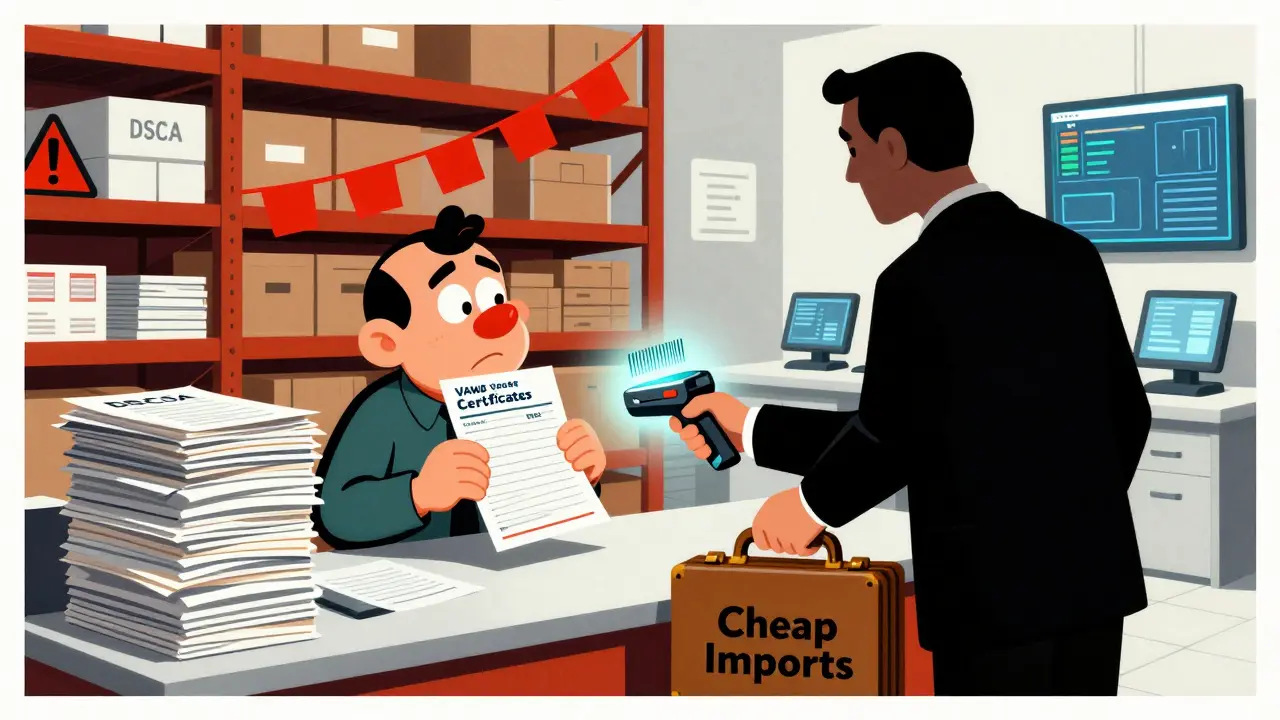
Who’s Responsible?
In most hospitals, the Chief Pharmacy Officer (CPO) now owns procurement compliance. By 2023, 92% of academic medical centers had appointed one. That’s because compliance isn’t a task for a junior pharmacist anymore - it’s a leadership role. Staff need 120 hours of specialized training. Certification through the Healthcare Supply Chain Association’s CHCSCP program takes six months. Without trained people, even the best software fails.What Happens If You Break the Rules?
The FDA doesn’t issue warnings. They issue fines, recalls, and shutdowns. In 2022, HRSA audited 1,247 340B drug pricing program participants and found $1.3 billion in non-compliant purchases. That’s not just money lost - it’s legal liability. Pharmacies that receive counterfeit drugs face criminal charges if they distribute them. Even if you didn’t know they were fake, ignorance isn’t a defense under DSCSA. The law assumes you should have known - because the tools to verify are available. The FDA received 2,147 reports of suspicious drug activity in 2022 - up 28% from 2021. That’s not declining. It’s growing. And every case starts with a pharmacy that skipped a step.What Should You Do Today?
If you run a pharmacy, here’s your action list:- Verify every supplier’s FDA registration and VAWD status - don’t take their word for it. Check the FDA and NABP websites yourself.
- Require full DSCSA transaction data for every shipment. If they can’t provide it electronically, refuse delivery.
- Scan every barcode on incoming drugs. Match it to your purchase order. No exceptions.
- Log and store all temperature data for refrigerated products - keep records for at least six years.
- Train your team on ASHP’s seven criteria. Make compliance part of onboarding, not an afterthought.
- Join a GPO if you’re independent. Centralized verification saves time, money, and risk.
Can I buy drugs from international suppliers to save money?
No. Importing prescription drugs from outside the U.S. is illegal unless specifically authorized by the FDA - and even then, it’s rare. Most international suppliers don’t meet U.S. cGMP standards. The FDA has intercepted thousands of counterfeit drugs from countries like India and China that were falsely labeled as U.S.-approved. The risk far outweighs any cost savings.
Do I need to verify every single lot number?
Yes. DSCSA requires verification of every lot number, expiration date, and National Drug Code (NDC). Even if you’ve bought from the same supplier for years, each shipment must be checked. One bad batch can contaminate your entire inventory. Barcode scanning isn’t optional - it’s the law.
What if my supplier says they’re ‘DSCSA-compliant’ but won’t share data?
Don’t accept that. DSCSA compliance isn’t a claim - it’s a technical capability. If they can’t send you transaction information in the required electronic format, they’re not compliant. Walk away. There are hundreds of certified distributors. You don’t need to work with one that cuts corners.
How often should I audit my suppliers?
At least quarterly. Review their licenses, recall history, and DSCSA documentation. ASHP recommends checking for three consecutive years of compliance. If a supplier has had even one recall in the past year, investigate why - and consider switching.
Are generic drugs riskier to source?
No - but they’re more targeted by counterfeiters. Generic drugs make up 90% of prescriptions in the U.S., so they’re the most common fake. The same rules apply: verify the manufacturer, check the NDC, scan barcodes, and demand full traceability. Just because it’s cheap doesn’t mean it’s safe.
What’s the biggest mistake pharmacies make?
Assuming trust equals compliance. Just because a supplier has been around for 20 years or sends you a nice brochure doesn’t mean they’re following the law. The most dangerous suppliers are the ones that look legitimate. Always verify - never assume.
Konika Choudhury
January 11, 2026 AT 04:13Why are we letting foreign suppliers dictate our medicine safety when we have our own pharma giants? This DSCSA stuff is just bureaucracy dressed up as protection. We don't need more paperwork-we need more American-made pills. Stop outsourcing our health to India and China. The FDA should be shutting down imports, not making compliance forms.
Windie Wilson
January 11, 2026 AT 09:55So let me get this straight… we’re spending 20 hours a week verifying lot numbers while patients wait for life-saving drugs because some system glitched? And we call this progress? I miss the days when a pharmacist just looked at the bottle and said ‘this looks right.’ Now we need blockchain, AI, and a PhD in supply chain law just to get aspirin.
Daniel Pate
January 11, 2026 AT 19:36The real issue isn’t DSCSA compliance-it’s the erosion of professional autonomy. Pharmacists were trained to be clinical gatekeepers, not data entry clerks. The system has been weaponized into a compliance theater where documentation replaces judgment. If you can’t trust a licensed distributor with a 20-year track record, what are we even measuring? The metrics don’t reflect safety-they reflect paperwork volume. We’re optimizing for audits, not outcomes.
jordan shiyangeni
January 12, 2026 AT 14:25Let’s be clear: every time a pharmacy skips a verification step, they are not just breaking a regulation-they are potentially killing someone. This isn’t about cost. It’s not about convenience. It’s about moral responsibility. When you accept a shipment without full DSCSA documentation, you are choosing to gamble with human lives. And if you’re doing that because you’re too lazy or too busy to verify a barcode, then you don’t belong in healthcare. You belong in a different industry-one where lives aren’t on the line. The FDA doesn’t issue warnings. They issue indictments. And if you think ignorance is a defense, you haven’t read the law. You’ve read a brochure.
Monica Puglia
January 12, 2026 AT 16:44Y’all are making this sound like a horror movie 🥲 I get it, the system’s broken. But we’re not helpless. I work at a small clinic and we joined a GPO last year-suddenly, our compliance time dropped from 15 hrs/week to 4. And no one got fired. No one cried. We just… got better. If you’re solo and drowning, reach out. There are people who’ve been there. You’re not alone. 💪❤️
George Bridges
January 12, 2026 AT 19:01I’ve seen pharmacies shut down because they trusted a ‘longtime supplier’ who suddenly got flagged. It’s heartbreaking. The people who work there aren’t criminals-they’re overworked, underpaid, and told to do more with less. We need systemic support, not just blame. Maybe instead of punishing every small pharmacy for one misstep, we should fund training, subsidize tech, and make compliance less of a solo death march.
Faith Wright
January 13, 2026 AT 22:49White bagging? Please. I’ve seen nurses holding insulin vials in their purses for an hour because ‘the clinic didn’t have a fridge.’ And you want me to believe that’s safer than a regulated chain? This isn’t innovation-it’s negligence with a fancy name. The fact that 42% of systems had errors? That’s not a statistic. That’s a funeral list.
Rebekah Cobbson
January 14, 2026 AT 06:48For anyone feeling overwhelmed by DSCSA-start small. Pick one thing. Maybe barcode scanning. Do it right for a month. Then add temperature logs. Then supplier verification. You don’t have to fix everything at once. Progress, not perfection. And if you’re a manager-give your team time to learn. This isn’t a test. It’s a lifeline.
gary ysturiz
January 14, 2026 AT 22:30AI detecting fake drugs? That’s the future. But tech only works if people use it. I’ve seen systems sit unused because no one was trained. Don’t buy software-buy training. Don’t hire compliance officers-hire mentors. The real solution isn’t blockchain. It’s people who care enough to double-check.
laura manning
January 16, 2026 AT 10:46According to the FDA’s 2022 report on suspicious drug activity, there was a 28% year-over-year increase, which, when contextualized against the total volume of pharmaceutical transactions (approximately 12.7 billion units annually), equates to an absolute increase of approximately 3,800 incidents. Furthermore, the 1% counterfeit rate cited in the original article, while statistically significant, is misleading without normalization per drug class-biologics and insulin exhibit counterfeit rates exceeding 3.7% in certain regions, per CDC surveillance data from Q3 2023. The 220% increase in compliance costs, while alarming, must be weighed against the estimated $4.2 billion in annual losses due to counterfeit drugs, per the Institute of Medicine. Therefore, the economic argument against compliance is not only fallacious-it is dangerously myopic.
Sumit Sharma
January 17, 2026 AT 19:10The Indian pharma sector exports over 50% of global generic drugs under strict WHO-GMP standards. Dismissing all international suppliers as counterfeit is ignorant. The problem isn’t origin-it’s traceability. A VAWD-certified Indian distributor with blockchain integration is safer than a local one with paper logs. Stop the nationalism. Fix the system. Audit the data, not the country.
Jay Powers
January 18, 2026 AT 17:09Just got a shipment yesterday. Supplier said they were DSCSA-compliant. Asked for the electronic data. They sent a PDF. I sent it back. No exceptions. I don’t care if they’ve been our vendor since 2008. If they can’t send the data right, they’re not getting our business. Simple. No drama. No yelling. Just the law.