
You pay less for the pill. It has the same active ingredient. The government says it works just as well. So why do you still hesitate when the pharmacist hands you a box with a different logo? This hesitation is not just stubbornness or confusion. It is a deep-seated psychological response known as risk perception, which refers to how individuals subjectively evaluate potential dangers and benefits in uncertain situations. In healthcare, this perception often overrides scientific data, leading patients to reject cost-effective treatments they believe are inferior.
This gap between what regulators say and what patients feel creates a massive problem. It drives up healthcare costs, reduces treatment adherence, and leaves many people suffering from conditions that could be managed effectively. Understanding why we distrust generics requires looking beyond chemistry into human psychology, education gaps, and the way we communicate about medicine.
The Psychology of "Brand" Trust
We are wired to associate higher cost with higher quality. This cognitive bias is not unique to medicine; it applies to cars, electronics, and even food. When it comes to health, however, the stakes are life and death, making us more sensitive to perceived risks. Dr. Aaron S. Kesselheim, an Associate Professor of Medicine at Harvard Medical School, notes that the term "generic" itself carries negative connotations. For many, "generic" sounds like "copycat" or "budget version," triggering an immediate assumption of lower efficacy.
This bias is reinforced by marketing. Brand-name drugs spend billions on advertising, building emotional connections and trust over years. Generics have no such budget. They rely on clinical equivalence, a dry statistical concept that does little to comfort a worried patient. The result is a phenomenon called "brand loyalty," where patients insist on paying full price for a specific label because they fear the unknown variables of a substitute.
Consider the difference in how we view a branded smartphone versus a generic charger. We might accept the charger if it looks identical, but with a pill going inside our body, visual similarity matters less than the invisible chemical process. Without visible cues of quality, patients default to skepticism. This skepticism is not irrational from a psychological standpoint; it is a protective mechanism against uncertainty.
The Bioequivalence Gap
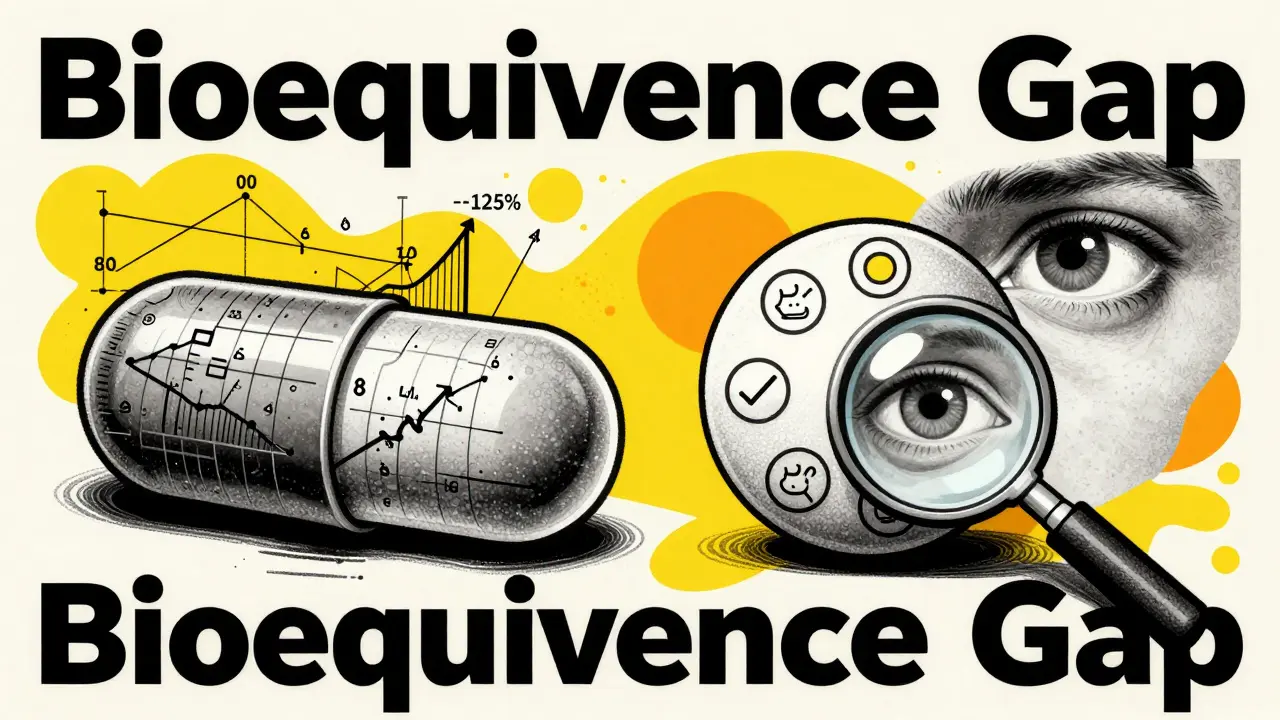
To understand the conflict, we must look at the science. The U.S. Food and Drug Administration (FDA) requires that generic drugs demonstrate bioequivalence, meaning they deliver the same amount of active ingredient into the bloodstream within a similar timeframe as the brand-name drug. Specifically, the generic must fall within 80-125% of the brand’s pharmacokinetic parameters. To a statistician, this is a tight margin indicating high similarity. To a layperson, "up to 25% different" can sound alarming.
However, the 80-125% rule is designed to ensure therapeutic equivalence, not mathematical identity. Two brand-name pills from the same manufacturer can vary slightly due to production tolerances. The FDA standard accounts for this natural variation. Despite this, the FDA acknowledges that misconceptions persist. Their own research identifies four primary myths driving safety concerns: that generics are less effective, take longer to work, are unsafe, and are made in substandard facilities.
The disconnect lies in the translation of data. Clinical trials prove population-level effectiveness. They do not guarantee individual experience. When a patient switches from a brand to a generic and feels a slight change-perhaps due to inactive ingredients like dyes or fillers-they attribute it to the active drug failing. This personal anecdote becomes powerful evidence against the statistical norm. One bad experience outweighs thousands of successful ones in the mind of the consumer.
Who Is Most Skeptical?
Risk perception is not uniform across all patients. Demographics play a significant role in who doubts generic safety. Research published in the CDC's *Preventing Chronic Disease* journal found that 20-40% of patients expressed uncertainty about generic equivalence. But certain groups are far more skeptical than others.
- Health Literacy: A 2015 study by Iosifescu et al. showed that patients with low health literacy were twice as likely to believe generics were less safe compared to those with higher literacy scores. If you cannot easily read a prescription label or understand medical jargon, the lack of branding feels like a lack of transparency.
- Age: Older adults, particularly those over 60, show heightened concern about side effects. A 2024 machine learning analysis in *Frontiers in Drug Safety and Regulation* found that older participants were significantly more anxious about generic switches, possibly due to polypharmacy (taking multiple medications) where small changes feel risky.
- Ethnicity: Non-Caucasian patients exhibit higher skepticism. A 2009 study in PMC revealed that Black and Hispanic patients were 1.8 times more likely to express safety concerns than White patients. This may stem from historical mistrust in medical institutions and unequal access to detailed provider communication.
- Education Level: Lower educational attainment correlates with higher perceived danger. Participants with less formal education were nearly twice as likely to view generic use as potentially dangerous, highlighting the need for simplified, accessible information.
These disparities matter because they affect health outcomes. If marginalized groups are systematically denied the cost savings and accessibility of generics due to unfounded fears, the healthcare system fails them twice: once in equity, and once in affordability.
The Power of Personal Experience
Statistics are abstract. Stories are concrete. Patient feedback reveals that anecdotal evidence is the strongest driver of risk perception. On forums like Reddit and PatientsLikeMe, users share stories of switching to generics and experiencing withdrawal symptoms, reduced effectiveness, or new side effects. For example, user u/MedSkeptic2023 reported severe withdrawal after switching to generic sertraline, returning to the brand to resolve issues.
While these experiences are real, they are often caused by inactive ingredients or the nocebo effect (where expecting a negative outcome causes it). However, patients do not distinguish between cause and correlation. They see the switch and the symptom and link them directly. The FDA issued a safety communication in 2012 regarding bupropion XL, acknowledging that some generic versions had narrower bioequivalence ranges, validating these fears for many.
This creates a paradox. 68% of patients who switched to generics report no difference in effectiveness (National Community Pharmacists Association, 2021). Yet, the loud minority of negative experiences dominates online discourse and word-of-mouth networks. A single story of "my blood pressure went up on the generic" spreads faster than a thousand studies proving safety. This viral nature of anecdotal risk makes combating misinformation incredibly difficult.
| Factor | Impact on Risk Perception | Evidence/Source |
|---|---|---|
| Physician Explanation | Increases acceptance 3.2x | JAMA Internal Medicine (2011) |
| Low Health Literacy | Doubles safety concerns | US Pharmacist (2015) |
| Pharmacist Counseling | Improves adherence by 37% | JAPhA (2020) |
| Negative Anecdotes | Overrides statistical safety data | Patient Forums (2023) |
| Complex Generics (Inhalers) | 48% express specific concerns | Journal of Generic Medicines (2023) |
Bridging the Trust Gap
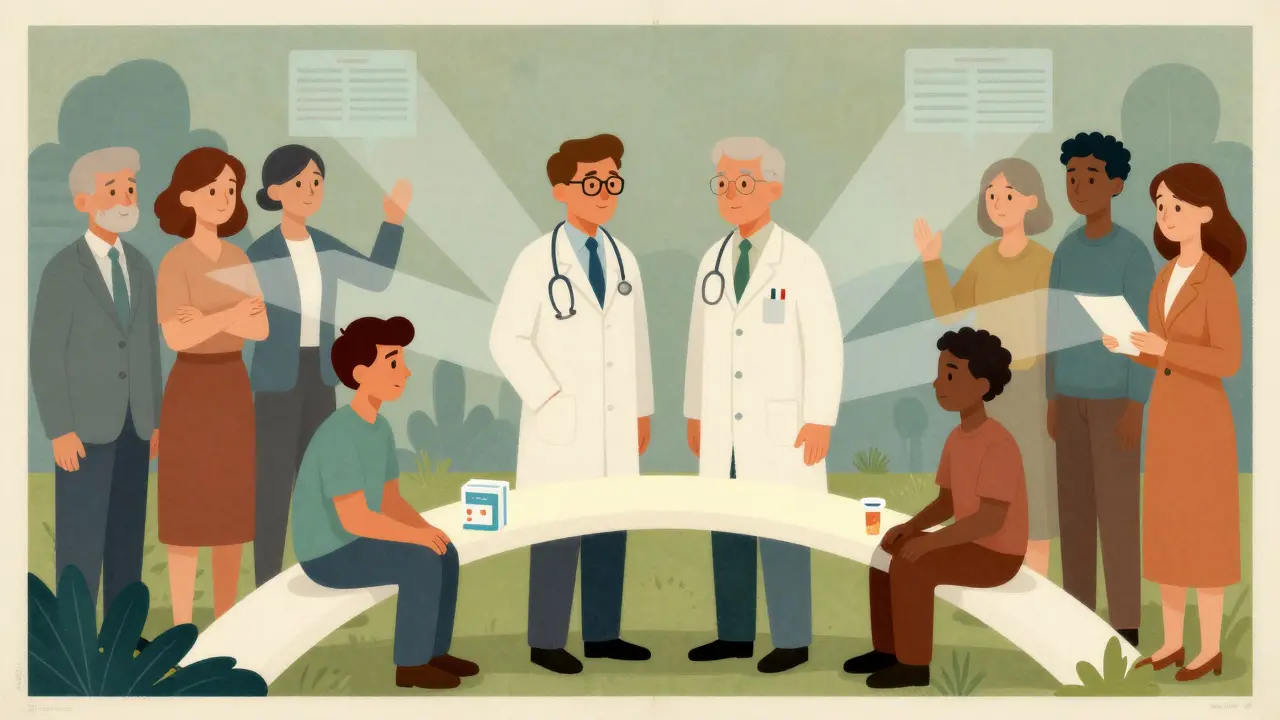
If the problem is psychological and communicative, the solution must be too. Simply pointing to FDA regulations rarely works. Patients need personalized, empathetic reassurance. Research shows that physician communication is the strongest predictor of generic acceptance. When a doctor explains bioequivalence in simple terms during the prescription process, patients are 2.8 times more likely to accept the switch.
Pharmacists also play a critical role. A 2020 study found that patients receiving counseling from pharmacists showed 37% higher adherence rates. However, time is a barrier. The average consultation lasts only 47 seconds. In that brief window, providers must build trust, explain the science, and address fears. This requires targeted training. Educational interventions designed for low-literacy patients reduced safety concerns by 42%, proving that tailored messaging works.
Technology offers new tools. Machine learning models can now identify patients at high risk for safety concerns with 87% accuracy, allowing providers to intervene proactively. Instead of waiting for a patient to refuse a refill, systems can flag those likely to doubt generic safety and trigger a deeper conversation. Additionally, multilingual campaigns by the FDA have shown a 15% reduction in safety concerns among Spanish-speaking patients, highlighting the importance of cultural and linguistic relevance.
Insurance design also influences perception. Medicare Part D plans with $0 copays for generics saw 18% higher utilization than those with tiered structures. Removing financial friction reduces the mental load of decision-making, making patients more willing to try the recommended option. When money is not a factor, trust becomes the sole variable.
The Economic Stakes
This is not just a clinical issue; it is an economic imperative. Generic drugs account for 90% of prescriptions filled in the U.S. but only 23% of drug spending, saving approximately $370 billion annually. However, brand loyalty driven by safety fears costs the system about $8 billion each year in unnecessary brand-name prescriptions. Over the next decade, closing this gap could save $185 billion, according to the Congressional Budget Office.
These savings are not just theoretical. They fund hospitals, support research, and keep premiums lower for everyone. When patients reject generics based on outdated perceptions, they contribute to rising healthcare costs that affect their entire community. Addressing risk perception is therefore a public health priority, not just a pharmaceutical marketing challenge.
The path forward requires a shift in narrative. We must move from defending generics as "cheap alternatives" to promoting them as "scientifically equivalent standards." By empowering patients with clear, relatable information and leveraging the trust they place in their healthcare providers, we can align perception with reality. Until then, the gap will remain, costing both health and wealth.
Are generic drugs really the same as brand-name drugs?
Yes, for most medications. The FDA requires generics to be bioequivalent, meaning they contain the same active ingredient, strength, and dosage form as the brand-name drug. They must perform similarly in the body, though inactive ingredients like colors or fillers may differ.
Why do some patients feel worse on generics?
Some patients experience differences due to inactive ingredients, which can cause mild allergic reactions or digestive issues. Others may experience the nocebo effect, where expecting a negative outcome leads to perceived side effects. Rarely, a specific generic manufacturer may have tighter or looser bioequivalence margins, affecting performance for sensitive individuals.
What should I do if I think my generic isn't working?
Do not stop taking your medication abruptly. Contact your doctor or pharmacist immediately. They can investigate whether the issue is related to the specific generic manufacturer, your health condition, or other factors. In some cases, they may prescribe a different generic brand or authorize the brand-name drug if medically necessary.
Are complex generics like inhalers as safe as brands?
Complex generics, such as inhalers, patches, and topical creams, are harder to prove equivalent because delivery mechanisms matter more. While they meet FDA standards, 48% of patients express specific concerns about them. Always follow your doctor's guidance closely with these devices, as proper technique is crucial for effectiveness.
How can doctors help reduce generic skepticism?
Doctors should proactively discuss generic options during prescriptions, explaining bioequivalence in simple terms. Acknowledging patient concerns rather than dismissing them builds trust. Providing written materials tailored to health literacy levels and encouraging questions can significantly increase acceptance and adherence.