
The Quick Guide to Getting Started
If you don't want to read the whole deep dive and just want to know how to fix the "winter blues," here is the cheat sheet. To make Light Therapy work, you need three things: the right intensity, the right timing, and the right distance.- Intensity: Use a light box that delivers 10,000 lux of full-spectrum white light.
- Timing: Sit in front of the light for 30 minutes, ideally within one hour of waking up.
- Distance: Keep the box about 16 to 24 inches from your face.
- Technique: Don't stare directly into the light. Place it slightly to the side and keep your eyes open while you read, eat breakfast, or check emails.
Why Your Brain Craves Light in December
Your brain isn't just reacting to the "gloomy weather." It's a chemical reaction. When sunlight drops, your body produces more melatonin (the sleep hormone) and less serotonin (the feel-good neurotransmitter). This is why you feel sleepy all day and irritable all night. Circadian Rhythm is the internal 24-hour clock that regulates sleep-wake cycles and hormone release. When the sun disappears, this clock gets out of sync. Light therapy essentially "tricks" your brain into thinking it's a bright spring morning, which suppresses melatonin and boosts serotonin. Research from the American Psychiatric Association shows that about 5% of adults suffer from SAD. For these people, BLT isn't just a "wellness tip"-it's a first-line clinical treatment with remission rates between 50% and 60% when done correctly.Comparing Light Therapy to Other Treatments
When you're feeling low, you generally have three paths: lifestyle changes, medication, or light therapy. How do they stack up? One of the biggest draws of BLT is the speed. While antidepressants like Fluoxetine (Prozac) can take weeks to fully kick in, many people feel an energy boost from light therapy within 5 to 7 days. In some clinical trials, BLT actually outperformed medication in the first two weeks of treatment, even if they ended up being equally effective after two months.| Feature | Bright Light Therapy (BLT) | SSRIs (e.g., Prozac) | Lifestyle (Exercise/Diet) |
|---|---|---|---|
| Onset of Action | Fast (1-2 weeks) | Moderate (4-6 weeks) | Slow/Gradual |
| Side Effects | Mild (Eye strain, headache) | Variable (Nausea, insomnia) | None |
| Daily Effort | High (30 min daily) | Low (1 pill daily) | High (Consistent gym/diet) |
| Medical Risk | Low (Except for Bipolar/Eyes) | Moderate (Drug interactions) | Very Low |
Choosing the Right Gear: Not All Lamps are Equal
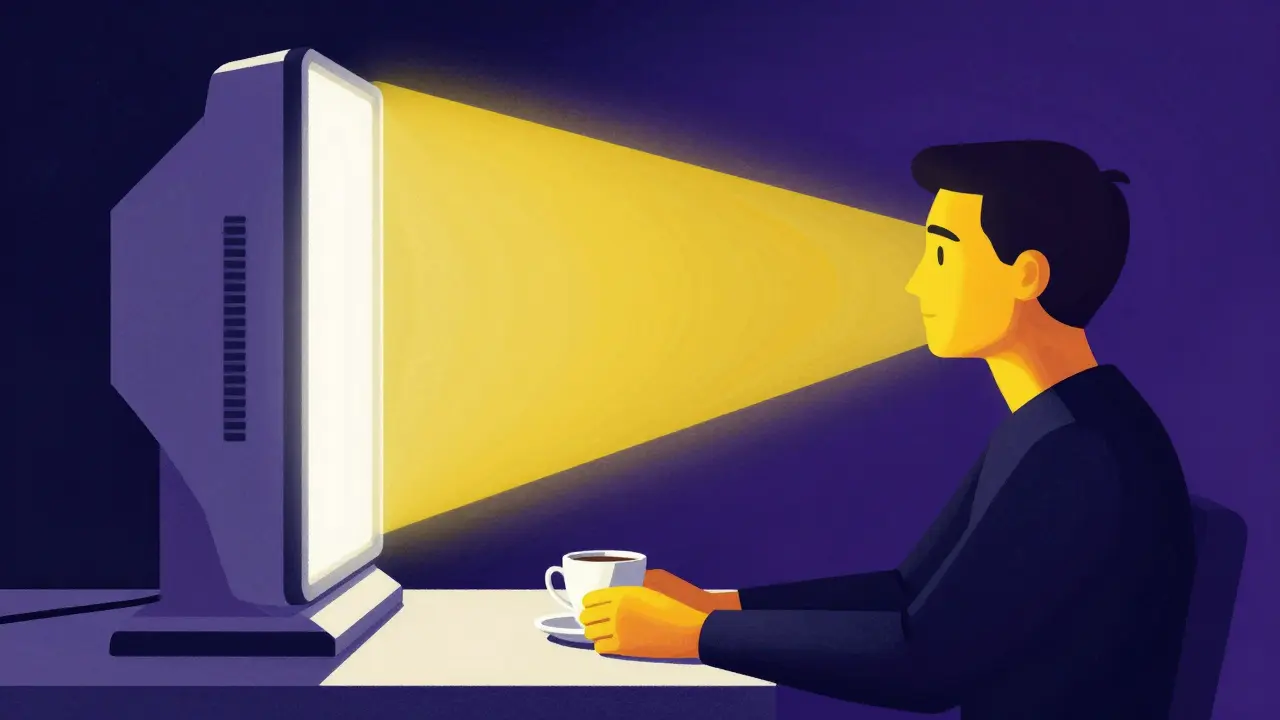
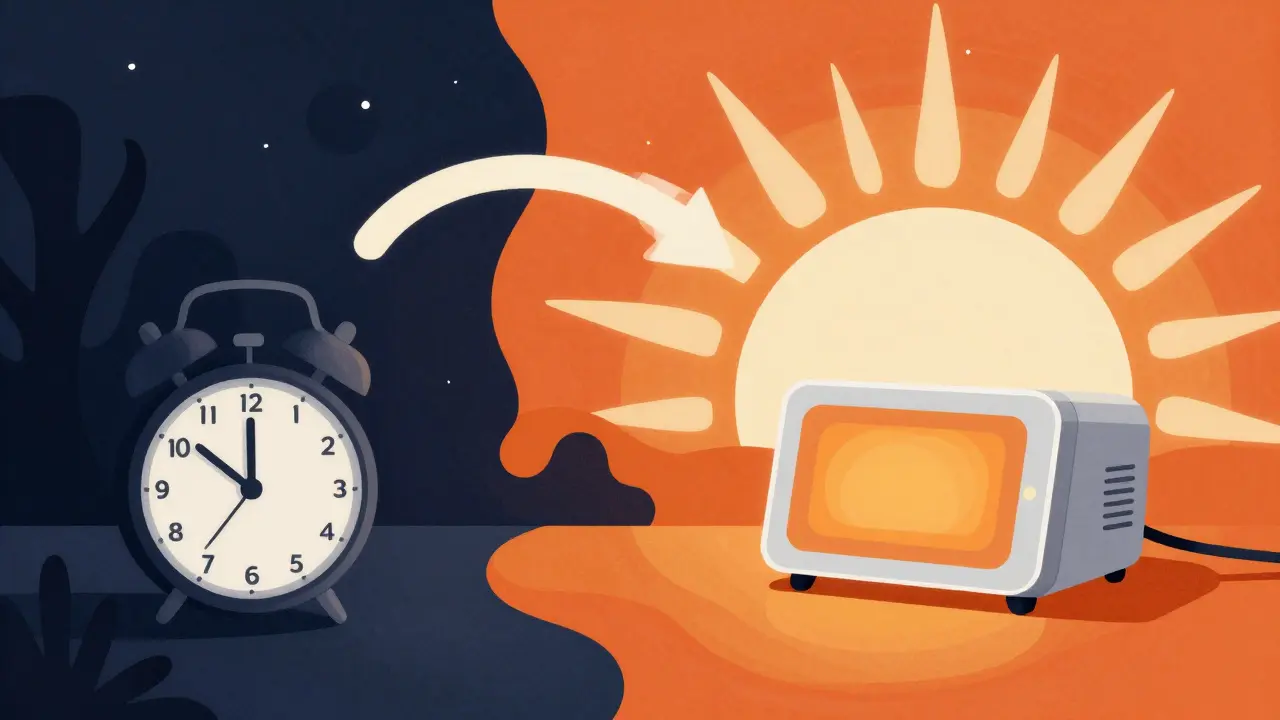
This is where most people mess up. You cannot use a standard desk lamp or a "happy lamp" from a gas station and expect clinical results. If the lamp doesn't put out 10,000 lux, it's just a fancy light bulb. When shopping, look for "Full Spectrum" and "UV-Filtered." You want the light to mimic the sun, but you definitely don't want the Ultraviolet Radiation that causes sunburns and eye damage. The American Academy of Ophthalmology warns that non-certified devices can leak UV rays, which is a huge risk for your retinas. If you struggle to wake up in the dark, consider a Dawn Simulator. These are alarm clocks that slowly brighten the room from black to orange to bright white over 30 minutes. They don't replace the 10,000 lux box, but they make the transition from sleep to wakefulness much less painful.Practical Tips and Common Pitfalls
Using a light box sounds easy, but consistency is where people fail. A NAMI survey found that nearly 40% of people quit BLT because the morning routine became too cumbersome. To avoid this, try these hacks:- The Breakfast Club: Put your light box on the dining table. Use your 30 minutes while you eat and drink your coffee.
- The Workstation Setup: If you start work at 8 AM, have the light on your desk. You can answer emails while getting your therapy.
- The 30-Degree Rule: Don't stare into the light like a flashlight. Angle it slightly to the side. This reduces eye strain and headaches.
Beyond Winter Depression
It turns out that light therapy isn't just for people in snowy climates. A 2024 study in JAMA Psychiatry showed that people with non-seasonal depression also responded well to BLT, with a 41% remission rate. It's also showing promise for perinatal depression in pregnant women, providing a safe alternative for those who want to avoid medication during pregnancy. We are moving toward a world of "personalized light." Researchers at Stanford are currently testing AI that adjusts light intensity based on your specific biomarkers. In the meantime, the best tool we have is a simple, high-intensity box and a commitment to 30 minutes every morning.Can I just go outside in the sun instead?
Yes, absolutely. Natural sunlight is the best source of light. However, in the middle of a northern winter, the sun often doesn't reach the necessary intensity (lux) to treat SAD, and the clouds block too much of it. A 10,000 lux lamp provides a consistent, concentrated dose that you simply can't get from a gray Tuesday in December.
How long does it take to feel a difference?
Most people notice an improvement in energy and mood within 5 to 14 days. However, you have to be consistent. Skipping three days in a row can actually cause your symptoms to slide back.
Is it safe to use light therapy with antidepressants?
For many, combining BLT with medication is very effective. However, some medications make your skin and eyes more sensitive to light. Always check with your psychiatrist to ensure your specific medication doesn't cause photosensitivity.
Can I use the light box at night if I work shifts?
What if the light gives me a headache?
Headaches and eye strain are the most common side effects. Try increasing your distance from the lamp or reducing your session to 15 minutes and gradually working up to 30. Make sure you aren't staring directly into the LEDs.
Next Steps for Your Winter Wellness
If you're feeling the winter slump, don't wait until January to act. The best time to start light therapy is in October or November, just as the days begin to shorten.- For the Beginner: Start by tracking your mood for two weeks. If you see a clear pattern of low energy and cravings, look for a CET-certified 10,000 lux lamp.
- For the Pro: If you already use a light box but aren't seeing results, try a dawn simulator to help you wake up and ensure you're using the lamp within 60 minutes of waking.
- For those with Medical Concerns: Schedule a quick appointment with your GP or psychiatrist to rule out bipolar disorder or eye conditions before buying a device.