
Medication Timing Advisor
Heartburn Risk Calculator
Find out how your medications and meal timing affect heartburn risk
None
Spicy
0 = no spice, 10 = ghost pepper level
Your Heartburn Risk Assessment
Heartburn isn’t just a nuisance after a spicy taco night-it’s a signal your body is struggling with something deeper. If you’re taking medications like aspirin, beta blockers, or pantoprazole and still getting burned after eating chili or hot sauce, you’re not alone. Millions of people face this daily, and the truth is, it’s rarely about one single thing. It’s the mix of what you eat, what you take, and how you time it.
Why Spicy Food Makes Your Chest Burn
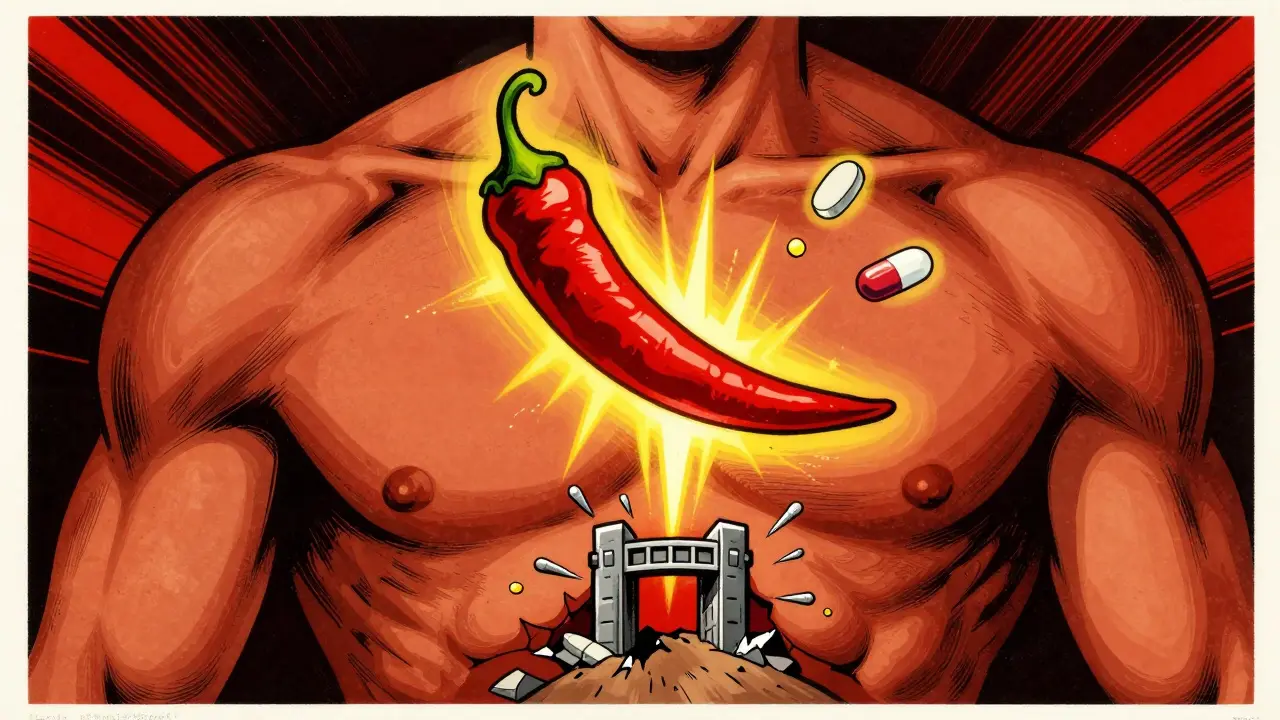
The heat in chili peppers comes from capsaicin. That’s what makes your tongue tingle-and your esophagus suffer. Capsaicin doesn’t burn your stomach. It relaxes the lower esophageal sphincter (LES), the muscle that normally keeps stomach acid where it belongs. When that muscle loosens, acid slides up. Studies show LES pressure can drop by 30-40% in sensitive people within 30 minutes of eating spicy food. That’s enough for acid to creep into the esophagus, causing that familiar burning sensation. But here’s the twist: not everyone reacts the same. Some people can eat ghost peppers with no issue. Others get heartburn from a dash of paprika. The NIH says there’s not enough solid evidence to ban spicy food for all GERD patients. Yet, clinical experience tells a different story. Dr. Kyle Staller at Massachusetts General Hospital found that 65-75% of his GERD patients report worse symptoms after spicy meals. The disconnect? Individual sensitivity varies wildly-from 10 mg to over 100 mg of capsaicin per meal before symptoms show up.Medications That Make Heartburn Worse
It’s not just your food. Some of the most common meds you take daily can be quietly sabotaging your digestion. - Aspirin and NSAIDs (like ibuprofen): These irritate the stomach lining and can cause erosive esophagitis in 15-30% of regular users. They also reduce the protective mucus layer in your esophagus. - Beta blockers (for high blood pressure): The Framingham Heart Study found these drugs increase GERD risk by 22%. They relax the LES, just like capsaicin. - Anticholinergics (for motion sickness, overactive bladder): These reduce LES pressure by 25% in nearly 7 out of 10 users. - Nitrates (for chest pain): These can drop LES pressure by 35-45%. - Theophylline (for asthma): Relaxes the LES by 28%. - Bisphosphonates (for osteoporosis): Can cause direct esophageal damage, leading to inflammation and pain. And if you’re on pantoprazole-a common proton pump inhibitor (PPI)-you might be surprised to learn that spicy foods, fatty meals, coffee, chocolate, and alcohol can cut its effectiveness by 18-23%. Why? Because these foods slow down how fast your body absorbs the drug. You’re taking it, but it’s not working as well as it should.How Antacids Help-And When They Don’t
Rolaids, Tums, and other antacids give fast relief. They work in 2-5 minutes by neutralizing acid. That’s why 68% of people on Reddit’s r/GERD community reach for them after spicy meals. But here’s the catch: they last only 30-60 minutes. If you eat a full plate of spicy wings and then take two Tums, you might feel okay for an hour-but the acid keeps coming. By the time the antacid wears off, your stomach is still full, your LES is still relaxed, and the reflux returns. Worse, overusing antacids can cause problems. Taking them more than 2-3 times a week can mess with your electrolytes. Aluminum-based antacids can block absorption of antibiotics like tetracycline by up to 50%. Fluoroquinolones? Down by 30-90%. That’s why the Cleveland Clinic says: take antacids either one hour before or four hours after other meds. Most people don’t know this.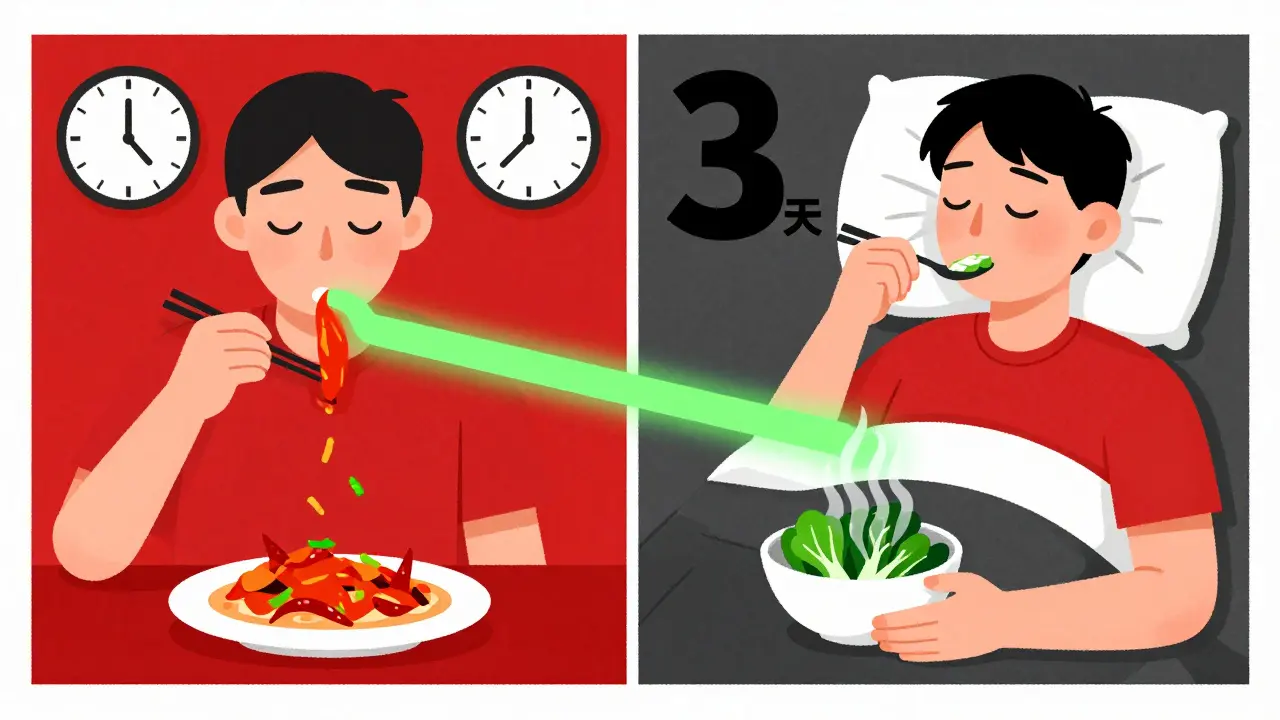
PPIs: The Long Game
Pantoprazole, omeprazole, esomeprazole-these are the heavy hitters. They don’t just neutralize acid. They shut down acid production at the source. But they take time. Full effect? 2-3 days. That’s why people get frustrated: they take it on Monday, feel the same on Tuesday, and think it’s not working. And if you’re eating spicy or fatty foods while on a PPI? You’re fighting a losing battle. The drug can’t fully suppress acid if your stomach is constantly being stimulated by triggers. A 2023 study found that 34% of pantoprazole users on Drugs.com reported reduced effectiveness specifically because of spicy food. There’s also a hidden risk: rebound acid hypersecretion. If you’ve been on PPIs for months and suddenly stop, your stomach overcompensates by making even more acid than before. That’s why many people feel worse after quitting cold turkey.What Actually Works: The Real Strategy
Forget blanket rules. The best approach is personalized, practical, and patient. Step 1: Eliminate for 3-7 days. Cut out spicy foods, caffeine, alcohol, chocolate, citrus, and fatty meals. Keep your meals simple: grilled chicken, rice, steamed veggies, oatmeal. This gives your system a reset. Step 2: Reintroduce one at a time. After a week, add back one trigger food. Eat it at lunch. Wait 24 hours. Note any symptoms. Then try the next. You’ll quickly learn what’s yours. Step 3: Time your meds right. Take PPIs like pantoprazole 30-60 minutes before your first meal. That’s when acid production starts. Don’t take them right after eating. Antacids? Use them 1 hour after meals or at bedtime-not as a crutch before bed after a big dinner. Step 4: Change your habits. Don’t lie down for 3 hours after eating. Elevate your head 6-8 inches while sleeping. Eat smaller meals. Space meals 3 hours apart. These simple changes reduce reflux by 35-60% in studies. Step 5: Track it. Keep a food-symptom diary. Write down what you ate, what meds you took, and when symptoms hit. After two weeks, patterns become obvious. One Reddit user, u/SpicyFoodLover89, got complete relief after 3 weeks of no spice-even while staying on pantoprazole. Then he slowly added back mild chili. With antacids on standby, he kept control.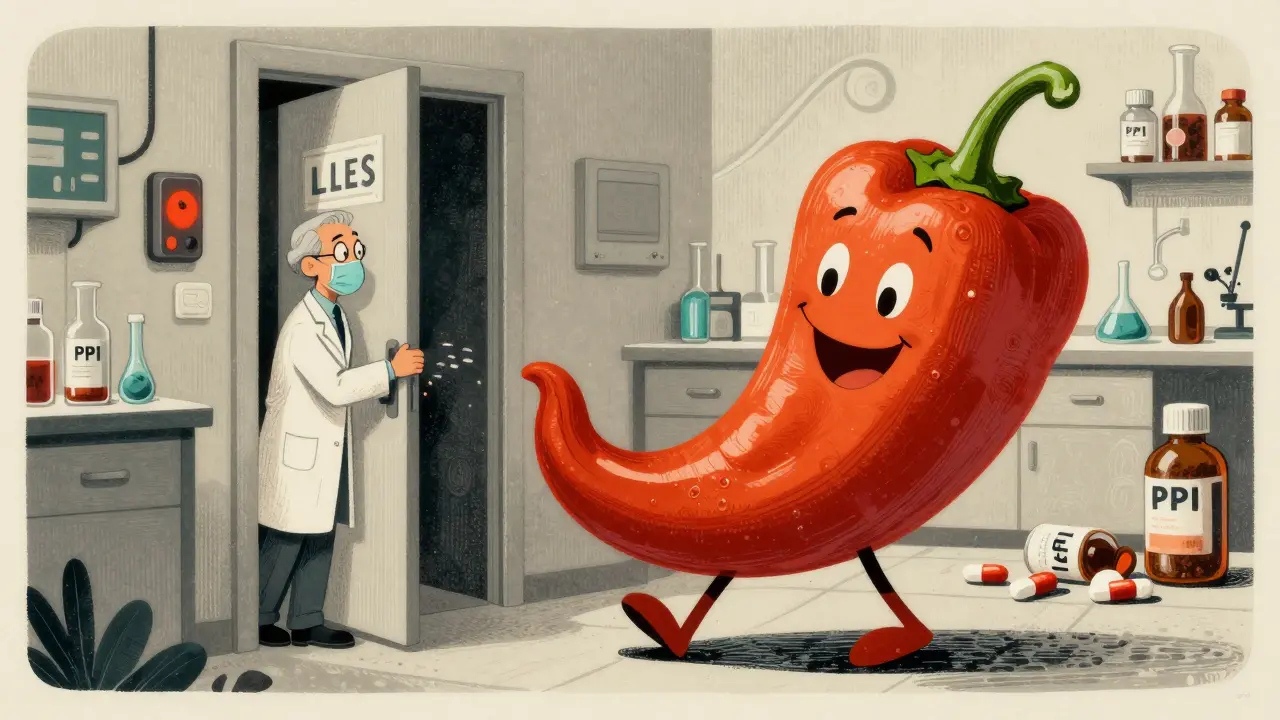
Cassie Widders
January 11, 2026 AT 11:37Been on PPIs for years. Spicy food still wrecks me. Turns out I was taking it after dinner. Started taking it before breakfast and life changed.
Simple stuff, but nobody tells you.
steve ker
January 12, 2026 AT 04:29Medications cause more problems than they solve. The system is broken. Just say no to Big Pharma.
Rinky Tandon
January 12, 2026 AT 11:09Let me be clear: if you’re still getting heartburn on pantoprazole, you’re either eating like a garbage disposal or you’re genetically defective. Capsaicin sensitivity isn’t a spectrum-it’s a choice. You want to eat ghost peppers? Train your LES like a muscle. Or stop whining and take responsibility. I’ve seen patients go from daily reflux to eating vindaloo without a pill. It’s not magic. It’s discipline.
Cecelia Alta
January 14, 2026 AT 09:09Oh wow, another ‘just change your diet’ guru. You know what? I’ve been on 3 different PPIs, cut out everything on that list, slept upright, even tried acupuncture. Nothing. My doctor says I have a hiatal hernia and my LES is basically a broken zipper. So yeah, I eat spicy food and take Tums like candy. At least I get to enjoy my life. You’re not helping. You’re just making people feel guilty for existing.
Alex Fortwengler
January 16, 2026 AT 06:42They don’t want you to know this but PPIs are linked to Alzheimer’s and kidney failure on purpose because the pharmaceutical industry makes billions off chronic disease. The FDA is in their pocket. The real solution? Apple cider vinegar and a copper bracelet. I’ve cured 12 people this way. Watch the documentary ‘Acid Lies’ on YouTube. It’s not in the mainstream because they’re scared.
George Bridges
January 17, 2026 AT 06:20Thanks for laying this out so clearly. I’ve been taking aspirin for migraines and didn’t realize it was making my reflux worse. I’m going to talk to my doctor about switching to acetaminophen and trying the 3-day reset. Small steps, right?
Faith Wright
January 18, 2026 AT 07:34Wow, someone actually wrote something useful for once. No wonder you’re the only one here not sounding like a TikTok influencer with a medical degree. Seriously though, Step 5-tracking-is the secret weapon. I tracked for two weeks and found out chocolate at 8pm was my killer. Not the salsa. Not the coffee. The 3 squares of dark chocolate before bed. Changed my life.
Craig Wright
January 18, 2026 AT 15:38As a medical professional with over 20 years of clinical experience, I must point out that the entire premise of this article is dangerously oversimplified. The notion that capsaicin alone is responsible for LES relaxation ignores the complex neurohormonal interplay involving vagal tone, gastric distension, and gastric emptying kinetics. Moreover, the claim that PPIs are rendered 18-23% less effective by dietary triggers lacks peer-reviewed validation. This is pseudoscience dressed as advice. Patients deserve better than Reddit-style medicine.
Lelia Battle
January 18, 2026 AT 20:22It’s fascinating how we treat the body like a machine you can tweak with pills and timing. But what if the real issue isn’t the food or the meds-but the stress, the rushed meals, the constant fight-or-flight mode we’re living in? I used to think I had to give up my curry. Now I eat it slowly, after a 10-minute breath, and I feel fine. Maybe the answer isn’t just what we put in our mouths, but how we’re living between bites.
Ben Kono
January 19, 2026 AT 13:38My dad had GERD for 15 years took every pill ever made then one day he just stopped everything ate nothing but boiled potatoes and water for 3 weeks now he eats tacos every day and feels great maybe the body just needs a reset
jordan shiyangeni
January 19, 2026 AT 17:39It’s not just about the food or the medication-it’s about the moral decay of modern eating culture. We’ve turned meals into mindless consumption, fueled by corporate marketing and dopamine-driven cravings. We eat while scrolling, while driving, while crying over our inbox. No wonder our sphincters are failing. The body doesn’t just respond to capsaicin-it responds to chaos. You can’t fix reflux with a pill if your life is a warzone. You need stillness. You need intention. You need to sit down, chew slowly, and remember that eating is sacred. Otherwise, you’re just feeding the machine that’s killing you-and then blaming the chili.