
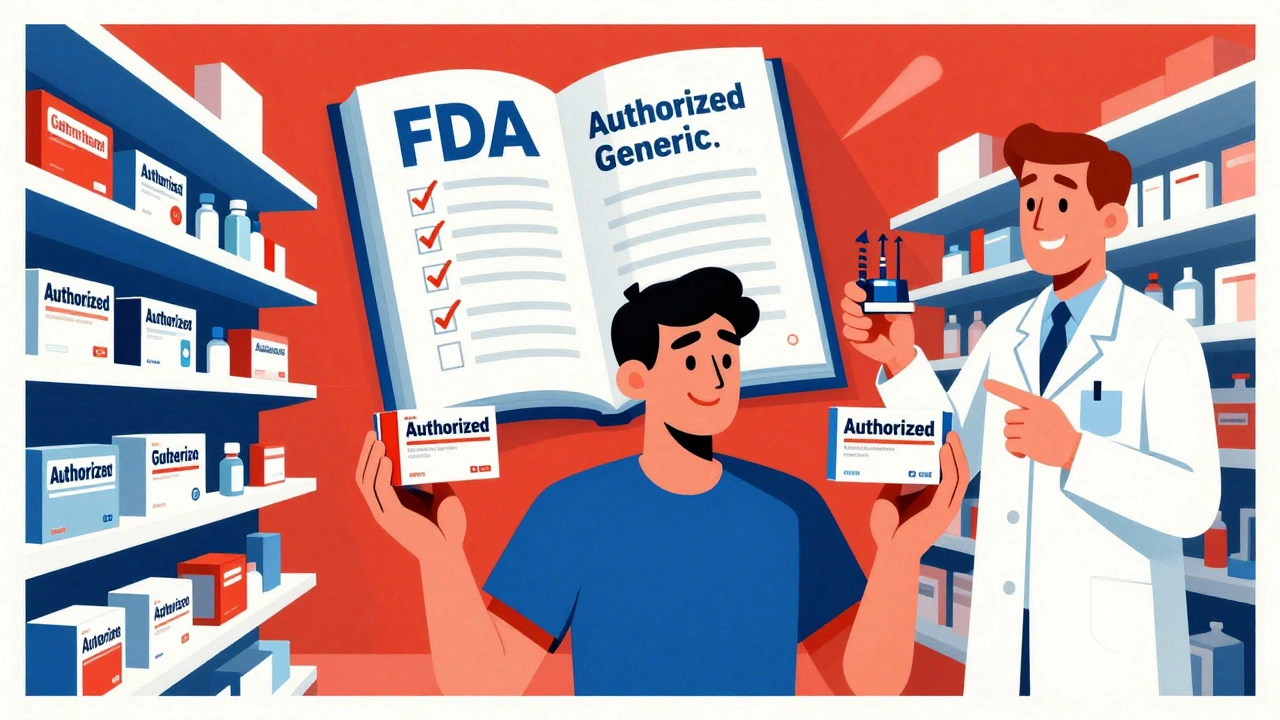
When your doctor prescribes a brand-name drug and you get to the pharmacy, you might see a much cheaper version on the shelf. It looks different. The label doesn’t have the name you recognize. You wonder: is this the same thing? Could it hurt? You’re not alone. Thousands of people in the UK and the US face this exact moment every week. The answer is often yes - it’s the same. And here’s how to make that switch safely, confidently, and without overpaying.
What exactly is an authorized generic?
An authorized generic isn’t just another generic. It’s the exact same pill, capsule, or liquid that the brand-name company makes - same active ingredients, same inactive ingredients, same factory, same process. The only difference? No brand name on the box. It’s sold under a different label, usually at a lower price. Think of it like buying a car made by Toyota, but it’s sold under a dealership’s own name. Same car. Different sticker. The FDA keeps a public list of these authorized generics, updated every quarter. You can check it yourself. If a generic version of your drug is listed there as an authorized generic, you’re getting the real deal - not a copy, not a lookalike, not a different formula. Just the same medicine, cheaper.Why does this even exist?
It started with a law in 1984 called the Hatch-Waxman Act. The goal was to get cheaper drugs to market faster. But brand-name companies found a loophole: they could launch their own generic version right when the patent expired. That way, they kept some of the market share while still lowering prices. The Federal Trade Commission found that when authorized generics hit the market, retail prices dropped by 4% to 8%, and wholesale prices dropped by 7% to 14%. In some cases, you save $15 to $30 per prescription. That adds up fast if you’re on a long-term medication. And here’s the kicker: authorized generics can show up even during the 180-day exclusivity period when only one generic company is supposed to be allowed in. That’s when prices really start to fall.How is this different from a regular generic?
Regular generics have to prove they work the same way as the brand-name drug. That means testing for bioequivalence - how your body absorbs the medicine. They’re approved under an Abbreviated New Drug Application (ANDA). But they don’t have to be made in the same factory. Sometimes they use different fillers, dyes, or coatings. That’s why a generic version of your pill might be blue instead of white, or oval instead of round. An authorized generic doesn’t need that testing. It’s made under the original brand’s New Drug Application (NDA). So if your brand-name drug was made in a plant in New Jersey, the authorized generic is made in that same plant, with the same machines, same batch records, same quality checks. The only thing changed is the label. For people with allergies or sensitivities to certain dyes or fillers, that matters. An authorized generic eliminates that risk entirely. You’re not guessing whether the inactive ingredients match. They do.What should you do before switching?
Don’t just swap it out without checking. Here’s your checklist:- Confirm it’s an authorized generic. Go to the FDA’s Orange Book and search for your drug. Look for the "Authorized Generic" flag. If it’s there, you’re good. If not, it’s a regular generic - and may not be identical.
- Ask your pharmacist. Say: "Is this an authorized generic of my brand-name drug?" They can pull up the manufacturer and confirm. Don’t be shy - pharmacists see this every day.
- Check your insurance. Most plans automatically switch you to the cheapest option. But if you’re on a specialty tier or have prior authorization, you might need to request the switch. Call your insurer and ask: "Does my plan cover the authorized generic for [drug name]?"
- Review your medical records. If you’re on multiple medications or have a chronic condition, make sure your doctor knows you’ve switched. It’s not always needed, but it’s good practice.
What if the pill looks different?
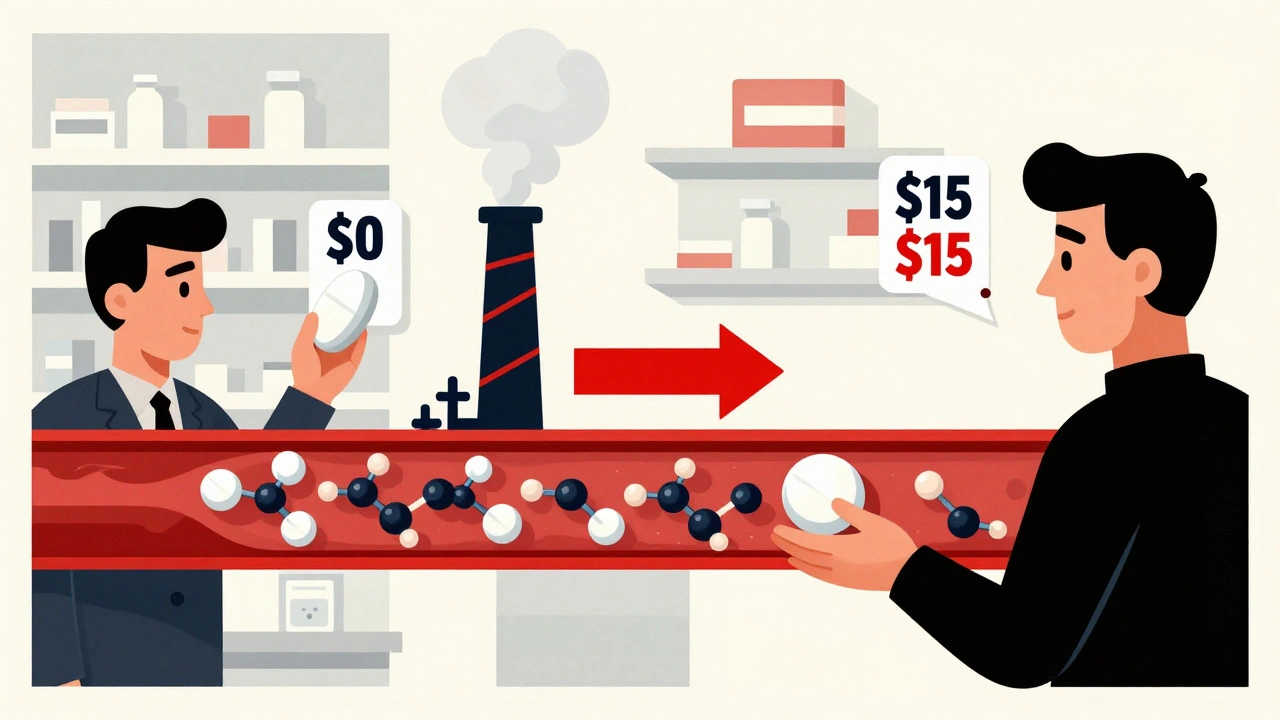
This is the #1 concern. You’ve been taking a white oval pill for years. Now you get a small, round, yellow one. Panic sets in. You think: "This isn’t the same. What if it doesn’t work?" It’s the same. The color, shape, and size don’t affect how the medicine works. The FDA allows this because the packaging and labeling are different - but the active ingredient is identical. Authorized generics often look exactly like the brand-name version because they’re made in the same place. But sometimes, even those change slightly due to packaging updates or minor manufacturing tweaks. A study from the National Center for Biotechnology Information found that patients switching to authorized generics had the same rates of hospital visits and medication discontinuation as those who stayed on the brand. No difference. Your body won’t notice. Still, if you’re anxious, ask your pharmacist for the brand-name version one more time - then ask them to show you the manufacturer name on the bottle. If it’s the same company as the brand (e.g., Pfizer, Novartis, AbbVie), you’re holding an authorized generic. No trick. No risk.Will your insurance force you to switch?
Almost always, yes. In the UK and the US, most insurance plans have tiered formularies. Brand-name drugs are often Tier 3 or 4 - expensive. Authorized generics are usually Tier 1 or 2 - cheap. Your plan will push you to the lowest-cost option unless you formally opt out. In 2022, Medicare Part D data showed 80-90% of prescriptions for drugs with authorized generics were filled as the generic version. That’s not because patients asked for it - it’s because the plan made it automatic. You’ll pay less. Your insurer saves money. Everyone wins - unless you’re worried about the change. If you really want to stay on the brand, you can ask your doctor to write "Do Not Substitute" on the prescription. But that usually means you’ll pay more. And in many cases, you won’t get any extra benefit.What about side effects?
If you’ve had side effects on the brand-name version, switching to the authorized generic won’t change that. It’s the same drug. The same chemistry. The same way your body processes it. But if you’ve had side effects on a regular generic - like a rash from a dye, or stomach upset from a filler - the authorized generic might help. Because it uses the same inactive ingredients as the brand. No surprises. A 2018 study in Health Affairs tracked 12,000 patients switching to authorized generics. They found no increase in side effects. In fact, adherence improved slightly - people were more likely to keep taking their meds because they cost less.What if your doctor doesn’t mention it?
Doctors don’t always bring it up. They’re busy. They assume you’ll get the cheapest option. But if you’re paying out of pocket, or you’re on a fixed income, it’s worth asking. Say this: "I’ve heard about authorized generics. Is there one for my medication? Would it be safe to switch?" Most doctors will say yes. They’ve seen the data. They know it’s the same. Some might not know the term - but they’ll check the formulary and agree. If they push back, ask why. Is it because of a clinical reason? Or just habit? If it’s habit, you’re probably fine to switch.
What about long-term use?
Some people worry: "What if I take this for years? Will it wear out my body?" No. Authorized generics have been used for over 20 years. Millions of people take them. Studies show no drop in effectiveness over time. No increased risk of complications. No hidden downsides. The only long-term question is whether they reduce competition. Some analysts argue that when brand companies launch their own generic, it discourages other companies from entering the market. That could mean less price pressure later. But for you - the patient - that doesn’t matter right now. Right now, you get a lower price and the same medicine.Where can you find the list of authorized generics?
The FDA updates its list every three months. You don’t need to be a doctor to use it. Go to the FDA’s website and search for "Orange Book". Then look for "Authorized Generic" under the drug name. You’ll see:- Brand name
- Generic name
- Manufacturer
- Whether an authorized generic exists
- When it was approved
Bottom line: Should you switch?
If your drug has an authorized generic - and your insurance allows it - switch. You’ll pay less. You’ll get the exact same medicine. You won’t lose effectiveness. You won’t get new side effects. The only reason not to switch is if you’ve had a documented allergic reaction to a specific inactive ingredient in the brand-name version - and the authorized generic uses a different one. But that’s rare. And you can check the ingredients on the label. Most people don’t notice a difference. Not in how they feel. Not in how their condition is managed. Just in how much they pay at the pharmacy counter. Start with one prescription. Try it. See how it goes. If you’re still unsure, talk to your pharmacist. They’ve seen hundreds of these switches. They’ll tell you the truth. You’re not taking a risk. You’re making a smart choice.Are authorized generics safe?
Yes. Authorized generics are made by the same company, in the same facility, using the same formula as the brand-name drug. The FDA requires them to be identical in active and inactive ingredients. They’re not a cheaper copy - they’re the exact same product with different packaging.
Why does my pill look different now?
The shape, color, or size of a pill doesn’t affect how it works. Authorized generics often look identical to the brand, but sometimes packaging changes cause minor differences. These are cosmetic only. The active ingredient and dosage remain unchanged. If you’re concerned, ask your pharmacist to confirm the manufacturer - if it matches the brand, you’re fine.
Will my insurance cover an authorized generic?
Almost always. Most insurance plans automatically switch you to the lowest-cost option, and authorized generics are typically the cheapest. If you’re unsure, call your insurer and ask if your drug has an authorized generic on formulary. You’ll likely pay 30-70% less.
Can I switch back to the brand if I don’t like it?
Yes, you can. If you feel unsure, ask your doctor to write "Do Not Substitute" on the prescription. But remember - the authorized generic is chemically identical. Most people experience no difference in effectiveness or side effects. Switching back usually means higher out-of-pocket costs.
How do I know if my drug has an authorized generic?
Check the FDA’s Orange Book online. Search for your drug’s brand name. If an authorized generic exists, it will be listed with a clear indicator. You can also ask your pharmacist to verify - they have access to the same database.
Jack Appleby
December 10, 2025 AT 03:02Let’s be unequivocally clear: authorized generics are not merely ‘similar’-they are pharmacologically indistinguishable from their branded counterparts. The FDA’s Orange Book is not a suggestion box; it’s a legally binding repository of bioequivalence data. When a manufacturer produces an authorized generic under the original NDA, they are contractually and scientifically bound to replicate every excipient, particle size, and dissolution profile. To suggest otherwise is to misunderstand the very architecture of pharmaceutical regulation in the United States.
Moreover, the notion that ‘looks different = works differently’ is a cognitive fallacy rooted in placebo-driven anxiety, not pharmacokinetics. The colorant in your pill is not a therapeutic agent-it’s a dye. The shape? A manufacturing artifact. The active ingredient? Identical. The bioavailability? Statistically equivalent within the 80-125% confidence interval mandated by the FDA. This isn’t opinion. It’s data.
And for those who still cling to brand loyalty like a security blanket: ask yourself why you’d pay 300% more for a pill that is, in every measurable way, the same. This isn’t luxury goods. It’s medicine. Efficiency isn’t a vice-it’s a public health imperative.
Raj Rsvpraj
December 11, 2025 AT 06:00India has been producing high-quality generics for decades-why are Americans suddenly acting like they discovered the moon? We export authorized-grade generics to the U.S., Europe, and Japan every day-without a single scandal. Your pharmaceutical industry is bloated with greed, and now you’re surprised when the system works? The FDA’s approval isn’t a rubber stamp-it’s a forensic audit. If your country can’t trust its own regulatory body, that’s not a drug problem-it’s a cultural one.
And don’t even get me started on ‘brand loyalty.’ You pay for advertising, not active ingredients. A pill from Pfizer is not ‘better’ than one from Teva-unless you’re paying for the logo. We in India don’t cry over pill colors. We take what works. And it works. End of story.
Rebecca Dong
December 13, 2025 AT 01:36WAIT. So you’re telling me the SAME COMPANY that made my brand pill is now selling it under a different label??
That’s not a loophole-that’s a conspiracy.
They’re making us think we’re saving money… but they’re just repackaging it to keep us hooked. You think they’re not making MORE profit this way? They get to charge less, but still control the market, and now you’re all cheerleading for it??
And don’t even get me started on the FDA-they’re bought off by Big Pharma. I’ve seen the documents. They don’t test the inactive ingredients properly. That’s where the toxins are hidden. You think your ‘same pill’ isn’t giving you chronic fatigue? It’s the fillers. They changed them. They ALWAYS change them.
And now they’re telling you to ‘trust the system’? I’ll trust my body’s reaction-not a government website.
PS: My neighbor’s cousin’s dog got sick after switching. Coincidence? I think not. 😡
Michelle Edwards
December 14, 2025 AT 06:42I switched my dad to an authorized generic for his blood pressure med last month, and honestly? He didn’t even notice.
He was terrified at first-same fear everyone has. But we checked the manufacturer together, and it was the same company as the brand. We called his pharmacist, who showed us the paperwork. He took it for a week, then said, ‘Huh. I feel the same.’
And he’s saving $22 a month. That’s a grocery trip. Or a new pair of shoes.
If you’re scared, start small. Try one prescription. Talk to your pharmacist. They’re not trying to trick you-they’re trying to help. You’re not losing anything. You’re gaining peace of mind-and a little extra cash.
You’ve got this.
Sarah Clifford
December 14, 2025 AT 18:29My pill turned from white to yellow and I cried. Like, full-on ugly tears. I thought I was dying. Turns out? Same drug. Same company. Just a different color. I feel dumb. But also? So glad I didn’t panic-stop it. Saved me $40 this month. Worth the emotional rollercoaster.
Regan Mears
December 15, 2025 AT 15:05As someone who’s been managing a chronic condition for over a decade, I’ve switched between brand, generic, and authorized generic more times than I can count. I’ve had anxiety, I’ve had confusion, I’ve had moments where I thought I was losing my mind.
But here’s what I know for sure: the authorized generic is the closest thing to the brand you can get without paying the brand price. And the data doesn’t lie-adherence improves when costs drop. That’s not just about money. It’s about health outcomes.
I’ve talked to my pharmacist weekly for years. I’ve asked the same question: ‘Is this the same?’ Every time, the answer has been yes. And every time, I’ve felt better-physically and mentally-because I wasn’t choosing between my health and my budget.
You’re not being naive by switching. You’re being smart. And you’re not alone in this.
Ben Greening
December 17, 2025 AT 09:27The FDA’s Orange Book is a public resource, and its data is transparent and verifiable. Authorized generics are listed under the NDA holder’s name with a specific flag indicating their status. The manufacturing facility, batch records, and quality control protocols are identical to the branded product. There is no regulatory distinction in efficacy or safety. The only variable is cost, which is driven by market dynamics and corporate pricing strategy, not pharmaceutical integrity.
Patients who experience perceived differences are often responding to psychological factors, not pharmacological ones. The placebo effect, in reverse, is a documented phenomenon in therapeutic adherence literature.
For those seeking clinical reassurance, peer-reviewed studies from the Journal of the American Pharmacists Association and Health Affairs confirm no statistically significant difference in outcomes between branded and authorized generic formulations.
Neelam Kumari
December 18, 2025 AT 14:37Oh wow. So now we’re supposed to be *grateful* that Big Pharma lets us buy their own product for half price? How noble. How charitable. They didn’t ‘invent’ this to help you-they did it to crush competition before it even started. You think they’re your friend? They’re your landlord. And now you’re thanking them for lowering the rent a little?
And don’t even get me started on the ‘FDA says so’ mantra. They approved 300+ tainted generic drugs last year. You really trust them? You’re not a patient-you’re a consumer. And consumers get played every day.
Stick with the brand. Pay more. At least you know who you’re paying.
Doris Lee
December 20, 2025 AT 05:06I used to be terrified of generics too-until I switched my mom’s cholesterol med. She’s 72, lives on a fixed income, and was skipping doses because it cost $120 a month. We switched to the authorized generic-same pill, same maker, $18 a month.
She didn’t feel any different. Her labs stayed perfect. And now she has extra cash for her weekly coffee with friends.
If you’re scared, start here: ask your pharmacist to show you the manufacturer name on the bottle. If it’s Pfizer, Novartis, or AbbVie? You’re holding the same thing. No trick. No risk. Just savings.
You’re not giving up quality. You’re just choosing to spend your money on things that matter-like groceries, or gas, or a night out.
You deserve that.
Frank Nouwens
December 20, 2025 AT 23:10It is a matter of considerable public interest that the authorized generic model represents a rare alignment of economic efficiency, regulatory rigor, and patient benefit. The Hatch-Waxman Act, though imperfect in its implementation, succeeded in fostering competition without compromising therapeutic fidelity. The fact that identical pharmaceutical products are marketed under different commercial labels does not constitute deception; rather, it reflects a nuanced market mechanism designed to reduce financial barriers to essential therapeutics.
For the layperson, the primary concern-safety-is empirically addressed by the FDA’s requirement that authorized generics be manufactured under the original NDA, thereby eliminating variability in excipients and production parameters. This is not a compromise. It is a refinement.
One might reasonably conclude that the resistance to authorized generics stems not from clinical concern, but from a cultural attachment to brand identity as a proxy for quality-an attachment that is, in this context, scientifically unfounded.
Kaitlynn nail
December 21, 2025 AT 01:33It’s not about the pill. It’s about the story we tell ourselves.
We think ‘brand’ means ‘better’ because we’ve been sold that lie for decades.
The truth? You’re paying for a logo, not a cure.
Switch. Save. Breathe.
It’s the same.
Nikki Smellie
December 21, 2025 AT 18:46Okay, but what if the authorized generic is a Trojan horse? 🤔
I read somewhere that the FDA allows the brand company to secretly change the inactive ingredients in the authorized version-just enough to make it *slightly* less effective, so people will go back to the brand. It’s called ‘planned obsolescence in pharma.’
And don’t say ‘it’s illegal’-they’ve done it before. Look up the 2018 Metformin scandal. They changed the coating to make it ‘more stable’-but it caused GI issues in 12% of patients. No one told us.
They’re not your friends. They’re corporations. And they’re watching you right now. 😳
PS: My cousin’s neighbor’s aunt had a ‘bad reaction’ to an authorized generic. She said it felt like ‘her soul was leaking out.’ I’m not making this up.
PPS: I’ve saved screenshots. I’m going to file a complaint with the FTC. Someone needs to stop this.