
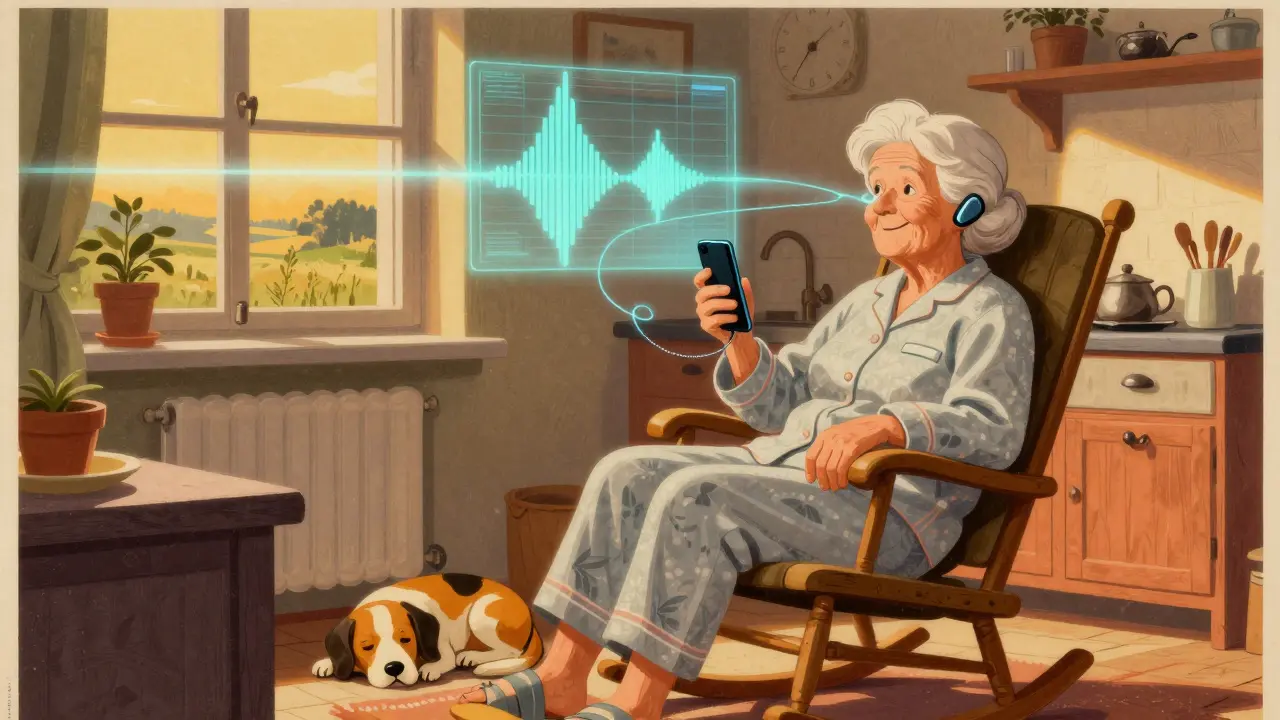
For years, if you needed your hearing aids adjusted, you had to drive to an audiology clinic-sometimes hours away. For people in rural areas, seniors with mobility issues, or anyone juggling work and family, that meant canceling plans, spending money on gas, and losing half a day. Today, that’s changing. With teleaudiology, you can get your hearing aids fine-tuned from your kitchen chair, in pajamas, while your dog naps beside you.
What Is Teleaudiology, Really?
Teleaudiology isn’t just a video call with your audiologist. It’s a full system for delivering hearing care remotely using technology. You can take hearing tests online, get your hearing aids reprogrammed over video, receive counseling about listening in noisy places, and even troubleshoot feedback or static-all without leaving home.
The concept isn’t new. Doctors have used phone calls and early video systems since the 1950s to reach patients in remote areas. But it wasn’t until the pandemic hit that hearing care providers had no choice but to go digital. By 2022, nearly half of all audiology practices in the U.S. were using teleaudiology for routine follow-ups. Now, it’s standard. Major brands like Phonak, ReSound, Oticon, and Starkey built apps that let you connect directly with your provider. These aren’t gimmicks-they’re clinically validated tools.
How It Works: Two Ways to Get Remote Care
There are two main ways teleaudiology works: asynchronous and synchronous.
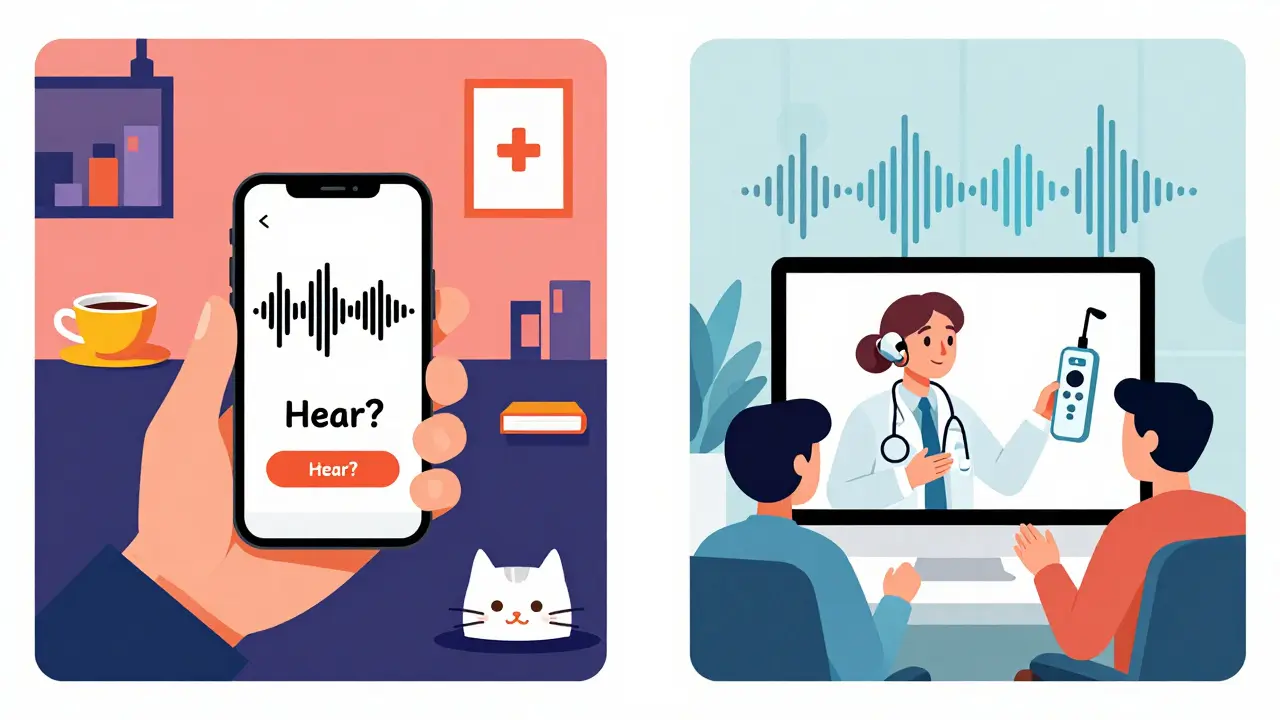
Asynchronous means you do something on your own, and your audiologist reviews it later. You might use a smartphone app to take a hearing test in a quiet room. The app plays tones at different volumes and pitches. You press a button when you hear them. Your results get sent securely to your provider, who then adjusts your hearing aids and emails you back with settings. No live chat needed.
Synchronous is live video. You hop on a call with your audiologist using Zoom, Microsoft Teams, or a secure platform built into your hearing aid app. During the call, they can guide you through real-time tests, ask you to turn up the volume on your TV, or even control your hearing aids remotely to tweak settings while you’re sitting in your favorite chair. Some systems, like hear.com’s Clinic-in-a-Box®, even let the audiologist trigger sounds in your home environment during the session to test how you hear in real life.
You don’t need fancy gear. Just a smartphone or computer with a stable internet connection (5 Mbps or better), Bluetooth-enabled hearing aids, and a quiet space. Surprisingly, 82% of people over 65 can use these systems after one short tutorial. Age isn’t the barrier-tech anxiety is. And that’s something providers are getting better at fixing.
Accuracy: Can Remote Tests Really Work?
One of the biggest questions people ask: “Can a test done at home be as accurate as one in a soundproof booth?”
The answer: Yes-mostly.
Studies show remote pure-tone hearing tests are 92-95% accurate when done in a quiet room with good equipment. That’s nearly the same as in-clinic results. But if your home is noisy-kids playing, a fan running, traffic outside-that accuracy drops to 78-85%. That’s why audiologists always ask you to find the quietest room possible.
What teleaudiology can’t do? Check your ears. No remote tool can look inside your ear canal to see if you have wax buildup, an infection, or a perforated eardrum. That’s still an in-person job. About 12-15% of patients who start with remote care end up needing a physical exam because something wasn’t visible on screen. That’s why experts recommend a hybrid model: start with teleaudiology for adjustments, but plan for at least one in-person visit a year.
Why People Love It (And Why Some Don’t)
Patients who use teleaudiology consistently rate it higher than in-person visits for convenience. One study found satisfaction scores of 4.6 out of 5 for remote adjustments, compared to 4.2 for office visits. Why? No driving. No waiting rooms. No scheduling conflicts.
Take a 72-year-old in rural Montana. She had constant feedback from her hearing aids every time she talked to her granddaughter. Before teleaudiology, she’d have to drive four hours round-trip for a 20-minute adjustment. She did it three times last year. Now? Three 15-minute video calls. Done. She saved over 12 hours of travel time.
But it’s not perfect. About 29% of negative reviews mention internet issues. One user in California tried five remote sessions before discovering a blockage of earwax-something no app could detect. Another user spent 45 minutes trying to pair his hearing aids to his phone, only to realize he’d turned off Bluetooth.
Technical problems are the biggest hurdle. But providers are improving. Major manufacturers now offer 24/7 tech support with average response times under 10 minutes. Independent clinics? You’re lucky if they reply within two hours.
Cost and Accessibility: Who Benefits Most?
Teleaudiology isn’t just convenient-it’s cheaper. A remote adjustment typically costs $120-$150. An in-person visit? $140-$180. That’s a 15-20% savings. For people on fixed incomes, that adds up.
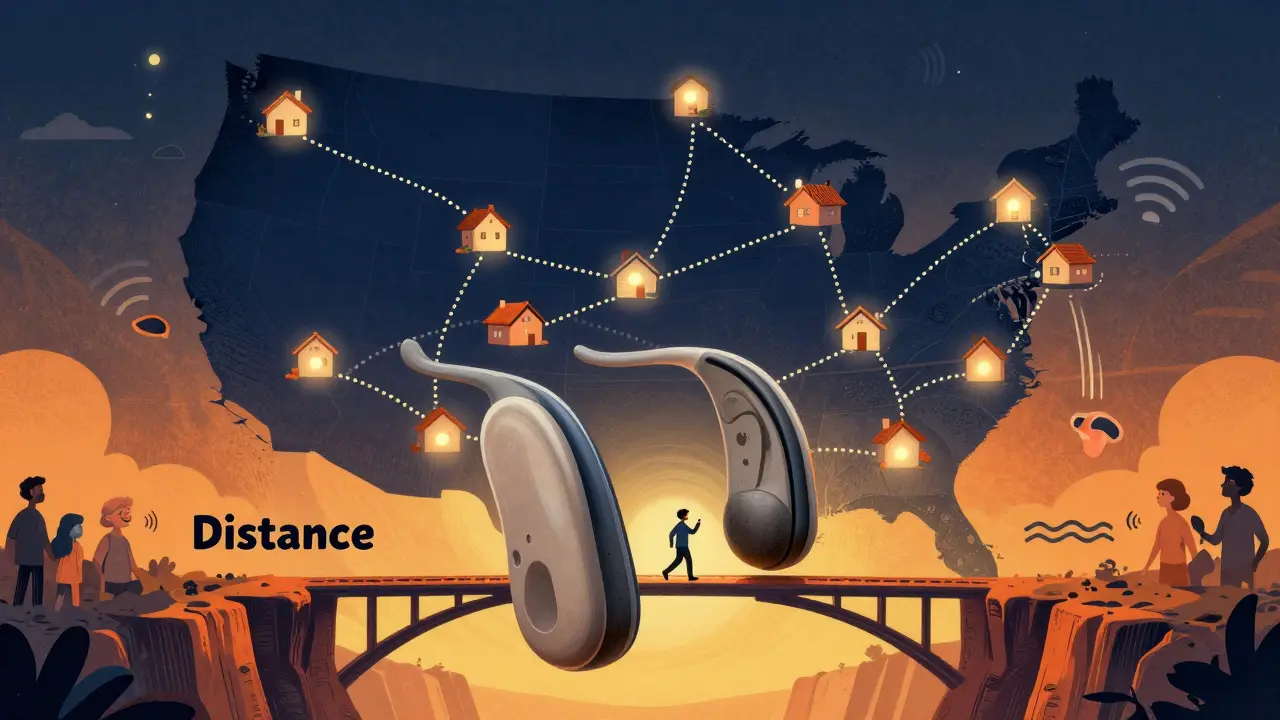
And it’s life-changing for rural communities. In the U.S., 78% of rural patients live more than 50 miles from the nearest audiology clinic. Before teleaudiology, many gave up on care entirely. Now, they’re getting help. The same goes for veterans. The VA reports no-show rates dropped from 22% to 9% after switching routine follow-ups to telehealth.
But access isn’t equal. In 28 U.S. states, audiologists can’t legally provide care across state lines. If you move or visit family, you might lose your provider. Medicare only covers tele-audiology in 18 states. And in parts of Europe and Asia, adoption is slower due to regulations or lack of infrastructure.
What You Need to Get Started
Getting started is simple, but it takes a little prep.
- Make sure your hearing aids are Bluetooth-enabled and from a major brand (Phonak, ReSound, Oticon, Starkey, Signia, Widex).
- Download your manufacturer’s app (like myPhonak or ReSound Smart).
- Create a secure patient portal account-this is where you’ll schedule calls and receive updates.
- Find a quiet room. Turn off the TV, close the windows, silence your phone.
- Charge your hearing aids and your phone. Use wired headphones if Bluetooth keeps dropping.
- Schedule your first virtual appointment. Most providers offer a free 20-minute onboarding call to walk you through the process.
Most people need just one 30-minute tutorial to feel comfortable. The hardest part? Remembering to turn Bluetooth on.
The Future: AI, OTC Hearing Aids, and Global Reach
Teleaudiology is evolving fast. In late 2023, Widex launched an AI feature that automatically detects if you’re in a restaurant, car, or quiet room-and adjusts your hearing aids without you lifting a finger. Signia did the same in early 2024, bringing remote care to over-the-counter (OTC) hearing aids for the first time.
The FDA’s April 2024 update now allows tele-audiology support for OTC devices. That opens the door for 40 million Americans who bought hearing aids online without a prescription. No audiologist needed? Not quite. Even OTC users benefit from remote guidance to optimize settings.
By 2027, analysts predict 55-60% of all hearing aid follow-ups will happen remotely. Why? Because AI will handle 30-40% of routine adjustments automatically. Think of it like your thermostat learning your schedule-your hearing aids will learn your listening habits and adapt on their own.
But the biggest reason teleaudiology is here to stay? A global shortage of hearing professionals. By 2030, the World Health Organization estimates we’ll be short 200,000 audiologists. Teleaudiology isn’t just a convenience-it’s a necessity to meet demand.
Final Thoughts: Is It Right for You?
Teleaudiology is perfect for:
- Adjusting hearing aid volume or programs
- Troubleshooting feedback or static
- Getting counseling on how to hear better in crowds or on the phone
- Follow-ups after a new hearing aid fitting
It’s not ideal for:
- First-time hearing evaluations
- Ear infections or wax buildup
- Complex cases involving balance issues or sudden hearing loss
If you’re unsure, talk to your provider. Many clinics now offer hybrid care-start remote, switch to in-person if needed. The goal isn’t to replace clinics. It’s to make care easier, faster, and more personal.
For the first time, hearing care isn’t tied to geography. You don’t need to live near a clinic to hear well. You just need a phone, a quiet room, and the willingness to try something new.
Can I use teleaudiology if I have an older hearing aid?
Only if your hearing aids have Bluetooth connectivity. Most prescription hearing aids made after 2018 support Bluetooth. Older analog or non-wireless models won’t connect to remote apps. If you’re unsure, check your device manual or contact your provider. Some manufacturers offer upgrade programs for older devices.
Do I need a prescription to use teleaudiology?
For prescription hearing aids, yes-you need to be under the care of a licensed audiologist. For over-the-counter (OTC) hearing aids, no prescription is required. But even if you bought your OTC device online, you can still schedule a tele-audiology session to help fine-tune settings for your environment. Many OTC brands now offer free remote support as part of their service.
Is teleaudiology covered by insurance?
Medicare only covers tele-audiology in 18 U.S. states. Private insurers vary-some cover it fully, others only partially. Always check with your provider before scheduling. Many hearing aid manufacturers offer tele-audiology as part of their warranty or subscription plan, so you may not pay extra. Look for terms like “remote support” or “virtual care” in your device’s service agreement.
What if my internet cuts out during a session?
If your connection drops, your audiologist will usually try to reconnect via phone or reschedule. For critical adjustments, they may send you updated settings via email or app notification. To prevent this, use a wired internet connection if possible, or switch your phone to cellular data. Avoid using public Wi-Fi-security and reliability are poor. Most platforms save your session progress, so you won’t lose your place.
Can teleaudiology help with tinnitus or balance issues?
Teleaudiology can help manage tinnitus through counseling and sound therapy apps, but it can’t diagnose the cause. For balance issues related to hearing, like vertigo or Meniere’s disease, an in-person exam is essential. These conditions often require physical testing that can’t be done remotely. Always mention tinnitus or dizziness during your teleconsultation so your provider knows whether to recommend a follow-up visit.
Carolyn Whitehead
January 31, 2026 AT 10:08My hearing aids were buzzing like a bee in my ear and within 10 minutes my audiologist had it fixed while I sipped coffee in my pajamas
No driving. No waiting. Just me and my dog and a better sound world
Sheila Garfield
February 1, 2026 AT 09:55Niamh Trihy
February 1, 2026 AT 10:16Sazzy De
February 2, 2026 AT 18:06Adarsh Uttral
February 3, 2026 AT 10:57Jason Xin
February 4, 2026 AT 07:56Blair Kelly
February 6, 2026 AT 04:32Sidhanth SY
February 7, 2026 AT 12:06Kimberly Reker
February 7, 2026 AT 22:20Sarah Blevins
February 9, 2026 AT 00:43Katie and Nathan Milburn
February 9, 2026 AT 04:09Shubham Dixit
February 9, 2026 AT 22:51