
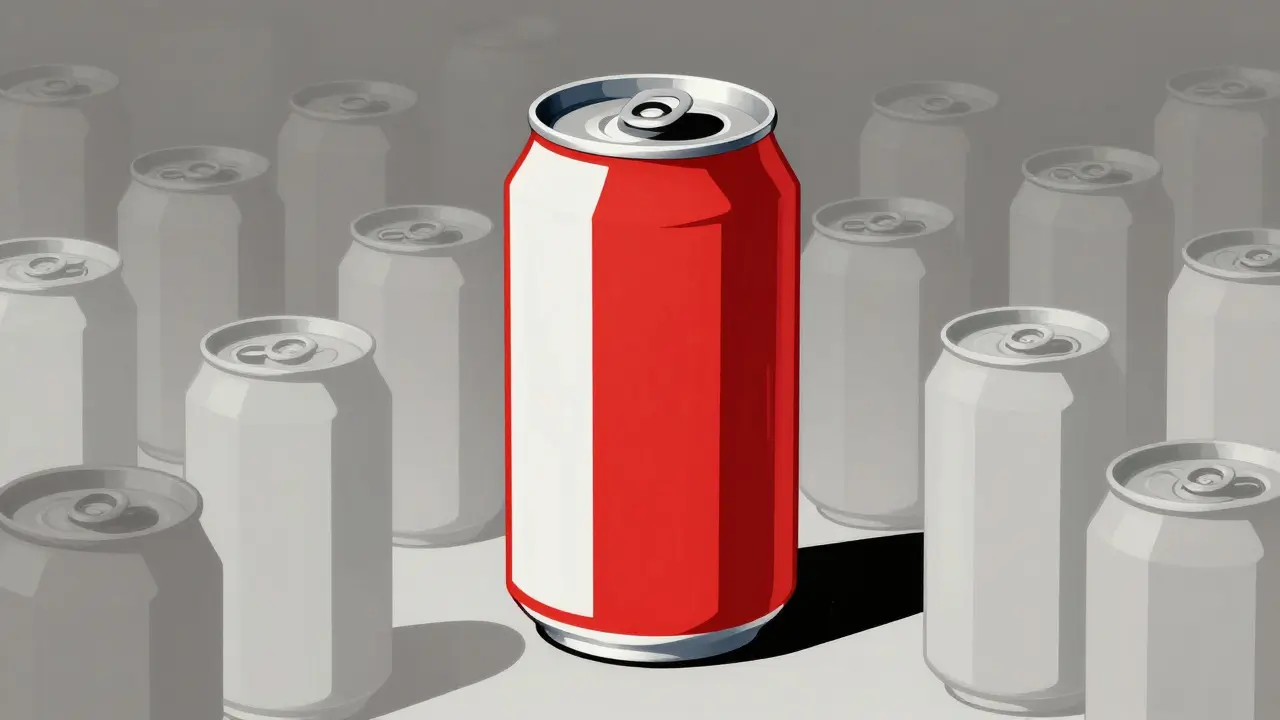
Most business advice tells you to be agile. We're told to pivot, adapt, and change our messaging to fit the mood of the moment. But there's a hidden risk in being too flexible. When a company constantly shifts its identity to chase trends or blend in with generic alternatives, it risks erasing the very thing that makes customers trust it. In rare, high-stakes scenarios, rigid brand consistency is actually the most effective way to get a positive individual response from a customer.
Think about it: why do you feel a specific spark of nostalgia when you see a red-and-white soda can, even if there are ten cheaper, generic versions of that drink right next to it? It isn't just about the taste. It's about what that brand has owned in your mind for decades. When a company successfully "owns" a single emotion or concept, any deviation from that brand identity can feel like a breach of trust.
The Psychology of Muscle Memory Branding
There is a phenomenon known as "muscle memory branding." This happens when a brand's visual and emotional cues are so consistent that the human brain recognizes them almost instantly, bypassing the need for active decision-making. For example, Nike is a global athletic footwear and apparel company that uses consistent motivational messaging to drive athlete performance . By sticking to the "Just Do It" ethos since 1988, they've created a neurological shortcut. Research shows that nearly 89% of athletes feel a personal surge of motivation when they see this consistent messaging, while those seeing brands that change their slogans frequently only feel that spark about 42% of the time.
When a brand stays consistent, it stops being a product and starts being a trigger. This is why switching to a generic or "adaptive" version of a brand identity during a campaign often backfires. Customers don't see a "fresh new look"; they see a loss of identity, which leads to a drop in emotional connection.
The Power of Tribal Loyalty in Values
Consistency isn't just about logos and colors; it's about values. Some brands build what is known as "tribal loyalty," where the customer's identity is tied to the brand's unwavering stance on a specific issue. Patagonia is an American clothing company that focuses on environmental activism and sustainable outdoor gear . Since its founding in 1973, Patagonia has refused to budge on its commitment to the planet.
This rigidity is their greatest strength. During retail crises, while other outdoor brands temporarily shifted their sustainability messaging to save costs, Patagonia stayed the course. The result? Their core customers didn't just stay-they felt a deeper bond. In fact, individual customer retention increased by 28 percentage points because the brand proved it wouldn't sell out. When you're dealing with a value-driven audience, "adapting" to the market is often seen as a betrayal.
| Metric | Consistent Branding | Adaptive/Generic Branding |
|---|---|---|
| Customer Lifetime Value | 23% Higher | Baseline |
| Emotional Recognition | 63% Stronger (Amygdala activation) | Lower/Variable |
| Crisis Trust Levels | 2.3x More Positive Mentions | Mixed/Negative |
| Recognition Speed (Kids) | 94% Accuracy | 61% Accuracy |
The Consistency Paradox in Global Markets
You might think that going global requires localizing everything, but the "consistency paradox" proves otherwise. Take McDonald's is the world's largest fast-food restaurant chain, known for its standardized menu and branding . By refusing to significantly change the Happy Meal branding across 119 countries, they've achieved a level of recognition that is almost biological. Children as young as 2.7 years old can identify their branding with 94% accuracy.
This proves that for certain products, extreme consistency creates a cognitive advantage. The brand becomes a universal language. However, there is a fine line here. While visual consistency is king, cultural blindness is a disaster. For instance, when McDonald's tried to maintain beef-related branding elements in India, it triggered thousands of complaints in just a few days. The lesson? Be rigid with your identity, but stay sensitive to cultural taboos.
Why Consistency Wins During a Crisis
When things go wrong, most brands panic. They switch from "fun and quirky" to "somber and corporate" overnight. But the rarest and most successful cases of crisis management happen when a brand refuses to change its core positioning. During the 2020 pandemic, Coca-Cola is a multinational beverage corporation that positions itself as a symbol of happiness and togetherness maintained its "happiness" positioning while competitors shifted to depressing, somber tones.
By staying true to the promise of happiness during a dark time, Coca-Cola generated over twice as many positive social media mentions as its rivals. People didn't want a corporate apology or a somber mood; they wanted the comfort of something that remained unchanged. Consistency in a crisis provides a psychological anchor for the consumer.
Technical Rules for Maintaining the Brand Anchor
If you're wondering how to actually implement this without looking stagnant, it comes down to a few strict rules. High-performing brands don't just "wing it"; they use precise technical specifications to ensure the brand doesn't drift.
- Color Variance: Keep visual identity within a 5% color variance using the Pantone matching system. Even a slight shift in hue can trigger a "something is wrong" response in the brain.
- Typography: Use identical fonts across 100% of touchpoints. Switching fonts for a "special campaign" often confuses the customer.
- Message Pillars: Keep your core values unchanged for at least 7-year cycles. This is the minimum time required for a brand to achieve neurological recognition thresholds.
- Consistent Core, Adaptive Surface: This is the Apple approach. The core product design language stays identical, while the marketing surface adapts slightly to local languages or regions.
When brands ignore these rules, they see a spike in customer complaints. In one case, a major bank changed its logo for a Pride Month campaign, and LGBTQ+ customers actually responded negatively, feeling "tokenized" because the brand's year-round support wasn't as consistent as its temporary logo change. The individual response was: "Why are you changing your look now when you haven't changed your policies?"
The Long-Term ROI of Refusing to Pivot
Staying on brand is hard. It requires a level of discipline that most companies lack-only about 12% of Fortune 500 companies maintain this level of consistency for over a decade. But the payoff is massive. Brands that refuse to drift toward generic, adaptive messaging see a significantly higher customer lifetime value.
By "owning" a single word in the consumer's mind-like "happiness" for Coke or "achievement" for Nike-these companies claim a piece of "cognitive real estate." Once you own that space, you don't have to fight for attention; you already have it. The neurological evidence is clear: fMRI scans show much stronger emotional processing (amygdala activation) when customers interact with a consistently branded product compared to a rebranded or generic version.
Does brand consistency mean never changing my logo?
Not necessarily, but changes should be evolutionary, not revolutionary. The goal is to maintain the "core" identity. Drastic shifts often destroy the neurological shortcuts customers have built, making your brand feel like a generic stranger rather than a trusted friend.
When is it actually better to be adaptive than consistent?
Adaptation is necessary when entering a new cultural market where your brand identity clashes with local religious or social norms. As seen with McDonald's in India, failing to adapt to cultural taboos can cause immediate and severe brand damage.
How do I know if my brand is too "generic"?
If your customers cannot identify your brand's core "emotion" (e.g., happiness, safety, luxury) within seconds, or if your visual identity varies across different platforms, you are likely drifting toward a generic presence.
Can small businesses afford this level of consistency?
Yes. In fact, for small businesses, consistency is a competitive advantage. While you can't outspend the giants, you can out-discipline them by owning a very specific niche and never wavering from that identity.
Why do some customers hate "corporate" consistency?
People generally dislike consistency when it feels fake or "corporate." The key is to be consistent in your values and promises, not just your colors. When values are consistent, it feels like integrity; when only colors are consistent, it feels like a costume.
Ajinkya Joshi
April 22, 2026 AT 19:43Oh look, another "groundbreaking" realization that consistency is good. Truly revolutionary stuff here. I'm sure the fMRI scans were very impressive for whoever is paying for this corporate propaganda. 🙄
Ally Warren
April 22, 2026 AT 21:05There is a profound irony in the idea that we find comfort in the rigidness of a corporate logo. It suggests that in a world of chaotic flux, we aren't looking for authenticity, but rather for a predictable anchor that simulates stability. We don't love the brand; we love the feeling of not having to think.
Caroline Duvoe
April 23, 2026 AT 04:27pls tell me why we act like nike is deep 🙄 it's just shoes
Olayinka Ibukunoluwa Mercy
April 25, 2026 AT 03:05This is such a wonderful perspective on building trust!!! 🌟 It really shows how staying true to your values can create such a beautiful bond with your community... we should all strive for that kind of integrity in our own lives!!! ❤️✨
RAJESH MARAVI
April 26, 2026 AT 11:42Looool this is so wrong!!’ Consistency is boring and makes brands look old!!’ Everyone just wants new stuff and this whole "neurological shortcut" thing sounds like totaly made up science to sell more coke!! 🤡🤡
Dan Wizard
April 26, 2026 AT 12:52I find it quite fascinating how the mention of McDonald's in India highlights the delicate balance between a global identity and local respect, because it makes me wonder if the internal struggle of a company to remain consistent while being empathetic to cultural taboos is actually where the most genuine growth happens, especially when you consider that true loyalty isn't just about a logo but about the brand's ability to listen and evolve without losing its core essence.
Odicha ude Somtochukwu
April 27, 2026 AT 10:48It is indeed an enlightening analysis of market psychology!!! The emphasis on the 7-year cycle for message pillars is particularly noteworthy, as it aligns with the patience required to build a legacy of trust in many traditional cultures!!! This discipline is truly the hallmark of leadership!!!