
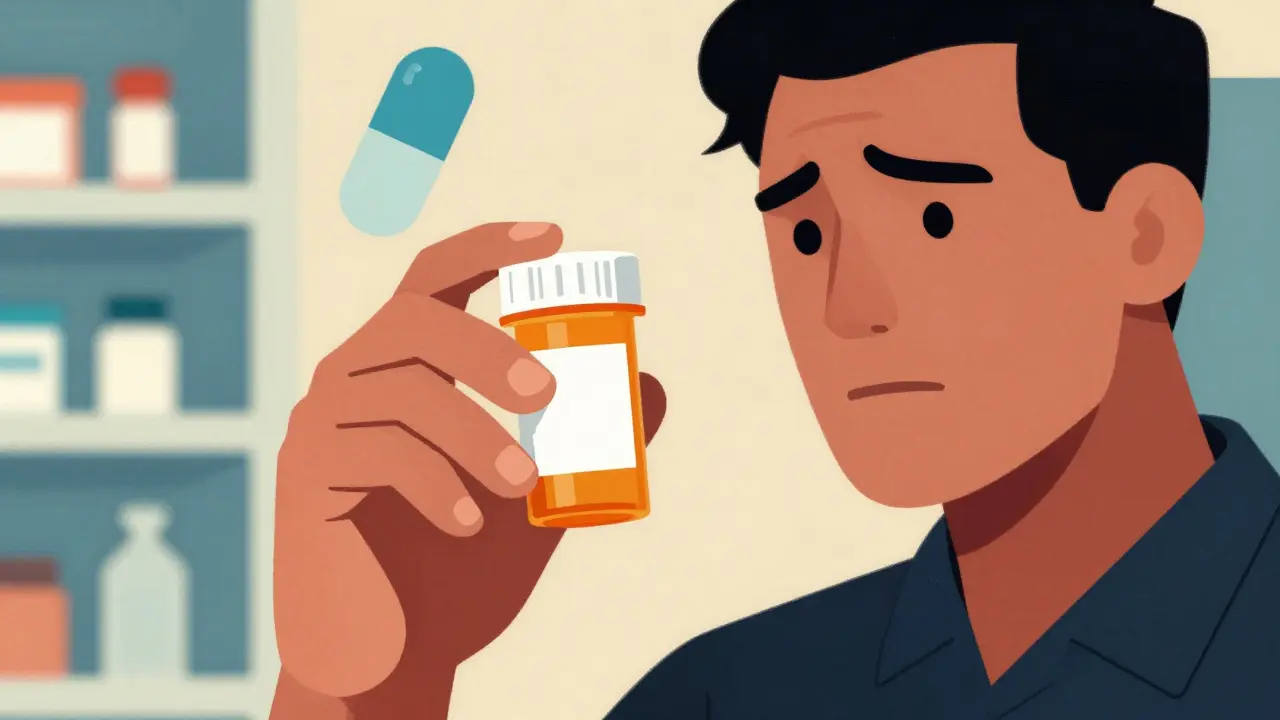
You walk into your local pharmacy, ready to pick up your monthly refill. The pharmacist hands you the bag, and you pull out the bottle. Something feels off. The pill inside isn't the blue capsule you've been taking for years. It's a white tablet. Maybe it's smaller. Maybe it's a completely different shape. Your stomach tightens. Is this the right medicine? Did the pharmacy make a mistake? Or is something wrong with the drug itself?
This scenario plays out in pharmacies across the United States every single day. The visual difference between generic and brand-name drugs confuses millions of patients. It triggers anxiety and, in some cases, leads people to stop taking their medication altogether. But here is the truth: the change in appearance has nothing to do with the quality or effectiveness of the drug. It comes down to the law.
The Legal Reason Behind the Different Look
When you see a generic version of a medication, it looks different because of Trademark Laws in the United States. These laws protect the intellectual property of the original drug manufacturer. The U.S. Food and Drug Administration (FDA) explicitly states that trademark laws do not allow a generic drug to look exactly like other drugs already on the market. This rule prevents consumers from confusing one brand with another.
This regulatory framework traces back to the Hatch-Waxman Act of 1984. Officially known as the Drug Price Competition and Patent Term Restoration Act, this legislation created the pathway for generic drugs to enter the market. It balanced two competing needs. First, it allowed new manufacturers to produce cheaper versions of life-saving medicines once the original patent expired. Second, it protected the brand-name company's right to profit from their innovation during the patent period.
Because the brand-name company owns the specific look of the pill-its color, shape, and imprint-generic manufacturers cannot copy it. If a generic version of Prozac looked exactly like the blue capsule made by Eli Lilly, it would infringe on their trademark. So, generic makers must design their own unique appearance. This is why you might see a pink tablet instead of a blue one, or a round pill instead of an oval one.
Active Ingredients vs. Inactive Ingredients
While the outside looks different, the inside remains the same. Every generic drug must contain the exact same Active Ingredients as the brand-name version. This is the chemical substance that actually treats your condition. Whether it is atorvastatin for cholesterol or lisinopril for blood pressure, the active molecule must be identical in strength and dosage.
The differences appear in the Inactive Ingredients, also known as excipients. These are the fillers, binders, and coatings that hold the pill together. They do not treat your illness, but they affect the physical properties of the medication. Different manufacturers use different excipients to achieve the same therapeutic effect. For example, one company might use a specific dye to color the pill blue, while another uses a different dye to make it white. Some use lactose as a binder, while others use cellulose.
These inactive ingredients can change the size, shape, color, and even the taste of the medication. In liquid formulations, flavorings often differ between brands. However, the FDA requires that these differences do not alter how the drug works in your body. The coating might affect how fast the pill dissolves, but it cannot change the total amount of active ingredient your body absorbs.
Understanding Bioequivalence
How do regulators ensure the generic works just as well as the brand? They use a standard called Bioequivalence. For a generic drug to get approval, it must prove that it delivers the same amount of active ingredient into the bloodstream as the brand-name drug. The FDA sets strict limits for this. The absorption rate of the generic must fall within 80% to 125% of the brand-name drug's pharmacokinetic profile.
Many patients worry that this range means the drug might be weaker or stronger. In reality, the variability is clinically insignificant for almost all medications. A landmark 2008 study published in the Journal of the American Medical Association analyzed 38 clinical trials. They compared 12 different generic-to-brand switches and found only a 3.5% average difference in absorption rates. This is well within the acceptable safety margin.
Dr. Janet Woodcock, former Director of the FDA's Center for Drug Evaluation and Research, testified before the Senate Committee on Aging in 2021. She stated that the 8-10% variability permitted in drug manufacturing applies equally to both brand and generic products. Even brand-name drugs vary slightly from batch to batch. The difference between a generic and a brand is often smaller than the difference between two batches of the same brand-name drug.
The Cost Difference You Pay
If the drugs work the same, why do people still choose the brand? Often, it is habit or insurance coverage. But the financial difference is massive. Generic drugs typically cost 80-85% less than their brand-name equivalents. According to GoodRx's 2023 medication pricing report, this savings adds up to billions of dollars for the healthcare system.
The Association for Accessible Medicines reported that generic drugs saved the U.S. healthcare system $313 billion in 2022 alone. Over the past decade, cumulative savings reached $2.2 trillion. This affordability allows more people to access necessary treatments. Without generics, many patients would skip doses or stop treatment entirely due to high costs. The generic drug market was valued at $135.3 billion in U.S. sales as of 2022, showing how central these products are to modern healthcare.
Patient Safety and Confusion
Despite the science, the visual difference causes real problems. Confusion about pill appearance accounts for approximately 3% of all medication errors in community pharmacies. A 2021 study in JAMA Internal Medicine found a 14.2% discontinuation rate for chronic medications during generic substitution. Some patients simply refuse to take the new pill because it looks "wrong."
A case study from Brown University Health highlights the danger. A 72-year-old patient with hypertension stopped taking her amlodipine medication for 11 days after receiving a differently colored generic tablet. She thought it was a mistake. Her blood pressure spiked to 198/112 mmHg, requiring emergency care. This shows that while the drug is safe, the confusion can lead to unsafe behavior.
Online communities reflect this anxiety. On Reddit's r/pharmacy community, a March 2023 thread titled "Generic drug looks different than usual - should I be concerned?" received 147 comments. About 68% of respondents reported confusion or anxiety about appearance changes between refills. However, education helps. GoodRx's 2023 patient survey found that 78% of patients who consistently use generics report no issues once they understand the trademark requirements.
How Pharmacies Manage the Change
Pharmacies know this confusion exists, and many have implemented systems to help. The National Community Pharmacists Association's 2023 guidelines note that 89% of independent pharmacies now employ "medication synchronization" programs. These programs coordinate refills to maintain consistent generic manufacturers. If you get your pills from the same manufacturer every time, the look stays the same.
Large chains like CVS and Walgreens implemented "Generic Appearance Alerts" in their dispensing systems in 2022. When a patient receives a visually different generic version, the system triggers a pharmacist counseling session. The pharmacist explains the change before the patient leaves the counter. The FDA's November 2023 guidance recommends that pharmacists provide "medication images" with each prescription. About 76% of U.S. pharmacies adopted this practice according to the 2023 Pharmacy Times benchmarking report.
Patient education materials from Humana's 2023 medication adherence campaign emphasize that the color or shape of your pill does not affect how it works. Their data showed a 22% reduction in generic-related abandonment when this information is provided at dispensing. Talking to your pharmacist is the best way to ease your mind.

Future of Generic Appearance
Regulators are aware of the confusion. The FDA issued draft guidance in September 2023 titled "Product-Specific Considerations for Cosmetics of Solid Oral Dosage Form Generic Drugs." This guidance encourages, but does not require, generic manufacturers to match reference listed drug appearance where feasible. The goal is to minimize errors without breaking trademark laws.
The 2023 Elijah E. Cummings Lower Drug Costs Now Act includes provisions requiring the Department of Health and Human Services to develop standards for "minimizing appearance-related medication errors" by June 2025. Some companies like Teva and Mylan have implemented voluntary "appearance consistency" programs since 2021. They maintain the same color and shape across multiple generics for commonly prescribed medications. A June 2023 study in the American Journal of Managed Care found adherence rates improving by 17.3% with these programs.
Comparison of Generic and Brand-Name Medicines
| Feature | Brand-Name Medicines | Generic Medicines |
|---|---|---|
| Active Ingredient | Original patented formula | Identical to brand-name |
| Appearance | Unique color, shape, imprint | Different due to trademark laws |
| Inactive Ingredients | Proprietary excipients | May vary between manufacturers |
| Cost | High (80-85% more expensive) | Low (Significant savings) |
| Approval Process | Full clinical trials required | Bioequivalence demonstration required |
| Effectiveness | Proven clinical efficacy | Therapeutically equivalent |
Frequently Asked Questions
Can I switch between generic and brand-name drugs safely?
Yes, you can switch safely for most medications. The FDA requires generics to be bioequivalent, meaning they work the same way in your body. However, for narrow therapeutic index drugs like warfarin or levothyroxine, doctors may recommend staying with one specific manufacturer to avoid minor variations affecting your dosage needs.
Why does my pill look different every time I refill?
This happens because pharmacies often source drugs from different generic manufacturers based on cost and availability. Each manufacturer has its own trademarked look for the pill. You can ask your pharmacist to try to keep you on the same manufacturer if the appearance bothers you.
Are generic drugs as safe as brand-name drugs?
Yes, generic drugs go through a rigorous review process to receive FDA approval. They must have the same quality, strength, purity, and potency as brand-name drugs. The only differences are in inactive ingredients and appearance, which do not affect safety.
What should I do if I notice a change in my medication?
Contact your pharmacist immediately. They can verify the prescription and explain the change. Do not stop taking your medication without consulting a healthcare professional, as stopping abruptly can be dangerous for many conditions.
Do all generic drugs look different from the brand?
Not necessarily, but most do. Some generics may look similar, but they cannot be identical due to trademark laws. The FDA encourages manufacturers to design products with similar size and shape to minimize confusion, but this remains non-binding guidance.
Jefferson Moratin
March 26, 2026 AT 20:21The difference between how it looks and how it works is a big debate in medicine. We care too much about the look without thinking about the effect. Real healing is in the chemicals, not the outside. We need to value the stuff inside more than the style. It's wild how our eyes trick us into thinking color is important. Our brains make links that don't make sense biologically. We see a blue pill and want a specific feeling. That training is strong but totally random here. The law protects the brand name but not the patient. We have to separate the ads from the medicine. Saving money is the real win for everyone. Getting the meds is better than the pill shape. Insurance pushes for the cheaper generic versions. People need to know the science behind the swap. Trusting the regulators is key for health.
Raphael Schwartz
March 27, 2026 AT 06:08stop trusting the fake meds they pushs on us now
Caroline Dennis
March 28, 2026 AT 23:43Bioequivalence metrics are crucial for therapeutic interchange. Pharmacokinetic profiles align within acceptable variance margins. Adherence improves with consistent patient education protocols. The variance is clinically insignificant for most therapeutic classes.
Agbogla Bischof
March 30, 2026 AT 17:27Indeed. The bioequivalence range is strictly defined. It ensures safety. It ensures efficacy. There is no room for error. The pharmacokinetics must align. We must trust the data. This is the standard.
Kevin Y.
March 31, 2026 AT 10:00It's really remarkable how the rules keep things safe while letting prices drop. The Hatch-Waxman Act is a big deal for getting meds to people. We should appreciate the FDA work on these changes. Working together with pharmacists is key for good results. The system tries to protect everyone involved.
Chris Crosson
April 2, 2026 AT 01:48That supply chain issue is a major factor in the inconsistency patients face. It is frustrating when the visual cue changes without warning. Understanding the mechanism helps reduce the anxiety significantly. We need better communication from the dispensing systems to prevent confusion. The industry must address these visual discrepancies proactively.
peter vencken
April 3, 2026 AT 09:15i work in pharmacy and people always freak out when the bottle changes color. its just the excipients that are different like fillers or dyes. the active stuff is the same molecule so dont worry about it. we try to keep the same brand but sometimes supply chain stuff messes that up. cost is the main driver for the switch usually.
Marissa Staples
April 3, 2026 AT 17:42I guess the shape of a pill doesn't really matter as long as it helps you feel better. It's funny how we get attached to colors like they mean something deep. Maybe we just want control over our own bodies more than we think. The change is just a visual thing but the feeling inside stays the same. It's all about perspective in the end.
Katie Putbrese
April 5, 2026 AT 05:46You people should just trust the system instead of complaining about colors. It is your duty to take the medicine prescribed to you. Wasting time worrying about pills is selfish when others need care. Follow the rules and stop making things difficult for the pharmacists. Compliance is the only path to health.