

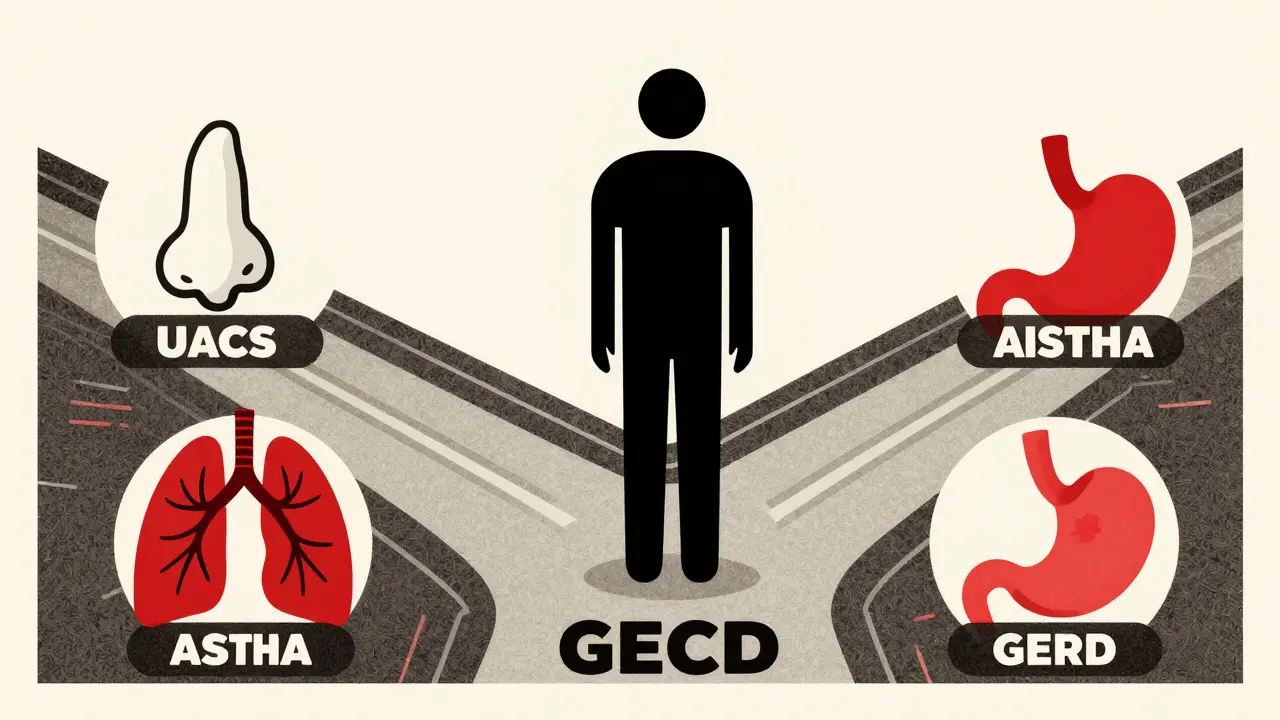
That tickle in your throat that just won’t quit is more than annoying-it’s exhausting. If you’ve been coughing for more than eight weeks, you’re dealing with what doctors call a chronic cough, defined by the American College of Chest Physicians as a persistent symptom lasting beyond this specific timeframe. It’s not just a lingering cold; it’s a signal that something else is going on. The good news? In most adults who don’t smoke and aren’t taking certain blood pressure medications, three conditions account for 80-95% of these cases: gastroesophageal reflux disease (GERD), asthma, and upper airway cough syndrome (UACS). Getting to the bottom of it doesn’t require endless tests. It requires a smart, step-by-step workup.
The Big Three: Why These Causes Dominate
When you walk into a clinic with a chronic cough, your doctor isn’t guessing. They are following an evidence-based path established by guidelines from organizations like the American Academy of Family Physicians (AAFP) and the European Lung Foundation. These guidelines prioritize investigating the "big three" because they are statistically the most likely culprits. Skipping straight to expensive scans or rare disease testing often leads to frustration and wasted money. Instead, the goal is to systematically identify and treat these common issues, which can resolve symptoms within weeks rather than months.
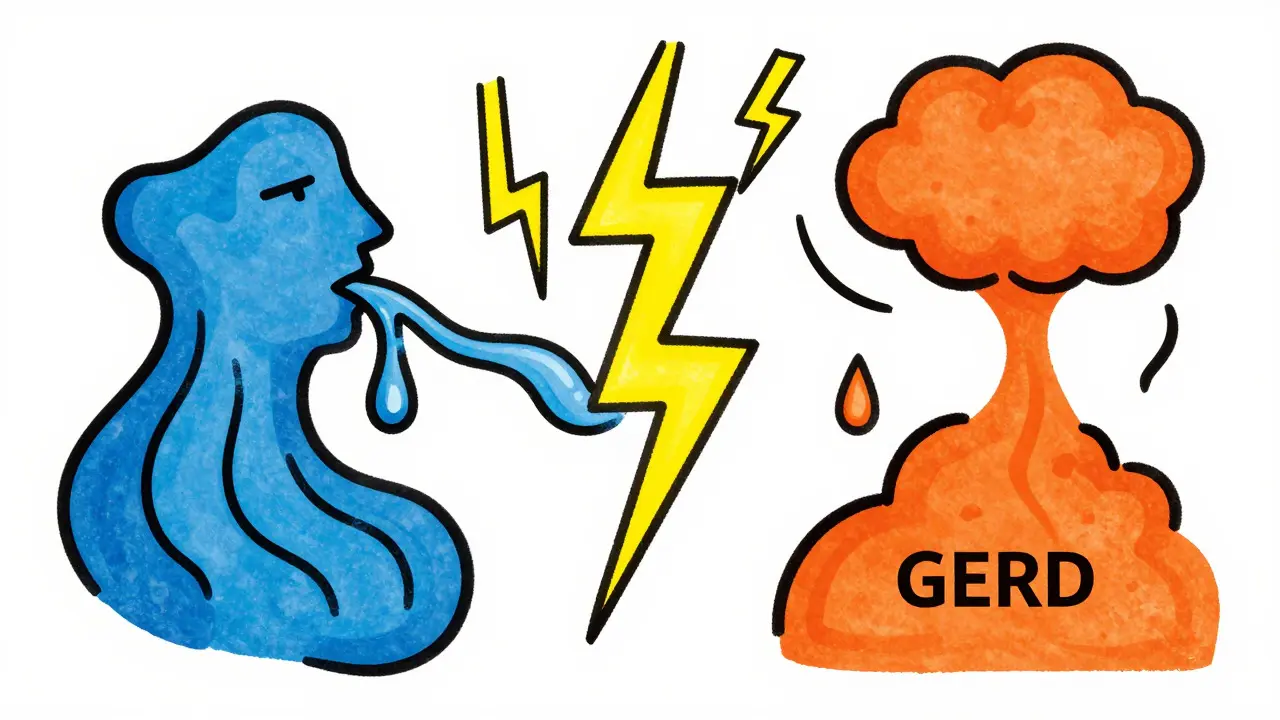
Understanding why these three conditions cause coughing helps demystify the process. Upper airway cough syndrome (UACS), formerly known as postnasal drip, occurs when mucus from the nose or sinuses drips down the back of the throat, irritating the cough receptors. This accounts for 38-62% of chronic cough cases. Asthma, particularly a variant called cough-variant asthma where cough is the only symptom, makes up 24-29% of cases. Here, the airways are inflamed and hyper-reactive, triggering coughs without the classic wheezing. Finally, Gastroesophageal reflux disease (GERD) causes stomach acid to creep up into the esophagus and sometimes reach the throat, causing irritation and coughing. This affects 21-41% of patients. Often, these conditions overlap, making a structured approach essential.
Step 1: The Essential Initial Evaluation
Before diving into treatments, your doctor needs to rule out serious conditions and gather clues. This phase is critical and should never be skipped. It involves a detailed history, a physical exam, and two basic tests: a chest X-ray and spirometry.
- History Taking: Your doctor will ask about when the cough started, what makes it worse (like lying down or being around pets), and any other symptoms like heartburn or nasal congestion. They’ll also review your medications. Did you start an ACE inhibitor (a common blood pressure drug ending in -pril) recently? These drugs cause cough in 5-35% of users.
- Physical Exam: Listening to your lungs for wheezing or crackles, checking your nose for inflammation, and looking at your throat for signs of drainage or redness provides immediate diagnostic hints.
- Chest Radiography (X-ray): This is non-negotiable. A normal chest X-ray effectively rules out structural problems like pneumonia, tuberculosis, sarcoidosis, or lung cancer. According to the European Lung Foundation, if the X-ray is normal, jumping straight to a CT scan is usually unnecessary due to low yield and higher radiation exposure.
- Spirometry: This breathing test measures how much air you can exhale and how fast. It helps identify obstructive patterns typical of asthma or COPD. A significant improvement in airflow after using a bronchodilator inhaler strongly suggests asthma.
Step 2: Investigating Upper Airway Cough Syndrome (Postnasal Drip)
If your initial tests are clear, UACS is often the first condition doctors target because it responds well to simple treatments. You might feel a constant need to clear your throat, notice mucus dripping down the back of your throat, or have a hoarse voice.
The diagnostic approach here is largely therapeutic. Doctors typically prescribe a trial of first-generation antihistamines (like chlorpheniramine) combined with decongestants (like pseudoephedrine) for two to three weeks. If your cough improves significantly during this period, UACS was likely the cause. Response rates are high-70-90%-when the diagnosis is correct. For those who don’t respond, newer guidelines suggest trying intranasal corticosteroids, which reduce inflammation in the nasal passages directly.
Step 3: Unmasking Asthma and Cough-Variant Asthma
Asthma doesn’t always present with wheezing. In cough-variant asthma, the cough is the sole manifestation, occurring in about 30% of asthma-related chronic cough cases. If your spirometry results were normal initially but suspicion remains, your doctor might order a methacholine challenge test. This test exposes your airways to increasing amounts of methacholine, a substance that causes narrowing in sensitive airways. A positive result (PC20 <8 mg/mL) confirms airway hyperresponsiveness, pointing toward asthma.
Treatment involves a trial of inhaled corticosteroids, often combined with a long-acting beta-agonist. Unlike UACS, asthma treatment may take 2-4 weeks to show full effect. If your cough resolves with these medications, the diagnosis is confirmed. It’s important to stick with the treatment even if you feel better quickly, as stopping too soon can lead to a relapse.
Step 4: Tackling GERD and Silent Reflux
GERD is tricky because many people with reflux-related cough don’t experience classic heartburn. This is called "silent reflux" or laryngopharyngeal reflux (LPR). Only 50-75% of patients with GERD-induced cough report typical burning sensations. Others might complain of a sour taste, hoarseness, or a feeling of a lump in the throat.
Diagnosing GERD often involves an empirical trial of high-dose proton pump inhibitors (PPIs), such as omeprazole or pantoprazole, taken twice daily for 2-4 weeks. However, recent guidelines caution against blind PPI use due to mixed response rates (only 50-75% of cases improve). To help assess likelihood, doctors may use the Hull Airway Reflux Questionnaire (HARQ). A score above 13 suggests LPR with 80% sensitivity. If the PPI trial fails, further testing like 24-hour pH impedance monitoring might be considered, though insurance approval can be challenging.
| Condition | Prevalence in Chronic Cough | Key Symptoms | Diagnostic Method | Treatment Trial Duration |
|---|---|---|---|---|
| Upper Airway Cough Syndrome (UACS) | 38-62% | Nasal drainage, throat clearing, postnasal sensation | Therapeutic trial of antihistamines/decongestants | 2-3 weeks |
| Asthma / Cough-Variant Asthma | 24-29% | Cough triggered by exercise/cold air, possible wheezing | Spirometry with bronchodilator, Methacholine challenge | 2-4 weeks |
| GERD / LPR | 21-41% | Heartburn (often absent), hoarseness, sour taste | HARQ questionnaire, PPI trial, pH impedance monitoring | 4-8 weeks |
Red Flags: When to Worry
While the big three are common, your doctor must first ensure you don’t have a serious underlying condition. Seek immediate attention if you experience "red flag" symptoms alongside your cough:
- Hemoptysis: Coughing up blood.
- Unexplained Weight Loss: Losing weight without trying.
- Fever: Persistent or recurring fevers.
- Night Sweats: Drenching sweats at night.
- Dysphagia: Difficulty swallowing.
These symptoms could indicate infections like tuberculosis, malignancies, or other systemic diseases that require different diagnostic paths, such as CT scans or biopsies.
What If Nothing Works?
About 10-30% of chronic cough cases don’t fit neatly into the big three categories. This is where things get complex. You might have eosinophilic bronchitis, which mimics asthma but shows no airflow obstruction on spirometry. Diagnosis requires induced sputum analysis showing high eosinophil counts. Treatment involves inhaled corticosteroids.
Another possibility is chronic refractory cough (CRC), now often termed cough hypersensitivity syndrome. This affects 10-20% of patients who fail standard treatments. Recent developments include new medications like gefapixant, a P2X3 receptor antagonist approved in late 2022, which has shown promise in reducing cough frequency by 18-22% compared to placebo. Speech therapy techniques, focusing on vocal cord function and breathing control, are also becoming standard care for CRC.
Practical Tips for Patients
Navigating a chronic cough workup can feel slow. Each therapeutic trial takes time. Here’s how to make the process smoother:
- Keep a Cough Diary: Track when you cough, what you were doing, and what you ate. This data is invaluable for your doctor.
- Be Patient with Trials: Don’t stop a medication after three days if you haven’t felt better. Give the UACS or asthma trials the full recommended duration.
- Communicate Side Effects: Antihistamines can cause drowsiness; PPIs can affect nutrient absorption. Tell your doctor if side effects are intolerable.
- Avoid Irritants: Smoke, strong perfumes, and dry air can worsen any type of chronic cough. Use a humidifier if needed.
How long does a chronic cough workup take?
The initial evaluation (history, exam, X-ray, spirometry) happens in one visit. Subsequent therapeutic trials for UACS, asthma, or GERD each take 2-8 weeks. Therefore, a complete workup can span several months if multiple trials are needed sequentially.
Can allergies cause chronic cough?
Yes, allergies often contribute to Upper Airway Cough Syndrome (UACS). Allergic rhinitis causes increased mucus production and postnasal drip, which irritates the throat. Treating the underlying allergy with antihistamines or nasal steroids can resolve the cough.
Is a CT scan necessary for chronic cough?
Usually not as a first step. Guidelines recommend starting with a chest X-ray. A CT scan is reserved for cases where the X-ray is abnormal, red flags are present, or the cough persists despite treating the common causes. CT scans involve higher radiation and cost.
What is cough-variant asthma?
Cough-variant asthma is a form of asthma where chronic cough is the only symptom, without wheezing or shortness of breath. It is diagnosed through spirometry showing reversibility or a positive methacholine challenge test, and it responds to asthma medications like inhaled corticosteroids.
Can GERD cause cough without heartburn?
Yes, this is known as silent reflux or laryngopharyngeal reflux (LPR). Stomach contents reach the throat and irritate the cough receptors without causing the classic burning sensation in the chest. Diagnosis often relies on questionnaires like HARQ and response to PPI trials.