
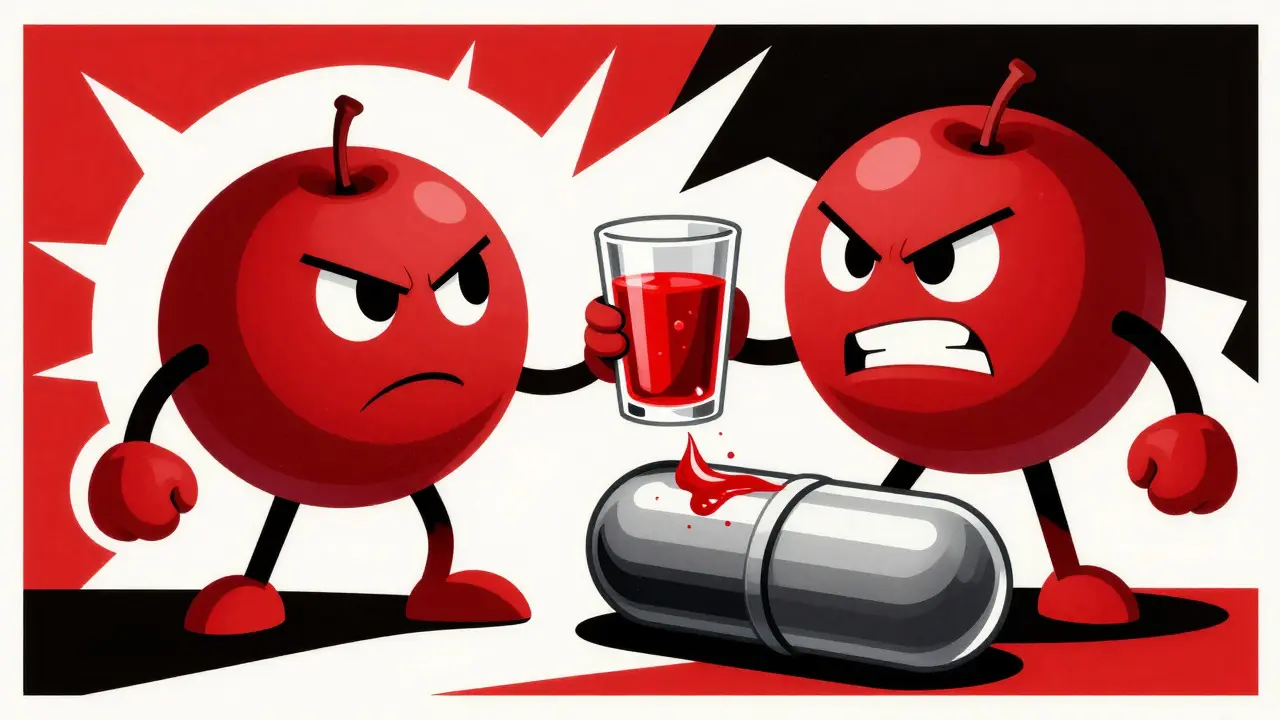
That bright red glass of cranberry juice you reach for to ward off a urinary tract infection might be doing more than just protecting your bladder. If you are taking Warfarin, a widely prescribed oral anticoagulant used to prevent blood clots, that drink could quietly push your blood thinner into dangerous territory. It is not just a myth or an old wives' tale; it is a documented chemical clash that has led to hospital visits and serious bleeding events for thousands of patients.
The relationship between cranberry products and warfarin is one of the most significant food-drug interactions in modern medicine. While cranberry is celebrated for its health benefits, particularly for urinary health, its active compounds can interfere with how your body processes warfarin. This interference doesn't happen overnight, but it happens consistently enough that healthcare providers worldwide have issued strict warnings. Understanding this interaction isn't just about avoiding a fruit-it's about keeping your International Normalized Ratio (INR) stable and your risk of hemorrhage low.
The Science Behind the Interaction
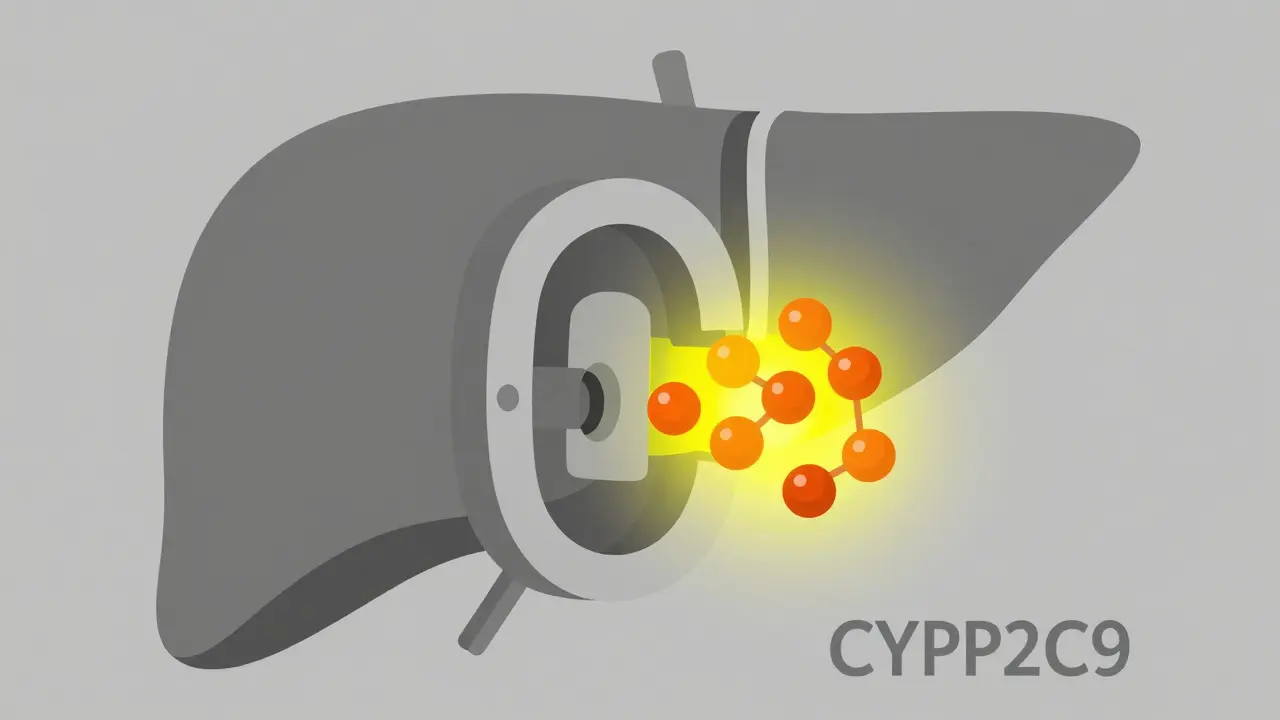
To understand why cranberry juice poses a risk, we need to look at what happens inside your liver. Warfarin works by thinning your blood, but it has a very narrow therapeutic window. This means the difference between a dose that prevents clots and a dose that causes dangerous bleeding is tiny. Your body metabolizes warfarin primarily through an enzyme called Cytochrome P450 2C9 (commonly known as CYP2C9). This enzyme is responsible for breaking down the S-enantiomer of warfarin, which is the form of the drug that actually thins your blood.
Cranberries contain flavonoids, specifically quercetin and other polyphenols. Research published in the PMC database indicates that these compounds can inhibit the activity of the CYP2C9 enzyme. When this enzyme is inhibited, it slows down the breakdown of warfarin. As a result, more active warfarin stays in your bloodstream longer than intended. Studies suggest this inhibition can increase systemic exposure to warfarin by 30-50%. In simple terms, your body thinks it’s processing the normal dose, but chemically, you’re effectively taking a much higher dose.
This mechanism was highlighted in a pivotal 2007 case report involving a 78-year-old male patient. He was on a stable warfarin regimen for atrial fibrillation. After consuming half a gallon of cranberry-apple juice weekly, his INR spiked to 6.45. The therapeutic range for most patients is between 2.0 and 3.0. An INR of 6.45 puts him at severe risk for internal bleeding. His INR returned to normal only after he stopped drinking the juice, proving the direct link between the product and the drug interaction.
Recognizing the Signs of Elevated INR
You cannot always feel your INR rising. That is what makes this interaction so tricky. However, there are physical signs that your blood is too thin. If you start consuming cranberry products regularly while on warfarin, watch for these symptoms within 3 to 7 days:
- Unexplained bruising or large bruises from minor bumps
- Nosebleeds that last longer than usual or are difficult to stop
- Blood in your urine (pink, red, or brown color) or stool (black or tarry)
- Gums that bleed easily when brushing teeth
- Heavier than normal menstrual periods
- Feeling unusually tired, dizzy, or weak, which can signal internal blood loss
In documented cases, patients have experienced gastrointestinal bleeding after just two weeks of daily cranberry juice consumption. One 71-year-old woman saw her INR jump from a safe 2.5 to a critical 8.3 in ten days. These aren't outliers; they represent the potential severity of the interaction. The time it takes for INR to elevate can range from 2 to 14 days after you start drinking the juice, depending on your metabolism and the concentration of the cranberry product.
Not All Cranberry Products Are Created Equal
When experts talk about the cranberry-warfarin interaction, they mean all forms of the berry. It is not limited to pure juice. The American Heart Association warns that capsules, extracts, dried cranberries, and even cranberry-flavored beverages pose risks. In fact, sweetened cranberry juice cocktails might be particularly problematic because they often contain higher concentrations of active compounds per serving compared to diluted pure juice, and people tend to drink them in larger volumes because they taste better.
| Product Type | Typical Consumption | Risk Level | Notes |
|---|---|---|---|
| Pure Cranberry Juice | 8-12 oz daily | High | Concentrated flavonoids; strong inhibitor of CYP2C9 |
| Cranberry Cocktail (Sweetened) | 16+ oz daily | Very High | Often consumed in larger volumes; high sugar masks taste |
| Dried Cranberries (Craisins) | Handfuls daily | Moderate to High | Concentrated form; easy to overconsume without realizing |
| Cranberry Supplements/Capsules | Standard dose | Variable | Depends on standardization; some extracts are highly potent |
| Occasional Cranberry Sauce | Small portion yearly | Low | Infrequent use less likely to cause sustained INR elevation |
The key variable here is consistency and volume. Most adverse reactions occur when patients consume cranberry products regularly-daily or several times a week-in moderate to large amounts. A single small sip once a year is unlikely to cause issues, but making cranberry juice part of your morning routine is a different story entirely.
What Do the Experts Say?
The medical consensus is clear, though the intensity of the warning varies slightly by region. The U.S. Food and Drug Administration (FDA) updated warfarin labeling in 2005 to explicitly warn patients about cranberry products. Dr. Paul Offit, a renowned infectious disease expert, has called this one of the most clinically significant food-drug interactions seen in practice. The Merck Manual Consumer Version states plainly that people taking warfarin should avoid cranberry products to reduce bleeding risk.
However, science is rarely black and white. Some controlled clinical trials have shown inconsistent results, leading to debate among researchers. Dr. David Flockhart, a former chief of clinical pharmacology at Indiana University, notes that the inconsistency likely stems from genetic differences. People have different versions of the CYP2C9 gene. Those with certain genetic variants (*CYP2C9*2 and *CYP2C9*3) metabolize warfarin more slowly anyway. For these individuals, adding cranberry’s inhibitory effect can lead to 2-3 times greater INR elevation compared to someone with normal metabolism. This genetic variability explains why one person might drink cranberry juice safely while another ends up in the emergency room.
Regulatory bodies like New Zealand’s Medsafe have taken a hardline approach. In December 2022, they advised patients to avoid cranberry products entirely due to the unpredictable nature of the interaction. They reported that food and supplement interactions accounted for a significant portion of warfarin adverse events, highlighting the real-world impact of dietary choices.

Practical Steps for Patients
If you are on warfarin, you don’t necessarily have to live in fear of every red fruit, but you do need a strategy. Here is how to manage the risk effectively:
- Avoid Regular Consumption: The safest route, recommended by the American College of Chest Physicians (ACCP), is to avoid all cranberry products unless closely monitored. If you love cranberry sauce at Thanksgiving, enjoy a small portion occasionally, but don’t make it a daily habit.
- Monitor More Frequently: If you choose to consume cranberry products, your INR needs to be checked within 3-5 days of starting. If your doctor allows continued use, check it weekly. Do not stick to your standard 4-week interval.
- Know Your Triggers: Keep a food diary. Note when you consume cranberry products and correlate it with your INR test results. This data helps your healthcare provider adjust your warfarin dose if necessary.
- Consider Alternatives for UTI Prevention: Many people take cranberry for urinary tract health. If you are on warfarin, ask your doctor about alternatives like methenamine hippurate or low-dose antibiotics, which do not interact with blood thinners.
- Communicate Clearly: Tell every doctor, dentist, and pharmacist you see that you are on warfarin. Ask them specifically if any new supplements or foods they recommend interact with your medication.
The goal is stability. Warfarin requires a consistent lifestyle. Sudden changes in diet, including the addition of cranberry products, disrupt that stability. By treating your diet as part of your medication regimen, you take control of your health rather than letting chemistry dictate your outcomes.
Looking Ahead: Is Warfarin Still Relevant?
With the rise of Direct Oral Anticoagulants (DOACs) like apixaban and rivaroxaban, fewer people are starting warfarin today. Prescriptions for warfarin have declined by 18% annually since 2015. DOACs generally have fewer food interactions, which is why many doctors prefer them. However, approximately 2.5 million Americans still rely on warfarin, often due to cost, kidney function issues, or mechanical heart valves. For these patients, the cranberry interaction remains a critical, life-saving piece of knowledge.
Future research may allow for personalized risk assessment through genetic testing for CYP2C9 polymorphisms. Imagine knowing exactly how your liver processes drugs before you ever take a pill. Until then, caution is the best policy. The cranberry-warfarin interaction is a reminder that our food choices are deeply connected to our medical treatments. Stay informed, stay vigilant, and never hesitate to ask your healthcare provider about dietary restrictions.
How much cranberry juice is too much when taking warfarin?
There is no officially "safe" amount established by major health agencies. Case reports show interactions occurring with as little as 150 mL (about 5 ounces) per day, but most severe cases involve higher volumes like 240-1000 mL daily. Because individual sensitivity varies based on genetics and metabolism, the safest approach is to avoid regular consumption entirely. If you must consume it, limit it to occasional, small servings and monitor your INR closely.
Does dried cranberry (craisins) interact with warfarin?
Yes, dried cranberries can interact with warfarin. Because the water is removed, the flavonoids and other active compounds are concentrated. Eating a handful of dried cranberries daily can deliver a similar or higher dose of interacting compounds compared to a glass of juice. Treat dried cranberries with the same caution as liquid products.
How long does it take for cranberry to affect my INR?
INR elevations typically occur within 3 to 7 days after starting regular cranberry consumption, though it can take anywhere from 2 to 14 days depending on the individual. Once you stop consuming cranberry products, your INR usually returns to the therapeutic range within 5 to 7 days, assuming your warfarin dose remains unchanged.
Are there safe alternatives to cranberry for UTI prevention?
Yes. If you are on warfarin and want to prevent urinary tract infections, discuss alternatives with your doctor. Options include methenamine hippurate, which creates an antibacterial environment in the urine, or low-dose prophylactic antibiotics. D-mannose is another supplement sometimes used, but you should still check with your provider to ensure it doesn't interfere with your specific health profile.
Why do some people drink cranberry juice on warfarin without issues?
Individual variation plays a huge role. Genetic differences in the CYP2C9 enzyme mean some people metabolize warfarin faster or slower than others. Additionally, the concentration of active flavonoids varies between different brands and batches of cranberry products. Someone with robust liver enzyme activity might tolerate small amounts of cranberry, while someone with a genetic variant that slows metabolism could experience a dangerous spike in INR from the same amount.