
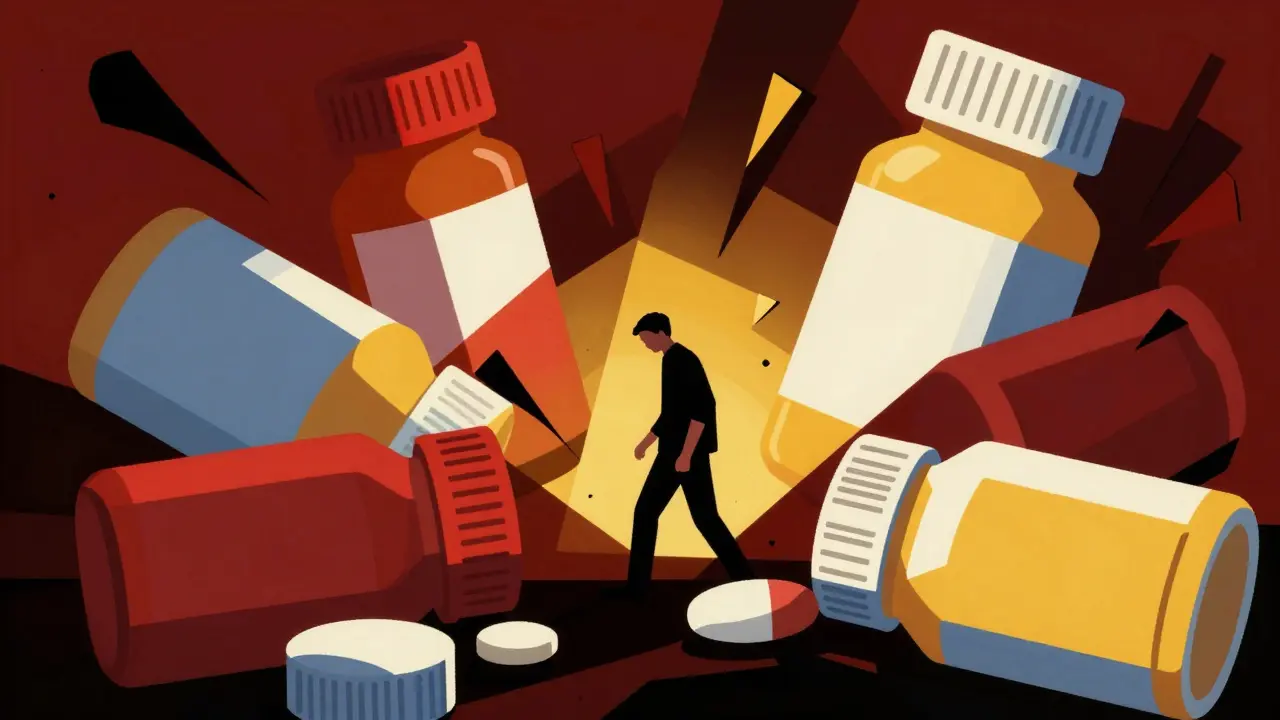
Half of all patients with chronic conditions forget to take their medicine or skip doses entirely. This isn't just a minor oversight; it creates a ripple effect that costs the U.S. healthcare system between $100 billion and $300 billion annually. For individuals, the stakes are even higher: missed doses lead to worse health outcomes, more hospital visits, and a feeling of losing control over one’s own body. Traditional advice-just setting an alarm or reading a brochure-often falls flat because taking medication daily is less about logic and more about habit, emotion, and social context.
This is where support groups and community programs designed to improve medication compliance through peer interaction and structured guidance step in. These aren't just chat sessions; they are structured interventions that leverage human connection to solve a medical problem. By tapping into the power of shared experience, these programs help patients navigate the complex reality of long-term treatment. Here is how they work, why they matter, and what you need to know if you are looking for one.
The Power of Peer Connection Over Clinical Advice
We often assume that doctors have all the answers, but when it comes to sticking to a difficult medication regimen, empathy beats authority. Research published in the American Journal of Managed Care in 2022 highlighted a stark difference in effectiveness based on program structure. Programs where facilitators received more than 40 hours of training showed significantly better results than those with less training. Why? Because effective support requires more than just good intentions; it needs skilled navigation of emotional barriers.
Consider the data from the Journal of Medical Care (2020). A systematic review found that peer-facilitated interventions produced an effect size (Cohen's d) of 0.40 for improving medication adherence. In contrast, traditional educational brochures alone only achieved an effect size of 0.15. That is a massive gap. When you talk to someone who has successfully managed hypertension or diabetes for years, you aren't just hearing instructions; you are seeing proof that survival-and thriving-is possible. This social influence mechanism encourages positive behavior changes in a way that clinical lectures cannot.
The Veterans Health Administration provides a real-world example of this scale. As of 2023, they implemented peer support programs across 140 facilities, serving approximately 250,000 veterans annually. The result? Documented reductions in hospital readmission rates by 15-30% across multiple chronic conditions. This proves that when you build a community around compliance, the medical metrics follow.
Types of Community Programs Available
Not all support looks the same. Depending on your location, lifestyle, and condition, different models may fit your needs better. Understanding these structures helps you choose the right path without wasting time on a format that doesn't resonate.
- Hospital-Based Peer Groups: These typically operate once or twice a week with small groups of 8-12 participants. They offer high-touch interaction and immediate access to medical resources but require physical travel.
- Community Health Worker Visits: In these programs, trained workers visit patients' homes, usually conducting 4-12 visits over 3-6 months. This model removes transportation barriers and allows for personalized observation of living conditions that affect adherence.
- Digital Peer Platforms: Apps and online forums provide 24/7 access to moderated communities. While convenient, they lack the deep emotional bonding of face-to-face interaction, which research shows contributes to 28% higher long-term adherence rates in in-person settings.
- Hybrid Models: Combining in-person meetings with mobile app reminders. Recent studies show this approach produces 34% higher adherence rates in hypertension management compared to using either method alone.
Cost is another factor. Nonprofit community programs are often free to participants, funded by grants ranging from $75,000 to $150,000 annually per program. Hospital-based programs, however, may cost healthcare systems $200-$500 per patient annually, though this is often covered by insurance under value-based care models.
Why Family and Social Networks Matter
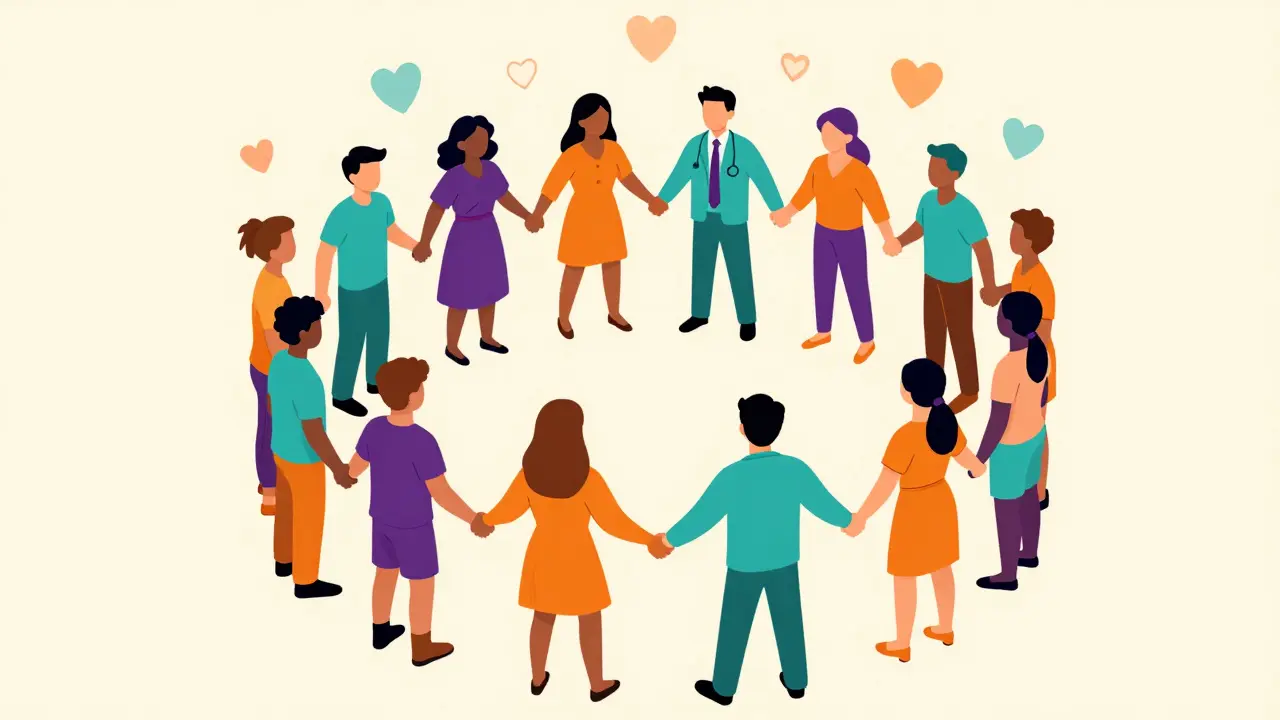
Medication adherence rarely happens in a vacuum. Your household environment plays a critical role. A 2021 review in PMC8234709 analyzed family support interventions and found that 11 out of 14 studies demonstrated statistically significant positive associations between family involvement and medication adherence. Compare this to general social support, where only 9 studies showed similar benefits. The specificity of family engagement makes a tangible difference.
Dr. Karen Ladin from Tufts University School of Medicine noted in a 2022 Health Affairs commentary that social support systems create networks that encourage not just pill-taking, but broader lifestyle changes. She cited potential healthcare cost reductions of 12-18% through reduced hospital readmissions when these networks are active. If you are struggling, involving a trusted family member or friend can transform a solitary chore into a shared responsibility.
| Intervention Type | Effect Size (Adherence) | Key Benefit | Main Limitation |
|---|---|---|---|
| Peer-Facilitated Groups | d=0.40 | High emotional support & relatability | Scheduling conflicts |
| Educational Brochures | d=0.15 | Low cost, easy distribution | Low engagement, no accountability |
| Mobile Health Apps | d=0.40 | 24/7 accessibility, reminders | Lacks deep emotional connection |
| Pharmacist-Led Support | +23% vs Physician-led | Expert medication knowledge | Less focus on lifestyle/emotion |
Real-World Impact: What Patients Say
Statistics tell part of the story, but personal experiences reveal the true texture of these programs. On Reddit’s r/ChronicIllness forum, a user identified as 'DiabetesWarrior87' shared a powerful outcome in March 2023: attending weekly diabetes support groups cut their missed doses from 3-4 per week to less than 1. Within six months, their A1c dropped from 8.5% to 6.9%. That is a clinically significant improvement driven largely by community accountability.
Data from PatientsLikeMe supports this anecdote. In a 2022 survey of 12,450 users, 78% of participants in condition-specific support groups reported improved medication adherence. Notably, 63% credited "hearing how others manage side effects" as the most valuable aspect. Knowing that nausea or fatigue is a common, manageable hurdle rather than a sign of failure keeps patients on track.
However, it is not always smooth sailing. A 2021 National Alliance on Mental Illness survey found that 42% of participants faced scheduling conflicts, and 29% felt discomfort in group settings. Cultural matching also matters significantly. A qualitative study in BMC Health Services Research (2022) documented that African American participants in hypertension support groups reported 35% higher satisfaction when groups were culturally matched, compared to 18% in mixed-race groups. Finding a group where you feel understood is half the battle.
Implementation Challenges and Success Factors
If you are considering starting or joining a program, understanding the mechanics behind successful implementation is crucial. The CDC’s 2022 Medication Adherence Implementation Guide outlines a rigorous 6-month rollout process: three months for stakeholder engagement and facilitator training, two months for pilot testing with 15-20 participants, and one month for refinement. This structure exists because haphazard programs fail.
Dr. John Urquhart from Stanford University cautioned in JAMA (2019) that many support programs fail because they ignore the complexity of medication regimens. He noted that simplifying dosing schedules (e.g., reducing from four times daily to twice daily) produced 18% greater adherence improvement than support groups alone. The best programs combine social support with practical logistical help.
Retention is another major hurdle. The average dropout rate is 22% by six months. Programs that integrate text message reminders see 15% lower attrition. Facilitators must possess specific skills: active listening (rated essential by 92% of programs), medication knowledge (87%), and cultural competency (79%). Without these, the group becomes just another obligation rather than a lifeline.
The Future of Community-Based Adherence
The landscape is shifting toward digital integration and new payment models. The global medication adherence market reached $2.8 billion in 2022, with support groups representing 18% of interventions. This sector is projected to grow to $4.1 billion by 2027. Medicare Advantage plans are leading this charge, with 63% of 2023 plans including some form of medication adherence support.
Innovation continues with FDA-approved digital therapeutics like Pear Therapeutics' reSET-O, which combines mobile app support with peer coaching. CMS launched the Medication Therapy Management Support Program in 2023, allocating $50 million to integrate community health workers into adherence support. These developments signal that peer support is no longer a fringe concept but a core component of modern healthcare infrastructure.
Despite this growth, disparities remain. Rural areas have 47% fewer support programs per capita than urban areas, and only 22% of programs offer non-English language support despite 25% of the U.S. population having limited English proficiency. Advocacy for accessible, inclusive programs remains vital.
Are support groups covered by insurance?
Coverage varies widely. Many nonprofit community programs are free to participants, funded by grants. However, hospital-based programs or those integrated into Medicare Advantage plans may be partially or fully covered. As of 2023, 63% of Medicare Advantage plans include some form of medication adherence support. Check with your specific provider to understand your benefits.
How do I find a local support group?
Start by asking your primary care physician or pharmacist for referrals. You can also search through national organizations like the American Heart Association (for cardiovascular conditions) or the National Alliance on Mental Illness. Online directories like PatientsLikeMe or local hospital websites often list community-based groups. For rural residents, look for hybrid models that offer virtual participation options.
What if I don't like group settings?
Group settings aren't for everyone. If you feel uncomfortable, consider one-on-one support options such as community health worker home visits or pharmacist-led counseling. Digital platforms also offer private messaging features with peer mentors. The goal is adherence, so choosing a format that feels safe and sustainable is key.
Do support groups replace medical advice?
No. Support groups complement medical care but do not replace it. They provide emotional support, practical tips, and accountability. Always consult your doctor or pharmacist before making changes to your medication regimen. Effective programs often include pharmacists (73% of effective programs do) to ensure medical accuracy alongside peer support.
How long does it take to see results?
Results vary, but many patients report improvements within weeks. For example, one diabetic patient saw a significant drop in A1c levels after six months of consistent attendance. Studies show that sustained engagement beyond six months yields the best long-term adherence rates. Consistency is more important than speed.