
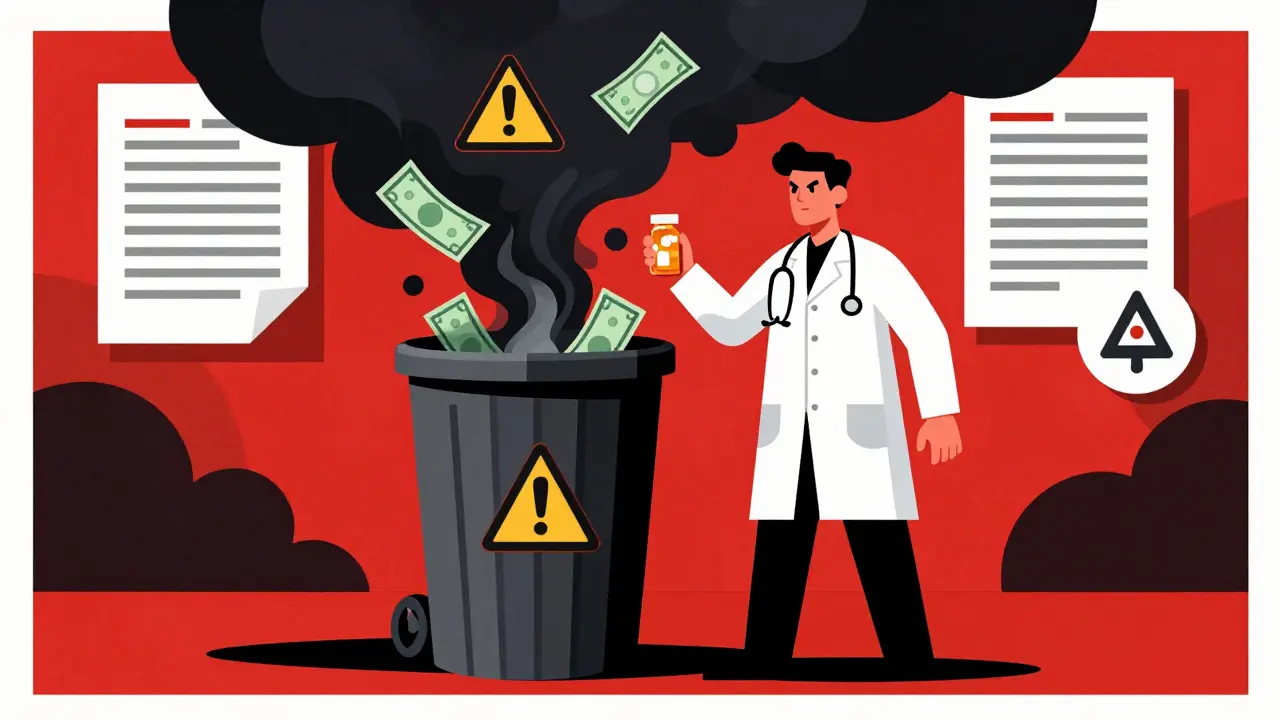
Throwing expired painkillers or sedatives into the trash bin is a major violation. It puts your license at risk, endangers public safety, and can lead to massive fines from the Drug Enforcement Administration (DEA). Handling expired controlled substances requires strict adherence to federal laws, specifically Title 21 of the Code of Federal Regulations (21 CFR) Parts 1300-1399. Whether you run a dental office, a veterinary clinic, or a research lab, the rules are non-negotiable.
The stakes have never been higher. In 2022 alone, the DEA conducted nearly 1,850 disposal compliance inspections, issuing over 300 warning letters and levying millions in fines. The goal isn't just bureaucracy; it’s preventing diversion-the illegal transfer of drugs to people who shouldn’t have them. This guide breaks down exactly how to handle these high-risk medications legally and safely.
Understanding the Rules: Inventory vs. Wastage
Before you touch a bottle, you need to know which rule applies. The DEA distinguishes between two main types of disposal: inventory disposal and wastage. Getting this wrong is one of the most common errors we see in audits.
Inventory Disposal is the process of getting rid of larger quantities of unused, expired, or damaged controlled substances that were previously part of your official inventory. These drugs must be rendered "non-retrievable," meaning they cannot be recovered or used again. Incineration by a licensed facility is currently the only method the DEA accepts as meeting this standard. You cannot simply crush them or dissolve them in water.
Wastage is the disposal of small amounts of controlled substances during normal operations, such as leftover medication after a procedure or a broken vial. While wastage doesn't always require sending the drugs to an incinerator, it still demands rigorous documentation and witness protocols. According to guidelines from the University of Michigan's Research Ethics & Compliance office, even small amounts with recoverable potential cannot be poured down the sink or mixed with cat litter.
Step-by-Step Disposal Process for Healthcare Facilities
If you have a stockpile of expired meds, here is the practical workflow to follow. This aligns with protocols used by major institutions like UCSF and the University of Michigan.
- Label Clearly: Immediately mark every container intended for disposal with labels reading "To Be Disposed," "Do Not Use," or "Expired." This prevents accidental administration.
- Segregate Securely: Move these labeled items out of your active inventory storage. Keep them in a separate, secure locked cabinet or safe. Do not leave them accessible to general staff.
- Contact a Reverse Distributor: For inventory disposal, you must use a DEA-registered reverse distributor. Companies like Stericycle, Daniels Health, or Drug and Laboratory Disposal, Inc. (DLD) specialize in this. Expect fees ranging from $250 to $500 per pickup, depending on volume and location.
- Complete Documentation: Fill out the required forms. For Schedule I and II substances, this typically involves DEA Form 41 (for destruction authorization) or transferring via DEA Form 222 if using a specific reverse distribution channel. Record the date, quantity, and recipient details.
- Zero Out Your Records: Update your internal logs immediately. The remaining balance for those specific items should be zeroed out upon confirmed disposal.
Schedule-Specific Requirements
Not all drugs are treated equally. The schedule of the substance dictates the paperwork and procedures.
| Drug Schedule | Examples | Key Requirement | Form Needed |
|---|---|---|---|
| Schedule I & II | Morphine, Fentanyl, Adderall | Strictest control; requires reverse distributor for inventory; two witnesses for wastage. | DEA Form 222 (transfer) or Form 41 (destruction) |
| Schedule III-V | Tylenol with Codeine, Valium, Xanax | Less restrictive but still requires record-keeping; some alternative pathways may exist. | Internal logs + Recipient records |
For Schedule I and II substances, the involvement of a reverse distributor is mandatory for inventory disposal. You cannot dispose of these yourself. For Schedule III-V, while you still need to maintain detailed records including the date, manner of disposal, and name/address of the recipient, the process is slightly less bureaucratic, though no less important.
The Critical Role of Witnesses and Documentation
Paperwork is your shield against liability. The DEA mandates that Two Authorized Personnel must witness the disposal process and sign documentation confirming the action occurred as directed. One of these individuals must be the registrant or an authorized agent.
This isn't just a formality. Dr. Robert Tucker, a Senior Advisor at the DEA Diversion Control Division, emphasizes that this dual-witness requirement is critical for maintaining the chain of custody. If an inspector asks where a missing dose went, your signed logbook is the only proof you have.
Keep these records for at least two years. Many facilities fail because they shred documents too early. Store them securely, either physically in a fireproof safe or digitally in a compliant system like UCSF’s Research Inventory Online (RIO), which has proven more efficient than paper-based systems with error rates dropping significantly.
Common Mistakes to Avoid
Even experienced pharmacists and doctors make costly errors. Here are the pitfalls to watch out for:
- Using Sink Disposal: Never pour controlled substances down the drain. The FDA explicitly states this is unacceptable for substances with recoverable amounts. It contaminates water supplies and violates environmental laws.
- Mixing with Cat Litter: While mixing pills with coffee grounds or kitty litter is sometimes suggested for *non-controlled* household meds, it is illegal for professional disposal of controlled substances unless specifically approved for tiny wastage amounts under strict local guidelines-and even then, it's risky. Stick to reverse distributors.
- Ignoring Training: The DEA requires initial 2-hour training and annual 1-hour refreshers for anyone handling disposal. Only about 67% of facilities meet this requirement. Ensure your team is certified.
- Delaying Pickups: Don't let expired drugs pile up. Scheduling delays with reverse distributors can average 14 business days. Plan ahead and batch disposals efficiently.

Special Considerations for Veterinary Practices
Veterinary clinics face unique challenges. With 43.6% of practices reporting confusion over disposal methods, it’s easy to slip up. Remember, the same DEA rules apply to vets as they do to human healthcare providers. Improper disposal contributes to nearly 15% of veterinary drug diversion cases. Use the DEA’s online disposal locator tool to find a reverse distributor near you. Don’t rely on generic waste haulers; ensure they are DEA-registered for controlled substances.
Future Trends: Going Digital
The landscape is shifting toward digital tracking. The DEA’s Electronic Registration System (ERS) for Form 222 became mandatory in January 2023, cutting processing times from over a week to just a day. Look out for the upcoming Electronic Inventory Management System (EIMS), planned for full implementation by 2025, which will require real-time reporting of disposals. Adopting digital inventory management now will save you headaches later.
Can I throw expired controlled substances in the regular trash?
No. Throwing controlled substances in the regular trash is illegal and dangerous. It allows for easy retrieval and abuse. You must use a DEA-registered reverse distributor or follow specific wastage protocols with proper witnessing and documentation.
What is a reverse distributor?
A reverse distributor is a company registered with the DEA to receive, store, and destroy controlled substances. They provide secure pickup services and handle the legal paperwork required for proper disposal. Major players include Stericycle and Daniels Health.
How long must I keep disposal records?
You must retain all records related to the disposal of controlled substances for a minimum of two years. This includes logs, witness signatures, and receipts from reverse distributors.
Is there a difference between disposing of Schedule II and Schedule IV drugs?
Yes. Schedule II drugs (like morphine) have the strictest requirements, often requiring DEA Form 222 for transfer and mandatory reverse distributor use. Schedule IV drugs (like Xanax) have slightly less stringent paperwork but still require careful logging and witness verification.
What happens if I don't follow DEA disposal rules?
Violations can result in severe penalties, including heavy fines, suspension or revocation of your DEA registration, and criminal charges. The DEA actively inspects facilities, and improper disposal is a top reason for enforcement actions.