
Think about the last time you saw a pharmaceutical commercial on TV. You probably remember the smiling couple hiking in nature or the catchy jingle promising relief from anxiety or insomnia. What you likely did not remember was a mention of the cheaper, equally effective generic version of that drug. This is no accident. In the United States and New Zealand-the only two countries in the world that allow direct-to-consumer (DTC) advertising for prescription medications-marketing has fundamentally rewired how patients view their health options. The result? A deep-seated preference for expensive branded drugs over generics, even when the active ingredients are identical.
This phenomenon is not just about corporate greed; it is a complex interplay of brand psychology is the study of how branding influences consumer behavior and perception, regulatory frameworks, and human cognitive biases. As of 2020, pharmaceutical companies spent $6.58 billion annually on these advertisements, a staggering increase from the $550 million spent in 1996. This massive investment creates a market environment where visibility equals validity in the minds of consumers, often at the expense of rational medication selection.
The Psychology of Brand Preference in Healthcare
Why do we trust the name we see on TV more than the unbranded alternative? It comes down to familiarity and perceived quality. When a company spends millions ensuring its logo and tagline are everywhere, it triggers the "mere exposure effect." We assume that if a drug is heavily advertised, it must be superior. This bias is particularly potent in healthcare, where patients feel vulnerable and seek reassurance.
Generic drugs, by definition, lack this marketing budget. They contain the same active ingredient as the brand-name counterpart and meet the same FDA standards for safety and efficacy. However, they arrive without the emotional packaging. There is no sunny meadow, no happy family reunion, and no celebrity endorsement. To the average patient, a generic pill can feel like an afterthought-a discount version rather than a medical equivalent. This psychological gap allows branded manufacturers to charge premiums that have little to do with clinical superiority and everything to do with perceived value.
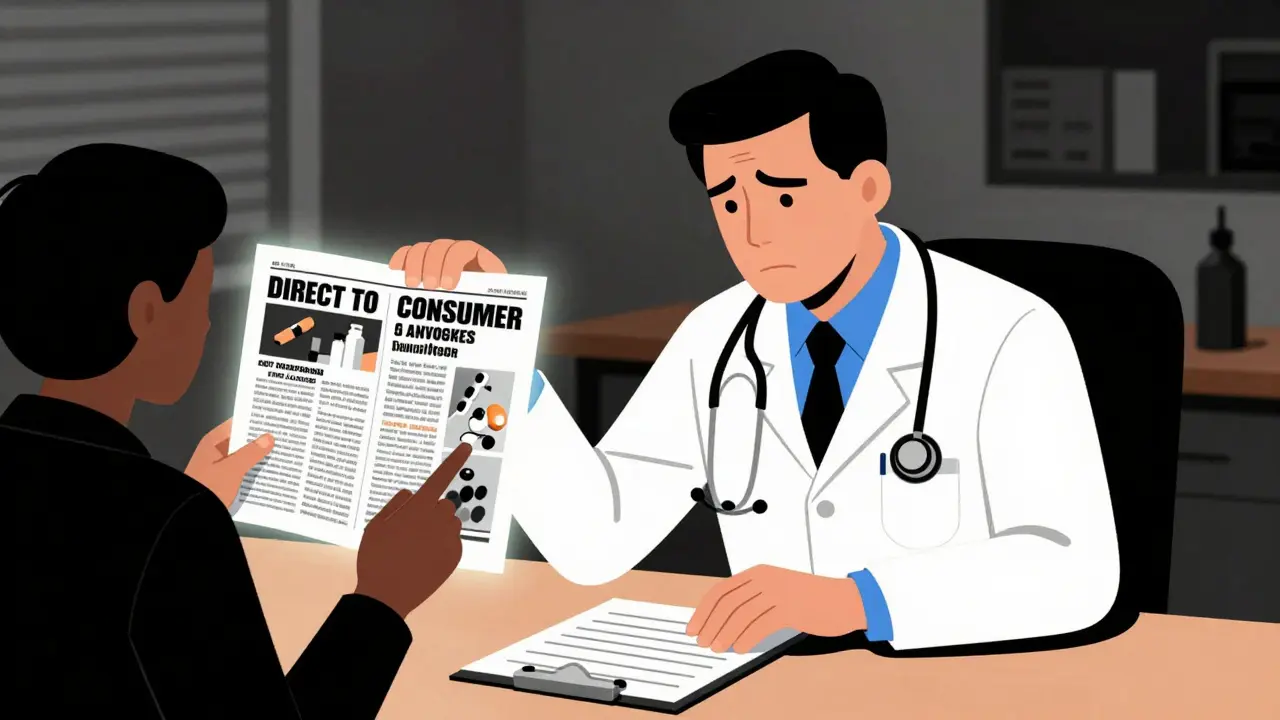
The impact extends beyond simple preference. Research indicates that this marketing dominance shapes the very conversation between patient and doctor. When a patient walks into a clinic requesting a specific branded drug because they saw it on Netflix, the dynamic shifts. The physician is no longer just a consultant but a gatekeeper who must either acquiesce to the demand or engage in a difficult explanation of why the generic is sufficient. This friction often leads to the prescription of the brand, reinforcing the cycle.
The Spillover Effect: Does Advertising Help Generics?
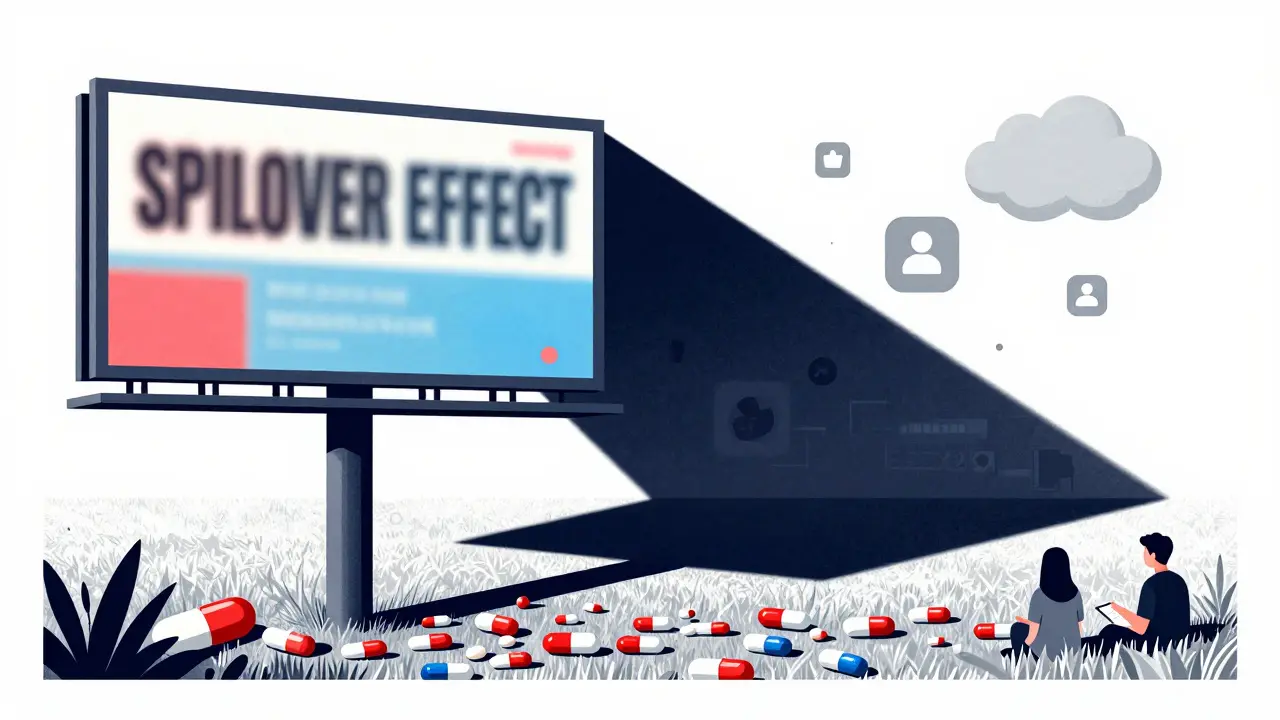
Here is where the story gets nuanced. While DTC advertising clearly boosts sales for the specific branded drugs featured, it also generates what researchers call a "spillover effect." Studies from the Wharton School suggest that a 10% increase in advertising exposure increases the number of prescriptions purchased by approximately 5%. Crucially, much of this increase includes non-advertised drugs within the same therapeutic class-typically generics.
How does this work? Imagine a patient sees an ad for a popular cholesterol medication. They become aware that high cholesterol is a treatable condition and that they should be taking something. They go to their doctor and ask for that specific brand. The doctor, knowing that several generic statins exist that are clinically equivalent and far cheaper, may prescribe one of those instead. The patient still starts treatment, but they end up with a generic. In this scenario, the branded ad acted as a wake-up call, driving overall utilization of the drug class, including generics.
However, this benefit is limited. The spillover effect relies on the physician’s ability to steer the patient away from the brand. If the patient is insistent, or if the insurance plan requires higher copays for generics, the brand wins. Furthermore, the initial awareness created by the ad is tied to the brand image. Even if the patient takes the generic, their mental model of the treatment remains anchored to the expensive, well-marketed product. This makes them less likely to switch to generics in the future or to advocate for cost-saving measures.
Distorted Risk Perception and Information Recall
One of the most concerning aspects of DTC advertising is how it handles risk information. By law, these ads must include a list of potential side effects, often read in rapid-fire voiceovers while uplifting visuals play on screen. The Federal Drug Administration (FDA) has studied this extensively. Their 2018 research found that while repeated exposure to ads improves recall of both benefits and risks, the retention of both remains low overall. More importantly, risk information requires significantly more repetitions than benefit information to be accurately remembered.
This asymmetry creates a dangerous imbalance. Patients walk away remembering the promise of relief (the benefit) but forgetting the warning about liver damage or suicidal thoughts (the risk). Generic drugs, which do not have these emotionally charged ads, do not suffer from this specific distortion-but they also do not benefit from the disease awareness campaigns that sometimes accompany branded ads. The net result is a population that is overly optimistic about the efficacy of new branded drugs and under-informed about their dangers, while remaining largely unaware of the safety profile of established generics.
Dr. Alpert’s research highlights another troubling trend: patients who initiate treatment solely due to advertising show lower compliance rates on average. This suggests that ads may be capturing people for whom treatment is marginally less appropriate, or individuals who are simply less committed to the regimen. This leads to increased drug spending without proportional gains in health outcomes. For generics, which often serve as the backbone of chronic disease management, this instability in patient commitment can undermine long-term health strategies.
Physician Autonomy Under Pressure
The relationship between patient requests driven by advertising and physician decision-making is fraught with tension. A national survey cited by the University of Montana revealed that physicians reported filling 69% of DTCA-motivated requests for interventions they considered inappropriate. This statistic is alarming. It suggests that nearly seven out of ten times, a doctor prescribed a drug-not because it was the best clinical choice, but because the patient asked for it based on a commercial.
This erosion of clinical autonomy has significant implications for generic prescribing. Physicians know that generics are cost-effective and clinically sound. However, overriding a patient’s request requires time, empathy, and communication skills. In a busy clinic, it is easier to write the script for the brand. Over time, this convenience becomes a habit. The physician’s role shifts from expert advisor to service provider, and the generic option fades into the background unless the patient specifically asks for it.
Moreover, the financial incentives in the healthcare system can exacerbate this issue. While many insurance plans now favor generics through tiered formularies, some still allow brands with minimal penalty. When combined with the patient’s insistence, the barrier to prescribing the brand drops significantly. The result is a healthcare landscape where marketing dollars indirectly influence prescribing patterns, bypassing clinical judgment.
| Factor | Branded Drugs | Generic Drugs |
|---|---|---|
| Advertising Spend | High ($6.58B industry total) | Minimal to None |
| Patient Awareness Source | TV, Digital, Social Media Ads | Physician Recommendation, Pharmacy Labels |
| Perceived Quality | High (due to brand trust) | Moderate (often viewed as "cheaper") |
| Risk Communication | Emotional, often overlooked | Clinical, dry, but accurate |
| Prescribing Influence | Strong patient pressure | Relies on physician initiative |
The Future of Generic Perception in a Digital Age
As advertising moves from television to digital platforms, the dynamics are shifting again. Social media algorithms target users based on interests and behaviors, allowing pharmaceutical companies to reach highly specific demographics. This precision marketing can amplify the psychological impact of brand messaging. A young adult interested in fitness might see targeted ads for performance-enhancing supplements or weight-loss drugs, further entrenching the idea that branded solutions are the key to health optimization.
However, this digital shift also offers opportunities for education. Health organizations and advocacy groups are beginning to use similar channels to promote the value of generics. By providing clear, accessible information about bioequivalence and cost savings, they aim to counteract the brand bias. The challenge is competing with the emotional resonance of professional advertising. Facts rarely win against feelings in the short term.
Policymakers are also reevaluating the regulatory framework. Debates continue over whether current FDA guidelines adequately protect consumers from misleading information. Some propose stricter requirements for risk communication, such as mandatory plain-language summaries or balanced comparisons with generic alternatives. Others argue that banning DTC ads entirely would deprive patients of valuable disease awareness. Finding the right balance is critical to ensuring that marketing enhances, rather than distorts, public health.
Practical Steps for Patients and Providers
So, what can you do? If you are a patient, start by asking questions. When your doctor prescribes a branded drug, ask if a generic alternative exists. Ask about the cost difference. Most importantly, ask if the generic is clinically equivalent. Knowledge is the antidote to bias. Understanding that the active ingredient is the same can help you make a more informed, financially sound decision.
If you are a healthcare provider, take the time to explain the rationale behind generic prescribing. Acknowledge the patient’s concern-they want the best care. Then, provide evidence-based reassurance. Highlight the rigorous testing generics undergo. Discuss the long-term cost savings. By building trust through transparency, you can reduce the power of marketing-driven demands and reinforce the value of evidence-based medicine.
Finally, support policies that promote transparency in pharmaceutical marketing. Advocate for regulations that require balanced presentation of risk and benefit. Encourage educational initiatives that highlight the role of generics in sustainable healthcare. By shifting the narrative from brand loyalty to clinical efficacy, we can create a system where the best medicine is chosen for its science, not its slogan.
Are generic drugs really as effective as branded ones?
Yes. Generic drugs must meet the same strict FDA standards for safety, efficacy, and quality as their branded counterparts. They contain the same active ingredient and work in the same way in the body. The main differences are usually in inactive ingredients (like dyes or fillers) and price.
Why do only the US and New Zealand allow DTC advertising?
Most countries ban DTC advertising for prescription drugs, believing it encourages unnecessary medication use and undermines the doctor-patient relationship. The US and New Zealand permit it, arguing that it promotes disease awareness and empowers patients to discuss treatments with their doctors.
What is the "spillover effect" in drug advertising?
The spillover effect refers to the phenomenon where advertising for a specific branded drug increases the overall usage of that entire drug class, including non-advertised generics. Patients become aware of a condition and seek treatment, but may end up receiving a generic alternative prescribed by their doctor.
Do doctors always prescribe what patients ask for after seeing an ad?
Not always, but often. Research shows that physicians fill approximately 69% of patient requests motivated by DTC ads, even when they consider the intervention inappropriate. This highlights the significant influence marketing has on clinical decisions.
How can I tell if a drug I need has a generic version?
You can ask your pharmacist or doctor directly. Pharmacists are experts in drug equivalencies and can often identify generic alternatives immediately. Additionally, many pharmacy websites and apps allow you to search for a drug by name to see available generic options and prices.