
Glucocorticoid-Induced Osteoporosis (GIOP) Prevention Planner
Why This Matters
Up to 50% of patients on long-term steroid therapy develop osteoporosis. Bone loss begins within the first 3-6 months of treatment.
This tool provides general guidance based on ACR recommendations. Always consult your doctor for personalized advice.
Your Personalized Prevention Plan
Monitoring Schedule
Starting a course of glucocorticoids (like prednisone) can save your life or manage severe inflammation, but it comes with a hidden cost. Your bones begin to weaken almost immediately. This condition, known as glucocorticoid-induced osteoporosis (GIOP), is the most common form of secondary osteoporosis. It affects up to half of patients on long-term steroid therapy. The scary part? You might not feel any pain until a fracture happens. Vertebral fractures can occur within the first year of treatment if you are not protected.
The good news is that this damage is largely preventable. By combining specific supplements with targeted medications, you can maintain your bone strength despite the steroids. This guide breaks down exactly how to protect your skeleton, from basic calcium intake to advanced drug therapies like bisphosphonates.
Why Steroids Damage Your Bones So Quickly
To prevent bone loss, you need to understand why it happens. Unlike age-related osteoporosis, which develops slowly over decades, GIOP strikes fast. Research shows that significant bone loss occurs within the first three to six months of starting treatment. Why is it so aggressive?
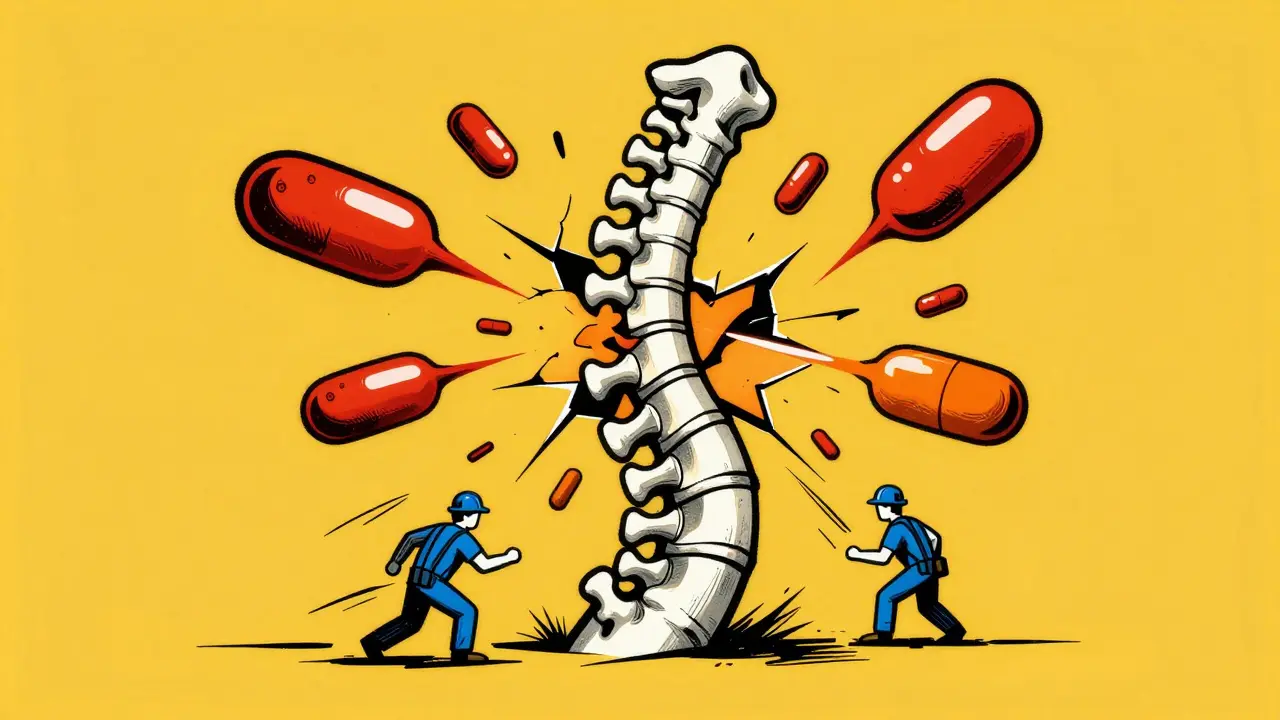
Steroids attack your bone health from two directions simultaneously. First, they suppress osteoblasts, the cells responsible for building new bone. In fact, about 70% of the bone loss in GIOP comes from this halted construction work. Second, steroids stimulate osteoclasts, the cells that break down old bone. With builders on strike and demolition crews working overtime, your bone density drops rapidly. This dual mechanism explains why standard advice for aging adults isn't enough for steroid users-you need a more robust defense strategy.
The Foundation: Calcium and Vitamin D Supplementation
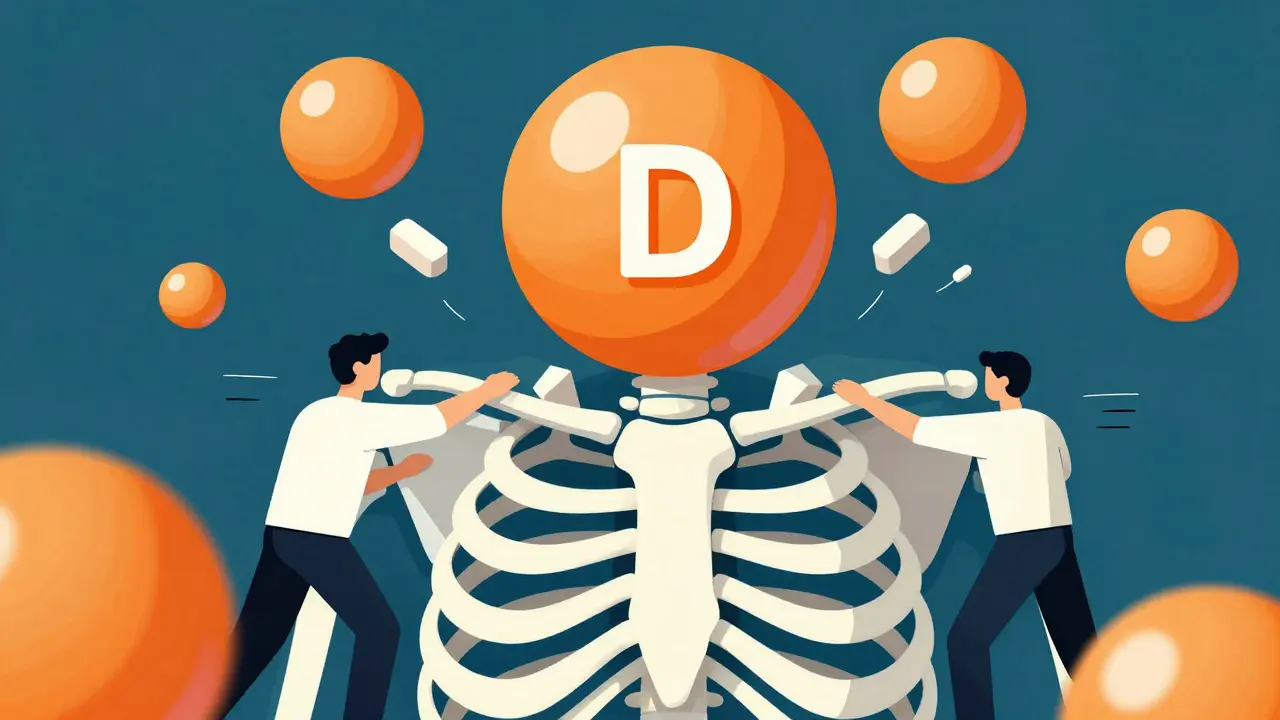
Before adding prescription drugs, every patient starting long-term glucocorticoid therapy must establish a solid nutritional base. Think of this as the mortar for your bricks. Without adequate raw materials, even the best medication will struggle to preserve bone mass.
Current guidelines from the American College of Rheumatology (ACR) recommend specific daily targets:
- Calcium: Aim for 1,000 to 1,200 mg per day. If your diet is rich in dairy, leafy greens, and fortified foods, you might only need a small supplement. However, many people fall short of this target through food alone.
- Vitamin D: Take 600 to 800 IU daily. If you have a known deficiency (blood levels below 30 ng/mL), your doctor may prescribe higher doses, such as 800-1,000 IU or more, to ensure your body can actually absorb the calcium.
Do not skip this step. Studies show that without sufficient vitamin D, calcium sits unused in your gut. Furthermore, low vitamin D levels are independently linked to muscle weakness, which increases your risk of falls-and thus fractures-even if your bones are relatively strong.
First-Line Defense: Oral Bisphosphonates
If you are over 40 years old and taking at least 2.5 mg of prednisone equivalent daily for three months or longer, supplements alone are usually not enough. This is where oral bisphosphonates come in. These are the gold standard for preventing GIOP.
Drugs like alendronate (Fosamax) and risedronate (Actonel) work by binding to the bone surface and inhibiting the osteoclasts mentioned earlier. They essentially put the brakes on bone breakdown. Clinical trials, such as the pivotal Fosamax Spine Osteoporosis Trial (FOSIT), have proven their effectiveness. In one study, patients taking alendronate gained 3.7% in lumbar spine bone density after one year, while those on placebo lost 1.7%. That is a massive difference in just twelve months.
Here is what you need to know about taking them:
- Dosing: Alendronate is typically taken once weekly (70 mg). Risedronate is also often weekly (35 mg).
- Administration Rules: These pills are harsh on the esophagus. You must take them with a full glass of plain water, stay upright (sitting or standing) for at least 30 minutes afterward, and avoid eating or drinking anything else during that time. Failure to follow these rules can cause severe heartburn or esophageal ulcers.
- Efficacy: They reduce vertebral fracture risk by approximately 40-50%. However, they have less impact on non-vertebral fractures (like hips or wrists) in some studies.
Alternatives for High-Risk Patients: IV Zoledronic Acid and Teriparatide
Not everyone tolerates oral bisphosphonates well. About 15-30% of patients experience gastrointestinal side effects. Others have kidney issues that make oral bisphosphonates unsafe. For these groups, there are powerful alternatives.
Intravenous Zoledronic Acid
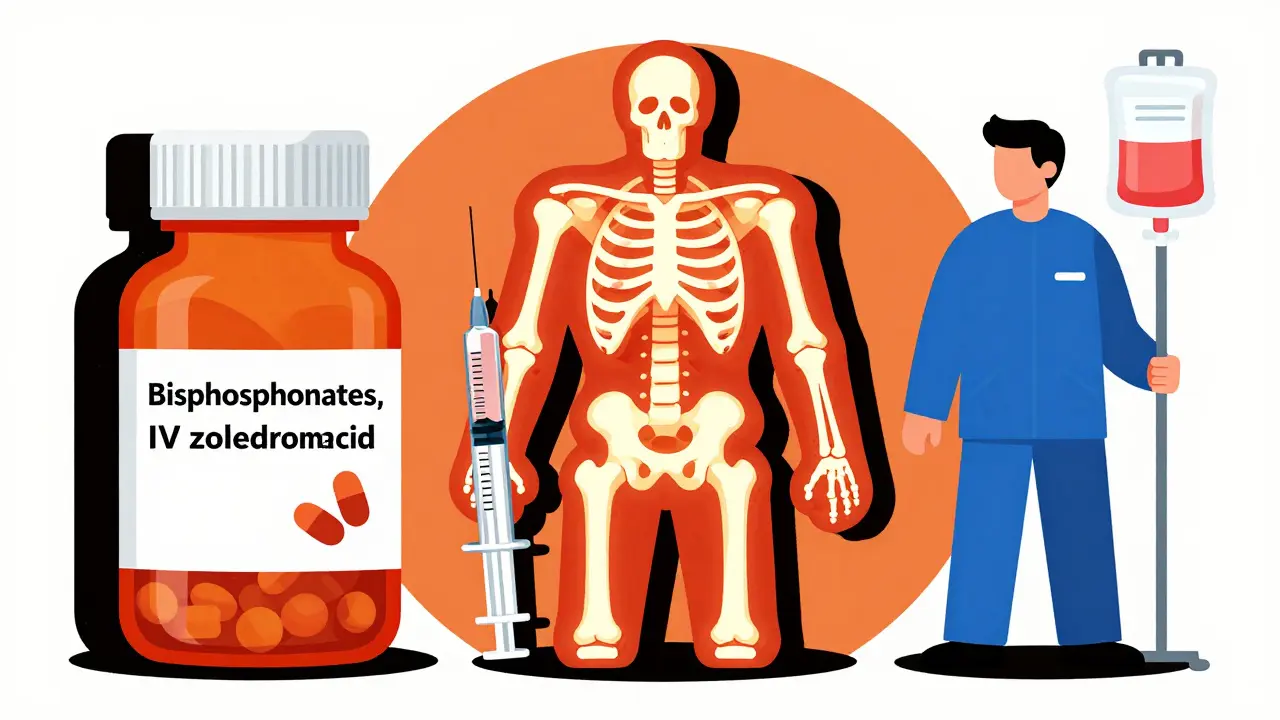
Zoledronic acid (Reclast/Aclasta) is an intravenous bisphosphonate administered once a year. It offers convenience for those who hate taking pills and has shown superior bone mineral density (BMD) gains compared to oral options in some trials. A 2020 study found it improved lumbar spine BMD by 4.1% more than risedronate after 12 months. It is particularly useful for patients with poor adherence to daily or weekly regimens.
Teriparatide: Building New Bone
For patients at very high risk-those with previous fractures, extremely low T-scores (≤-2.5), or multiple risk factors-doctors may prescribe teriparatide (Forteo). Unlike bisphosphonates, which stop bone loss, teriparatide is an "anabolic" agent. It actively stimulates osteoblasts to build new bone.
The evidence for its superiority in high-risk cases is strong. The ACTIVE study showed that teriparatide reduced new vertebral fractures to just 0.6% incidence, compared to 6.1% for alendronate. It can increase lumbar spine BMD by over 16% in 18 months. However, it requires daily subcutaneous injections and costs significantly more (often ten times the price of generic bisphosphonates). It is also contraindicated in patients with Paget’s disease or prior radiation to the skeleton due to a theoretical risk of osteosarcoma, though human data has not confirmed this risk after 15 years of use.
Comparison of Treatment Options
| Treatment | Mechanism | Frequency | Key Benefit | Major Limitation |
|---|---|---|---|---|
| Calcium + Vitamin D | Nutritional support | Daily | Essential foundation; low cost | Insufficient alone for high-dose steroids |
| Oral Bisphosphonates (Alendronate) | Anti-resorptive (stops breakdown) | Weekly | Gold standard; highly effective; cheap | GI side effects; strict dosing rules |
| IV Zoledronic Acid | Anti-resorptive | Annually | High adherence; potent BMD gain | Acute phase reaction (fever/fatigue) post-infusion |
| Teriparatide | Anabolic (builds bone) | Daily injection | Best for severe osteoporosis/fractures | High cost; injection burden; safety warnings |
Monitoring and Adherence: The Missing Link
Having a prescription is not enough. The biggest challenge in GIOP management is adherence. Studies reveal that up to 50% of eligible patients do not receive appropriate prophylaxis, and discontinuation rates for oral bisphosphonates hit 50-70% within the first year. Why? Because bone loss is silent. You don't feel better when you take the pill, so it's easy to forget.
To stay on track, follow this monitoring plan:
- Baseline DXA Scan: Get a dual-energy X-ray absorptiometry scan of your lumbar spine and hip before or shortly after starting steroids. This establishes your starting point.
- Follow-Up Scans: Repeat the DXA scan every 12 months. If you lose more than 5% of bone density in a year, your treatment needs escalation (e.g., switching from oral bisphosphonates to teriparatide or IV zoledronic acid).
- Kidney Function Checks: Since bisphosphonates are cleared by the kidneys, your doctor should check your eGFR annually. If your eGFR drops below 30 mL/min, oral bisphosphonates are generally avoided, and alternatives like denosumab or teriparatide are considered.
Remember, the goal is not just to treat osteoporosis but to prevent it from ever reaching that stage. Early intervention is key. If you are prescribed a bisphosphonate, commit to the routine. Set a weekly alarm for your pill. Discuss IV options if you struggle with compliance. Your future self will thank you when you remain mobile and pain-free.
How quickly does steroid-induced osteoporosis develop?
Bone loss begins rapidly, often within the first 3 to 6 months of starting glucocorticoid therapy. This is much faster than age-related osteoporosis. Up to 12% of patients on high doses (≥7.5 mg/day prednisone) may suffer a vertebral fracture within the first year if untreated.
Can I just take calcium and vitamin D instead of prescription drugs?
For most patients taking moderate to high doses of steroids for longer than three months, calcium and vitamin D alone are insufficient. While essential, they do not provide enough protection against the rapid bone resorption caused by steroids. Prescription medications like bisphosphonates are recommended for anyone over 40 on ≥2.5 mg/day of prednisone equivalent.
What are the side effects of oral bisphosphonates?
The most common side effects are gastrointestinal, including heartburn, esophageal irritation, and abdominal pain, affecting 15-30% of users. Rare but serious risks include atypical femoral fractures and osteonecrosis of the jaw, though these are extremely uncommon with short-to-medium term use. Strict adherence to dosing instructions (staying upright for 30 minutes) minimizes GI risks.
Is teriparatide safe for everyone?
No. Teriparatide is contraindicated in patients with Paget’s disease, open epiphyses (growing bones in children), unexplained elevated alkaline phosphatase, or a history of skeletal radiation. It carries a black box warning for osteosarcoma based on rat studies, although no increased risk has been observed in humans after 15 years of post-marketing surveillance. It is reserved for high-risk patients due to cost and administration method.
How often should I get a bone density scan?
You should have a baseline DXA scan when starting long-term steroid therapy. Follow-up scans are typically recommended every 12 months. If your bone density drops by more than 5% in a year, your doctor may adjust your treatment plan to a more potent therapy.